Kirjojen hintavertailu. Mukana 11 717 486 kirjaa ja 12 kauppaa.

Kirjahaku

Etsi kirjoja tekijän nimen, kirjan nimen tai ISBN:n perusteella.

1000 tulosta hakusanalla John Butler Johnson

John Andrew Frey

John Andrew Frey

Charles Lopeman

Praeger Publishers Inc
1999
sidottu
Lopeman examines the impact advocacy of intentional judicial activism by a justice of a state supreme court can have on establishing the court as a policy maker. He examines the attitudinal model and the judicial role model of decision making and concludes that, while the attitudinal model might describe the decision-making process in the U.S. Supreme Court, the judicial role model better describes decision making in state supreme courts. This judicial role model allows the activist to transform a court into a policy maker.The traditions, recent history, and biographies of recent justices of the Indiana, West Virginia, and Ohio courts are examined to establish a significant relationship between the presence of an activist advocate justice and active policy making by the courts. These courts' decisions in cases with policy making potential are contrasted with decisions in similar cases of three state supreme courts that did not have an advocate justice. Lopeman argues that the presence of an activist advocate explains a court's transformation to active policy making, and that other apparent explanations are insufficient. He emphasizes that the motives of an activist advocate are likely to determine the permanence of policy making in the court. This volume is an important resource for political scientists, legal scholars, and other researchers involved with judicial decision making, state politics, and state constitutional law.
John Basil Turchin and the Fight to Free the Slaves

John Basil Turchin and the Fight to Free the Slaves

Stephen Chicoine

Praeger Publishers Inc
2003
sidottu
This book highlights the contributions of a Russian immigrant who became a Union officer during the Civil War. John Basil Turchin left Czarist Russia to embrace democracy in America. When the Civil War began, he rushed to defend the Union, his formal training in the Imperial Russian Army and his combat experience in the Crimean making him a valuable officer. A man of conviction, he refused to be intimidated by commanding officers that were lenient toward rebels and the return of fugitive slaves to their masters. His subsequent court martial turned the trial into a focal point for Northern debate on the conduct of the war and the issue of slavery.John Basil Turchin left Czarist Russia to embrace democracy in America. When the Civil War began, he rushed to defend the Union, his formal training in the Imperial Russian Army and his combat experience in the Crimean making him a valuable officer. He was among those determined to see the war as revolutionary—a vehicle by which to put an end to Southern aristocracy and the institution of slavery. A man of conviction, he refused to be intimidated by commanding officers that were lenient toward rebels and the return of fugitive slaves to their masters. His actions during the Union thrust into northern Alabama in the spring of 1862 led to his court martial. The national attention given to the proceedings turned the trial into a focal point for Northern debate on the conduct of the war and the issue of slavery.Turchin took advantage of his exposure during the trial to express his position to the nation. His reinstatement by Lincoln in the aftermath of the court-martial and his promotion to brigadier general signaled that the administration was beginning to take a stronger position. The Emancipation Proclamation, delivered by Lincoln shortly thereafter, transformed the war into a crusade to free the slaves. John Basil Turchin returned to the field and played important roles on the battlefields of Chickamauga and Missionary Ridge.
John Jebb and the Enlightenment Origins of British Radicalism
A supporter of the American rebellion and advocate of radical ideas on religion, philosophy, education, law, medicine, and politics, John Jebb (1736-1786) provides an ideal case to examine the nature of radicalism in 18th-century Britain. Jebb began his career as a clergyman and academic at Cambridge in the 1760s and died as a doctor and leading figure among political reformers in Enlightenment London. Profoundly influenced by David Hartley's attempt to combine a Christian theology of universal salvation with a materialist and determinist account of the mind, Jebb's philosophical and religious radicalism inspired him to work tirelessly for reform. This is the first modern extended study of his life.While at Cambridge, Jebb provoked strong conservative opposition to his religious views and proposals for academic reform. Increasingly marginalized in church and university, as a tide of loyalism swept the country in response to rebellion in America, Jebb resigned as a clergyman and moved to London to work as a doctor. As the American war dragged on with no end in sight, a popular movement urging political reform developed. Jebb became a leader of this movement and was instrumental in establishing a platform that called for universal suffrage and annual elections. British radicals would continue to campaign for this platform until the mid-19th century.
John Dee

John Dee

Praeger Publishers Inc
2004
sidottu
When it was discovered in 1976, John Dee's The Limits of the British Empire (1577-78) was quickly recognized as a seminal text in the history of English Atlantic discovery, settlement, and imperial ideology. Writing directly to Queen Elizabeth and drawing on ancient and contemporary history, geography, and law as his supporting evidence, Dee argued for the existence and recovery of a vast British Empire. This included much of the North Atlantic and North America, Ireland and Scotland, and even portions of Scandinavia and the Iberian Peninsula. King Arthur, Geoffrey of Monmouth, Robert the Bruce, Pope Alexander VI, Martin Frobisher, and the Emperor Justinian are just a few of the historical agents who help to make this treatise at once erudite, elegant, and effusive. Offered for the first time in print, this volume uses sources that will be of interest to scholars in history and historical geography, English and British studies, and legal and empire studies. The book shows that Dee was an important propagandist of empire, that English antiquarianism was used to practical purpose, and that the legal foundations of the empire were not based solely on the indigenous, common law. In making these claims, this study contributes directly to several debates about the ideological development of the British Empire, especially the work of David Armitage and Anthony Pagden.
John F. Kennedy and Israel

John F. Kennedy and Israel

Herbert Druks

Praeger Publishers Inc
2005
sidottu
John F. Kennedy entered the White House hoping to make America and the world a better and safer place in which to live. Through diplomacy, he wanted to achieve a settlement of the East-West tensions and to bring about a peaceful resolution to such issues as the Israeli-Arab conflict. Although his provision of defensive HAWK anti-aircraft missiles, in response to Russian, French, and British arms sales to the Arabs, made him the first President to supply arms to Israel, Kennedy feared both exacerbation of the arms race and the proliferation of nuclear weapons. While he remained an honest and loyal friend to Israel, he also attempted to further America's relationship with the Arab states and to encourage a settlement of the Arab refugee issue.Kennedy was an independent thinker who learned how to rely upon his own best judgment and intelligence rather than upon his father or officials like Dean Rusk or Allen Dulles. Kennedy ultimately agreed to regular consultations between Israeli and American military personnel, but he would not agree to a dual alliance nor would he allow America to become Israel's main source of military equipment. The author contends that it was this precarious and uncertain diplomatic and military situation that encouraged Israel to develop its own defense industries and to investigate the possibilities of producing its own nuclear weapons systems.
John Baptist

John Baptist

Spck

SPCK Publishing
1997
nidottu
An historical portrait of one of the most fascinating figures of the Gospels: John the Baptist. Joan Taylor brings the world and work of this strange wandering ascetic to life, and seeks answers to some intriguing questions such as what was the origin of baptism as a symbol for repentance.
John Wesley

John Wesley

Spck

SPCK Publishing
2003
nidottu
A major new biography and analysis of the life and work of John Wesley - his family, influences, contemporary context, friends and writings. Publication is scheduled to coincide with the celebrations to mark the 300th anniversary of John's birth, in May 2003. The writing will be popular, and will provide a good grounding for those coming new to the subject, and new information and fresh insights make it required reading for those already familiar with Wesley and his work.
John Henry Newman

John Henry Newman

A.N. Wilson

SPCK Publishing
2007
nidottu
John Henry Newman is recognized as one of the greatest Christian thinkers of the modern age. He was also a man of prayer and deep spirituality. A. N. Wilson's wide-ranging anthology of Newman's prayers, poems and meditations will appeal to all those who are fascinated by this inspirational man. The readings cover the general themes of faith, prayer, the contemplation of Christ, discipleship, the meaning of holiness, and the hope of heaven. In an engaging Introduction, Wilson brings fresh insight to Newman's life and thought. This carefully arranged anthology will provide comfort and sustenance to all those who cherish Newman's writings and to those who are keen to discover one of our best loved spiritual writers for the first time.
John Wesley & Money

John Wesley & Money

Ralph Waller

SPCK Publishing
2017
nidottu
At a time when the world is thrown into financial crisis, this detailed study of John Wesley and his attitude to money would make a contribution to our understanding of Christian stewardship. His own life style, his concern for the poor, his constant need to raise money to support the emerging Methodist Societies, together with his attitude towards debt and the national lottery in the eighteenth century, all combine to make this an important study for the modern day.
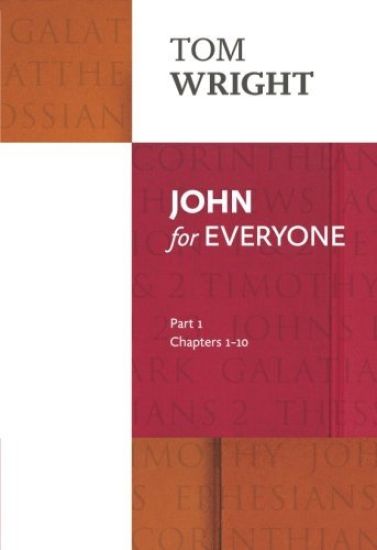
John for Everyone: Part 1

John for Everyone: Part 1

Tom Wright

SPCK Publishing
2014
nidottu
Making use of his true scholar's understanding, yet writing in an approachable and anecdotal style, Tom Wright manages to unravel the great complexity of this extraordinary gospel. He describes it as 'one of the great books in the literature of the world; and part of its greatness is the way it reveals its secrets not just to high-flown learning, but to those who come to it with humility and hope'. Wright's stimulating comments are combined with his own translation of the Bible text. Tom Wright has undertaken a tremendous task: to provide guides to all the books of the New Testament, and to furnish them with his own fresh translation of the entire text. Each short passage is followed by a highly readable discussion with background information. The series is suitable for personal or group use. The format makes it appropriate also for daily study.
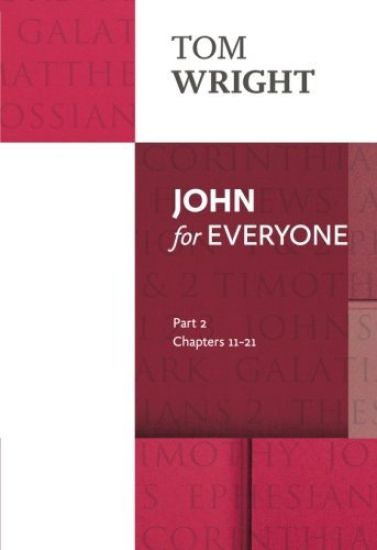
John for Everyone

John for Everyone

Tom Wright

SPCK Publishing
2014
nidottu
Making use of his true scholar's understanding, yet writing in an approachable and anecdotal style, Tom Wright manages to unravel the great complexity of this extraordinary gospel. He describes it as 'one of the great books in the literature of the world; and part of its greatness is the way it reveals its secrets not just to high-flown learning, but to those who come to it with humility and hope'. Wright's stimulating comments are combined with his own translation of the Bible text. Tom Wright has undertaken a tremendous task: to provide guides to all the books of the New Testament, and to furnish them with his own fresh translation of the entire text. Each short passage is followed by a highly readable discussion with background information. The series is suitable for personal or group use. The format makes it appropriate also for daily study.
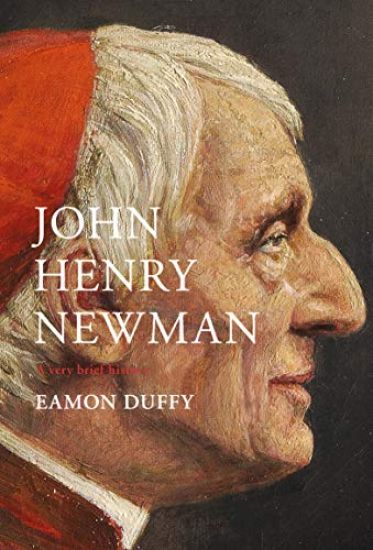
John Henry Newman

John Henry Newman

Eamon Duffy

SPCK Publishing
2019
sidottu
‘In another world it is otherwise, but here below to live is to change, and to be perfect is to have changed often.’ From An Essay on the Development of Christian Doctrine (1903) Canonized by Pope Francis in October 2019, Saint John Henry Newman (1801–90) was one of the most controversial and influential thinkers of his day. He is now recognized as one of the finest prose stylists of modern times, as well as a popular poet and hymn-writer. His spiritual autobiography, Apologia Pro Vita Sua, is a modern classic, and his many theological writings continue to be widely read and highly regarded by Christians of all traditions. As Eamon Duffy brilliantly demonstrates in this fresh assessment of Newman’s life and achievement, other theologians of his time are now largely of historical interest whereas Newman is still very much our contemporary. ‘This splendid book. . . expertly illuminates every aspect of Newman's life [and] work.’ Wall Street Journal
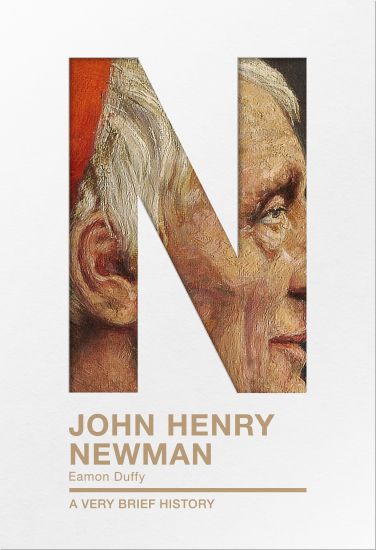
John Henry Newman: A Very Brief History

John Henry Newman: A Very Brief History

Eamon Duffy

SPCK Publishing
2020
nidottu
Part One: The History (What do we know?) This brief historical introduction to Newman explores the social, political and religious factors that formed the original context of his life and writings, and considers how those factors affected the way he was initially received. What was his impact on the world at the time and what were the key ideas and values connected with him? Part Two: The Legacy (Why does it matter?) This second part explores the intellectual and cultural `afterlife' of Newman, and considers the ways in which his impact has lasted and been developed in different contexts by later generations. Why is he still considered important today? In what ways is his legacy contested or resisted? And what aspects of his legacy are likely to continue to influence the world in the future? The book has a brief chronology at the front plus a glossary of key terms and a list of further reading at the back.
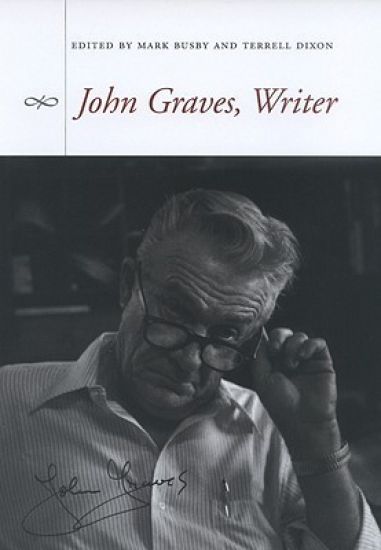
John Graves, Writer

John Graves, Writer

University of Texas Press
2007
sidottu
Runner-up, Violet Crown Award, Writer's League of Texas, 2008 Renowned for Goodbye to a River, his now-classic meditation on the natural and human history of Texas, as well as for his masterful ability as a prose stylist, John Graves has become the dean of Texas letters for a legion of admiring readers and fellow writers. Yet apart from his own largely autobiographical works, including Hard Scrabble, From a Limestone Ledge, and Myself and Strangers, surprisingly little has been written about Graves's life or his work. John Graves, Writer seeks to fill that gap with interviews, appreciations, and critical essays that offer many new insights into the man himself, as well as the themes and concerns that animate his writing. The volume opens with the transcript of a revealing, often humorous symposium session in which Graves responds to comments and stories from his old friend Sam Hynes, his former student and contemporary art critic Dave Hickey, and co-editor Mark Busby. Following this is a more formal interview of Graves by Dave Hamrick, who draws the author out on issues relating to each of his major works. John Graves's friends Bill Wittliff, Rick Bass, Bill Broyles, John R. Erickson, Bill Harvey, and James Ward Lee speak to the powerful influence that Graves has had on fellow writers. In addition to these personal observations, nine scholars analyze essential aspects of Graves's work. These include the place of Goodbye to a River within environmental literature and how its writing was a rite of passage for its author; Graves as a prose stylist and a literary, rather than polemical, writer; the ways in which Graves's major works present different aspects of a single narrative about our relationship to the land; the question of gender in Graves's work; and Graves's sometimes contentious relationship with Texas Monthly magazine. Mark Busby introduces the volume with a critical overview of Graves's life and work, and Don Graham concludes it with a discussion of Graves's reception and literary reputation. A bibliography of works by and about Graves rounds out the book. John Graves, Writer confirms Graves's stature not only within Texas letters, but also within American environmental writing, where Graves deserves to be more widely known.
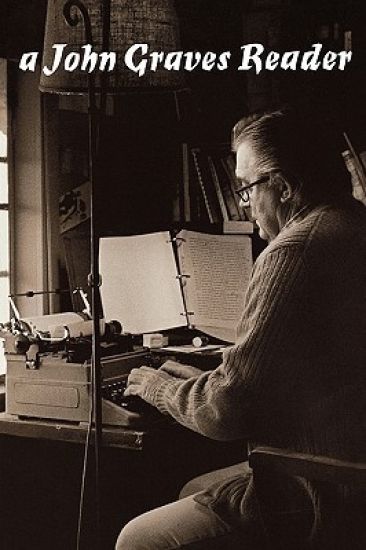
A John Graves Reader

A John Graves Reader

John Graves

University of Texas Press
1996
pokkari
Since the publication of his haunting, elegiac Goodbye to a River in 1960, John Graves has become one of Texas' most beloved writers, whose circle of loyal readers extends far beyond the borders of his home state. A "regional" writer only by virtue of his gift for vividly evoking the spirit of the land and its people, Mr. Graves is also admired for the unerring craftsmanship of his prose.Now the University of Texas Press takes great pleasure in publishing A John Graves Reader to introduce his writing to a new generation of readers. This anthology contains selections from Goodbye to a River and his two other major books, Hard Scrabble (1974) and From a Limestone Ledge (1980). It also includes short stories and essays, some of which have never been published before and others that Mr. Graves has reworked especially for this book.All of the pieces in this anthology were chosen by Mr. Graves himself to be, in his words, "representative of my writing, for better or worse." They reflect various stages of his life and writing career-youth in Texas, World War II, sojourns in New York, Mexico, and Europe during the 1940s and 1950s, and his final return to Texas as home and as subject matter-as well as recurring themes in his writing, from the land and the people to fishing, traveling, and the enduring friendships that have enriched his life.For those who have never read John Graves, this anthology will be the perfect introduction to the range and excellence of his work. At the same time, those who have read him faithfully for many years will find new pieces to enjoy, as well as old favorites to savor once again.
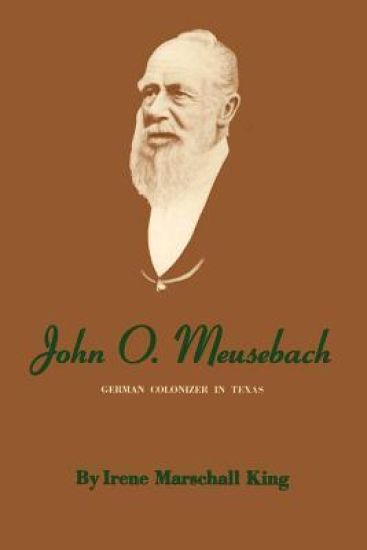
John O. Meusebach

John O. Meusebach

Irene Marschall King

University of Texas Press
1966
pokkari
Otfried Hans Freiherr von Meusebach chose a life of hardship and freedom in Texas rather than a life of comfort and influence in his native Germany, where he had lived his formative years within a framework of unconstitutional government. In 1845 the young liberal relinquished his hereditary German title, left behind his close family ties and his various intellectual and political associations, and arrived in Texas as John O. Meusebach, commissioner-general for the Society for the Protection of German Immigrants. His background enabled him to assume an enlightened leadership of fellow immigrants who were pouring in from Germany. Lacking adequate financial backing, he nevertheless led the settling of some five thousand people in a land that was largely occupied by Indians. Irene Marschall King presents the full sweep of Meusebach's vigorous life: Meusebach as the young liberal in Germany, as the colonizer in the 1840s, as a Texas senator and, later, an observer of the Civil War, and as a Texan who devoted his later years to bringing the Texas soil to fruition-all set against a background of the immigration movement and frontier life. "Freedom is not free; it is costly," Meusebach believed. In Texas he found for himself and others freedom worth the price he paid. Rich in historic detail, King's story recounts the founding of Fredericksburg, the crippling effect of the Mexican War upon the mass of immigrants huddled in illness on the coast, the signing of the Indian Treaty, which opened to settlement over three million acres of land, and the final collapse of the Society for the Protection of German Immigrants. Also depicted is the colonists' influence on the land-the gardens and orchards of south central Texas, the "Easter Fires" that blaze on the hills surrounding Fredericksburg, the mixture of German custom with American necessity that created a unique culture. Throughout the narrative Mrs. King presents a fascinating cast of characters: the noble Prince Solms, who tries to establish a German military outpost in Texas; Henry Fisher, who attempts by devious methods to control the colonists and their land and finally incites a mob which tries to hang Meusebach; Philip Cappes, a special commissioner and Meusebach's assistant, who plots through intriguing correspondence with Count Castell, the executive secretary in Germany, to overthrow Meusebach; and the colorful and courageous Indian fighter and Texas Ranger, Colonel Jack Hays. Primarily, however, this is the story of a man who found strength in his family's motto, "Perseverance in Purpose," and gave of his energies to build Texas.
John Okada

John Okada

University of Washington Press
2018
pokkari
No-No Boy, John Okada's only published novel, centers on a Japanese American who refuses to fight for the country that incarcerated him and his people in World War II and, upon release from federal prison after the war, is cast out by his divided community. In 1957, the novel faced a similar rejection until it was rediscovered and reissued in 1976 to become a celebrated classic of American literature. As a result of Okada's untimely death at age forty-seven, the author's life and other works have remained obscure.This compelling collection offers the first full-length examination of Okada's development as an artist, placing recently discovered writing by Okada alongside essays that reassess his lasting legacy. Meticulously researched biographical details, insight from friends and relatives, and a trove of intimate photographs illuminate Okada's early life in Seattle, military service, and careers as a public librarian and a technical writer in the aerospace industry. This volume is an essential companion to No-No Boy.
John Okada

John Okada

University of Washington Press
2018
sidottu
No-No Boy, John Okada's only published novel, centers on a Japanese American who refuses to fight for the country that incarcerated him and his people in World War II and, upon release from federal prison after the war, is cast out by his divided community. In 1957, the novel faced a similar rejection until it was rediscovered and reissued in 1976 to become a celebrated classic of American literature. As a result of Okada's untimely death at age forty-seven, the author's life and other works have remained obscure.This compelling collection offers the first full-length examination of Okada's development as an artist, placing recently discovered writing by Okada alongside essays that reassess his lasting legacy. Meticulously researched biographical details, insight from friends and relatives, and a trove of intimate photographs illuminate Okada's early life in Seattle, military service, and careers as a public librarian and a technical writer in the aerospace industry. This volume is an essential companion to No-No Boy.
John Donne's Marriage Letters in the Folger Shakespeare Library
This is a complete facsimile edition of fourteen autograph letters of John Donne that are among the greatest treasures of the Folger Library. The letters, dating from February and March 1602, relate to Donne's clandestine marriage to Anne More and are addressed to his father-in-law, Sir George More, and to Sir Thomas Egerton, the lord keeper, who was also Donne's employer.The text of a letter provides one part of the story, while its very tangibility -- the ancient folds, the grime and fingerprints deposited by the writer, deliverer, and readers, the broken seals, the ink blots, the idosyncratic spelling, the location of a signature -- tells another. An understanding of a letter's written and unwritten social signals brings into focus a fuller, grittier, and a clearer view of life in 17th century England.John Donne's Marriage Letters was recognized in the AIGA "50 books/50 Covers" competition as one of 100 examples of outstanding book and book cover design produced in 2005.
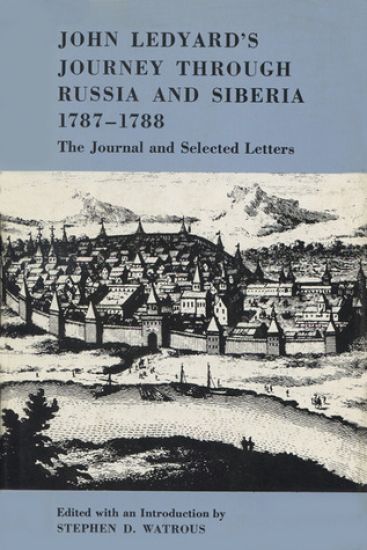
John Ledyard's Journey Through Russia and Siberia, 1787-1788

John Ledyard's Journey Through Russia and Siberia, 1787-1788

Stephen D. Watrous

University of Wisconsin Press
2011
nidottu
Provides a complete volume of pertinent information by and about John Ledyard, one of the most amazing explorers of all time. Including Ledyard’s own journal, letters between him and others, particularly Thomas Jefferson, and biographical information on eighteenth-century Siberia, this offers an exceptional look at history, geography, and travel.