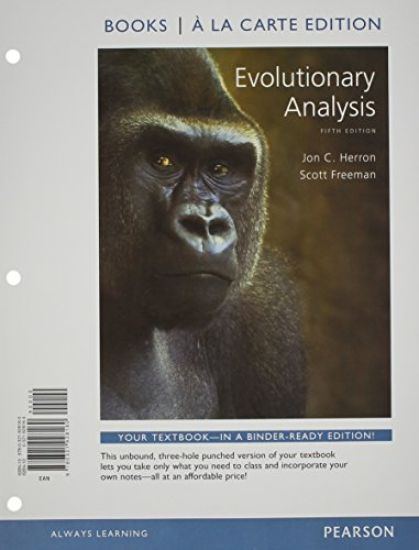
For undergraduate courses in Evolution By presenting evolutionary biology as a dynamic, ongoing research effort and organizing discussions around questions, this best-selling text helps you think like a scientist as you learn about evolution. The authors convey the excitement and logic of evolutionary science by introducing principles through recent and classical studies, and by emphasizing real-world applications. In the Fifth Edition, co-author Jon Herron takes the lead in streamlining and updating content to reflect key changes in the field. The design and art program have also been updated for enhanced clarity.
Dr. Jon Koff has assembled and expert team of authors of the topic of Cystic Fibrosis. Articles include: Epidemiology and Pathobiology, Genetics and genetic medicine in Cystic Fibrosis, Innate and Adaptive Immunity in Cystic Fibrosis, Microbiome in Cystic Fibrosis, Diagnostic Testing in Cystic Fibrosis, Treating Pseudomonas in Cystic Fibrosis, Diagnosis of Adult Patients with Cystic Fibrosis, Transition from Pediatrics to Adult Care, Lung Transplant in Cystic Fibrosis, and more!
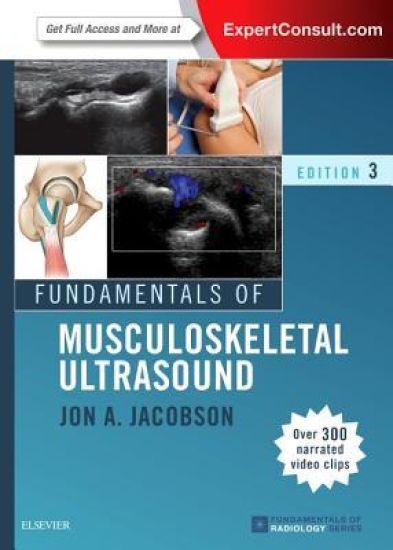
Effectively perform and interpret musculoskeletal ultrasound with this concise, highly illustrated resource by Jon A. Jacobson, MD. Fully revised, this bestselling title covers all the essential details of musculoskeletal ultrasound imaging, providing a solid understanding of the technique and how to make accurate diagnoses. It takes a concise, clear, and step-by-step approach to all of the most common musculoskeletal ultrasound applications, with specific details on anatomy, patient positioning, scanning techniques, normal and abnormal findings, tips, and pitfalls. A succinct, highly accessible writing style makes information easy to understand. Over 200 narrated video clips of real-time dynamic ultrasound imaging provide instruction in a succinct, didactic format, highlighting key findings. Common percutaneous ultrasound-guided musculoskeletal procedures are demonstrated, including transducer and needle positioning.
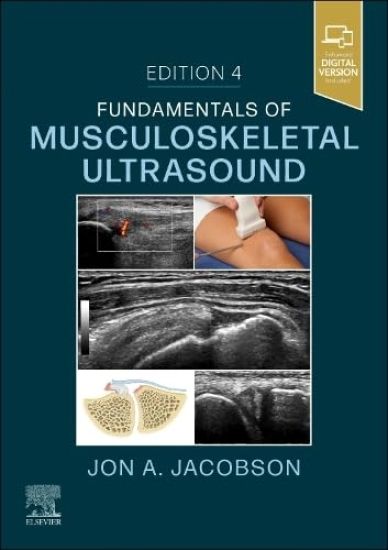
Fully revised, the new 4th edition of this bestselling title provides a comprehensive review of musculoskeletal ultrasound imaging. Ultrasound scanning details for each joint are described and illustrated using a protocol-driven approach that allows the reader to develop an efficient and comprehensive scanning technique. Examples show transducer placement and resulting normal ultrasound findings, essential anatomy is illustrated and reviewed, and common musculoskeletal pathology is discussed, along with ultrasound imaging examples and videos. Other topics include image optimization, color Doppler imaging, and ultrasound-guided interventional procedures. Reviews essential anatomy of each joint, including anatomical drawings and illustrations. Details a scanning protocol for each joint, including checklists of important anatomical structures. NEW in this 4th edition: live real-time narrated videos demonstrating scanning protocols for each joint with simultaneous ultrasound imaging. Includes more than 200 NEW and updated images of common musculoskeletal pathology. Features 335 updated and narrated video clips of real-time dynamic ultrasound imaging that provide instruction in a didactic format, highlighting key findings. Includes sample reports of normal and abnormal ultrasound exams that can be used as reporting templates. Reviews common ultrasound-guided musculoskeletal procedures, including transducer placement and needle positioning. Keeps you up to date with thoroughly revised text, references, and images. Provides quick and easy reference with reader-friendly lists, tables, and images. An eBook version is included with purchase. The eBook allows you to access all of the text, figures, and references, with the ability to search, customize your content, make notes and highlights, and have content read aloud. Additional digital ancillary content may publish up to 6 weeks following the publication date.
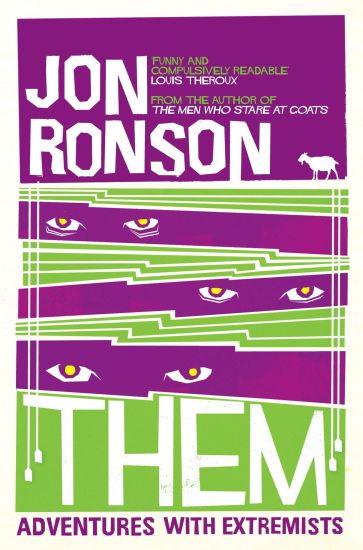
Guardian journalist Jon Ronson's Them began as a book about different kinds of extremists, but after Jon had got to know some of them – Islamic fundamentalists, neo-Nazis, Ku Klux Klansmen – he found that they had one oddly similar belief: that a tiny, shadowy elite rule the world from a secret room . . . In Them, Jon sets out, with the help of the extremists, to locate that room. The journey is as creepy as it is comic, and along the way Jon is chased by men in dark glasses, unmasked as a Jew in the middle of a Jihad training camp, and witnesses international CEOs and politicians participate in a bizarre pagan ritual in the forests of northern California. Them is a fascinating and entertaining exploration of extremism, in which Jon learns some alarming things about the looking-glass world of 'them' and 'us'. Are the extremists on to something? Or has Jon become one of them?
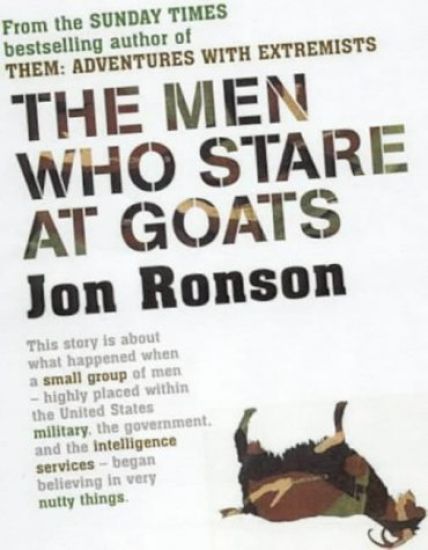
At times incredible, at times worrying, at times hilarious, always gripping, Jon Ronson investigates American military paranoia. And if you think this outlandish, wait until you learn about some of the things the Bush family believe in.
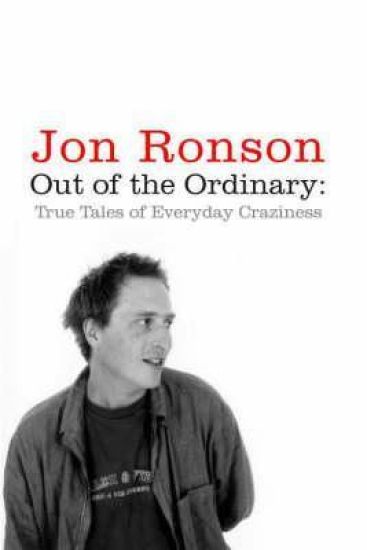
A collection of Jon's "Guardian" features, with a common theme: the ways in which people get themselves into wholly irrational bubbles, within which all manner of lunacy makes perfect sense.
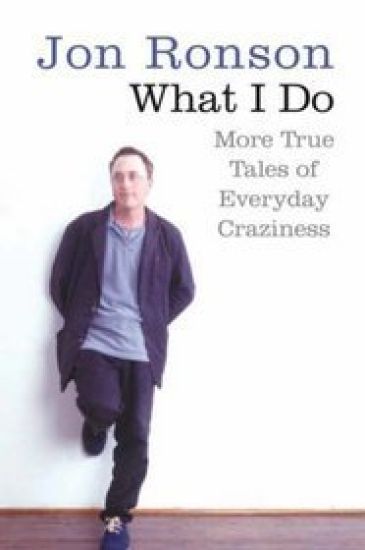
As hilarious as it is perturbing, Jon Ronson's second collection of Guardian journalism, What I Do, is a treat for everyone who has ever suspected themselves to be at the mercy of forces they can barely comprehend.In part one, read about the time Jon inadvertently made a lewd gesture to a passing fourteen-year-old girl late at night in the lobby of a country-house hotel. And about his burgeoning obsession with a new neighbour who refused to ask him what he did for a living, despite Jon's constant dropping of intriguing hints. And about the embarrassment of being caught recycling small talk at a party. In part two, read some of Jon's longer stories, which explore manifestations of insanity in the wider world: the tiny town of North Pole, Alaska, where it's Christmas 365 days of the year; behind the scenes at Deal or No Deal, which Jon likens to a cult with Noel Edmonds as its high priest; a meeting with TV hypnotist Paul McKenna, who has joined forces with a self-help guru who once stood trial for murder – but can they cure Jon of his one big phobia?
This volume contains a series of essays which examine microeconomic or structural issues and attempt to explain why alternative prescriptions to monetarism could have avoided the massive rise in unemployment in the 1980s. Policies are suggested which could reduce and stabilize unemployment levels.
A companion text to "Making the Economy Work", this covers aspects of the Employment Institute's published output in its first three years. Based on items produced by the Institute, it explains why alternative action to "monetarism" could have avoided the rise in unemployment in the early 1980s.
The author attempts to dispel what he believes to be the myth of modern Japan, and finds that it is not the extraordinary success it is frequently claimed to be.
In a wide-ranging and compelling account of the life of metrical and free verse in the twentieth century, poet and critic Jon Silkin deepens our understanding of the way poetry works on us. He begins from the premiss that two modes of verse, free and metrical, engage the creative energies of poetry now, creating a rich, fertile environment capable of yielding work valuable to poetry itself and to the society which has given it life. With a practitioner's empathy Silkin reads the poetry of Whitman, Hopkins, Eliot, Pound, Lawrence, Dylan Thomas, Bunting and eight British poets from the post-second World War period to illustrate how free and metrical verse create, separately or together, a poetic harmony. Additionally, he includes crucial statements on modern poetry from poets themselves, concluding with a fine memoir of Basil Bunting by Connie Pickard, published in book-form for the first time.
In a wide-ranging and compelling account of the life of metrical and free verse in the twentieth century, poet and critic Jon Silkin deepens our understanding of the way poetry works on us. He begins from the premiss that two modes of verse, free and metrical, engage the creative energies of poetry now, creating a rich, fertile environment capable of yielding work valuable to poetry itself and to the society which has given it life. With a practitioner's empathy Silkin reads the poetry of Whitman, Hopkins, Eliot, Pound, Lawrence, Dylan Thomas, Bunting and eight British poets from the post-second World War period to illustrate how free and metrical verse create, separately or together, a poetic harmony. Additionally, he includes crucial statements on modern poetry from poets themselves, concluding with a fine memoir of Basil Bunting by Connie Pickard, published in book-form for the first time.
This book explores the key issues of racism, anti-racism and identity in British football. It relates the history of black players in the game, analyses the racism they have experienced, and evaluates the efficacy of anti-racist campaigns. The efficacy of the policing of racism is also assessed. The nationalism and xenophobia evident in much of the media's coverage of major tournaments is highlighted in the context of the way that English, Scottish and Welsh identities are constructed within British football.
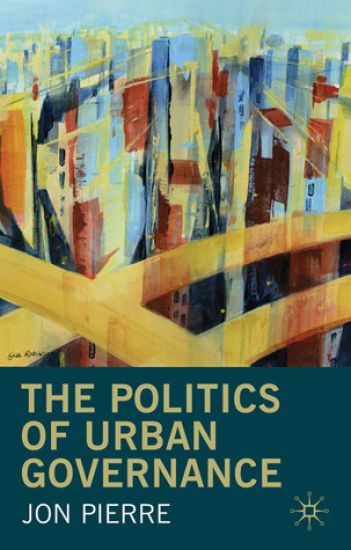
The study of urban governance provides a valuable insight into economic, social, and political forces and how they shape city life. But who and what are the real drivers of change? This innovative text casts new light on the issues and re-examines the state of urban governance at the start of the twenty-first century. Jon Pierre analyses four models of urban governance: 'management', 'corporatist', 'pro-growth' and 'welfare'. Each is assessed in terms of its implications for the major issues, interests and challenges in the contemporary urban arena. Distinctively, Pierre argues that institutions – and the values which underpin them – are the driving forces of change. The book also assesses the impact of globalization upon urban governance.The long-standing debate on the decline of urban governance is re-examined and reformulated by Pierre, who applies a wider international approach to the issues. He argues that the changing cast of private and public actors, combined with new forms of political participation, have resulted in a transformation – rather than a decline – of contemporary urban governance.
The study of urban governance provides a valuable insight into economic, social, and political forces and how they shape city life. But who and what are the real drivers of change? This innovative text casts new light on the issues and re-examines the state of urban governance at the start of the twenty-first century. Jon Pierre analyses four models of urban governance: 'management', 'corporatist', 'pro-growth' and 'welfare'. Each is assessed in terms of its implications for the major issues, interests and challenges in the contemporary urban arena. Distinctively, Pierre argues that institutions – and the values which underpin them – are the driving forces of change. The book also assesses the impact of globalization upon urban governance.The long-standing debate on the decline of urban governance is re-examined and reformulated by Pierre, who applies a wider international approach to the issues. He argues that the changing cast of private and public actors, combined with new forms of political participation, have resulted in a transformation – rather than a decline – of contemporary urban governance.
This book explores the key issues of racism, anti-racism and identity in British football. It relates the history of black players in the game, analyses the racism they have experienced, and evaluates the efficacy of anti-racist campaigns. The efficacy of the policing of racism is also assessed. The nationalism and xenophobia evident in much of the media's coverage of major tournaments is highlighted in the context of the way that English, Scottish and Welsh identities are constructed within British football.