Kirjojen hintavertailu. Mukana 11 717 486 kirjaa ja 12 kauppaa.

Kirjahaku

Etsi kirjoja tekijän nimen, kirjan nimen tai ISBN:n perusteella.

1000 tulosta hakusanalla Kenneth B. Kidd

Referring to the World

Referring to the World

Kenneth A. Taylor

Oxford University Press Inc
2021
sidottu
Our words and ideas refer to objects and properties in the external world; this phenomenon is central to thought, language, communication, and science. But great works of fiction are full of names that don't seem to refer to anything! In this book Kenneth A. Taylor explores the myriad of problems that surround the phenomenon of reference. How can words in language and perturbations in our brains come to stand for external objects? Reference is essential to truth, but which is more basic: reference or truth? How can fictional characters play such an important role in imagination and literature, and how does this use of language connect with more mundane uses? Taylor develops a framework for understanding reference, and the theories that other thinkers-past and present-have developed about it. But Taylor doesn't simply tell us what others thought; the book is full of new ideas and analyses, making for a vital final contribution from a seminal philosopher.
Matter of Mind

Matter of Mind

Kenneth M. Heilman

Oxford University Press Inc
2002
sidottu
Most of what has been learned about how the brain mediates behaviour comes from experiments of nature where a stroke or other damage to the brain produces changes in a person's behaviour. In Matter of Mind, one of the leading figures in behavioural and cognitive neurology uses patient vignettes and other examples from his rich professional life to show just how much knowledge about brain functions such as reading, writing, language, control of emotions, skilled movement, perception, attention, and motiviation has been gained from the study of patients with diseases of or damage to the brain. No knowledge of neurology or neuroscience is required to understand the book, which is intended for neurological patients and their families. It will also be of interest to professionals who study the brain or treat patients with brain damage including neuropsychologists, neurologists, neuroscientists, psychologists, speech pathologists, occupational and physical therapists, and their students and trainees.
Behaving

Behaving

Kenneth F. Schaffner

Oxford University Press Inc
2016
sidottu
Behaving presents an overview of the recent history and methodology of behavioral genetics and psychiatric genetics, informed by a philosophical perspective. Kenneth F. Schaffner addresses a wide range of issues, including genetic reductionism and determinism, "free will," and quantitative and molecular genetics. The latter covers newer genome-wide association studies (GWAS) that have produced a paradigm shift in the subject, and generated the problem of "missing heritability." Schaffner also presents cases involving pro and con arguments for genetic testing for IQ and for Attention Deficit Hyperactivity Disorder (ADHD). Schaffner examines the nature-nurture controversy and Developmental Systems Theory using C. elegans or "worm" studies as a test case, concluding that genes are special and provide powerful tools, including "deep homology," for investigating behavior. He offers a novel account of biological knowledge emphasizing the importance of models, mechanisms, pathways, and networks, which clarifies how partial reductions provide explanations of traits and disorders. The book also includes examinations of personality genetics and of schizophrenia and its etiology, alongside interviews with prominent researchers in the area, and discusses debates about psychosis that led to changes in the DSM-5 in 2013. Schaffner concludes by discussing additional philosophical implications of the genetic analyses in the book, some major worries about "free will," and arguments pro and con about why genes and DNA are so special. Though genes are special, newer perspectives presented in this book will be needed for progress in behavioral genetics- perspectives that situate genes in complex multilevel prototypic pathways and networks. With a mix of optimism and pessimism about the state of the field and the subject, Schaffner's book will be of interest to scholars in the history and philosophy of science, medicine, and psychiatry.
After the Golden Age

After the Golden Age

Kenneth Hamilton

Oxford University Press Inc
2007
sidottu
Kenneth Hamilton's book engagingly and lucidly dissects the oft-invoked myth of a Great Tradition, or Golden Age of Pianism. It is written both for players and for members of their audiences by a pianist who believes that scholarship and readability can go hand-in-hand. Hamilton discusses in meticulous yet lively detail the performance-style of great pianists from Liszt to Paderewski, and delves into the far-from-inevitable development of the piano recital. He entertainingly recounts how classical concerts evolved from exuberant, sometimes riotous events into the formal, funereal trotting out of predictable pieces they can be today, how an often unhistorical "respect for the score" began to replace pianists' improvisations and adaptations, and how the clinical custom arose that an audience should be seen and not heard. Pianists will find food for thought here on their repertoire and the traditions of its performance. Hamilton chronicles why pianists of the past did not always begin a piece with the first note of the score, nor end with the last. He emphasizes that anxiety over wrong notes is a relatively recent psychosis, and playing entirely from memory a relatively recent requirement. Audiences will encounter a vivid account of how drastically different are the recitals they attend compared to concerts of the past, and how their own role has diminished from noisily active participants in the concert experience to passive recipients of artistic benediction from the stage. They will discover when cowed listeners eventually stopped applauding between movements, and why they stopped talking loudly during them. The book's broad message proclaims that there is nothing divinely ordained about our own concert-practices, programming and piano-performance styles. Many aspects of the modern approach are unhistorical-some laudable, some merely ludicrous. They are also far removed from those fondly, if deceptively, remembered as constituting a Golden Age.
Time to Heal

Time to Heal

Kenneth M. Ludmerer

Oxford University Press Inc
2005
nidottu
The recipient of extraordinary critical acclaim, this magisterial book provides a landmark account of American medical education in the twentieth century, concluding with a call for the reformation of a system currently handicapped by managed care and by narrow, self-centred professional interests. Kenneth M. Ludmerer describes the evolution of American medical education from 1910, when a muck-raking report on medical diploma mills spurred the reform and expansion of medical schools, to the current era of managed care, when commercial interests once more have come to the fore, compromising the training of the nation's future doctors. Ludmerer portrays the experience of learning medicine from the perspective of students, house officers, faculty, administrators, and patients, and he traces the immense impact on academic medical centres of outside factors such as World War II, the National Institutes of Health, private medical insurance, and Medicare and Medicaid. Most notably, the book explores the very real threats to medical education in the current environment of managed care, viewing these developments not as a catastrophe but as a challenge to make many long overdue changes in medical education and medical practice. Panoramic in scope, meticulously researched, brilliantly argued, and engagingly written, Time to Heal is both a stunning work of scholarship and a courageous critique of modern medical education. The definitive book on the subject, it provides an indispensable framework for making informed choices about the future of medical education and health care in America.
The Poverty of Riches

The Poverty of Riches

Kenneth Baxter Wolf

Oxford University Press Inc
2005
nidottu
Saint Francis of Assisi is arguably the most attractive saint ever produced by the Catholic Church. The unusually high regard with which he is held has served to insulate him from any real criticism of the kind of sanctity that he embodied: sanctity based first and foremost on his deliberate pursuit of poverty. In this book, Kenneth Baxter Wolf takes a fresh look at Francis and the idea of voluntary poverty as a basis for Christian perfection. Wolf's point of departure is a series of simple but hitherto unasked questions about the precise nature of Francis's poverty: How did he go about transforming himself from a rich man to a poor one? How successful was this transformation? How did his self-imposed poverty compare to the involuntary poverty of those he met in and around Assisi? What did poor people of this type get out of their contact with Francis? What did Francis get out of his contact with them? Wolf finds that while Francis's conception of poverty as a spiritual discipline may have opened the door to salvation for wealthy Christians like himself, it effectively precluded the idea that the poor could use their own involuntary poverty as a path to heaven. Based on a thorough reconsideration of the earliest biographies of the saint, as well as Francis's own writings, Wolf's work sheds important new light on the inherent ironies of poverty as a spiritual discipline and its relationship to poverty as a socio-economic affliction.
Relational Being

Relational Being

Kenneth J. Gergen

Oxford University Press Inc
2009
sidottu
This book builds on two current developments in psychology scholarship and practice. The first centers on broad discontent with the individualist tradition in which the rational agent, or autonomous self, is considered the fundamental atom of social life. Critique of individualism spring not only from psychologists working in the academy, but also from communities of therapy and counseling. The second, and related development from which this work builds, is the search for alternatives to individualist understanding. Thus, therapists such as Steve Mitchell, along with feminists at the Stone Center, expand the psychoanalytic tradition to include a relational orientation to therapy. The present volume will give voice to the critique of individualism, but its major thrust is to develop and illustrate a far more radical and potentially exciting landscape of relational thought and practice that now exists. Most existing attempts to build a relational foundation remain committed to a residual form of individualist psychology. The present work carves out a space of understanding in which relational process stands prior to the very concept of the individual. More broadly, the book attempts to develop a thoroughgoing relational account of human activity. In doing so, Gergen reconstitutes 'the mind' as a manifestation of relationships and bears out these ideas in a range of everyday professional practices, including family therapy, collaborative classrooms, and organizational psychology.
Beyond Rationality

Beyond Rationality

Kenneth R. Hammond

Oxford University Press Inc
2007
sidottu
Ken Hammond has spent over a half-century analysing judgment and decision-making. His long-time focus has been on the dichotomy between judgment theories of correspondence (working to achieve empirical accuracy) and coherence (aiming for rationality and consistency) and the political consequences that can come from not understanding which of these theories people are following. In Beyond Rationality Hammond sums up his work and illustrates it with penetrating case studies on topics such as why Kennedy and Khruschev misunderstood each other, Colin Powell's misjudgments, the modes of thought on the Supreme Court, and much, much more. Hammond has changed the way academics think about decision making; with this book, he aims to show a larger audience why mistaken judgments happen, how to make better decisions, and how to understand the thought modes operating in the political process.
Postgraduate Year One

Postgraduate Year One

Kenneth M. Heilman

Oxford University Press Inc
2008
nidottu
Academic interest in the non-scientific parts of good medical practice continues to grow as evidenced by the increasing number of undergraduate and trainee-level courses on doctor-patient communication, ethics and professionalism. Lessons in Caring provides an introduction for students and trainees to fundamental but unquantifiable clinical skills.
Reputation

Reputation

Kenneth H. Craik

Oxford University Press Inc
2009
sidottu
This book argues that a network interpretation of reputation advances our understanding of an essential and inescapable feature of social life and integrates many of its' varied facets. Reputation is a dispersed phenomenon that is to be found in the beliefs and assertions of an extensive number of other individuals. Reputation is part of the environment but uniquely referenced to a specific person. Discussions concerning reputation are often vague with regard to who are those others holding beliefs or making assertions about a person and thereby contributing to that person's reputation, with reference perhaps to 'people in general' or 'society at large.' A network model of reputation generates conceptual innovations that have systematic implications for such diverse disciplines as network theory and social network analysis, gossip research, person perception and cognition, social representation research, personality theory and assessment, publicity and public relations, libel law, biographical studies, and cultural history. Craik argues that reputation is not simply a central topic for the study of social life. Rather, it holds the potential to sustain an interdisciplinary field of inquiry in its own right.
Linking to the Past: A Brief Introduction to Archaeology [With CDROM] [With CDROM]
This thoroughly revised Second Edition of Linking to the Past features: * A completely reorganized structure that ensures all students take the same pathway to learning the material traditionally covered in an archaeology course* An expanded focus that covers the whole of the archaeological experience (including ceramics, theory, and human burials) and integrates examples from around the globe* Updated material on such cutting-edge technology and theory as transformation processes, GIS, Total Station, glacial dating, and aerial photography* Discussions of current issues facing archaeology, including federal legislation that protects archaeological sites* More in-depth coverage of the scientific method; the history and development of archaeology; various theoretical approaches; and the archaeology of social inequality, race, gender, and the sacred* An in-text CD with interactive student exercises and slide shows Written in a conversational style, Linking to the Past: A Brief Introduction to Archaeology, Second Edition, offers students a concise and entertaining introduction to archaeological methods. Author Kenneth L. Feder helps students relate to the study of the past and learn what it means to think like an archaeologist by using accessible examples drawn from daily life; he examines the evolution of the beer and soda can to teach about seriation, demonstrates how technology changes over time with an iPod, and introduces dendrochronology by discussing a tree that fell on his property during a storm. Employing an "ask-and-answer" approach, Feder leads students through a wide-ranging series of questions about how archaeologists find, recover, study, and interpret the material culture left behind by earlier peoples. To give students an opportunity to think like archaeologists, the author offers interactive student exercises and slide shows (provided on the in-text CD). Linked to chapters in the text, the exercises on the CD include exploring a topographic map to see what features might support human habitation, translating radiocarbon dates into calendar years, and calculating the age at death of a sample of human beings by examining their skeletal features. The text is also enriched by additional pedagogical features including detailed study questions at the end of each chapter, an extensive glossary of more than 200 key terms, and suggestions for further reading. An Instructor's Manual on CD is also available.
Emotions in Child Psychotherapy

Emotions in Child Psychotherapy

Kenneth Barish

Oxford University Press Inc
2010
sidottu
Emotions are the common ground of child psychotherapy and a therapist's essential means of communication with children. Improved emotional resilience must be the shared therapeutic goal of all those who work with children and families. In Emotions in Child Psychotherapy, Kenneth Barish presents an integrative framework for child therapy, based on a contemporary understanding of the child's emotional experience. Barish begins with a concise review of recent advances in the psychology and neuroscience of emotions and an analysis of several emotions-interest, shame and pride, anxiety, anger, and sadness-that are essential, but often underappreciated, in therapeutic work with children. Offering an emotion-based perspective on optimal and pathological development in childhood, Barish argues that in pathological development, negative emotions have become malignant and children are locked in vicious cycles of interaction that perpetuate defiance and withdrawal. Based on these principles, Barish presents a comprehensive model for therapeutic work with children and families. He demonstrates how a systematic focus on the child's emotions provides new understandings of all phases of the therapeutic process and effective means of solving persistent clinical problems: how to engage more children in treatment, mitigate the child's resistance, and provide the kind of understanding to children that promotes openness, initiative, and pro-social character development. Finally, Barish offers a set of active therapeutic strategies that will help repair family relationships damaged by frequent anger and resentment, as well as specific techniques to help parents resolve many of the most common challenges of childrearing. Emotions in Child Psychotherapy includes extensive clinical illustrations and addresses many of the problems faced, at some time, by every child therapist. Both richly informative and highly practical, this book will be value to all students of child therapy and to practicing clinicians of differing theoretical orientations.
Bilateral Investment Treaties

Bilateral Investment Treaties

Kenneth J. Vandevelde

Oxford University Press Inc
2010
sidottu
Bilateral Investment Treaties: History, Policy, and Interpretation organizes, summarizes and comments upon the arbitral awards interpreting and applying BIT provisions. Policymakers and practitioners will find a thorough introduction to the operation of the BITs, including the principal arguments and case authorities on both sides of the major issues in international investment law. The book is intended to be a single-volume reference covering every important development in the 50 years of BIT programs worldwide, from 1959 until 2009. Author Kenneth Vandevelde argues that the primary purpose of the BITs is to promote the application of the rule of law to foreign investment, while a secondary purpose is to create a liberal investment regime. He further argues that BITs are based on six core principles: reasonableness, security, nondiscrimination, access, transparency and due process. The book explains each of these principles and analyzes the major BIT provisions based on them. Vandevelde addresses the host of complex questions that BITs engender: Do bilateral investment treaties attract foreign investment or otherwise contribute to economic development? Do BITs limit host state regulatory discretion too much? Why should countries continue to conclude BITs? What is meant by BIT guarantees of "fair and equitable treatment" and "full protection and security"? What is the scope of the BIT provision for most-favored-nation treatment? The book's expert analysis of these questions makes it useful to policy makers in the area of international economic relations, attorneys representing multinational companies, and anyone interested in the process of economic globalization.
U.S. International Investment Agreements

U.S. International Investment Agreements

Kenneth J Vandevelde

Oxford University Press Inc
2009
sidottu
U.S. International Investment Agreements is the definitive interpretative guide to the United States' bilateral investment treaties (BITs) and free trade agreements (FTAs) with investment chapters. Providing an authoritative look at the development of the BIT program, treatment provisions, expropriation, and other provisions, Kenneth J. Vandevelde draws on his years of investment treaty and agreement expertise as both a former practitioner and a scholar. This unique and well-organized book analyzes the development of U.S. international investment agreement language and strategy within their historical context. It also explains the newest changes to the model negotiating text (US Model BIT 2004) and additional treaties.
Guodian

Guodian

Kenneth Holloway

Oxford University Press Inc
2009
sidottu
Fourteen years ago, a corpus of bamboo-strip texts was found in a late-fourth-century-BCE tomb at Jingmen, Hubei province in central China. The discovery of the "Guodian" texts, together with other recently discovered Warring States manuscripts, has revolutionized the study of early Chinese intellectual history. Kenneth Holloway argues that the Guodian corpus puts forth a political philosophy based on the harmonious interconnection of individuals engaged in moral self cultivation. This unique worldview, says Holloway, cannot meaningfully be categorized as "Confucian" or "Daoist," because it shares important concepts and vocabulary with a number of different textual traditions that have anachronistically been characterized as competing or incompatible "schools" of thought. He finds that within the Guodian corpus familiar philosophical concepts and texts are applied in distinctive ways, presenting a worldview that is quite different from the received textual traditions. In addition to contributing to our understanding of this particular body of texts, Holloway proposes a methodology for assessing a corpus of texts without relying on assumptions and definitions that derive from two millennia of scholarship.
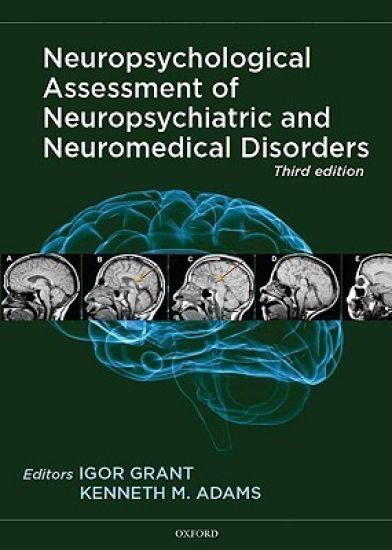
Neuropsychological Assessment of Neuropsychiatric and Neuromedical Disorders
This is a major revision of a standard reference work for neuropsychologists, psychiatrists, and neurologists. About one-half of the book contains entirely new work by new contributors. New topics not covered in the previous editions include consideration of common sources of neurocognitive morbidity, such as multiple sclerosis, diabetes, and exposure to heavy metals; psychiatric and behavioral disorders associated wtih traumatic brain injury; neuropsychology in relation to everyday functioning; the effects of cognitive impairment on driving skills, and adherence to medical treatments. The Third Edition aims to reflect the enormous developments in neuropsychology in terms of research, clinical applications, and growth of new talent during the past decade. At one time focused on mapping the cognitive and related consequences of brain injuries, research in neuropsychology has now expanded to much broader considerations of the effects of systemic disease, infection, medications, and inflammatory processes on neurocognition and emotion. The Third Edition attemtps to capture these developments while continuing to adhere to the objective of presenting them in a concise manner in a single volume.
Armies of Sand

Armies of Sand

Kenneth Pollack

Oxford University Press Inc
2020
nidottu
Since the Second World War, Arab armed forces have consistently punched below their weight. They have lost many wars that by all rights they should have won, and in their best performances only ever achieved quite modest accomplishments. Over time, soldiers, scholars, and military experts have offered various explanations for this pattern. Reliance on Soviet military methods, the poor civil-military relations of the Arab world, the underdevelopment of the Arab states, and patterns of behavior derived from the wider Arab culture, have all been suggested as the ultimate source of Arab military difficulties. In Armies of Sand, Kenneth M. Pollack assesses these differing explanations and isolates the most important causes. Over the course of the book, he examines the combat performance of fifteen Arab armies and air forces in virtually every Middle Eastern war, from the Jordanians and Syrians in 1948 to Hizballah in 2006 and the Iraqis and ISIS in 2014-2017. The book ultimately concludes that reliance on Soviet doctrine was more of a help than a hindrance to the Arabs. In contrast, politicization and underdevelopment were both important factors limiting Arab military effectiveness, but patterns of behavior derived from the dominant Arab culture was the most important factor of all. Pollack closes with a discussion of the rapid changes occurring across the Arab world, and suggests that because both Arab society and warfare are changing, the problems that have bedeviled Arab armed forces in the past could dissipate or even vanish in the future, with potentially dramatic consequences for the Middle East military balance. Sweeping in its coverage, this will be the go-to reference for anyone interested in the history of warfare in the Middle East since 1945.
I, Warbot: The Dawn of Artificially Intelligent Conflict

I, Warbot: The Dawn of Artificially Intelligent Conflict

Kenneth Payne

Oxford University Press, USA
2021
sidottu
Artificial Intelligence is going to war. Intelligent weapon systems are here today, and many more are on the way tomorrow. Already, they're reshaping conflict--from the chaos of battle, with pilotless drones, robot tanks and unmanned submersibles, to the headquarters far from the action, where generals and politicians use technology to weigh up what to do. AI changes how we fight, and even how likely it is that we will. In battle, warbots will be faster, more agile and more deadly than today's crewed weapons. New tactics and concepts will emerge, with spoofing and swarming to fool and overwhelm enemies. Strategies are changing too. When will an intelligent machine escalate, and how can it be deterred? Can robots predict the future? And what happens to the 'art of war' as machines themselves become creative? Autonomous warfare makes many people uneasy. An international campaign against 'killer robots' hopes to ban AI from conflict. But the genie is out--AI weapons are too useful for states to outlaw. Still, crafting sensible rules for warbots is possible. This fascinating book shows how it might be done.