Kirjojen hintavertailu. Mukana 11 244 527 kirjaa ja 12 kauppaa.

Kirjahaku

Etsi kirjoja tekijän nimen, kirjan nimen tai ISBN:n perusteella.

1000 tulosta hakusanalla Kenneth Poolman

American Christmas Cards 1900-1960

American Christmas Cards 1900-1960

Kenneth L. Ames

Yale University Press
2011
pokkari
The power of Christmas derives from the appeal of its repeated rituals, the presumed antiquity of its traditions, and its ability to adapt to changing cultural conditions. Christmas cards seemed inevitable and ubiquitous, but in recent years the genre has been visibly in decline. It is now evident that the Christmas card was a culturally specific artifact, a distinctive way in which a fundamental human gesture could be expressed within a commercial, materialistic, and rapidly changing society. This stylish book explores the imagery, graphic forms, subject matter, and significance of Christmas cards in their chronological timeframe to reveal an important area of American material culture. There is much to surprise and delight.Distributed for the Bard Graduate CenterExhibition Schedule:Bard Graduate Center(09/28/11-12/30/11)
Social Choice and Individual Values

Social Choice and Individual Values

Kenneth J. Arrow; Eric S. Maskin

Yale University Press
2012
pokkari
Originally published in 1951, Social Choice and Individual Values introduced “Arrow’s Impossibility Theorem” and founded the field of social choice theory in economics and political science. This new edition, including a new foreword by Nobel laureate Eric Maskin, reintroduces Arrow’s seminal book to a new generation of students and researchers."Far beyond a classic, this small book unleashed the ongoing explosion of interest in social choice and voting theory. A half-century later, the book remains full of profound insight: its central message, ‘Arrow’s Theorem,’ has changed the way we think.”—Donald G. Saari, author of Decisions and Elections: Explaining the Unexpected
The Jews and the Reformation

The Jews and the Reformation

Kenneth Austin

Yale University Press
2020
sidottu
The first comprehensive account of Protestant and Catholic attitudes toward Jews and Judaism in the European Reformation"Austin’s examination of Christian attitudes to Jews during the Reformation throws fascinating new light on the turbulent history of early modern Europe."—Tony Barber, Financial Times "Best Books of 2020: History" ?In this rich, wide-ranging, and meticulously researched account, Kenneth Austin examines the attitudes of various Christian groups in the Protestant and Catholic Reformations towards Jews, the Hebrew language, and Jewish learning. Martin Luther’s writings are notorious, but Reformation attitudes were much more varied and nuanced than these might lead us to believe. This book has much to tell us about the Reformation and its priorities—and has important implications for how we think about religious pluralism more broadly.
Frederic Church

Frederic Church

Kenneth John Myers; Kevin J. Avery; Gerald L. Carr; Mercedes Volait

Yale University Press
2017
pokkari
A beautiful overview of fascinating paintings of the classical world and the Holy Land by a beloved American artist Frederic Church (1826–1900), one of the leading painters of 19th-century America and the Hudson River School, also journeyed around the globe to find fresh inspiration for his highly detailed compositions. Among Church’s lesser-known masterpieces are his paintings of the Middle East, Italy, and Greece, produced in the late 1860s through late 1870s, which explore themes of human history and achievement. Taking a closer look at this geographical and thematic shift in Church’s practice, this handsome book brings together the artist’s major paintings of Athens, Rome, Jerusalem, and the surrounding region. The essays concentrate on a set of six major paintings of architectural and archaeological marvels; one essay also spotlights Olana, Church’s home in New York State, which reflects the influence of Middle Eastern design. This impressive volume stands apart in its new approach to the artist’s work and its quest to determine why and how this quintessentially American figure was drawn to scenery and themes from the other side of the globe.Distributed for the Detroit Institute of ArtsExhibition Schedule:Detroit Institute of Arts (10/22/17–01/15/18)Reynolda House Museum of American Art, Winston-Salem, NC (02/08/18–05/13/18)Wadsworth Atheneum Museum of Art, Hartford, CT (06/03/18–08/26/18)
The Other Modern Movement

The Other Modern Movement

Kenneth Frampton

Yale University Press
2021
sidottu
A revealing new look at modernist architecture, emphasizing its diversity, complexity, and broad inventiveness “[Frampton] remains a formidable force in architecture . . . The Other Modern Movement offers an opportunity to re-examine the Western canon of 20th-century architecture—which Frampton himself was crucial in establishing—and delve deeper into the work of lesser-known practitioners.”—Josephine Minutillo, Architectural Record Usually associated with Mies and Le Corbusier, the Modern Movement was instrumental in advancing new technologies of construction in architecture, including the use of glass, steel, and reinforced concrete. Renowned historian Kenneth Frampton offers a bold look at this crucial period, focusing on architects less commonly associated with the movement in order to reveal the breadth and complexity of architectural modernism. The Other Modern Movement profiles nineteen architects, each of whom consciously contributed to the evolution of a new architectural typology through a key work realized between 1922 and 1962. Frampton’s account offers new insights into iconic buildings like Eileen Gray’s E-1027 House in France and Richard Neutra’s Kaufmann House in Palm Springs, California, as well as lesser-known works such as Antonin Raymond’s Tokyo Golf Club and Alejandro de la Sota’s Maravillas School Gymnasium in Madrid. Foregrounding the ways that these diverse projects employed progressive models, advanced new methods in construction techniques, and displayed a new sociocultural awareness, Frampton shines a light on the rich legacy of the Modern Movement and the enduring potential of the unfinished modernist project.
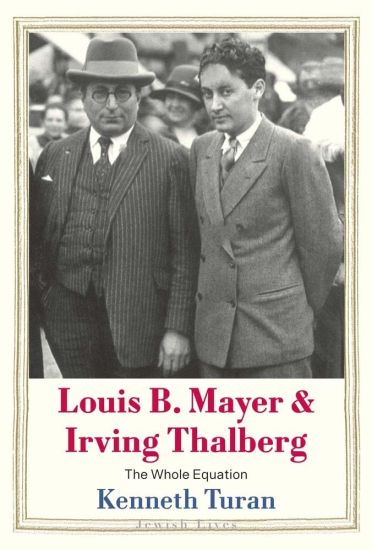
Louis B. Mayer and Irving Thalberg

Louis B. Mayer and Irving Thalberg

Kenneth Turan

YALE UNIVERSITY PRESS
2025
sidottu
Kenneth Turan brings to life the extraordinary partnership of Louis B. Mayer and Irving Thalberg and their role in creating the film industry as we know it “Sharply observant.”—Farran Smith Nehme, Wall Street Journal One was a tough junkman’s son, the other a cosseted mama’s boy, but they dreamed the same mighty dream: that the right movies could make a profit and change both the culture and individual lives. Sharing a religion and an evangelical zeal for film, Louis B. Mayer (1884–1957) and Irving Thalberg (1899–1936) were unlikely partners in one of the most significant collaborations in movie history. Over the course of their decade-long relationship, as key players at Metro-Goldwyn-Mayer and major players in Hollywood, they joined forces in redefining and mastering the template for the film industry. Mayer, older by more than a dozen years, was the business-minded face of the studio, while Thalberg worked closely with the creative corps, especially writers; together they rarely set a foot wrong. And while Mayer initially viewed Thalberg as the son he never had, the two would go from passionate friends to near enemies before Thalberg’s shocking death at the age of thirty-seven. In the first joint biography of the two men in fifty years, film critic Kenneth Turan traces their fraught relationship while examining the complicated history of Jewish identity in Hollywood.
Our Dollar, Your Problem

Our Dollar, Your Problem

Kenneth Rogoff

YALE UNIVERSITY PRESS
2025
sidottu
A National Bestseller • Recommended by Financial Times as “What to Read in 2025” “The central argument of Our Dollar, Your Problem—that the greenback’s pre-eminence was never guaranteed and might plausibly be overturned—could hardly be more timely.”—The Economist A leading economist explores the global rise of the U.S. dollar and shows why its future stability is far from assured Our Dollar, Your Problem argues that America’s currency might not have reached today’s lofty pinnacle without a certain amount of good luck. Drawing in part on his own experiences, including with policymakers and world leaders, Kenneth Rogoff animates the remarkable postwar run of the dollar—how it beat out the Japanese yen, the Soviet ruble, and the euro—and the challenges it faces today from crypto and the Chinese yuan, the end of reliably low inflation and interest rates, political instability, and the fracturing of the dollar bloc. Americans cannot take for granted that the Pax Dollar era will last indefinitely, not only because many countries are deeply frustrated with the system, but also because overconfidence and arrogance can lead to unforced errors. Rogoff shows how America’s outsized power and exorbitant privilege can spur financial instability—not just abroad but also at home.
Our Dollar, Your Problem: An Insider's View of Seven Turbulent Decades of Global Finance, and the Road Ahead
A National Bestseller - Recommended by Financial Times as "What to Read in 2025" "The central argument of Our Dollar, Your Problem--that the greenback's pre-eminence was never guaranteed and might plausibly be overturned--could hardly be more timely."--The Economist A leading economist explores the global rise of the U.S. dollar and shows why its future stability is far from assured Our Dollar, Your Problem argues that America's currency might not have reached today's lofty pinnacle without a certain amount of good luck. Drawing in part on his own experiences, including with policymakers and world leaders, Kenneth Rogoff animates the remarkable postwar run of the dollar--how it beat out the Japanese yen, the Soviet ruble, and the euro--and the challenges it faces today from crypto and the Chinese yuan, the end of reliably low inflation and interest rates, political instability, and the fracturing of the dollar bloc. Americans cannot take for granted that the Pax Dollar era will last indefinitely, not only because many countries are deeply frustrated with the system, but also because overconfidence and arrogance can lead to unforced errors. Rogoff shows how America's outsized power and exorbitant privilege can spur financial instability--not just abroad but also at home.
Louis B. Mayer and Irving Thalberg: The Whole Equation
Kenneth Turan brings to life the extraordinary partnership of Louis B. Mayer and Irving Thalberg and their role in creating the film industry as we know it "Sharply observant."--Farran Smith Nehme, Wall Street Journal A New Yorker Best Book of the Year One was a tough junkman's son, the other a cosseted mama's boy, but they dreamed the same mighty dream: that the right movies could make a profit and change both the culture and individual lives. Sharing a religion and an evangelical zeal for film, Louis B. Mayer (1884-1957) and Irving Thalberg (1899-1936) were unlikely partners in one of the most significant collaborations in movie history. Over the course of their decade-long relationship, as key players at Metro-Goldwyn-Mayer and major players in Hollywood, they joined forces in redefining and mastering the template for the film industry. Mayer, older by more than a dozen years, was the business-minded face of the studio, while Thalberg worked closely with the creative corps, especially writers; together they rarely set a foot wrong. And while Mayer initially viewed Thalberg as the son he never had, the two would go from passionate friends to near enemies before Thalberg's shocking death at the age of thirty-seven. In the first joint biography of the two men in fifty years, film critic Kenneth Turan traces their fraught relationship while examining the complicated history of Jewish identity in Hollywood.
Foundations of Business Telecommunications Management

Foundations of Business Telecommunications Management

Kenneth C. Grover

Kluwer Academic/Plenum Publishers
1986
nidottu
lnfonnation technology is about more than computers. Thus, it was a recurring-and rather infuriating-aspect of the early discussions on infonnation technology that those who participated tended either to ignore or to severely understate the role in infonnation technology of telecommunications. This very fine book by Ken Grover goes a long way toward correcting that misconception. However important the computer and computer-based equipment might be, the role of telecommunications equip­ ment has also been and continues to be significant. Moreover, as the author brings out, it is going to be even more important. As this enthralling story unfolds the reader will find him or herself continually remarking that there cannot be more-but again and again, there is. Those who are already of the world of telecommunications will, on reading this work, be proud of their colleague. Those who are already of the world of computers will learn a great deal and, it is to be hoped, will in future be fairer toward telecommunications than they have been in the past. Those who are new to the world of information technology will sally forth better balanced than most.
The Emerging Consensus in Social Systems Theory

The Emerging Consensus in Social Systems Theory

Kenneth C. Bausch

Kluwer Academic/Plenum Publishers
2001
sidottu
In The Emerging Consensus of Social Systems Theory Bausch summarizes the works of over 30 major systemic theorists. He then goes on to show the converging areas of consensus among these out-standing thinkers. Bausch categorizes the social aspects of current systemic thinking as falling into five broadly thematic areas: designing social systems, the structure of the social world, communication, cognition and epistemology. These five areas are foundational for a theoretic and practical systemic synthesis. They were topics of contention in a historic debate between Habermas and Luhmann in the early 1970's. They continue to be contentious topics within the study of social philosophy. Since the 1970's, systemic thinking has taken great strides in the areas of mathematics, physics, biology, psychology, and sociology. This book presents a spectrum of those theoretical advances. It synthesizes what various strains of contemporary systems science have to say about social processes and assesses the quality of the resulting integrated explanations. Bausch gives a detailed study of the works of many present-day systems theorists, both in general terms, and with regard to social processes. He then creates and validates integrated representations of their thoughts with respect to his own thematic classifications. He provides a background of systemic thinking from an historical context, as well as detailed studies of developments in sociological, cognitive and evolutionary theory. This book presents a coherent, dynamic model of a self-organizing world. It proposes a creative and ethical method of decision-making and design. It makes explicit the relations between structure and process in the realms of knowledge and being. The new methodology that evolves in this book allows us to deal with enormous complexity, and to relate ideas so as to draw out previously unsuspected conclusions and syntheses. Therein lies the elegance and utility of this model.
Technology, Science Teaching, and Literacy

Technology, Science Teaching, and Literacy

Kenneth P. King

Kluwer Academic/Plenum Publishers
2001
nidottu
This book deals with the use of technology in science teaching. The author is not, nor has ever had an intention of being a “techie. ” Rather, I spent the first decade of my professional life as a high school physics teacher, making occasional uses of technology to further student understanding and to automate my own teaching practices. During my graduate work, my interest in the use of technology continued. Catalyzed, to some extent by the increasing availability of graphical interfaces for computers, the realization struck that the computer was more and more becoming a tool that all teachers could use to support their teaching practice—not simply those with a passion for the technology itself. The rapid changes in the hardware and software available, however, frequently caused me to reflect on the usefulness of technology—if it were to change at such a rapid pace, would anyone, save for those who diligently focused on the development of these tools, be able to effectively use technology in science teaching? Was change to rapid to yield a useful tool for teachers? To address this interest, I examined the nature of science teaching during this century—using the equally fluid notion of “scientific literacy”—which formed the organizing principle for this study. The result is a examination of how technology was used to accomplishing this goal of producing scientifically literate citizens. What was observed is that technology, indeed, consistently came to the service of teachers as they attempted to achieve this goal.
Kandinsky

Kandinsky

Kenneth Lindsay; Peter Vergo

Da Capo Press Inc
1994
pokkari
Of all the giants of twentieth-century art, Wassily Kandinsky (1866-1944) was the most prolific writer. Here, available for the first time in paperback, are all of Kandinsky's writings on art, newly translated into English. Editors Kenneth C. Lindsay and Peter Vergo have taken their translations directly from Kandinsky's original texts, and have included select interviews, lecture notes, and newly discovered items along with his more formal writings. The pieces range from one-page essays to the book-length treatises On the Spiritual in Art (1911) and Point and Line to Plane (1926), and are arranged in chronological order from 1901 to 1943. The poetry, good enough to stand on its literary merits, is presented with all the original accompanying illustrations. And the book's design follows Kandinsky's intentions, preserving the spirit of the original typography and layout.Kandinsky was nearly thirty before he bravely gave up an academic career in law for his true passion, painting. Though his art was marked by extraordinarily varied styles, Kandinsky sought a pure art throughout, one which would express the soul, or "inner necessity," of the artist. His uncompromising search for an art which would elicit a response to itself rather than to the object depicted resulted in the birth of nonobjective art,and in these writings, Kandinsky offered the first cogent explanation of his aims. His language was characterized by its desire for vivification, of the infusion of life into mundane things.Considered as a whole, Kandinsky's writings exceed all expectations of what an artist should accomplish with words. Not only do his ideas and observations make us rethink the nature of art and the way it reflects the aspirations of his era, but they touch on matters vital to the situation of the human soul.
Nazi Plunder

Nazi Plunder

Kenneth Alford

Da Capo Press Inc
2003
pokkari
World War II was the most devastating conflict in human history, but the tragedy did not end on the battlefields. During the war, Germany- and, later, the Allies- plundered Europe's historic treasures. Between 1939 and 1945, German armed forces roamed from Dunkirk to Stalingrad, looting gold, silver, currency, paintings and other works of art, coins, religious artifacts, and millions of books and other documents. The value of these items, many of which were irreplaceable, is estimated in the billions of dollars. The artwork alone, looted under Hitler's direction, exceeded the combined collections of the Metropolitan Museum, the British Museum, and the Louvre. As the war wound to its conclusion in 1945, occupying forces continued the looting. The story of these celebrated works of art and other vanished treasures- and the mystery of where they went- is a remarkable tale of greed, fraud, deceit, and treachery. Kenneth Alford's Nazi Plunder is the latest word on this fascinating subject.
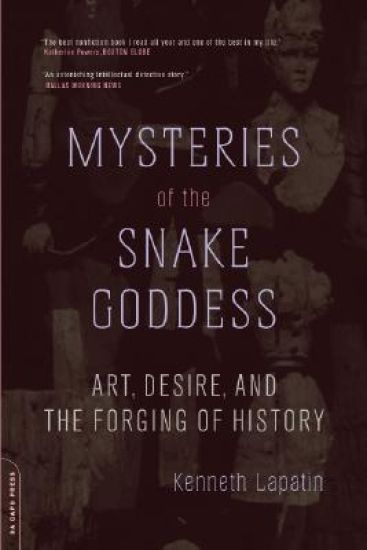
Mysteries Of The Snake Goddess

Mysteries Of The Snake Goddess

Kenneth Lapatin

Da Capo Press Inc
2003
pokkari
Not only is one of the most famous pieces of ancient Greek art-the celebrated gold and ivory statuette of the Snake Goddess-almost certainly modern, but Minoan civilization as it has been popularly imagined is largely an invention of the early twentieth century. This is Kenneth Lapatin's startling conclusion in Mysteries of the Snake Goddess-a brilliant investigation into the true origins of the celebrated Bronze Age artifact, and into the fascinating world of archaeologists, adventurers, and artisans that converged in Crete at the turn of the twentieth century. Including characters from Sir Arthur Evans, legendary excavator of the Palace of Minos at Knossos, who was driven to discover a sophisticated early European civilization to rival that of the Orient, to his principal restorer Swiss painter Emil Gillieron, who out of handfuls of fragments fashioned a picture of Minoan life that conformed to contemporary taste, this is a riveting tale of archeological discovery.
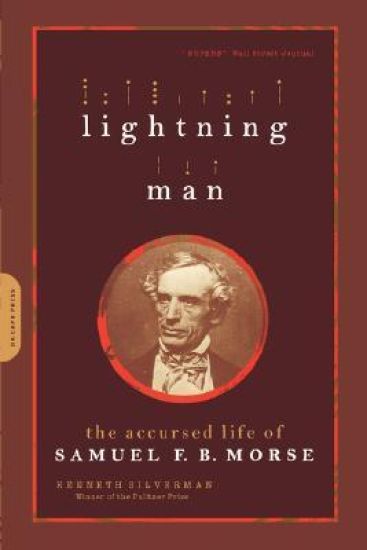
Lightning Man

Lightning Man

Kenneth Silverman

Da Capo Press Inc
2004
pokkari
This brilliantly conceived biography is the very American tale of a quiet man, raised by religious zealots, who became a gifted and prolific painter (more than three hundred portraits and historical canvases), became the first Professor of Fine Arts at an American college, and founded the National Academy of Design. A classic overachiever, this was simply not enough for Samuel F. B. Morse he subsequently ran for Congress and mayor of New York. Lastly, in his most famous life's work, he invented a machine that was to transform commerce, communication, transportation, military affairs, diplomacy, and the course of the modern world. What invention could be so revolutionary? The telegraph, of course-and the eponymous Morse code. Here is the story of an incredible invention, and an engrossing life, by a Bancroft- and Pulitzer Prize-winning author.
Mapping the Darkness: The Visionary Scientists Who Unlocked the Mysteries of Sleep
WINNER OF THE 2024 ASJA BOOK AWARD, BIOGRAPHY/HISTORY NAMED A BEST BOOK OF THE YEAR 2023 BY THE NEW YORKER NEW YORK TIMES EDITOR'S CHOICE SELECTION From award-winning journalist Kenneth Miller comes the definitive story of the scientists who set out to answer two questions: "Why do we sleep?" and "How can we sleep better?" A century ago, sleep was considered a state of nothingness--even a primitive habit that we could learn to overcome. Then, an immigrant scientist and his assistant spent a month in the depths of a Kentucky cave, making nationwide headlines and thrusting sleep science to the forefront of our consciousness. In the 1920s, Nathaniel Kleitman founded the world's first dedicated sleep lab at the University of Chicago, where he subjected research participants (including himself) to a dizzying array of tests and tortures. But the tipping point came in 1938, when his cave experiment awakened the general public to the unknown--and vital--world of sleep. Kleitman went on to mentor the talented but troubled Eugene Aserinsky, whose discovery of REM sleep revealed the astonishing activity of the dreaming brain, and William Dement, a jazz-bass playing revolutionary who became known as the father of sleep medicine. Dement, in turn, mentored the brilliant maverick Mary Carskadon, who uncovered an epidemic of sleep deprivation among teenagers, and launched a global movement to fight it. Award-winning journalist Kenneth Miller weaves together science and history to tell the story of four outsider scientists who took sleep science from fringe discipline to mainstream obsession through spectacular experiments, technological innovation, and single-minded commitment. Readers will walk away with a comprehensive understanding of sleep and why it affects so much of our lives. "A propulsive, utterly engrossing history... None of it is simple and all of it is captivating."--The New York Times "Mapping the Darkness offers two narratives at once: a sweeping journey of discovery about dreams, sleep and the terra incognita of unconsciousness; and a wake-up call about the dangers of chronic exhaustion. It's time, Mr. Miller tells us, to take our sleep back."--The Wall Street Journal
Hoover: An Extraordinary Life in Extraordinary Times
"An exemplary biography--exhaustively researched, fair-minded and easy to read. It can nestle on the same shelf as David McCullough's Truman, a high compliment indeed." --The Wall Street JournalThe definitive biography of Herbert Hoover, one of the most remarkable Americans of the twentieth century--a wholly original account that will forever change the way Americans understand the man, his presidency, his battle against the Great Depression, and their own history.An impoverished orphan who built a fortune. A great humanitarian. A president elected in a landslide and then resoundingly defeated four years later. Arguably the father of both New Deal liberalism and modern conservatism, Herbert Hoover lived one of the most extraordinary American lives of the twentieth century. Yet however astonishing, his accomplishments are often eclipsed by the perception that Hoover was inept and heartless in the face of the Great Depression. Now, Kenneth Whyte vividly recreates Hoover's rich and dramatic life in all its complex glory. He follows Hoover through his Iowa boyhood, his cutthroat business career, his brilliant rescue of millions of lives during World War I and the 1927 Mississippi floods, his misconstrued presidency, his defeat at the hands of a ruthless Franklin Roosevelt, his devastating years in the political wilderness, his return to grace as Truman's emissary to help European refugees after World War II, and his final vindication in the days of Kennedy's "New Frontier." Ultimately, Whyte brings to light Hoover's complexities and contradictions--his modesty and ambition, his ruthlessness and extreme generosity--as well as his profound political legacy.Hoover: An Extraordinary Life in Extraordinary Times is the epic, poignant story of the deprived boy who, through force of will, made himself the most accomplished figure in the land, and who experienced a range of achievements and failures unmatched by any American of his, or perhaps any, era. Here, for the first time, is the definitive biography that fully captures the colossal scale of Hoover's momentous life and volatile times.
War, Humanitarian Crises, Population Displacement, and Fertility
Fertility and reproductive health issues more broadly have tended to be of low priority in humanitarian crises. Public attention is drawn by information concerning the magnitude of refugee flows, of death tolls, and of numbers of injuries. Reproductive health has been regarded as a longer term issue that could safely be put on the back burner during the crisis phase of an emergency, when issues of providing adequate food, clean water, and shelter, plus treating acute infectious diseases of crowding, take priority. This report reviews what evidence there is concerning the effects of humanitarian crisis on fertility, with a view to identifying common patterns that may exist across settings and be of value in guiding responses to future crises. Table of Contents Front Matter Contents of Report
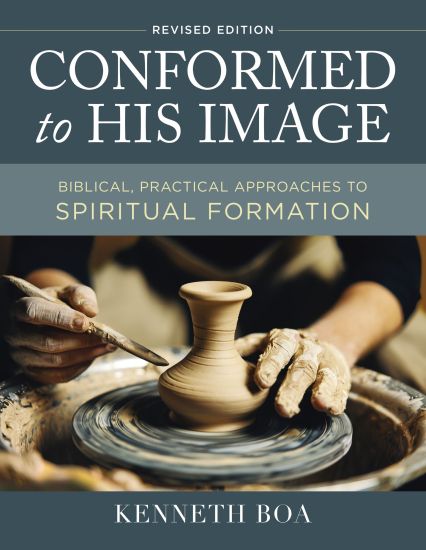
Conformed to His Image, Revised Edition
What does a real relationship with God look like? What is the biblical vision of true spiritual life? How do we grow in spiritual maturity? How we answer these questions influences the health, potency, and witness of Christians in an increasingly complex and hostile world.Conformed to His Image, Revised Edition answers these questions with clarity and insight, offering a comprehensive, balanced, and applicable guide to spiritual growth. Designed for use in college and seminary courses but also highly appropriate for any serious Christian wanting to grow, this revised edition helps readers build their lives on a fully biblical foundation. It offers a corrective to our tendency to narrow and compartmentalize spiritual growth by exploring twelve facets of authentic Christian spirituality, which include:Relational Spirituality: Loving God Completely, Ourselves Correctly, and Others CompassionatelyParadigm Spirituality: Cultivating an Eternal versus a Temporal PerspectiveDisciplined Spirituality: Engaging in the Historical DisciplinesExchanged Life Spirituality: Grasping Our True Identity in ChristMotivated Spirituality: A Set of Biblical IncentivesDevotional Spirituality: Growing in Relationship with GodHolistic Spirituality: Every Component of Life under the Lordship of ChristProcess Spirituality: Process versus Product, Being versus DoingSpirit-Filled Spirituality: Walking in the Power of the SpiritWarfare Spirituality: The World, the Flesh, and the DevilNurturing Spirituality: A Lifestyle of Evangelism and DiscipleshipCorporate Spirituality: Encouragement, Accountability, and WorshipWith chapter overviews and objectives, questions for personal application, a glossary, a list of key terms, and helpful appendices, Conformed to His Image, Revised Edition provides a defining text for the student, pastor, and church leader of today and tomorrow. This revised edition includes new recommended resources throughout, more recent examples of subjects discussed, and updated wording to better reflect our postmodern context.