Kirjojen hintavertailu. Mukana 12 366 141 kirjaa ja 12 kauppaa.

Kirjahaku

Etsi kirjoja tekijän nimen, kirjan nimen tai ISBN:n perusteella.

1000 tulosta hakusanalla Kevin Messerschmidt

USMLE Step 2 Triage

USMLE Step 2 Triage

Kevin Schwechten

Oxford University Press Inc
2010
nidottu
Step 2 Clinical Knowledge is one of the hardest exams you'll take in your medical training, and it's very important to do well! Preparation is the key that separates successful candidates from the rest. USMLE Step 2 Triage provides a thorough yet high-yield review for the exam, covering a gamut of frequently tested specialties and subspecialties with emphasis on pertinent principles of clinical science and patient-centered skills. Consistently organized, each topic is structured to provide the material in a manageable format, divided into several sections: "Symptoms," "Diagnosis," "Treatment," and "Take Home Points." USMLE Step 2 Triage is geared to facilitate the most comprehensive and efficient preparation for the exam; it is packed with tables and figures, and features 100 full color images. Written by the author of the popular USMLE Step 3 Triage and the USMLE Step 2 Clinical Skills Triage, this book will help deliver the best results for any student studying for the Step 2 Clinical Knowledge exam.
USMLE Step 2 Clinical Skills Triage

USMLE Step 2 Clinical Skills Triage

Kevin Schwechten

Oxford University Press Inc
2010
nidottu
USMLE Step 2 Clinical Skills Triage is the indispensable preparation book for the Step 2 Clinical Skills exam, presenting 40 high-yield patient-encounter cases that simulate the examination experience. Cases are organized for straightforward learning: a sample dialogue that mimics actual doctor-patient communication is followed by guidelines on performing the physical exam, ending the case, writing the patient note, and outlining the differential diagnosis. Comprehensive yet succinct, the cases address almost all possible exam scenarios, including telephone cases and "difficult patient" encounters. Each case contains detailed and relevant information on presenting complaints and conditions, with pertinent points highlighted and boxed for easy review. Written by the author of the popular USMLE Step 3 Triage, this book is optimal for either individual or group study and for any student interested in reviewing how to practice applying medical knowledge and patient-centered skills.
The Elephant in the Brain

The Elephant in the Brain

Kevin Simler; Robin Hanson

Oxford University Press Inc
2021
nidottu
Human beings are primates, and primates are political animals. Our brains, therefore, are designed not just to hunt and gather, but also to help us get ahead socially, often via deception and self-deception. But while we may be self-interested schemers, we benefit by pretending otherwise. The less we know about our own ugly motives, the better - and thus we don't like to talk or even think about the extent of our selfishness. This is "the elephant in the brain." Such an introspective taboo makes it hard for us to think clearly about our nature and the explanations for our behavior. The aim of this book, then, is to confront our hidden motives directly - to track down the darker, unexamined corners of our psyches and blast them with floodlights. Then, once everything is clearly visible, we can work to better understand ourselves: Why do we laugh? Why are artists sexy? Why do we brag about travel? Why do we prefer to speak rather than listen? Our unconscious motives drive more than just our private behavior; they also infect our venerated social institutions such as Art, School, Charity, Medicine, Politics, and Religion. In fact, these institutions are in many ways designed to accommodate our hidden motives, to serve covert agendas alongside their "official" ones. The existence of big hidden motives can upend the usual political debates, leading one to question the legitimacy of these social institutions, and of standard policies designed to favor or discourage them. You won't see yourself - or the world - the same after confronting the elephant in the brain.
Undaunted Mind

Undaunted Mind

Kevin J. Hayes

OXFORD UNIVERSITY PRESS INC
2025
sidottu
An exploration of the mind of one of America's most beloved Founding Fathers and most brilliant minds, through the books he read and his social circles in the United States and Europe. Arguably the most intellectual, creative, cosmopolitan, and curious of the Founding Fathers, Benjamin Franklin is the only top-tier Founder not to have served as president. Despite not becoming the Chief Executive, Franklin played an active role in American politics and served the aspiring and young United States in the key European capitals. His prodigious reading and appetite for learning are epic. As he did in works about Thomas Jefferson and George Washington, Kevin J. Hayes interprets the life and mind of Franklin through what he read. Undaunted Mind tells the story of the development of Franklin's intellect, starting with the earliest books he read as a child before examining his formal schooling and his independent study after his father pulled him from school. As an apprentice in his brother's printing house, Franklin's intellectual life developed through his contact with the Couranteers, the group of his brother's friends who contributed to his newspaper, and through his attention to his brother's excellent office library. After Franklin ran away to Philadelphia, he developed a new group of friends, all of whom loved reading. In many ways, the story of Franklin's intellectual odyssey is the story of the friends he made along the way. His time in London in his late teens introduced him to several important intellectuals who encouraged him to develop his mind. After returning to Philadelphia from London, he and some friends formed the Junto, a club for mutual improvement that made reading and writing important activities. With other members of the Junto, he formed the Library Company of Philadelphia, the first subscription library in colonial America. His role as a printer put him in contact with the best eighteenth-century American writing and kept a steady flow of imported books coming from Britain. He became a scientist, assembling a great scientific library, which helped his electrical research. An educational reformer, Franklin founded the Philadelphia Academy, which would become the University of Pennsylvania. As agent for the Pennsylvania Assembly, Franklin lived in London for many years, where he befriended some of Britain's greatest minds. Different concentrations of books in his library reveal Franklin's interests in travel and exploration, warfare, and slavery. His time in Paris toward the end of his life gave Franklin another great intellectual experience, but he ultimately returned home to live the last five years of his life in Philadelphia, where he imparted his knowledge and experience to a new generation of Americans. In this gripping work, Benjamin Franklin is given a biography as rich and complex as his own intellectual life by master literary historian Kevin J. Hayes.
The Problem of Immigration in a Slaveholding Republic

The Problem of Immigration in a Slaveholding Republic

Kevin Kenny

OXFORD UNIVERSITY PRESS INC
2023
sidottu
A powerful analysis of how regulation of the movement of enslaved and free black people produced a national immigration policy in the period between the American Revolution and the end of Reconstruction. Today the United States considers immigration a federal matter. Yet, despite America's reputation as a "nation of immigrants," the Constitution is silent on the admission, exclusion, and expulsion of foreigners. Before the Civil War, the federal government played virtually no role in regulating immigration, and states set their own terms for regulating the movement of immigrants, free blacks, and enslaved people. Insisting that it was their right and their obligation to protect the public health and safety, states passed their own laws prohibiting the arrival of foreign convicts, requiring shipmasters to post bonds or pay taxes for passengers who might become public charges, ordering the deportation of immigrant paupers, quarantining passengers who carried contagious diseases, excluding or expelling free blacks, and imprisoning black sailors. To the extent that these laws affected foreigners, they comprised the immigration policy of the United States. Offering an original interpretation of nineteenth-century America, The Problem of Immigration in a Slaveholding Republic argues that the existence, abolition, and legacies of slavery were central to the emergence of a national immigration policy. In the century after the American Revolution, states controlled mobility within and across their borders and set their own rules for community membership. Throughout the antebellum era, defenders of slavery feared that, if Congress gained control over immigration, it could also regulate the movement of free black people and the interstate slave trade. The Civil War and the abolition of slavery removed the political and constitutional obstacles to a national immigration policy, which was first directed at Chinese immigrants. Admission remained the norm for Europeans, but Chinese laborers were excluded through techniques of registration, punishment, and deportation first used against free black people in the antebellum South. To justify these measures, the Supreme Court ruled that immigration authority was inherent in national sovereignty and required no constitutional justification. The federal government continues to control admissions and exclusions today, while some states monitor and punish immigrants, and others offer sanctuary and refuse to act as agents of federal law enforcement. By revealing the tangled origins of border control, incarceration, and deportation, distinguished historian Kevin Kenny sheds light on the history of race and belonging in America, as well as the ongoing tensions between state and federal authority over immigration.
Augustine on Memory

Augustine on Memory

Kevin G. Grove

OXFORD UNIVERSITY PRESS INC
2021
sidottu
Augustine of Hippo, indisputably one of the most important figures for the study of memory, is credited with establishing memory as the inner source of selfhood and locus of the search for God. Yet, those who study memory in Augustine have never before taken into account his preaching. His sermons are the sources of memory's greatest development for Augustine. In Augustine's preaching, especially on the Psalms, the interior gives way to communal exterior. Both the self and search for God are re-established in a shared Christological identity and the communal labors of remembering and forgetting. This book opens with Augustine's early works and Confessions as the beginning of memory and concludes with Augustine's Trinity and preaching on Psalm 50 as the end of memory. The heart of the book, the work of memory, sets forth how ongoing remembering and forgetting in Christ are for Augustine are foundational to the life of grace. To that end, Augustine and his congregants go leaping in memory together, keep festival with abiding traces, and become forgetful runners like St. Paul. Remembering and forgetting in Christ, the ongoing work of memory, prove for Augustine to be actions of reconciliation of the distended experiences of human life-of praising and groaning, labouring and resting, solitude and communion. Augustine on Memory presents this new communal and Christological paradigm not only for Augustinian studies, but also for theologians, philosophers, ethicists, and interdisciplinary scholars of memory.
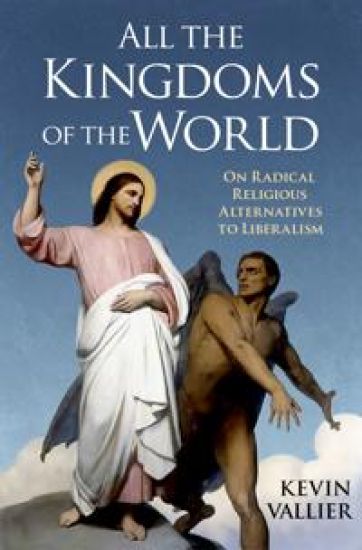
All the Kingdoms of the World

All the Kingdoms of the World

Kevin Vallier

OXFORD UNIVERSITY PRESS INC
2023
sidottu
A fresh assessment of Catholic integralism and other new and radical religious alternatives to liberal democracy. According to a common narrative, the twentieth century spelled the end of faith-infused political movements. Their ideologies, like Catholic integralism, would soon be forgotten. Humans were finally learning to keep religion out of politics. Or were we? In the twenty-first century, nations as diverse as Russia, India, Poland, and Turkey have seen a revival of religious politics, and many religious movements in other countries have proved similarly resilient. A new generation of political theologians passionately reformulate ancient religious doctrines to revolutionize modern political life. They insist that states recognize the true religion, and they reject modern liberal ideals of universal religious freedom and church-state separation. In this book, philosopher Kevin Vallier explores these new doctrines, not as lurid oddities but as though they might be true. The anti-liberal doctrine known as Catholic integralism serves as Vallier's test case. Yet his approach naturally extends to similar ideologies within Chinese Confucianism and Sunni Islam. Vallier treats anti-liberal thinkers with the respect that liberals seldom afford them and offers more moderate skeptics of liberalism a clear account of the alternatives. Many liberals, by contrast, will find these doctrines frightening and strange but of enduring interest. Vallier invites all his readers on a unique intellectual adventure, encouraging them to explore unfamiliar ideals through the lenses of theology, philosophy, politics, economics, and history.
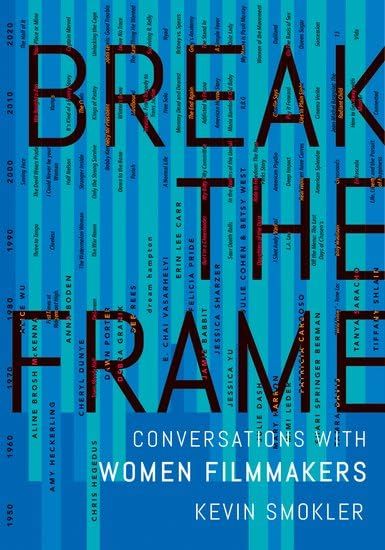
Break the Frame

Break the Frame

Kevin Smokler

OXFORD UNIVERSITY PRESS INC
2025
sidottu
A diverse group of women filmmakers speak for themselves about their careers and their work In the twenty-first century alone, women filmmakers have succeeded at directing every size, genre, and style of motion picture. Their movies have won Oscars (Free Solo), made actors into household names (Jennifer Lawrence in Winter's Bone), received induction into the Library of Congress's National Film Registry (Real Women Have Curves), and become worldwide box office phenomena (Captain Marvel, Deep Impact). Nevertheless in 2023, the year of Barbie, women directed only 12% of the top 250 movies in America. demonstrating how far moviemaking remains from gender parity. When women filmmakers succeed, they do so against these odds. Break the Frame is a collection of 24 career-spanning interviews with America's celebrated, reigning, and rising women filmmakers. Each conversation considers the director's complete filmography as a map of their evolving artistry and evidence of their unassailable contributions to a historically misogynist industry. Author Kevin Smokler listens as women filmmakers speak to the struggle and triumphs of developing and directing movies that are shaping how the film business sees women in the director's chair, and how their audiences see themselves and each other. This book is both an opportunity and invitation to devote one's time, admiration and enthusiasm to movies directed by women.
Dispatches from the AIDS Pandemic

Dispatches from the AIDS Pandemic

Kevin M. De Cock; Harold W. Jaffe; James W. Curran

OXFORD UNIVERSITY PRESS INC
2023
sidottu
Dispatches from the AIDS Pandemic is a unique firsthand account from three public health leaders of CDC's early response to AIDS. Drawing in part on interviews from the CDC's AIDS oral history project, the authors trace the evolution of AIDS from newly recognized disease to pandemic. The first section outlines the earliest days of the epidemic within the United States and the initial prevention strategies. The second section expands the borders of the response to Africa and Thailand, where CDC conducted its first international work on AIDS. The final section closes with an overview of the scientific and public health advancements that followed and the historic community activism that spurred essential funding and partnerships for the development of life-saving interventions. Authentic and insightful, Dispatches from the AIDS Pandemic provides an authoritative account of an epidemic and its central role in the expansion of global public health.
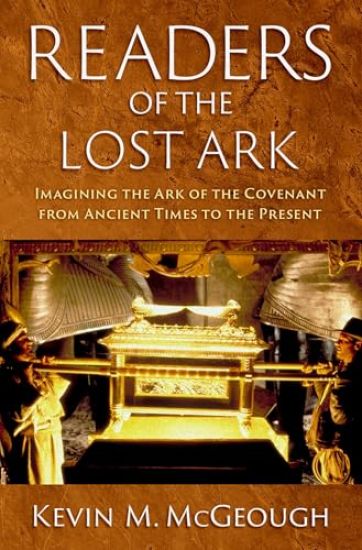
Readers of the Lost Ark

Readers of the Lost Ark

Kevin M. McGeough

OXFORD UNIVERSITY PRESS INC
2025
sidottu
The sacred chest said to have been built by the Israelites to house the stone tablets on which the Ten Commandments were written, the Ark of the Covenant has long captured the popular imagination. According to the Bible, the Israelites carried it with them as they wandered in the wilderness and entered the promised land. After the Temple of Solomon was built, the Ark was kept in an inner sanctum where God made his divine presence felt to the Israelites. The Hebrew Bible is unclear about what happened to the Ark after the destruction of the temple and offers vague accounts of its function. Despite (or because of) this ambiguity, the Ark continues to hold an important place in Jewish and Christian tradition, even in its absence, and has led to much popular speculation. Widely imagined and re-imagined, it is perhaps today best known in popular culture as the object sought by Indiana Jones in the 1981 film Raiders of the Lost Ark. In Readers of the Lost Ark Kevin McGeough explores the different ways people have interpreted and made sense of the Ark from ancient times to the present, in biblical literature, theological discourse, art, popular film, travel souvenirs, toys, faith-healing events, and alternative histories. The book recounts stories of people who have sought to find the Ark of the Covenant and examines how the Ark takes on new meanings in Europe, North America, East Asia, Ethiopia, and the modern Middle East.
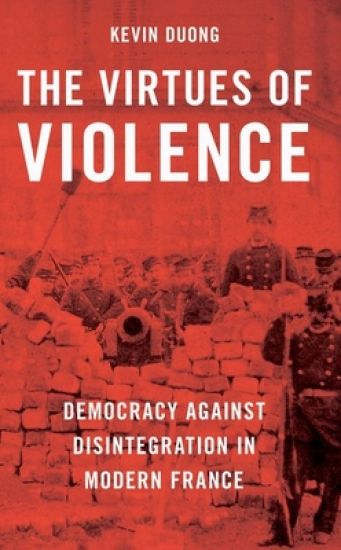
The Virtues of Violence

The Virtues of Violence

Kevin Duong

OXFORD UNIVERSITY PRESS INC
2022
nidottu
If democracy liberates individuals from their inherited bonds, what can reunite them into a sovereign people? In The Virtues of Violence, Kevin Duong argues that one particular answer captivated modern French thinkers: popular violence as social regeneration. In this tradition of political theory, the people's violence was not a sign of anarchy or disorder. Instead, it manifested a redemptive power capable of binding and repairing a society on the cusp of social disintegration. This was not a fringe view of French democracy at the time, but central to its momentous development. Duong analyzes the recurring role of the people's redemptive violence across four historical moments: the French Revolution, the imperial conquest of Algeria, the Paris Commune, and the years leading up to World War I. Bringing together democratic theory and intellectual history, he reveals how political thinkers across the spectrum proclaimed that violence by the people could repair the social fabric, even as they experienced democratization as social disintegration. The path from an anarchic multitude to an organized democratic society required the virtuous expression of violence by the people--not its prohibition. Duong's book urges us to reject accounts that view redemptive violence as an antidemocratic pathology. It challenges the long-held view that popular violence is a sign of anarchy or disorder. As shocking and unsettling as redemptive violence could be, it appealed to thinkers across the spectrum, because it answered a fundamental dilemma of political modernity: how to replace the severed bonds of the old regime with a superior democratic social bond. The Virtues of Violence argues we do not properly understand modern democracy unless we can understand why popular redemptive violence could be invoked on its behalf.
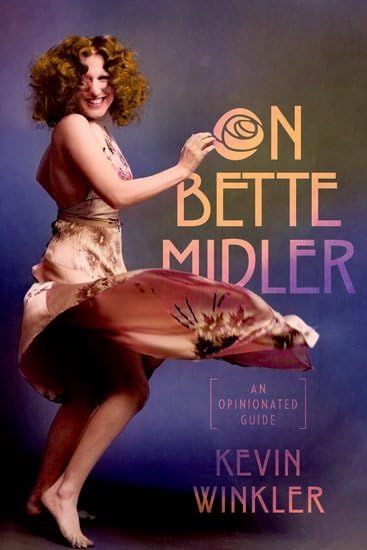
On Bette Midler

On Bette Midler

Kevin Winkler

OXFORD UNIVERSITY PRESS INC
2024
sidottu
Bette Midler today is a beloved legacy star, best known for her comic witch in Disney's Hocus Pocus (1993) and its 2022 sequel. She has also gained prominence for sentimental, anthemic ballads like "Wind Beneath My Wings," her initiation of green space projects in New York City, and tussling with Donald Trump on Twitter. Her profile is that of an articulate, civic-minded matriarch enjoying thoroughly mainstream stardom. But more than fifty years earlier she emerged from the steam of the subterranean Continental Baths as the Divine Miss M, the bawdy, campy, fearless alter ego she created in front of an audience of towel-clad gay men who came to the baths seeking not just sex, but a sense of community and safety from an often-harrowing outside world. "I was able to take chances on that stage that I could not have taken anywhere else," she later wrote. "Ironically, I was freed from fear by people who, at the time, were ruled by fear. And for that I will always be grateful." Overnight, Bette Midler became a much-loved icon of the gay community. The Divine Miss M coalesced gay, Jewish, feminist, and show business sensibilities into an outrageously funny and emotionally compelling persona that travelled with surprising ease from the cultural margins to the entertainment mainstream. Her embrace by mom-and-pop audiences, rock fans and critics, and the guardians of middle-of-the-road show business demonstrates just how deeply the tastes and sensibilities of her original audience have been absorbed into popular culture. On Bette Midler: An Opinionated Guide traces the early development of Midler's performing ethos from New York's downtown experimental theater scene and examines her impact across media, with chapters on the soaring highs (and occasional cringe-worthy lows) of her stage work, movies, recordings, and television appearances, and considers her influence as an environmental activist and social media presence. On Bette Midler features performance analysis and deeply researched background information, all of it supporting informed--and divinely opinionated--consideration of Midler the artist. It judges her work by the highest standards: those she established for herself.
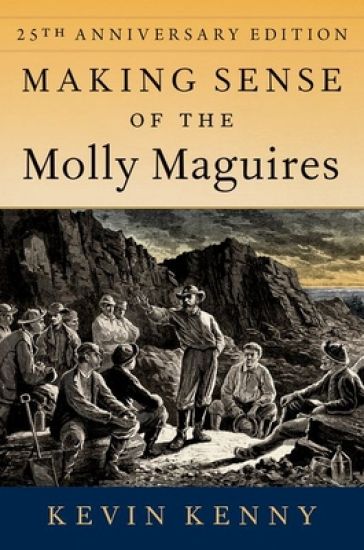
Making Sense of the Molly Maguires

Making Sense of the Molly Maguires

Kevin Kenny

OXFORD UNIVERSITY PRESS INC
2023
nidottu
Twenty Irish immigrants, suspected of belonging to a secret terrorist organization called the Molly Maguires, were executed in Pennsylvania in the 1870s for the murder of sixteen men. Ever since, there has been enormous disagreement over who the Molly Maguires were, what they did, and why they did it, as virtually everything we now know about the Molly Maguires is based on the hostile descriptions of their contemporaries. Arguing that such sources are inadequate to serve as the basis for a factual narrative, Kevin Kenny examines the ideology behind contemporary evidence to explain how and why a particular meaning came to be associated with the Molly Maguires in Ireland and Pennsylvania. At the same time, this work examines new archival evidence from Ireland that establishes that the American Molly Maguires were a rare transatlantic strand of the violent protest endemic in the Irish countryside. Combining social and cultural history, Making Sense of the Molly Maguires offers a new explanation of who the Molly Maguires were, as well as why people wrote and believed such curious things about them. In the process, it vividly retells one of the classic stories of American labor and immigration. In the twenty-fifth anniversary edition, a new preface reflects on the original work, immigration and labor history today, and the enduring memory of the Molly Maguires in American popular culture.
The Compleat Victory

The Compleat Victory

Kevin J. Weddle

OXFORD UNIVERSITY PRESS INC
2024
nidottu
Winner of the Gilder Lehrman Military History Prize, Winner of the Fraunces Tavern Museum Book Award, Winner of The Society of the Cincinnati Prize & Winner of the National Society Daughters of the American Revolution 2024 NASDR Excellence in American History Book Award In The Compleat Victory, award-winning military historian Kevin J. Weddle traces an epic panorama of strategy and chance--from London, to Quebec, to Philadelphia, to New York--that ultimately led to the decisive conclusion at Saratoga. In the late summer and fall of 1777, after two years of indecisive fighting on both sides, the outcome of the American War of Independence hung in the balance. Having successfully expelled the Americans from Canada in 1776, the British were determined to end the rebellion the following year and devised what they believed a war-winning strategy, sending General John Burgoyne south to rout the Americans and take Albany. When British forces captured Fort Ticonderoga with unexpected ease in July of 1777, it looked as if it was a matter of time before they would break the rebellion in the North. Less than three and a half months later, however, a combination of the Continental Army and Militia forces, commanded by Major General Horatio Gates and inspired by the heroics of Benedict Arnold, forced Burgoyne to surrender his entire army. The American victory stunned the world and changed the course of the war. Kevin J. Weddle offers the most authoritative history of the Battle of Saratoga to date, explaining with verve and clarity why events unfolded the way they did. In the end, British plans were undone by a combination of distance, geography, logistics, and an underestimation of American leadership and fighting ability. Taking Ticonderoga had misled Burgoyne and his army into thinking victory was assured. Saratoga, which began as a British foraging expedition, turned into a rout. The outcome forced the British to rethink their strategy, inflamed public opinion in England against the war, boosted Patriot morale, and, perhaps most critical of all, led directly to the Franco-American alliance. Weddle unravels the web of contingencies and the play of personalities that ultimately led to what one American general called "the Compleat Victory."
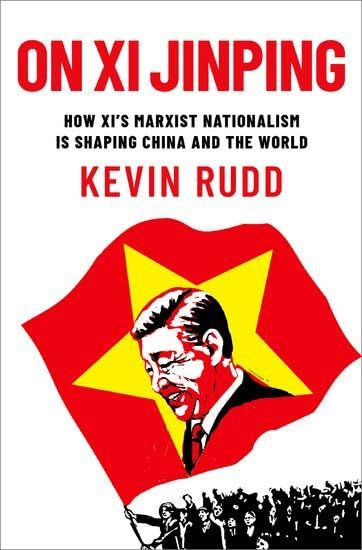
On Xi Jinping

On Xi Jinping

Kevin Rudd

OXFORD UNIVERSITY PRESS INC
2025
sidottu
An authoritative account of Xi Jinping's worldview and how it drives Chinese behaviour both domestically and on the world stage. In his new book, On Xi Jinping, former Australian Prime Minister Kevin Rudd provides an authoritative account of the ideological worldview driving Chinese behaviour both domestically and on the world stage--that of President Xi Jinping, who now hold near-total control over the Chinese Communist Party and is now, in effect, president-for-life. Rudd argues that Xi's worldview differs significantly from those of the leaders who preceded him, and that this ideological shift is reflected in the real world of Chinese policy and behaviour. Focusing on China's domestic politics, political economy, and foreign policy, Rudd characterises Xi Jinping's ideological framing of the world as "Marxist-Leninist nationalism." According to Rudd, Xi's notion of Leninism has taken the party and Chinese politics further to the left in comparison to his predecessors. Also, his Marxism has also taken Chinese economic thinking to the left-in a more decisively more statist direction and away from the historical dynamism of the private sector. However, Chinese nationalism under Xi has moved further to the right- towards a much, harder-edged, foreign policy vision of China and a new determination to change the international status quo. Xi's worldview is an integrated one, where his national ideological vision for China's future is ultimately inseparable from his view on China's position in the region and the world. These changes in worldview are also reflected in Xi's broader rehabilitation of the concept of "struggle" as a legitimate concept for the conduct of both Chinese domestic and foreign policy--a struggle that need not necessarily always be peaceful. Finally, Xi's ideological worldview also exhibits a new level of nationalist self-confidence about China's future--derived from China's historical and civilizational strengths but reinforced by his Marxist-Leninist concept of historical determinism and the belief that the tides of history are now on firmly China's side. A powerful analysis of the worldview of arguably the most consequential world leader of our era, this will be essential reading for anyone interested in how Xi is transforming both China and the international order, and, most importantly, why?
The Architects of Dignity

The Architects of Dignity

Kevin D. Pham

OXFORD UNIVERSITY PRESS INC
2024
nidottu
Vietnam has long been a crossroads of empires and thus a site of rich cross-cultural intellectual exchange. In The Architects of Dignity, Kevin Pham is the first political theorist to introduce Vietnamese political thought to debates in political theory, showing how Vietnamese thinkers challenge Western conventional wisdom. Drawing on Vietnamese and French language material, Pham traces an intergenerational debate among six influential Vietnamese intellectuals and political leaders who had competing visions for how the Vietnamese should strengthen themselves to stand up to French colonial domination. As theorists from a peripheral nation, they struggled to identify a national cultural heritage to be proud of or take guidance from. Rather than despair, they harnessed feelings of shame for their anti-colonial and nation-building projects. In doing so, they offer conceptions of shame and dignity that depart from mainstream conceptions in existing scholarship. While postcolonial theory typically views shame as destructive false consciousness, these thinkers show how a nation can harness shame in anticolonial, productive, and self-affirming ways, namely by synthesizing Eastern and Western ideas to be architects of their own dignity. And while dignity is typically understood as something inherent in individuals, as a justification for rights, and as requiring recognition, these thinkers saw dignity as a property of nations, as rooted in the duties a nation's people embrace instead of in the qualities of persons, and as something to be asserted by the nation instead of being dependent on recognition by colonizers.
The End of Binaries

The End of Binaries

Kevin Richardson

OXFORD UNIVERSITY PRESS INC
2025
sidottu
We live in a world in which the boundaries of gender and sexual orientation are increasingly being contested. Gender categories like man and woman cannot do justice to non-binary, genderqueer, and trans people. Common categories of sexual orientation, like heterosexual and homosexual, are unhelpful for understanding a new generation of people whose sexual identities do not neatly fit within those categories. These various social binaries-man/woman, heterosexual/homosexual--are now a fraught way to understand social identity. At the same time as there is resistance to these binaries, there are also those who reinforce and protect them. Across the United States and other countries, there has been a wave of legislation targeting perceived threats to the gender binary system. Books with trans characters are being removed from the shelves of public libraries. There is a surge of legislation prohibiting trans women from using women's restrooms. There is legislation that challenges the legality of drag performances. All of these efforts are attempts to preserve the dominant gender and sexuality binaries. The End of Binaries articulates a philosophical alternative to these binary ways of thinking about gender and sexuality. It proposes a spatial theory of gender and sexuality, where a person's gender or sexuality should be understood as a location within a multidimensional space. Just as the boundaries of countries divide up geographical territories, social boundaries divide up regions of gender and sexuality space. And just as each person has an exact location represented by a GPS coordinate, each person has a gender and sexual location that represents their distinctive way of being gendered or sexually oriented. The spatial approach to gender and sexuality fundamentally understands gender and sexuality as complex, diverse, and continuous. The spatial framework is a more accurate (and more just) way to understand the diversity of gender and sexuality.
The End of Binaries

The End of Binaries

Kevin Richardson

OXFORD UNIVERSITY PRESS INC
2026
nidottu
We live in a world in which the boundaries of gender and sexual orientation are increasingly being contested. Gender categories like man and woman cannot do justice to non-binary, genderqueer, and trans people. Common categories of sexual orientation, like heterosexual and homosexual, are unhelpful for understanding a new generation of people whose sexual identities do not neatly fit within those categories. These various social binaries-man/woman, heterosexual/homosexual--are now a fraught way to understand social identity. At the same time as there is resistance to these binaries, there are also those who reinforce and protect them. Across the United States and other countries, there has been a wave of legislation targeting perceived threats to the gender binary system. Books with trans characters are being removed from the shelves of public libraries. There is a surge of legislation prohibiting trans women from using women's restrooms. There is legislation that challenges the legality of drag performances. All of these efforts are attempts to preserve the dominant gender and sexuality binaries. The End of Binaries articulates a philosophical alternative to these binary ways of thinking about gender and sexuality. It proposes a spatial theory of gender and sexuality, where a person's gender or sexuality should be understood as a location within a multidimensional space. Just as the boundaries of countries divide up geographical territories, social boundaries divide up regions of gender and sexuality space. And just as each person has an exact location represented by a GPS coordinate, each person has a gender and sexual location that represents their distinctive way of being gendered or sexually oriented. The spatial approach to gender and sexuality fundamentally understands gender and sexuality as complex, diverse, and continuous. The spatial framework is a more accurate (and more just) way to understand the diversity of gender and sexuality.
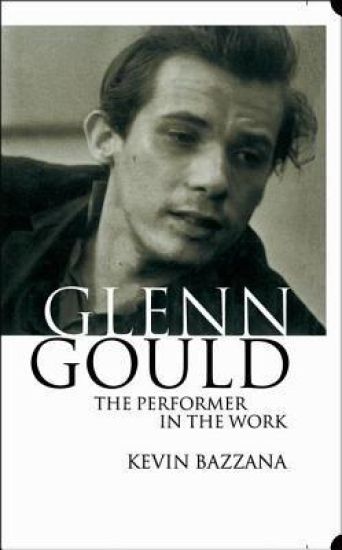
Glenn Gould: The Performer in the Work

Glenn Gould: The Performer in the Work

Kevin Bazzana

Oxford University Press
1997
sidottu
This book is a detailed study of the Canadian pianist, broadcaster, writer, and composer Glenn Gould (1932-82). While focussed primarily on his performances, it also situates his work and thought more broadly within relevant musical, cultural, intellectual, and historical contexts. It incorporates most of the existing primary and secondary literature on Gould, as well as many ideas, interpretations, and perspectives that have never before been offered. It alsoincorporates ideas from a wide range of literature, both musical and otherwise, and has benefitted from on-site research at The Glenn Gould Papers in the National Library of Canada. The book offers a more comprehensive, balanced, and thoroughly researched portrait of Gould as pianist and interpreterthan any previous volume in the Gould literature. Following an introduction that summarizes Gould's career and the posthumous interest in him, the book divides into two parts. Part 1, `Premises', focuses on the intellectual and aesthetic ideas that informed Gould's performances, and draws on literature from many fields, including music history and aesthetics, cultural history, the history of performance practice, theatre, literary criticism, and music analysis. The three large chapters of Part 1 cover a wide range of topics: Gould'sidealism, views on the musical work, musical tastes, and repertoire; his position on the role of the performer; the analytical, critical, and ethical discourses embodied in his performances; and his approach to performance in the contexts of Romanticism, modernism, neo-Classicism, post-structuralism, thehistorical performance movement, twentieth-century theatrical and literary practices, and cultural currents in the 1950s and 1960s. Part 2, `Practices', focuses in detail on Gould the pianist, illuminating important features of his style through prose description and critical analysis, and including graphic musical examples and plates. This second part focusses on specific aspects of Gould's performance practices: his relationship to the piano; his approach to counterpoint, rhythm, dynamics, articulation and phrasing, and ornamentation; and his uses of recording technology as a kind of performance practice. A conclusionserves in part as a summary of previous findings, but also discusses how, in light of these findings, Gould's work as a performer might ultimately be assessed.