Kirjojen hintavertailu. Mukana 12 016 292 kirjaa ja 12 kauppaa.

Kirjahaku

Etsi kirjoja tekijän nimen, kirjan nimen tai ISBN:n perusteella.

1000 tulosta hakusanalla Kevin van Whye

Music, Criticism, and the Challenge of History

Music, Criticism, and the Challenge of History

Kevin Karnes

Oxford University Press Inc
2016
nidottu
More than a century after Guido Adler's appointment to the first chair in musicology at the University of Vienna, Music, Criticism, and the Challenge of History provides a first look at the discipline in this earliest period, and at the ideological dilemmas and methodological anxieties that characterized it upon its institutionalization. Author Kevin Karnes contends that some of the most vital questions surrounding musicology's disciplinary identities today-the relationship between musicology and criticism, the role of the subject in analysis and the narration of history, and the responsibilities of the scholar to the listening public-originate in these conflicted and largely forgotten beginnings. Karnes lays bare the nature of music study in the late nineteenth century through insightful readings of long-overlooked contributions by three of musicology's foremost pioneers-Adler, Eduard Hanslick, and Heinrich Schenker. Shaped as much by the skeptical pronouncements of the likes of Nietzsche and Wagner as it was by progressivist ideologies of scientific positivism, the new discipline comprised an array of oft-contested and intensely personal visions of music study, its value, and its future. Karnes introduces readers to a Hanslick who rejected the call of positivist scholarship and dedicated himself to penning an avowedly subjective history of Viennese musical life. He argues that Schenker's analytical experiments had roots in a Wagner-inspired search for a critical alternative to Adler's style-obsessed scholarship. And he illuminates Adler's determined response to Nietzsche's warnings about the vitality of artistic and cultural life in an increasingly scientific age. Through sophisticated and meticulous presentation, Music, Criticism, and the Challenge of History demonstrates that the new discipline of musicology was inextricably tied in with the cultural discourse of its time.
The Oxford Handbook of Cognitive Neuroscience

The Oxford Handbook of Cognitive Neuroscience

Kevin N Ochsner; Stephen M Kosslyn

Oxford University Press Inc
2016
nidottu
Cognitive neuroscience has grown into a rich and complex discipline, some 35 years after the term was coined. Given the great expanse of the field, an inclusive and authoritative resource such as this handbook is needed for examining the current state-of-the-science in cognitive neuroscience. Spread across two volumes, the 59 chapters included in this handbook systemically survey all aspects of cognitive neuroscience, spanning perception, attention, memory, language, emotion, self and social cognition, higher cognitive functions, and clinical applications. Additional chapters cover topics ranging from the use of top-down cognitive processes in visual perception to the representation and recognition of objects and spatial relations; attention and its relationship to action as well as visual motor control; language and related core abilities including semantics, speech perception and production, the distinction between linguistic competence and performance, and the capacity for written language. Special coverage is also given to chapters describing the psychopharmacology of cognition, the theory of mind, the neuroscience underlying the regulation of emotion, and neuropsychological and neuroimaging evidence that supports the special status of self-knowledge in memory. This handbook provides a comprehensive compendium of research on cognitive neuroscience that will be widely accessible to students, researchers, and professionals working in this exciting and growing field.
Must Politics Be War?

Must Politics Be War?

Kevin Vallier

Oxford University Press Inc
2019
sidottu
Americans today are far less likely to trust their institutions, and each other, than in decades past. This collapse in social and political trust arguably fuels our increasingly ferocious ideological conflicts and hardened partisanship. Many believe that our previously high levels of trust and bipartisanship were a pleasant anomaly and that we now live under the historic norm. Seen this way, politics itself is nothing more than a power struggle between groups with irreconcilable aims: contemporary American politics is war because political life as such is war. Must Politics Be War? argues that our shared liberal democratic institutions have the unique capacity to sustain social and political trust between diverse persons. In succinct, convincing prose, Kevin Vallier argues that constitutional rights and democratic governance prevent any one ideology or faith from dominating all others, thereby protecting each person's freedom to live according to her values and principles. Illiberal arrangements, where one group's ideology or faith reigns, turn those who disagree into unwilling subversives, persons with little reason to trust their regime or to be trustworthy in obeying it. Liberal arrangements, in contrast, incentivize trust and trustworthiness because they allow people with diverse and divergent ends to act with conviction. Those with opposing viewpoints become trustworthy because they can obey the rules of their society without acting against their ideals. Therefore, as Vallier illuminates, a liberal society is one at moral peace with a politics that is not war.
Perceptual Learning

Perceptual Learning

Kevin Connolly

Oxford University Press Inc
2019
sidottu
Experts from wine tasters to radiologists to bird watchers have all undergone perceptual learning-long-term changes in perception that result from practice or experience. Philosophers have been discussing such cases for centuries, from the 14th-century Indian philosopher Vedanta Desika to the 18th-century Scottish philosopher Thomas Reid, and into contemporary times. This book uses recent evidence from psychology and neuroscience to show that perceptual learning is genuinely perceptual, rather than post-perceptual. It also offers a taxonomy for classifying cases in the philosophical literature. In some cases, perceptual learning involves changes in how one attends; in other cases, it involves a learned ability to differentiate two properties, or to perceive two properties as unified. Connolly uses this taxonomy to rethink several domains of perception in terms of perceptual learning, including multisensory perception, color perception, and speech perception. As a whole, the book offers a theory of the function of perceptual learning. Perceptual learning embeds into our quick perceptual systems what would be a slower task were it to be done in a controlled, cognitive manner. A novice wine taster drinking a Cabernet Sauvignon might have to think about its features first and then infer the type of wine, while an expert can identify it immediately. This learned ability to immediately identify the wine enables the expert to think about other things like the vineyard or the vintage of the wine. More generally, perceptual learning serves to free up cognitive resources for other tasks. This book offers a comprehensive empirically-informed account, and explores the nature, scope, and theoretical implications of perceptual learning.
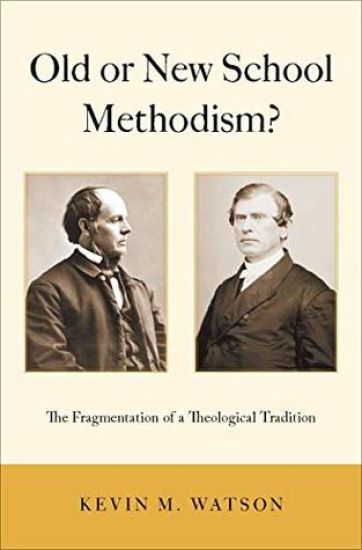
Old or New School Methodism?

Old or New School Methodism?

Kevin M. Watson

Oxford University Press Inc
2019
sidottu
On September 7, 1881, Matthew Simpson, Bishop in the Methodist Episcopal Church, in a London sermon asserted that: "As to the divisions in the Methodist family, there is little to mar the family likeness." Nearly a quarter-century earlier, Benjamin Titus (B.T.) Roberts, a minister in the same branch of Methodism as Simpson, had published an article in the Northern Independent in which he argued that Methodism had split into an "Old School" and "New School." He warned that if the new school were to "generally prevail," then "the glory will depart from Methodism." As a result of this article, Roberts was charged with "unchristian and immoral conduct" and expelled from the Genesee Conference of the Methodist Episcopal Church (MEC). Old or New School Methodism? examines how less than three decades later Matthew Simpson could claim that the basic beliefs and practices that Roberts had seen as threatened were in fact a source of persisting unity across all branches of Methodism. Kevin Watson argues that B. T. Roberts's expulsion from the MEC and the subsequent formation of his Free Methodist Church represent a crucial moment of transition in American Methodism. This book challenges understandings of American Methodism that emphasize its breadth and openness to a variety of theological commitments and underemphasize the particular theological commitments that have made it distinctive and have been the cause of divisions over the past century and a half. Old or New School Methodism? fills a major gap in the study of American Methodism from the 1850s to 1950s through a detailed study of two of the key figures of the period and their influence on the denomination.
Trust in a Polarized Age

Trust in a Polarized Age

Kevin Vallier

Oxford University Press Inc
2020
sidottu
Americans today don't trust each other and their institutions as much as they once did. The collapse of social and political trust has arguably fueled our increasingly ferocious ideological conflicts and hardened partisanship. But is today's decline in trust inevitable or avoidable? Are we caught in a downward spiral that must end in institutional decay or even civil war, or can we restore trust through our shared social institutions? In Trust in a Polarized Age, political philosopher Kevin Vallier offers a powerful counter-narrative to the prevailing sense of hopelessness that dogs the American political landscape. In an unapologetic defense of liberalism that synthesizes political philosophy and empirical trust research, Vallier restores faith in our power to reduce polarization and rebuild social and political trust. The solution is to strengthen liberal democratic political and economic institutions--high-quality governance, procedural fairness, markets, social welfare programs, freedom of association, and democracy. These institutions not only create trust, they do so justly, by recognizing and respecting our basic human rights. Liberal institutions have safeguarded trust through the most tumultuous periods of our history. If we heed the arguments and data in this book, trust could return.
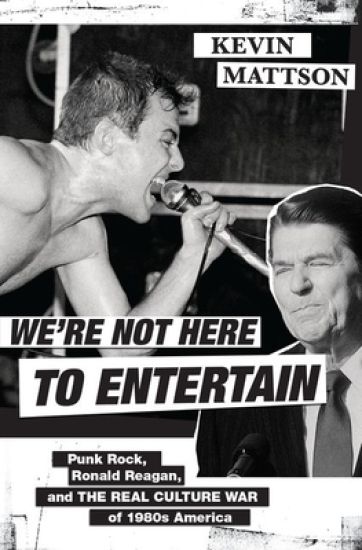
We're Not Here to Entertain

We're Not Here to Entertain

Kevin Mattson

Oxford University Press Inc
2020
sidottu
We remember the 1980s as the era of Ronald Reagan, a conservative decade populated by preppies and yuppies dancing to a soundtrack of electronic synth pop music (the "MTV generation"). But the decade also produced some of the most creative works of punk rock - not just the music of bands like the Minutemen and the Dead Kennedys, but also visual arts, literature, poetry, and film. Kevin Mattson documents what Kurt Cobain once called a "punk rock world." He shows just how widespread the movement became, and how democratic (not at all New York-centric), due to its commitment to Do-It-Yourself (DIY) ethics. Mattson puts this movement into a wider context, telling about a culture war that punks opened up against the sitting president. Reagan's talk about end days and nuclear warfare made kids panic; his tax cuts for the rich and simultaneous slashing of school lunch program funding made punks seethe at his meanness. The anger went deep, since punks saw Reagan as the country's entertainer-in-chief - his career (from radio to Hollywood and television) synched to the very world punks rejected. Through deep archival research, Mattson reignites the heated debates that punk's opposition generated - about everything from "straight edge" ethics to anarchism to the art of dissent. By reconstructing the world of punk, Mattson shows that it was more than just a style of purple hair and torn jeans. And in so doing, he reminds readers of its importance and its challenge to simplistic assumptions about the 1980s as a one-dimensional, conservative epoch.
George Washington

George Washington

Kevin J. Hayes

Oxford University Press Inc
2020
nidottu
When it comes to the Founding Fathers, Thomas Jefferson, Benjamin Franklin, and Alexander Hamilton are generally considered the great minds of early America. George Washington, instead, is toasted with accolades regarding his solid common sense and strength in battle. Indeed, John Adams once snobbishly dismissed him as "too illiterate, unlearned, unread for his station and reputation." Yet Adams, as well as the majority of the men who knew Washington in his life, were unaware of his singular devotion to self-improvement. Based on a comprehensive amount of research at the Library of Congress, the collections at Mount Vernon, and rare book archives scattered across the country, Kevin J. Hayes corrects this misconception and reconstructs in vivid detail the active intellectual life that has gone largely unnoticed in conventional narratives of Washington. Despite being a lifelong reader, Washington felt an acute sense of embarrassment about his relative lack of formal education and cultural sophistication, and in this sparkling literary biography, Hayes illustrates just how tirelessly Washington worked to improve. Beginning with the primers, forgotten periodicals, conduct books, and classic eighteenth-century novels such as Tom Jones that shaped Washington's early life, Hayes studies Washington's letters and journals, charting the many ways the books of his upbringing affected decisions before and during the Revolutionary War. The final section of the book covers the voluminous reading that occurred during Washington's presidency and his retirement at Mount Vernon. Throughout, Hayes examines Washington's writing as well as his reading, from The Journal of Major George Washington through his Farewell Address. The sheer breadth of titles under review here allow readers to glimpse Washington's views on foreign policy, economics, the law, art, slavery, marriage, and religion-and how those views shaped the young nation.. Ultimately, this sharply written biography offers a fresh perspective on America's Father, uncovering the ideas that shaped his intellectual journey and, subsequently, the development of America.
Short Too!

Short Too!

Kevin Crossley-Holland

Oxford University Press
2011
nidottu
Award-winning author, Kevin Crossley-Holland, follows the success of Short, with Short Too!, an inspirational collection for short story writers where even the longest story is very short. A wonderful mix of the best short stories. Some are old, some are new, some are scary, some are funny, but all the stories in this book will make you think. There's Tarvaa and the terrible plague, a bagful of butterflies, ghostly tales from the beyond the grave, and the short life of Barbara the Lamb Who Froze to Death. Baa! Brr! Ahh!
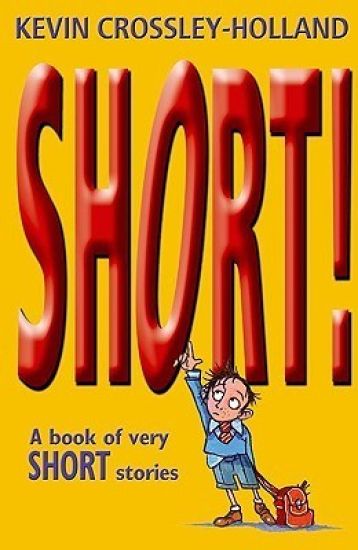
Short!

Short!

Kevin Crossley-Holland

Oxford University Press
1998
nidottu
In this wonderful collection of very short stories from award-winning author, Kevin Crossley-Holland, none of the stories is more than two pages long, and some are much shorter. There are stories about ghosts, supermarkets, animals, adventures, and all kinds of things to inspire every short story writer.
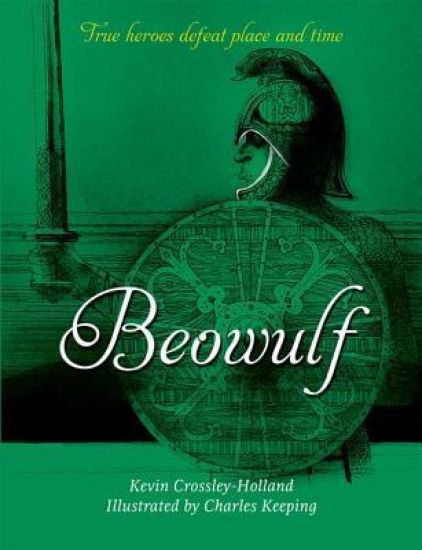
Beowulf

Beowulf

Kevin Crossley-Holland

Oxford University Press
2013
nidottu
'For a long while Beowulf leaned on the blood-stained sword; his heart was pounding. A man with the strength of thirty! Slayer of Grendel and slayer of the sea-wolf! A hero without equal in this middle-world!' The story of Beowulf was written down as an epic poem in Anglo-Saxon England. It recounts the heroic struggles of one man against supernatural monsters. Kevin Crossley-Holland's retelling unleashes the excitement in this tale of the triumph of good over evil, while unforgettable illustrations from Charles Keeping capture every brooding moment and explosive episode. This new edition features rescanned artwork to capture the breath-taking detail of Keeping's illustrations and a striking new cover.
The Future of the Book

The Future of the Book

Kevin J. Hayes

Oxford University Press
2022
sidottu
The Future of the Book: Images of Reading in the American Utopian Novel looks at how turn-of-the-century utopian novelists imagined what the book would be like in the ideal future. This works examines many different aspects of book culture. One chapter looks at the utopian residential library, both its contents and its personal and social functions. In the ideal future, everyone has books in their home. Another chapter discusses the public library in utopia. Many of the innovations the utopian novelists imagined correct problems that real public libraries faced in late nineteenth-century America. In utopia, everyone knows how to use the public library. A third chapter shifts the discussion of books and reading from the place of consumption to the place of production, looking at the role of the author in utopia. This chapter also attempts to answer a vexing question: Can an ideal world produce great literature? The utopian novelists said yes, but the novels they imagined in the future make their conclusions more circumspect. A parallel chapter studies what the utopian newspaper would be like. Some utopian novelists projected alternative news media, foreseeing technology that anticipated television and the internet. The final chapter examines what printed books would look like in the ideal future, looking at graphic design, universal languages, and methods to assure that the books would be printed without censorship or editorial intrusion.
Particulate and Granular Magnetism

Particulate and Granular Magnetism

Kevin O'Grady; Gonzalo Vallejo Fernandez; Atsufumi Hirohata

Oxford University Press
2023
sidottu
Aimed primarily at experimental chemists, physicists, electronic engineers and material scientists interested in particulate and granular magnetic materials, this textbook is the culmination of over 40 years' research into the subject. The text is divided into two parts. Part One covers the basic physics of magnetism from a relatively low level, including an explanation of some of the unusual terminology in magnetism such as the idea of poles and flux, whose origins are little understood. The complexity of the unit systems in magnetism are also presented. Thereafter a brief review of the principles of domain theory is presented and thermal activation effects and their correct measurement are discussed in some detail. The topic of exchange bias, where an antiferromagnetic material is grown in intimate contact with a ferromagnet, is presented in significant detail reviewing old theories and numerical models but then focusing on what has become known as the York Model of Exchange Bias which is now universally accepted as the model which describes the behaviour of exchange bias systems when grown in the form of granular thin films. In Part Two a detailed description of ferrofluids is presented including a simple method for their preparation and the various engineering applications in vacuum seals, loudspeakers, sink float separation and the alignment of non-magnetic entities.A description is provided of the phenomenon of magnetic hyperthermia which is a developing technology with significant potential applications in medicinal therapies. Other applications of magnetic nanoparticles in biomedicine are also presented. An extensive discussion of magnetic information storage in conventional recording systems is described, including the brief history of the development of this technology whose scale is now enormous as most of the cloud computing systems in current use are based on hard drive technology.
Appearance and Explanation

Appearance and Explanation

Kevin McCain; Luca Moretti

Oxford University Press
2021
sidottu
Phenomenal Conservatism (the view that an appearance that things are a particular way gives one prima facie justification for believing that they are that way) is a promising, and popular, internalist theory of epistemic justification. Despite its popularity, it faces numerous objections and challenges. For instance, epistemologists have argued that Phenomenal Conservatism is incompatible with Bayesianism, is afflicted by bootstrapping and cognitive penetration problems, does not guarantee that epistemic justification is a stable property, does not provide an account of defeat, and is not a complete theory of epistemic justification. This book shows that Phenomenal Conservatism is immune to some of these problems, but not all. Accordingly, it explores the prospects of integrating Phenomenal Conservatism with Explanationism (the view that epistemic justification is a matter of explanatory relations between one's evidence and propositions supported by that evidence). The resulting theory, Phenomenal Explanationism, has advantages over Phenomenal Conservatism and Explanationism taken on their own. Phenomenal Explanationism is a highly unified, comprehensive internalist theory of epistemic justification that delivers on the promises of Phenomenal Conservatism while avoiding its pitfalls.
Q: Skills for Success: Intro Level: Listening and Speaking Split Student Book A with iQ Online Practice
Q: Skills for Success is renowned for helping students to achieve academic success in English.The Third Edition helps students to develop the techniques and critical thinking skills they need for academic study with new Critical Thinking Strategies, updated texts and topics and 100% new assessment.
Q: Skills for Success: Intro Level: Listening and Speaking Split Student Book B with iQ Online Practice
Q: Skills for Success is renowned for helping students to achieve academic success in English.The Third Edition helps students to develop the techniques and critical thinking skills they need for academic study with new Critical Thinking Strategies, updated texts and topics and 100% new assessment.
Q: Skills for Success: Intro Level: Listening and Speaking Student Book with iQ Online Practice
Think critically. Succeed academically. Q Skills for Success Intro Level: Listening and Speaking Student Book with iQ Online Practice, third edition, builds on its question-centered approach to help students achieve academic success. It helps students to develop the techniques and critical thinking skills they need for academic study with new Critical Thinking Strategies, updated texts and topics and 100% new assessment. This Intro Level Listening and Speaking Student Books is suitable for CEFR language level A1. New to this EditionEach unit video now has new Work with the Video pages in the Student Book to guide students in watching, understanding, and discussing the unit videosNew Critical Thinking Strategies and activities in every unit help students analyse, develop and justify their ideas.New skills videos provide illustrated explanations of skills and grammar points in the Student Book to support students' skills developmentiQ Online Practice is now suitable for mobile use which gives students greater flexibility in where and when they get extra skills practice, access audio and video, and check their progressVocabulary from the new Oxford Phrasal Academic Lexicon helps students to develop essential spoken and written language for their academic studiesVocabulary from the Oxford 3000 (TM) and new Oxford 5000 (TM) provide students with the most frequent and relevant words they need in English, as chosen by language expertsThis student book is also available as an eBook. For more information please contact your Oxford Learning Resource Consultant. To purchase this product, please contact us and list this ISBN in the 'detailed information' field.
Inventing the Dream

Inventing the Dream

Kevin Starr

Oxford University Press Inc
1986
nidottu
This second volume in Kevin Starr's passionate and ambitious cultural history of the Golden State focuses on the turn-of-the-century years and the emergence of Southern California as a regional culture in its own right. "How hauntingly beautiful, how replete with lost possibilities, seems that Southern California of two and three generations ago, now that a dramatically diferent society has emerged in its place," writes Starr. As he recreates the "lost California," Starr examines the rich variety of elements that figured in the growth of the Southern California way of life: the Spanish/Mexican roots, the fertile land, the Mediterranean-like climate, the special styles in architecture, the rise of Hollywood. He gives us a broad array of engaging (and often eccentric) characters: from Harrision Gray Otis to Helen Hunt Jackson to Cecil B. DeMille. Whether discussing the growth of winemaking or the burgeoning of reform movements, Starr keeps his central theme in sharp focus: how Californians defined their identity to themselves and to the nation.