Kirjojen hintavertailu. Mukana 11 342 296 kirjaa ja 12 kauppaa.

Kirjahaku

Etsi kirjoja tekijän nimen, kirjan nimen tai ISBN:n perusteella.

1000 tulosta hakusanalla Lee H. Butler

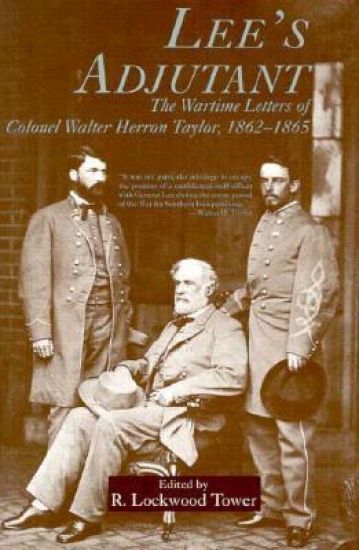
Lee's Adjutant

Lee's Adjutant

Walter Herron Taylor

University of South Carolina Press
1995
sidottu
Of all those who served with Robert E. Lee in the headquarters of the Army of Northern Virginia, no one was as close to him as Walter Taylor. Twenty-two years old when hostilities broke out, Taylor served at Lee's side virtually without interruption during the entire Civil War. The only officer who could lay claim to such a distinction, Taylor served first as aide-de-camp and subsequently as assistant adjutant general of the Army of Northern Virginia. Taylor traveled with Lee, ate at his mess, shielded him from a flood of administrative concerns, and on occasion delivered his battlefield orders. Taylor's personal correspondence, written without reserve as he enjoyed an unparalleled opportunity to observe Lee and his inner circle, constitutes a unique addition to the Civil War record. The 110 letters compiled in Lee's Adjutant shed light on day-to-day life at Lee's headquarters and on the general himself. Written to Taylor's fiancee and family, the recount the Army of Northern Virginia's early triumphs, invasions of the North, defeat at Gettysburg, and final surrender. To these revealing letters, R. Lockwood Tower adds a biographical sketch of the young adjutant that describes his role in helping Lee organize the Army of Virginia and-as an officer who lived to see the fiftieth anniversary of the war's end-in shaping Confederate memory.
Lee and His Generals

Lee and His Generals

University of Tennessee Press
2012
sidottu
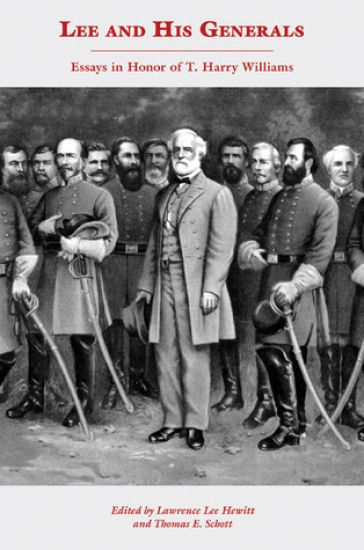
A legendary professor at Louisiana State University, T. Harry Williams not only produced such acclaimed works as Lincoln and the Radicals, Lincoln and His Generals, and a biography of Huey Long that won both the Pulitzer Prize and the National Book Award, but he also mentored generations of students who became distinguished historians in their own right. In this collection, ten of those former students, along with one author greatly inspired by Williams's example, offer incisive essays that honor both Williams and his career-long dedication to sound, imaginative scholarship and broad historical inquiry. The opening and closing essays, fittingly enough, deal with Williams himself: a biographical sketch by Frank J. Wetta and a piece by Roger Spiller that place Williams in larger historical perspective among writers on Civil War generalship. The bulk of the book focuses on Robert E. Lee and a number of the commanders who served under him, starting with Charles Roland's seminal article 'The Generalship of Robert E. Lee,' the only one in the collection that has been previously published. Among the essays that follow Roland's are contributions by Brian Holden Reid on the ebb and flow of Lee's reputation, George C. Rable on Stonewall Jackson's deep religious commitment, A. Wilson Greene on P. G. T. Beauregard's role in the Petersburg Campaign, and William L. Richter on James Longstreet as postwar pariah. Together these gifted historians raise a host of penetrating and original questions about how we are to understand America's defining conflict in our own time - just as T. Harry Williams did in his. And by encompassing such varied subjects as military history, religion, and historiography, Lee and His Generals demonstrates once more what a fertile field Civil War scholarship remains. Lawrence Lee Hewitt is professor of history emeritus at Southeastern Louisiana University. Most recently, he and Arthur W. Bergeron, now deceased, coedited three volumes of essays under the collective title Confederate Generals in the Western Theater. Thomas E. Schott served for many years as a historian for the U.S. Air Force and U.S. Special Operations Command. He is the author of Alexander H. Stephens of Georgia: A Biography, which won both the Society of American Historians Award and the Jefferson Davis Award.|A legendary professor at Louisiana State University, T. Harry Williams not only produced such acclaimed works as Lincoln and the Radicals, Lincoln and His Generals, and a biography of Huey Long that won both the Pulitzer Prize and the National Book Award, but he also mentored generations of students who became distinguished historians in their own right. In this collection, ten of those former students, along with one author greatly inspired by Williams's example, offer incisive essays that honor both Williams and his career-long dedication to sound, imaginative scholarship and broad historical inquiry. The opening and closing essays, fittingly enough, deal with Williams himself: a biographical sketch by Frank J. Wetta and a piece by Roger Spiller that place Williams in larger historical perspective among writers on Civil War generalship. The bulk of the book focuses on Robert E. Lee and a number of the commanders who served under him, starting with Charles Roland's seminal article 'The Generalship of Robert E. Lee,' the only one in the collection that has been previously published. Among the essays that follow Roland's are contributions by Brian Holden Reid on the ebb and flow of Lee's reputation, George C. Rable on Stonewall Jackson's deep religious commitment, A. Wilson Greene on P. G. T. Beauregard's role in the Petersburg Campaign, and William L. Richter on James Longstreet as postwar pariah. Together these gifted historians raise a host of penetrating and original questions about how we are to understand America's defining conflict in our own time - just as T. Harry Williams did in his. And by encompassing such varied subjects as military history, religion, and historiography, Lee and His Generals demonstrates once more what a fertile field Civil War scholarship remains. Lawrence Lee Hewitt is professor of history emeritus at Southeastern Louisiana University. Most recently, he and Arthur W. Bergeron, now deceased, coedited three volumes of essays under the collective title Confederate Generals in the Western Theater. Thomas E. Schott served for many years as a historian for the U.S. Air Force and U.S. Special Operations Command. He is the author of Alexander H. Stephens of Georgia: A Biography, which won both the Society of American Historians Award and the Jefferson Davis Award.
Lee and Jackson's Bloody Twelfth

Lee and Jackson's Bloody Twelfth

University of Tennessee Press
2012
nidottu
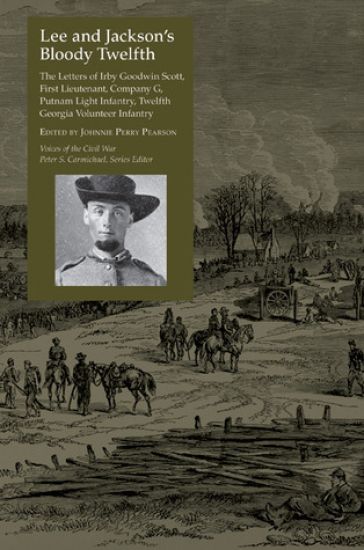
Offering a fascinating look at an ordinary soldier's struggle to survive not only the horrors of combat but also the unrelenting hardship of camp life, Lee and Jackson's Bloody Twelfth brings together for the first time the extant correspondence of Confederate lieutenant Irby Goodwin Scott, who served in the hard-fighting Twelfth Georgia Infantry. The collection begins with Scott's first letter home from Richmond, Virginia, in June 1861, and ends with his last letter to his father in February 1865. Scott miraculously completed the journey from naïve recruit to hardened veteran while seeing action in many of the Eastern Theatre’s most important campaigns: the Shenandoah Valley, the Peninsula, Second Manassas, and Gettysburg. His writings brim with vivid descriptions of the men's activities in camp, on the march, and in battle. Particularly revelatory are the details the letters provide about the relationship between Scott and his two African American body servants, whom he wrote about with great affection. And in addition to maps, photographs, and a roster of Scott's unit, the book also features an insightful introduction by editor Johnnie Perry Pearson, who highlights the key themes found throughout the correspondence. By illuminating in depth how one young Confederate stood up to the physical and emotional duress of war, the book stands as a poignant tribute to the ways in which all ordinary Civil War soldiers, whether fighting for the South or the North, sacrificed, suffered, and endured. Johnnie Perry Pearson is a retired state service officer formerly with the North Carolina Division of Veteran Affairs. He served as an infantry platoon sergeant during the Vietnam War and lives in Hickory, North Carolina.
Lee's Last Casualty

Lee's Last Casualty

University of Tennessee Press
2012
nidottu
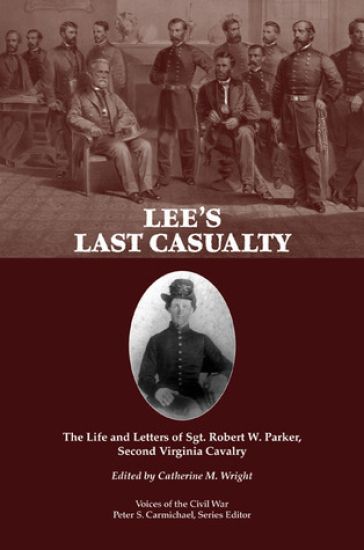
The letters assembled in this extraordinarily rich collection were written by Robert W. Parker, an enlisted Confederate cavalryman who is thought to have been the last man killed in action in the Army of Northern Virginia during the Civil War. He is representative of the Confederate Everyman: a modest farmer in the antebellum years, his patriotic fervour spurred him at the beginning of the war to enlist in the Confederate Army, in which he served until his death during the last charge at Appomattox Court House on April 9, 1865.Parker fought in most of the major campaigns in Virginia, including the 1862 Valley Campaign, the 1862 Peninsula Campaign, the 1863 Maryland Campaign, and the 1864 Overland Campaign. In letters to his wife Rebecca back home in Bedford County, Virginia, Parker described his life as an enlisted soldier in the Second Regiment Virginia Cavalry. His letters reveal how local communities worked together to provide the necessary stuff of war to soldiers, from food and clothing to moral support. They also show the importance of correspondence and religion in sustaining Confederate morale and nationalism.Catherine Wright provides a valuable introduction that illuminates not only these particular letters but also the many roles of correspondence during the Civil War. She points out how women-in this case, Parker's wife and his mother-made sure that men in the ranks understood that more than politics or manly honour was at stake in fighting the Yankees. Parker believed that the war was a supreme test in which God would look deep into the souls of Northerners and Southerners. His private beliefs informed his public views on how Southerners should act as citizens of a Confederate nation. People of all classes, Parker reasoned, had to give themselves to country and to God if Southern armies were to succeed on the battlefield. Parker's steadfastness was surely due in part to the words of his family, who instilled in him “just cause” to continue fighting.Anyone with an interest in how a typical soldier experienced the Civil War will find these letters both absorbing and enlightening.
Lee Miller in Fashion

Lee Miller in Fashion

Becky E. Conekin

Monacelli Press
2013
sidottu
Surrealist artist, muse of Man Ray, photographer, fashion model and Vogue war correspondent - Lee Miller defies categorization. Beginning her career as a Condé Nast model in 1920s New York, she made the unprecedented transition from one side of the lens to the other, creating stunning photos that imbued fashion with surrealist wit and whimsy. Fashion model, surrealist artist, muse, photographer, war correspondent - Lee Miller defies categorization. She was a woman who refused to be penned in, a free spirit constantly on the move from New York to London to Paris, from husbands to lovers and back, from photojournalistic objectivism to surrealism. Midcareer, she made the unprecedented transition from one side of the lens to the other, from a Condé Nast model in Jazz Age New York to fashion photographer, creating stunning images that imbued fashion with her signature wit and whimsy. Miller became a celebrated Surrealist under the tutelage of her lover, Man Ray, and then joined the war effort during World War II, documenting everything from the liberation of concentration camps to the daily life of Nazi-occupied Paris. Miller was recognized as “one of the most distinguished living photographers” during her hey-day as a fashion photographer, but an astonishing number of these images have remained unpublished. Lee Miller in Fashion is the first book to examine how her career as a model and fashion photographer illuminates her life story and connects to international fashion history from the late 1920s until the early 1950s. The world of fashion emerges as the backbone of Miller’s creative development, as well as an integral lens through which to understand the effects of war on the lives of women in the 1940s and 1950s. Miller witnessed incredible acts of resistance born out through fashion - and her photographic record of women’s indomitable spirit even in times of war has remained an invaluable resource in fashion and global history. Lee Miller in Fashion presents these striking archival fashion photographs as well as contact sheets, memos, and Miller’s published illustrations, vividly setting the wit, irrepressible creativity, and daring of Miller within the larger story of women’s experience of fashion, art, and war in the twentieth century. “In all her different worlds, she moved with freedom. In all her roles, she was her own bold self.” - Antony Penrose
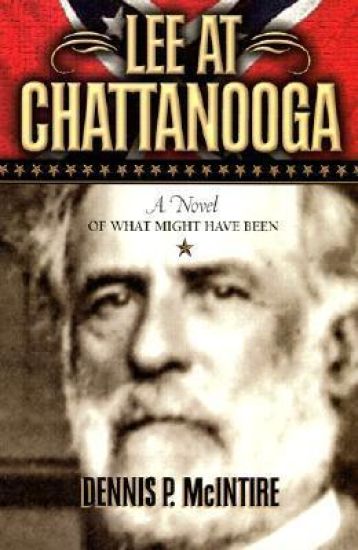
Lee at Chattanooga

Lee at Chattanooga

Dennis P. McIntire

Cumberland House Publishing,US
2002
pokkari
The possibility that Confederate President Jefferson Davis might have sent General Robert E. Lee to aide Braxton Bragg in his battle at Chattanooga is explored in this novel. What might have happened that September 1863 if this had occurred?
Lee's Sharpshooters

Lee's Sharpshooters

Major W S Dunlap

Digital Scanning Inc
2018
pokkari
In early 1864, Robert E. Lee began experimenting with tactical innovations for the upcoming spring campaign. To this end, he ordered the organization of sharpshooter battalions. William S. Dunlop was the commander of the sharpshooter battalion formed from the 1st, 12th, 13th, and 14th South Carolina, and Orr's Rifles. In Lee's Sharpshooters he chronicles the training processes, the ordnance tests and the marksmanship exercises the soldiers went through to become skilled and confident skirmishers.Robert E. Lee's decision didn't turn the tide of the war, but it did give rise to the specialized soldier whose " intelligence, marksmanship and unfaltering courage" was remarkable. Contributions from other battalions such as those of Lt. Robert F. Ward from Davis's Mississippi brigade provide first hand accounts of the sharpshooters' part in the battles of Wilderness and Spotsylvania.
Lee Ufan

Lee Ufan

The Hirshhorn Museum; Miwako Tezuka

Smithsonian Books
2020
sidottu
The beautiful companion volume to Lee Ufan's largest site-specific outdoor sculpture project in the U.S.In fall 2019, the Hirshhorn Museum and Sculpture Garden debuted 10 new specially commissioned outdoor sculptures from celebrated Korean artist Lee Ufan. This book accompanies the expansive installation, which features sculptures from the artist's signature and continuing "Relatum" series and marks the first exhibition of Lee's work in the nation's capital. For the first time in the Hirshhorn Museum's 44-year history, its 4.3-acre outdoor plaza will be devoted entirely to the work of a single artist, and this book is a beautiful commemoration or keepsake of that event. Lee is a founder of the late 1960s artistic movement Mono-ha, or "School of Things," so his artwork represents an encounter between the viewer, the materials, and the site. The sculptures in this installation and book reflect this: all of the sculptures respond to the museum's unique architecture and continue Lee's iconic practice of placing contrasting materials, such as stainless steel plates and boulders, in dialogue with one another to heighten awareness of the world. The book features more than 100 color illustrations, including preliminary sketches, photographs of the artist selecting materials for the work, images of the installation process, shots of installed sculptures, details of installed sculptures, and more. Accompanying these powerful images are a foreword, essays, artist interview, and short captions that highlight how the works are rooted in contemplation and sensation rather than static representation. Lee Ufan: Open Dimension offers readers an intimate look at the work, artistic process, and impact of one of the pioneering figures of postwar art.
Lee's Awakening

Lee's Awakening

Rebecca Montague

Cape Winds Press
2013
nidottu
Lee Compton is about to discover that when it comes to falling in love, there are no rules Socialite Lee Compton thought she knew what path lay ahead of her. Leaving her controlling husband after a five-year marriage, she approaches thirty ready to find her own happiness. She can't imagine that attending a birthday party at a local lesbian bar will force her to rewrite everything she believes she knows about herself. Ray Elliot's decidedly blue-collar existence is exactly the way she wants it. A reputation that guarantees no shortage of entanglement-free encounters suits her unwillingness let anyone into her emotions. When beautiful--and very straight--Lee walks through the back door of her favorite hangout, Ray has no idea that her perfect world is about to be turned upside down. As the two women struggle to resist the growing attraction between them, each finds her supposedly ideal life anything but. Ray fights to keep Lee from breaking through the walls around her heart while watching her dream job become a nightmare. Meanwhile, Lee's ex-husband isn't willing to let her go so easily, and she discovers that happiness may come at a heavy price.
Shocking Cases from Dr. Henry Lee's Forensic Files

Shocking Cases from Dr. Henry Lee's Forensic Files

Lee Henry C.; Labriola Jerry

Prometheus Books
2010
sidottu
Dr. Henry C. Lee is highly regarded throughout the law-enforcement community as one of the most talented and experienced forensic scientists in the world. He has also received widespread public recognition and media attention through his association with sensational criminal investigations, including the JFK assassination, the suicide of White House counsel Vincent Foster, the Chandra Levy homicide, the O.J. Simpson and JonBenet Ramsey cases, and, most recently, the Caylee Anthony case. In this new book, Dr. Lee and critically acclaimed mystery writer Jerry Labriola, MD, team up again to present another true-crime page-turner on five notorious incidents: · The Phil Spector case: Legendary music mogul Phil Spector was charged with murder in the death of actress Lana Clarkson, found slain in his mansion. But has Dr. Lee produced forensic evidence suggesting her death was a suicide? · The Brown's Chicken massacre: The savage murder of helpless employees of a restaurant in Palatine, Illinois, was left unsolved for over a decade until the painstaking forensic skills of Task Force and Dr. Lee eventually identified the killers. · Murder in the Sacristy: The brutal murder of a nun in a Toledo, Ohio, church had bizarre ritualistic overtones and remained unsolved until a priest was prosecuted twenty-six years later-the same priest who had conducted the nun's funeral service! Dr. Lee testified at the trial of the priest and here he demonstrates how the perseverance of law enforcement officials and forensic scientists eventually solved the crime. · The shooting of a Connecticut state trooper and the shooting death of a fourteen-year-old young man: Dr. Lee discusses the dual hazards of police work-being killed or injured in the line of duty and the accidental killing of innocent victims or suspects. In Hartford, while racial tensions threatened to spin out of control, Dr. Lee reconstructed the shooting of a young African American by a police officer. His diligent work defused hostilities that nearly led to a riot. · Genocide in Bosnia-Herzegovina: Dr. Lee discusses his role in the excavation and, in some cases, the identification of hundreds of bodies in the former Yugoslavia. The evidence he uncovered was later used to build a case against suspects indicted by the International War Crimes Tribunal. Combining fascinating details of forensic science with a vivid narrative, Shocking Cases from Dr. Henry Lee's Forensic Files is must reading for true-crime readers and forensic science lovers.
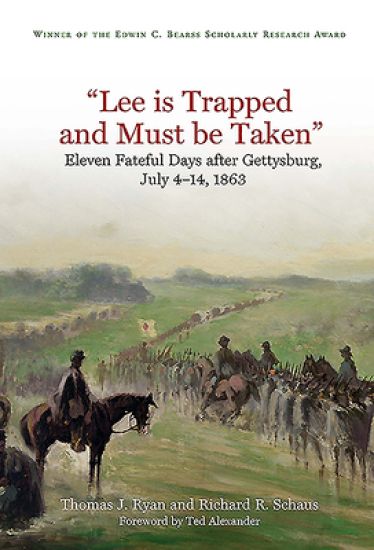
“Lee is Trapped, and Must be Taken”

“Lee is Trapped, and Must be Taken”

Thomas J. Ryan; Richard R. Schaus

Savas Beatie
2019
sidottu
Countless books have examined the battle of Gettysburg, but the retreat of the armies to the Potomac River and beyond has not been as thoroughly covered. “Lee is Trapped, and Must be Taken”: Eleven Fateful Days after Gettysburg: July 4 to July 14, 1863, by Thomas J. Ryan and Richard R. Schaus goes a long way toward rectifying this oversight. This comprehensive study focuses on the immediate aftermath of the battle and addresses how Maj. Gen. George G. Meade organized and motivated his Army of the Potomac in response to President Abraham Lincoln’s mandate to bring about the “literal or substantial destruction” of Gen. Robert E. Lee’s retreating Army of Northern Virginia. As far as the president was concerned, if Meade aggressively pursued and confronted Lee before he could escape across the flooded Potomac River, “the rebellion would be over.” The long and bloody three-day battle exhausted both armies. Their respective commanders faced difficult tasks, including the rallying of their troops for more marching and fighting. Lee had to keep his army organized and motivated enough to conduct an orderly withdrawal away from the field. Meade faced the same organizational and motivational challenges, while assessing the condition of his victorious but heavily damaged army, to determine if it had sufficient strength to pursue and crush a still-dangerous enemy. Central to the respective commanders’ decisions was the information they received from their intelligence-gathering resources about the movements, intentions, and capability of the enemy. The eleven-day period after Gettysburg was a battle of wits to determine which commander better understood the information he received, and directed the movements of his army accordingly. Prepare for some surprising revelations. Woven into this account is the fate of thousands of Union prisoners who envisioned rescue to avoid incarceration in wretched Confederate prisons, and a characterization of how the Union and Confederate media portrayed the ongoing conflict for consumption on the home front. The authors utilized a host of primary sources to craft their study, including letters, memoirs, diaries, official reports, newspapers, and telegrams, and have threaded these intelligence gems in an exciting and fast-paced narrative that includes a significant amount of new information. “Lee is Trapped, and Must be Taken” is a sequel to Thomas Ryan’s Spies, Scouts, and Secrets in the Gettysburg Campaign, the recipient of the Bachelder-Coddington Literary Award and Gettysburg Civil War Round Table Distinguished Book Award.
“Lee is Trapped and Must be Taken”

“Lee is Trapped and Must be Taken”

Thomas J Ryan; Richard R Schaus

Savas Beatie
2022
nidottu
Thousands of books and articles examine nearly every aspect of the Civil War, but the important retreat of the armies from the Gettysburg battlefield to the Potomac River has been but little covered. Until now, no one had produced a critical analysis of the command decisions made during that fateful time based upon available intelligence. “Lee is Trapped and Must be Taken”: Eleven Fateful Days after Gettysburg, July 4 to July 14, 1863, by Thomas J. Ryan and Richard R. Schaus, now available in paperback, rectifies this oversight. This comprehensive day-by-day account, which begins after the end of the Gettysburg battle, examines how Maj. Gen. George G. Meade organized and motivated his Army of the Potomac in response to President Abraham Lincoln’s mandate to bring about the “literal or substantial destruction” of Gen. Robert E. Lee’s defeated and retreating Army of Northern Virginia. As far as Lincoln was concerned, if Meade aggressively pursued and confronted Lee before he could escape across the flooded Potomac River, “the rebellion would be over.” The long and bloody three-day battle exhausted both armies. Both commanders faced the difficult tasks of rallying their troops for more marching and fighting. Lee had to keep his army organized and motivated enough to conduct an orderly withdrawal into Virginia. Meade faced the same organizational and motivational challenges with the added expectation of catching and defeating a still-dangerous enemy. Central to their decision-making was the information they received from their intelligence gathering resources about the movements, intentions, and capability of the enemy. The eleven-day period after Gettysburg was a battle of wits to determine which commander better understood the information he received and directed his army accordingly. Prepare for some surprising revelations. Ryan and Schaus rely on a host of primary sources to craft their study, including letters, memoirs, diaries, official reports, newspapers, and telegrams. The threading of these intelligence gems creates a gripping narrative with a significant amount of new information—which the authors use to offer their own direct and often damning conclusions. “Lee is Trapped and Must be Taken” is a sequel to Thomas Ryan’s Spies, Scouts, and Secrets in the Gettysburg Campaign (Savas Beatie, 2015), the recipient of the Bachelder-Coddington Literary Award and Gettysburg Civil War Round Table Distinguished Book Award.
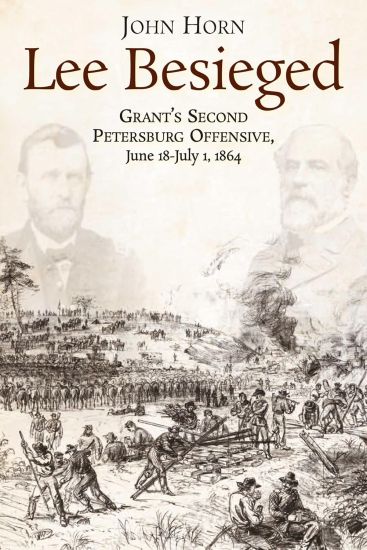
Lee Besieged

Lee Besieged

John Horn

Savas Beatie
2025
sidottu
The nine-month siege of Petersburg was the longest continuous operation of the Civil War. Contrary to popular belief, it was anything but static trench warfare, as John Horn ably demonstrates in Lee Besieged: Grant’s Second Petersburg Offensive, June 18-July 1, 1864. Large-scale Union “offensives”—grand maneuvers that triggered some of the large-scale battles—broke the monotony of siege warfare. Once his First Offensive (the assaults of June 15-18) failed to capture the city, the Union commander planned and launched his next major effort within hours. This Second Offensive was one of the most dramatic operations of the entire war. To pave the way for success, Grant brought the city’s bridges under the fire of his siege guns to slow the transfer of enemy troops in and out of Petersburg. He also seized a bridgehead at Deep Bottom on James River’s north bank to draw Confederate forces out of Petersburg by menacing Richmond. Next, he took more ambitious measures by sending infantry to hem in Petersburg from the Appomattox River above and below the city. The move was designed to cut the critical Weldon and South Side railroads and force the Rebels to abandon Petersburg and Richmond. As his infantry went to work, his cavalry set out to cut the Confederate railroads below Petersburg to slow reinforcements coming up from the south and west. Grant’s opponent, however, was General Robert E. Lee with his veteran infantry, not the inept John Floyd of Fort Donelson or the distracted John C. Pemberton of Vicksburg. Lee and his infantry subordinate William Mahone marched to meet the enemy and in a stunning turn of events routed Grant’s foot soldiers at Jerusalem Plank Road. Together, Confederate cavalry leader Wade Hampton and Mahone smashed Grant’s troopers at the battles of Sappony Church and First Reams Station. Thousands of Federal prisoners of war flooded into Confederate camps. Not until April 1865, after seven more offensives, would Grant reach the Appomattox above Petersburg and force Lee to relinquish that city and the capital of Richmond. This is tactical battle action at is finest. Horn’s explanation for the context and consequences of every decision is grounded in hundreds of primary sources and supported by 40 original maps. Lee Besieged: Grant’s Second Petersburg Offensive, June 18-July 1, 1864 is the first full-length book to put Grant’s second effort into its proper perspective—not only in the context of Petersburg’s siege and the Civil War, but in the context of warfare’s history.
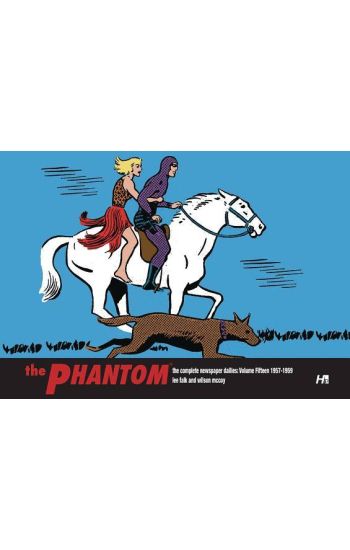
The Phantom the Complete Newspaper Dailies by Lee Falk and Wilson McCoy: Volume Fifteen 1957-1958
The critically acclaimed, best selling complete reprint of The Phantom continues! Referred to by comic strip historian Maurice Horn as the “granddaddy of all costumed superheroes,” The Phantom was created in 1936 by Lee Falk with artwork by Ray Moore. The strip hit the funny pages of newspapers well before the Dark Knight or Superman made their first appearances and has been acknowledged as an influence on every “masked man of mystery” since. The Phantom set the standard for action, adventure, intrigue, and romance in adventure comic strips and comic books – it has frequently been copied but never equaled. Included in this volume are six complete continuities, reprinted for the first time in their entirety, “The Calyle’s Good Mark,” “The Crybaby” “The Underwater Diamond Thieves,” “The Betrothal,” “The Swamp Rats,” and “Oogooru and the Witchmen.” Strips from this issue are taken directly from King Feature’s proofs. Included in the volume is a comprehensive essay and documentary materials.
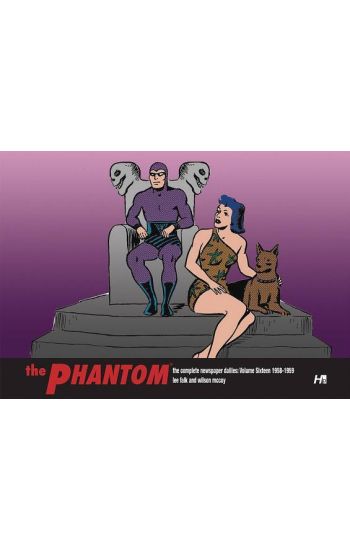
The Phantom the Complete Newspaper Dailies by Lee Falk and Wilson McCoy: Volume Sixteen 1958-1959
The critically acclaimed, best selling complete reprint of The Phantom continues! Referred to by comic strip historian Maurice Horn as the “granddaddy of all costumed superheroes,” The Phantom was created in 1936 by Lee Falk with artwork by Wilson McCoy. The strip hit the funny pages of newspapers well before the Dark Knight or Superman made their first appearances and has been acknowledged as an influence on every “masked man of mystery” since. The Phantom set the standard for action, adventure, intrigue, and romance in adventure comic strips and comic books - it has frequently been copied but never equaled.Included in this volume are six complete continuities, reprinted for the first time in their entirety, “The Reporter,” “The Monkey Tail (The Diamond Hijackers” “The Gurk Twins,” “The 50th Wife,” “The Iron Dragon,” and “The Werewolf.” Strips from this issue are taken directly from King Feature's proofs. Included in the volume is a comprehensive essay and documentary materials.