Kirjojen hintavertailu. Mukana 11 717 486 kirjaa ja 12 kauppaa.

Kirjahaku

Etsi kirjoja tekijän nimen, kirjan nimen tai ISBN:n perusteella.

1000 tulosta hakusanalla Linda Saukko-Rauta

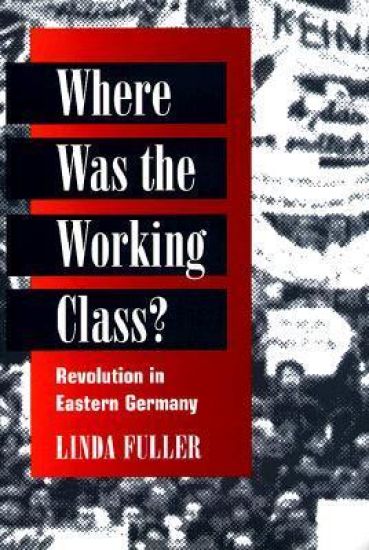
Where Was the Working Class?

Where Was the Working Class?

Linda Fuller

University of Illinois Press
1999
nidottu
In six months bridging 1989 and 1990, the German Democratic Republic underwent a transformation that took the world almost completely by surprise. Yet unlike the revolution in Poland a decade earlier, only a small percentage of workers played apolitically active role in the fall of socialism in Germany. In this unprecedented study, Linda Fuller sets out to explain why the working class was largely missing from the 1989-90 revolution. Drawing on pre- and post-revolutionary visits to East German work sites and dozens of interviews, Fuller documents workers' day-to-day experience of the labor process, workplace union politics, and class. She shows how all three factors led most workers to withdraw from politics, even while prompting a handful to become actively involved in the struggle.
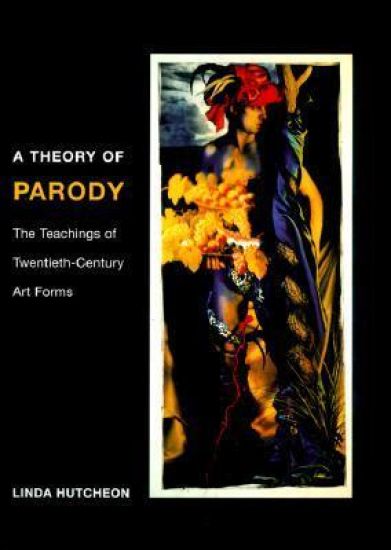
A Theory of Parody

A Theory of Parody

Linda Hutcheon

University of Illinois Press
2000
nidottu
In this major study of a flexible and multifaceted mode of expression, Linda Hutcheon looks at works of modern literature, visual art, music, film, theater, and architecture to arrive at a comprehensive assessment of what parody is and what it does. Hutcheon identifies parody as one of the major forms of modern self-reflexivity, one that marks the intersection of invention and critique and offers an important mode of coming to terms with the texts and discourses of the past. Looking at works as diverse as Tom Stoppard's Rosenkrantz and Guildenstern Are Dead, Brian de Palma's Dressed to Kill, Woody Allen's Zelig, Karlheinz Stockhausen's Hymnen, James Joyce's Ulysses, and Magritte's This Is Not a Pipe, Hutcheon discusses the remarkable range of intent in modern parody while distinguishing it from pastiche, burlesque, travesty, and satire. She shows how parody, through ironic playing with multiple conventions, combines creative expression with critical commentary. Its productive-creative approach to tradition results in a modern recoding that establishes difference at the heart of similarity. In a new introduction, Hutcheon discusses why parody continues to fascinate her and why it is commonly viewed as suspect-–for being either too ideologically shifty or too much of a threat to the ownership of intellectual and creative property.
Heroes of Their Own Lives

Heroes of Their Own Lives

Linda Gordon

University of Illinois Press
2002
nidottu
In this unflinching history of family violence, Linda Gordon traces policies on child abuse and neglect, wife beating, and incest from 1880 to 1960. Gordon begins with the so-called discovery of family violence in the 1870s, when experts first identified it as a social rather than personal problem. From there, Gordon chronicles the changing visibility of family violence as gender, family, and political ideologies shifted and the women's and civil rights movements gained strength. Throughout, she illustrates how public perceptions of issues like marriage, poverty, alcoholism, mental illness, and responsibility worked for and against the victims of family violence, and looks at the link between family violence and larger social problems. Powerful and moving, Heroes of Their Own Lives offers an honest understanding of a persistent problem and a realistic view of the difficulties in stopping it.
Peruvian Street Lives

Peruvian Street Lives

Linda J. Seligmann

University of Illinois Press
2004
nidottu
For more than twenty years, Linda J. Seligmann walked the streets of Peru in city and countryside alike, talking to the women who work in the informal and open-air markets in Cuzco's Andean highlands. Her combination of ethnographic analysis, insightful and human vignettes, and superb photographs offers a humane yet incisive portrait of the women's lives against the backdrop of globalization and other powerful forces. In Peruvian Street Lives, Seligmann argues that the sometimes invisible and informal economic, social, and political networks market women establish may appear disorderly and chaotic, but in fact often keep dysfunctional economies and corrupt bureaucracies from utterly destroying the ability of citizens to survive from day to day. Seligmann asks why the constructive efforts of market women to make a living provoke such negative social perceptions from some members of Peruvian society, who see them as symbols and actual catalysts of social disorder. At the same time, Seligmann shows how market women eke out a living, combat discrimination, and transgress racial and gender ideologies within the rich and expressive cultural traditions they have developed.
The Moral Property of Women

The Moral Property of Women

Linda Gordon

University of Illinois Press
2007
nidottu
Choice Magazine's Outstanding Academic Books for 2004The only book to cover the entire history of birth control and the intense controversies about reproduction rights that have raged in the United States for more than 150 years, The Moral Property of Women is a thoroughly updated and revised version of the award-winning historian Linda Gordon's classic history Woman's Body, Woman's Right, originally published in 1976.Arguing that reproduction control has always been central to women's status, The Moral Property of Women shows how opposition to it has long been part of the conservative opposition to gender equality. From its roots in folk medicine and in a campaign so broad it constituted a grassroots social movement at some points in history, to its legitimization through public policy, the widespread acceptance of birth control has involved a major reorientation of sexual values.Gordon puts today's reproduction control controversies--foreign aid for family planning, the abortion debates, teenage pregnancy and childbearing, stem-cell research--into historical perspective and shows how the campaign to legalize abortion is part of a 150-year-old struggle over reproductive rights, a struggle that has followed a circuitous path. Beginning with the "folk medicine" of birth control, Gordon discusses how the backlash against the first women's rights movement of the 1800s prohibited both abortion and contraception about 130 years ago. She traces the campaign for legal reproduction control from the 1870s to the present and argues that attitudes toward birth control have been inseparable from family values, especially standards about sexuality and gender equality.Highlighting both leaders and followers in the struggle, The Moral Property of Women chronicles the contributions of well-known reproduction control pioneers such as Elizabeth Cady Stanton, Margaret Sanger, and Emma Goldman, as well as lesser- known campaigners including the utopian socialist Robert Dale Owen, the three doctors Foote--Edward Bliss Foote, Edward Bond Foote, and Mary Bond Foote--the civil libertarian Mary Ware Dennett, and the daring Jane project of the 1970s, in which Chicago women's liberation activists performed illegal abortions.
Lars Von Trier

Lars Von Trier

Linda Badley

University of Illinois Press
2011
nidottu
Scandinavia's foremost living auteur and the catalyst of the Dogme95 movement, Lars von Trier is arguably world cinema's most confrontational and polarizing figure. Willfully devastating audiences, he takes risks few filmmakers would conceive, mounting projects that somehow transcend the grand follies they narrowly miss becoming. Challenging conventional limitations and imposing his own rules, he restlessly reinvents the film language. The Danish director has therefore cultivated an insistently transnational cinema, taking inspiration from sources that range from the European avant-garde to American genre films. This volume provides a stimulating overview of Trier's career while focusing on the more recent work, including his controversial Gold Heart Trilogy (Breaking the Waves, The Idiots, and Dancer in the Dark), the as-yet unfinished USA Trilogy (Dogville and Manderlay), and individual projects such as the comedy The Boss of It All and the incendiary horror psychodrama Antichrist. Closely analyzing the films and their contexts, Linda Badley draws on a range of cultural references and critical approaches, including genre, gender, and cultural studies, performance theory, and trauma culture. Two revealing interviews that Trier granted during crucial stages of Antichrist's development are also included.
Baking Powder Wars

Baking Powder Wars

Linda Civitello

University of Illinois Press
2017
nidottu
First patented in 1856, baking powder sparked a classic American struggle for business supremacy. For nearly a century, brands battled to win loyal consumers for the new leavening miracle, transforming American commerce and advertising even as they touched off a chemical revolution in the world's kitchens. Linda Civitello chronicles the titanic struggle that reshaped America's diet and rewrote its recipes. Presidents and robber barons, bare-knuckle litigation and bold-faced bribery, competing formulas and ruthless pricing--Civitello shows how hundreds of companies sought market control, focusing on the big four of Rumford, Calumet, Clabber Girl, and the once-popular brand Royal. She also tells the war's untold stories, from Royal's claims that its competitors sold poison, to the Ku Klux Klan's campaign against Clabber Girl and its German Catholic owners. Exhaustively researched and rich with detail, Baking Powder Wars is the forgotten story of how a dawning industry raised Cain--and cakes, cookies, muffins, pancakes, donuts, and biscuits.
Latin American Migrations to the U.S. Heartland

Latin American Migrations to the U.S. Heartland

Linda Allegro; Andrew Grant Wood

University of Illinois Press
2019
nidottu
This collection examines Latina/o immigrants and the movement of the Latin American labor force to the central states of Oklahoma, Kansas, Nebraska, Arkansas, Missouri, and Iowa. Contributors look at outside factors affecting migration, including corporate agriculture, technology, globalization, and government. They also reveal how cultural affinities like religion, strong family ties, farming, and cowboy culture attract these newcomers to the Heartland. Throughout, essayists point to how hostile neoliberal policy reforms have made it difficult for Latin American immigrants to find social and economic stability. Filled with varied and eye-opening perspectives, Latin American Migrations to the U.S. Heartland reveals how identities, economies, and geographies are changing as Latin Americans adjust to their new homes, jobs, and communities.Contributors: Linda Allegro, Tisa M. Anders, Scott Carter, Caitlin Didier, Miranda Cady Hallett, Edmund Hamann, Albert Iaroi, Errol D. Jones, Jane Juffer, László J. Kulcsár, Janelle Reeves, Jennifer F. Reynolds, Sandi Smith-Nonini, and Andrew Grant Wood.
Quinoa

Quinoa

Linda J. Seligmann

UNIVERSITY OF ILLINOIS PRESS
2023
nidottu
Quinoa’s new status as a superfood has altered the economic fortunes of Quechua farmers in the Andean highlands. Linda J. Seligmann journeys to the Huanoquite region of Peru to track the mixed blessings brought about by the surging worldwide popularity of this “exquisite grain.” Focusing on how Indigenous communities have confronted globalization, Seligmann examines the influence of food politics, development initiatives, and the region’s agrarian history on present-day quinoa production among Huanoquiteños. She also looks at the human stories behind these transformations, from the work of quinoa brokers to the ways Huanoquite’s men and women navigate the shifts in place and power occurring in their homes and communities. Finally, Seligmann considers how the consequences of nearby mining may impact Huanoquiteños’ ability to farm quinoa and thrive in their environment, and the efforts they are taking to resist these threats to their way of life. The untold story behind the popular health food, Quinoa illuminates how Indigenous communities have engaged with the politics and policies surrounding their production of a traditional and minor crop that became a global foodstuff.
To Advance the Race

To Advance the Race

Linda M. Perkins

UNIVERSITY OF ILLINOIS PRESS
2024
nidottu
From the United States' earliest days, African Americans considered education essential for their freedom and progress. Linda M. Perkins’s study ranges across educational and geographical settings to tell the stories of Black women and girls as students, professors, and administrators. Beginning with early efforts and the establishment of abolitionist colleges, Perkins follows the history of Black women's post–Civil War experiences at elite white schools and public universities in northern and midwestern states. Their presence in Black institutions like Howard University marked another advancement, as did Black women becoming professors and administrators. But such progress intersected with race and education in the postwar era. As gender questions sparked conflict between educated Black women and Black men, it forced the former to contend with traditional notions of women’s roles even as the 1960s opened educational opportunities for all African Americans. A first of its kind history, To Advance the Race is an enlightening look at African American women and their multi-generational commitment to the ideal of education as a collective achievement.
Inez

Inez

Linda J. Lumsden

Indiana University Press
2016
pokkari
Inez Milholland was the most glamorous suffragist of the 1910s and a fearless crusader for women's rights. Moving in radical circles, she agitated for social change in the prewar years, and she epitomized the independent New Woman of the time. Her death at age 30 while stumping for suffrage in California in 1916 made her the sole martyr of the American suffrage movement. Her death helped inspire two years of militant protests by the National Woman's Party, including the picketing of the White House, which led in 1920 to ratification of the 19th Amendment granting women the right to vote. Lumsden's study of this colorful and influential figure restores to history an important link between the homebound women of the 19th century and the iconoclastic feminists of the 1970s.
Indiana University Maurer School of Law

Indiana University Maurer School of Law

Linda K. Fariss; Keith Buckley

Indiana University Press
2019
sidottu
Throughout its 175-year history, the Indiana University Maurer School of Law has grown, diversified, and flourished to become of a nationally recognized law school. With strong and dedicated leadership, the school has emerged into the 21st century stronger than ever and has partnerships among with leading institutions in the world, and an alumni base that spans the globe. Preparing student for the practice of law, promoting the best interests of society, and taking a leadership role in providing solutions to the most pressing problems of society, are among the many achievements of the school and its faculty. Filled with historical photographs and engaging sidebars, this book tells the story of the individuals who built, sustained, and strengthened the Indiana University Maurer School of Law.
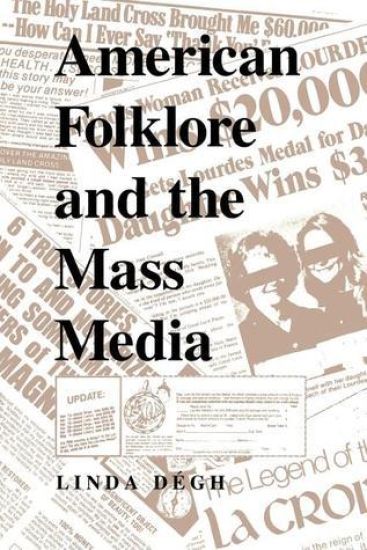
American Folklore and the Mass Media

American Folklore and the Mass Media

Linda Dégh

Indiana University Press
1994
pokkari
"This book shows how folklore—magic, miracles, and tales of enchanted princesses and genial giants—is still alive and well in the modern mass media. . . . contains a wealth of facts and observations with which to conjure." —Journal of Communication "Dégh brings her decades of expertise in folk narrative to bear in this well-researched, provocative study of the interrelationship between traditional processes of folk narrative performances and modern mass media. . . . Highly recommended . . . " —Choice "Spanning folk cultural developments as old as feudalism and as new as today's TV ad, American Folklore and the Mass Media demonstrates how vital folklore remains, how often it absorbs—rather than being absorbed by—the most dramatic technological innovations and social realignments." —Carl Lindahl ". . . all six essays are meaty and informative contributions to vital folkloric issues . . ." —Contemporary Legend
Dancing Class

Dancing Class

Linda J. Tomko

Indiana University Press
2000
pokkari
"Tomko blazes a new trail in dance scholarship by interconnecting U.S. History and dance studies. . . . the first to argue successfully that middle-class U.S. women promoted a new dance practice to manage industrial changes, crowded urban living, massive immigration, and interchange and repositioning among different classes." —Choice From salons to dance halls to settlement houses, new dance practices at the turn of the century became a vehicle for expressing cultural issues and negotiating matters of gender. By examining master narratives of modern dance history, this provocative and insightful book demonstrates the cultural agency of Progressive-era dance practices.
Boomer

Boomer

Linda G. Niemann

Indiana University Press
2011
pokkari
This classic account of self discovery and railroad life describes Linda Grant Niemann's travels as an itinerant brakeman on the Southern Pacific. Boomer combines travelogue, Wild West adventure, sexual memoir, and closely observed ethnography. A Berkeley Ph.D., Niemann turned her back on academia and set out to master the craft of railroad brakeman, beginning a journey of sexual and subcultural exploration and traveling down a path toward recovery from alcoholism. In honest, clean prose, Niemann treks off the beaten path and into the forgotten places along the rail lines, finding true American characters with colorful pasts—and her true self as well.
Irish Immigrants in New York City, 1945-1995

Irish Immigrants in New York City, 1945-1995

Linda Dowling Almeida

Indiana University Press
2001
sidottu
Irish Immigrants in New York City, 1945-1995 Linda Dowling Almeida The story of one of the most visible groups of immigrants in the major city of immigrants in the last half of the 20th century. "Almeida offers a dynamic portrait of Irish New York, one that keeps reinventing itself under new circumstances." —Hasia Diner, New York University "[Almeida's] close attention to changes in economics, culture, and politics on both sides of the Atlantic makes [this book] one of the more accomplished applications of the 'new social history' to a contemporary American ethnic group." —Roger Daniels, University of Cincinnati It is estimated that one in three New York City residents is an immigrant. No other American city has a population composed of so many different nationalities. Of these "foreign born," a relatively small percentage come directly from Ireland, but the Irish presence in the city—and America—is ubiquitous. In the 1990 census, Irish ancestry was claimed by over half a million New Yorkers and by 44 million nationwide. The Irish presence in popular American culture has also been highly visible. Yet for all the attention given to Irish Americans, surprisingly little has been said about post–World War II immigrants. Almeida's research takes important steps toward understanding modern Irish immigration. Comparing 1950s Irish immigrants with the "New Irish" of the 1980s, Almeida provides insights into the evolution of the Irish American identity and addresses the role of the United States and Ireland in shaping it. She finds, among other things, that social and economic progress in Ireland has heightened expectations for Irish immigrants. But at the same time they face greater challenges in gaining legal residence, a situation that has led the New Irish to reject many organizations that long supported previous generations of Irish immigrants in favor of new ones better-suited to their needs. Linda Dowling Almeida, Adjunct Professor of History at New York University, has published articles on the "New Irish" in America and is a longtime member of the New York Irish History Roundtable. She also edited Volume 8 of the journal New York Irish History. March 2001 232 pages, 6 1/8 x 9 1/4, index, append. cloth 0-253-33843-3$35.00 s / £26.5
Legend and Belief

Legend and Belief

Linda Dégh

Indiana University Press
2001
sidottu
Legend and Belief Dialectics of a Folklore Genre Linda Dégh An acclaimed folklorist asks "What is legend?" Legend and Belief is a descriptive and analytical study of the legend, the most prolific and characteristic form of folklore in contemporary Western civilization. Not that the legend does not have ancient roots; like the tale, the joke, the ballad, the proverb, and mummery, it was also a part of an archaic preindustrial tradition. But the legend—as old as conversation and debate, and similarly questioning the human condition—was able to survive technological innovations. It has remained contemporaneous, whereas many other genres succumbed to their own anachronism. The legend's concerns are universal and eternal, touching on the most sensitive areas of our existence. That is why stories about supernatural encounters, possessions, divine and infernal miracles, evil spirits, monsters, and prophetic dreams, as well as horror stories about insane and criminal agencies, inundate the urban/industrial world. Industrial advancement does not change the basic fragility of human life, while commercialization and the consumer orientation of the mass media have helped legends travel faster and farther. Legends are not only communicated orally, face-to-face, but also appear in the press, on radio and TV, on countless internet websites, and by e-mail to keep alive new waves of the "culture of fear." Linda Dégh, Distinguished Professor Emerita of Folklore at Indiana University, is a folklorist/ethnologist whose speciality is the analysis of personally observed creative processes of narration in both traditional and modern communities of Europe and North America. Her numerous publications include Four Lives: People in the Tobacco Belt; Folktales and Society; American Folklore and the Mass Media; and Narratives in Society. June 2001 496 pages, 6 1/8 x 9 1/4, index, append. cloth0-253-33929-4$49.95 s / £38.00
Cannabinoids

Cannabinoids

Linda A. Parker

MIT PRESS
2026
nidottu
The mysteries of the brain's own cannabinoid system exposed and explained. Though cannabis has been used, for pain or pleasure, for over 4000 years, only lately have we learned, first, what makes it work and, more recently, how. Unraveling the mystery of the human brain's special relationship with a psychoactive chemical derived from a plant--tetrahydrocannabinol, or THC, specifically--neuroscientist Linda Parker recounts the discovery of the brain's own THC, called endocannabinoids, and describes the remarkable brain chemical system this discovery revealed. In expert yet accessible terms, Cannabinoids explains what we know about this system, how it functions, and how it interacts with the plant materials in cannabis. Parker explores the role of the endocannabinoid system in regulating emotion, anxiety, depression, psychosis, learning, memory, feeding, nausea, pain, epilepsy, and neurological disorders--as well as, naturally, the brain's reward system. Examining the link between anecdotal reports and the current scientific literature, the book offers a balanced presentation of the scientific evidence for the medicinal use of marijuana, providing a timely intervention in ongoing debates about cannabis's medicinal value and its legal status.
The Inversion Factor

The Inversion Factor

Linda Bernardi; Sanjay Sarma; Kenneth Traub

MIT Press
2018
pokkari
Why companies need to move away from a "product first" orientation to pursuing innovation based on customer need.In the past, companies found success with a product-first orientation; they made a thing that did a thing. TheInversion Factor explains why the companies of today and tomorrow will have to abandon the product-first orientation. Rather than asking "How do the products we make meet customer needs?" companies should ask "How can technology help us reimagine and fill a need?" Zipcar, for example, instead of developing another vehicle for moving people from point A to point B, reimagined how people interacted with vehicles. Zipcar inverted the traditional car company mission. The authors explain how the introduction of "smart" objects connected by the Internet of Things signals fundamental changes for business. The IoT, where real and digital coexist, is powering new ways to meet human needs. Companies that know this include giants like Amazon, Airbnb, Uber, Google, Tesla, and Apple, as well as less famous companies like Tile, Visenti, and Augury. The Inversion Factor offers a roadmap for businesses that want to follow in their footsteps.The authors chart the evolution of three IoTs-the Internet of Things (devices connected to the Internet), the Intelligence of Things (devices that host software applications), and the Innovation of Things (devices that become experiences). Finally, they offer a blueprint for businesses making the transition to inversion and interviews with leaders of major companies and game-changing startups.
The Fourth Dimension and Non-Euclidean Geometry in Modern Art
The long-awaited new edition of a groundbreaking work on the impact of alternative concepts of space on modern art.In this groundbreaking study, first published in 1983 and unavailable for over a decade, Linda Dalrymple Henderson demonstrates that two concepts of space beyond immediate perception-the curved spaces of non-Euclidean geometry and, most important, a higher, fourth dimension of space-were central to the development of modern art. The possibility of a spatial fourth dimension suggested that our world might be merely a shadow or section of a higher dimensional existence. That iconoclastic idea encouraged radical innovation by a variety of early twentieth-century artists, ranging from French Cubists, Italian Futurists, and Marcel Duchamp, to Max Weber, Kazimir Malevich, and the artists of De Stijl and Surrealism. In an extensive new Reintroduction, Henderson surveys the impact of interest in higher dimensions of space in art and culture from the 1950s to 2000. Although largely eclipsed by relativity theory beginning in the 1920s, the spatial fourth dimension experienced a resurgence during the later 1950s and 1960s. In a remarkable turn of events, it has returned as an important theme in contemporary culture in the wake of the emergence in the 1980s of both string theory in physics (with its ten- or eleven-dimensional universes) and computer graphics. Henderson demonstrates the importance of this new conception of space for figures ranging from Buckminster Fuller, Robert Smithson, and the Park Place Gallery group in the 1960s to Tony Robbin and digital architect Marcos Novak.