Though you may not know the man, you probably know his music. Arkansas-born Louis Jordan's songs like Baby, It's Cold Outside," "Caldonia" and "Ain't Nobody Here But Us Chickens" can still be heard today, decades since Jordan ruled the charts. In his five-decade career, Jordan influenced American popular music, film and more and inspired the likes of James Brown, B.B. King, Chuck Berry and Ray Charles. Known as the "King of the Jukeboxes," he and his combo played a hybrid of jazz, swing, blues and comedy music during the big band era that became the start of R&B. In a stunning narrative portrait of Louis Jordan, author Stephen Koch contextualizes the great, forgotten musician among his musical peers, those he influenced and the musical present."
" ...Le roi de Bavi re et sa vie tourment e n'ont pas cess de parler l'imagination des hommes. Ses ch teaux re oivent toujours des visiteurs. Louis II n'a pas eu tort d' lever des palais o se fixe la curiosit . Sinon, sa cousine, la tragique lisabeth d'Autriche, e t bien pu effacer son souvenir. Comme la sensibilit de l'Imp ratrice est plus douloureuse et plus profonde que la sienne Et quelle rivale pour notre artiste manqu Car la royale m lancolie de cette Wittelsbach eut le don de s'exprimer avec art et avec noblesse, tandis que les panchements de Louis II on en trouvera plusieurs mod les dans sa bizarre correspondance sentimentale sont de la bien mauvaise litt rature. Son bonheur voulut seulement que des noms illustres, des v nements historiques fussent m l s sa vie. Il a eu Wagner. Il a travers 1870 et la fin de la vieille Allemagne. C'est pourquoi toute une cour de romanciers et de po tes a pu broder une aur ole au N ron bavarois. Louis II a-t-il vu tr s clair dans les th ories wagn riennes ? S'y est-il m me int ress ? C'est bien douteux, mais peu importe..."
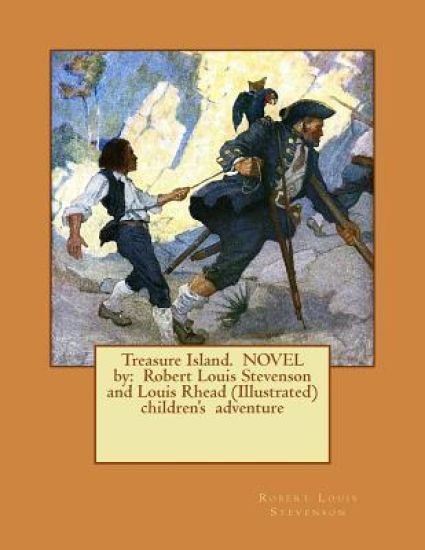
Treasure Island is an adventure novel by Scottish author Robert Louis Stevenson, narrating a tale of "buccaneers and buried gold". It was originally serialized in the children's magazine Young Folks between 1881 through 1882 under the title Treasure Island, or the mutiny of the Hispaniola, credited to the pseudonym "Captain George North". It was first published as a book on 14 November 1883 by Cassell & Co.
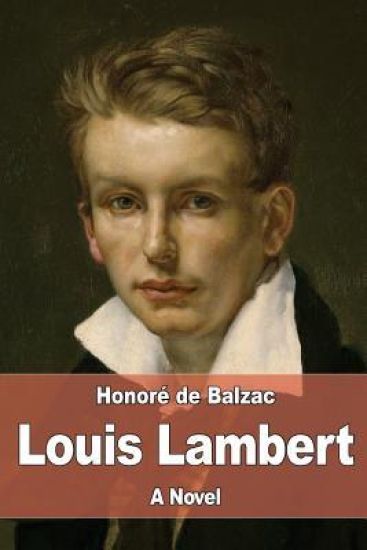
This novel begins with an overview of the main character's background. Louis Lambert, the only child of a tanner and his wife, is born in 1797 and begins reading at an early age. In 1811 he meets the real-life Swiss author Madame de Sta l (1766-1817), who - struck by his intellect - pays for him to enroll in the Coll ge de Vend me. There he meets the narrator, a classmate named "the Poet" who later identifies himself in the text as Balzac; they quickly become friends. Shunned by the other students and berated by teachers for not paying attention, the boys bond through discussions of philosophy and mysticism. After completing an essay entitled Trait de la Volont ("Treatise on the Will"), Lambert is horrified when a teacher confiscates it, calls it "rubbish", and - the narrator speculates - sells it to a local grocer. Soon afterwards, a serious illness forces the narrator to leave the school. In 1815, Lambert graduates at the age of eighteen and lives for three years in Paris. After returning to his uncle's home in Blois, he meets a woman named Pauline de Villenoix and falls passionately in love with her. On the day before their wedding, however, he suffers a mental breakdown and attempts to castrate himself. Declared "incurable" by doctors, Lambert is ordered into solitude and rest. Pauline takes him to her family's ch teau, where he lives in a near coma. The narrator, ignorant of these events, meets Lambert's uncle by chance, and is given a series of letters. Written by Lambert while in Paris and Blois, they continue his philosophical musings and describe his love for Pauline. The narrator visits his old friend at the Villenoix ch teau, where the decrepit Lambert says only: "The angels are white." Pauline shares a series of statements her lover had dictated, and Lambert dies on 25 September 1824 at the age of twenty-eight.
The tale bristles with breathless adventure, mistaken identities, detective investigations, romantic developments, and startling situations... It is a rousing story, told with a stimulating style, and culminating in love rewarded; but, before that happy end is reached, there are many thrilling revelations.
INTRODUCTIONHere's looking at Min. Louis Farrakhan in a variety of ways: Essays, articles, letters, and fictional satirical Plays. Farrakhan is still riding on his claim to fame by insulting and making mockery of Jewish people in Israel. It's not my aim to knock this apostle of hate off his pale-grey horse but to look at it critically and poke fun at it like a comedian donkey sometimes. The rider of the pale horse in revelations represented famine and pestilence (or poisoned food) and in my play All Praises Are Due, I offer some nutrition for Farrakhan to munch onFarrakhan is a wild and reckless orator, even in his mid-eighties he's still roaring or braying like the devil's jazz trumpets of an Ass/Donkey laugh. One of the symbols of the NOI is the trumpet they display high-atop corner of their propagandist newspaper The Final Call. And calling by analogy of Min. Farrakhan to the metaphor of the wild Donkey isn't out of bounds either. The Old Testament symbolized the Arab's ancestors to Ishmael would be wild and hostile towards his brothers (Gen 16:12). The Jewish community fed into Farrakhan's verbal hostility and rage by giving oxygen and air to his tongue of flames and got the heels of Louis's hoofs.Farrakhan still plays the 8-track tape of the 1930's of a Blackman by the name of Yacub creating the blond blue-eyed race of white devils. Well I have news for the hateful apostle that the son can't be more devilish then the monster father who created him. Then the chuckle gets even louder when he spouts a belief that a Space-craft (Mothership) will eventually come cruising down from the glorious clouds heaven and exterminate all these "Albino white people" and the unrighteous. His foreign policy is weird and terrible. His best friend in Africa was the late leader of Libya Gaddafi who was passing out Viagra pills to his loyalist who would rape his civilian protesters. Clearly Gaddafi went daffy on another incident when inmates in a dungeon prison cell objecting to guards leaving dead bodies to rot with them in their bunks. Gaddafi gave the word to the guards to slaughter all 2,000 plus prisoners. This is what broke the camel's back and started the revolution against him. Meanwhile Farrakhan characterized Gaddafi as an angel and God send to Libya. You can hear from the horse's mouth on his viral youtube rants and final call edicts .Following Farrakhan's leadership and advise would be like listening to the wisdom of a Mr. Ed. The best road to travel would be the tradition Civil Rights movement; and at the same avoiding the traps of being a mule to advance everybody's struggle but ours. We can't put a muzzle, bit and a bridle on the "beloved" apostle of hate. However, we can saddle this wild bucking Stallion with comedy, satire and critical analysis until the wheels fall off and the glue factory comes to pick up the remains (Hee Haw). Take it light and take it serious. This isn't no horse-shit but at times you will get a horse-laugh. When the Jews were upset with Apostle Paul they debunk him as stray donkey-ditto here.
Vernon Lee was the pseudonym of the British writer Violet Paget (14 October 1856 - 13 February 1935). She is remembered today primarily for her supernatural fiction and her work on aesthetics. An early follower of Walter Pater, she wrote over a dozen volumes of essays on art, music, and travel.Violet Paget was born in France on 14 October 1856, at Ch teau St Leonard, Boulogne, to British expatriate parents, Henry Ferguson Paget and Matilda Lee-Hamilton (n e Abadam). Violet Paget was the half-sister of Eugene Jacob Lee-Hamilton (1845-1907) by her mother's first marriage, and from whose surname she adapted her own pseudonym. Although she primarily wrote for an English readership and made many visits to London, she spent the majority of her life on the continent, particularly in Italy Her longest residence was just outside Florence in the Palmerino villa from 1889 until her death at San Gervasio, with a brief interruption during World War I. Her library was left to the British Institute of Florence and can still be inspected by visitors. In Florence she knit lasting friendships with the painter Telemaco Signorini and the learned Mario Praz, and she encouraged his love of learning and English literature. An engaged feminist, she always dressed la gar onne. During the First World War, Lee adopted strong pacifist views, and was a member of the anti-militarist organisation, the Union of Democratic Control. She was also a lesbian, and had long-term passionate friendships with three women, Mary Robinson, Kit Anstruther-Thomson, and British author Amy Levy.She played the harpsichord and her appreciation of music animates her first major work, Studies of the Eighteenth Century in Italy (1880). In her preface to the second edition of 1907, she recalled her excitement as a girl when she came across a bundle of 18th-century music. She was so nervous that it wouldn't live up to her expectations that she escaped to the garden and listened rapturously through an open window as her mother worked out the music on the piano. Along with Pater and John Addington Symonds, she was considered an authority on the Italian Renaissance, and wrote two works that dealt with it explicitly, Euphorion (1884) and Renaissance Fancies and Studies (1895)Her short fiction explored the themes of haunting and possession. The most famous were collected in Hauntings (1890) and her story "Prince Alberic and the Snake Lady" (1895) was first printed in the notorious The Yellow Book. She was instrumental in the introduction of the German concept of 'Einf hlung', or 'empathy' into the study of aesthetics in the English-speaking world
Louis hears the same voice day after day, Moloch. Enthralling young Louis with grand illusions of kings and emperors whose duties and obligations require a brave and puritanical society. Only now Louis's woodshop teacher, Mr. Rumstitch, has gotten in the way. Taken what rightfully belongs to him, the schools English teacher Miss Tolemy. However, Moloch's imparting grandiose visions has only spiraled Louis into deeper insanity until one day Louis decides to obey the treacherous creature once more. Only this time the outcome doesn't come without a price. A tale of mystery filled psycho drama, the reader will be asking themselves what is real and what is not from the mind of a madman.
"... Tant que le roi Louis fut l'h ritier pr somptif du tr ne de Bavi re, et m me pendant les commencements de son r gne, on ne vit que la premi re partie de son r le. Il tait un des combattants de 1813, il avait chant le soul vement de l'Allemagne, et on lui savait gr d'avoir d sir une place dans ce groupe g n reux o brillent les noms d'Arndt et de R ckert, de Th odore Koerner et de Max Schenkendorf. Le teutonisme se confondait alors dans les meilleurs esprits avec les id es lib rales, et cette confusion explique bien des m prises qui seraient aujourd'hui sans excuse. C' tait aussi le teutonisme qui mettait ressusciter les traditions de l'Allemagne un empressement beaucoup trop passionn pour tre toujours clairvoyant. Comme on avait senti durement les mis res de la patrie divis e, et comme l'unit n'apparaissait encore que dans un loignement bien obscur, c' tait au pass qu'on la demandait. Cet id al de l'Allemagne forte et puissante sous une loi commune, le pr sent ne pouvait le r aliser; en attendant les miracles de l'avenir, il fallut chercher cette grande image dans le tr sor des temps vanouis. Il y eut un instant o des milliers d' mes se r fugi rent, avec un entra nement aveugle, dans la foi du saint-empire. Plut t que de ne pas jouir de cette unit imaginaire, les esprits s'en allaient reculons dans le fond le plus t n breux des vieux si cles, et ne s'arr taient qu' Arminius..."
Sur la rive nord-ouest du lac de Morat, non loin du fameux champ de bataille o Charles le T m raire perdit sa gloire, on trouve le petit village de Motier. Ni le charme du paysage, ni un souvenir historique, n'ont encore attir le voyageur en cet endroit. D sormais les hommes instruits, traversant le canton de Fribourg, manqueront rarement de visiter le pauvre hameau; c'est Motier que Louis Agassiz naquit le 28 mai 1807; la mis rable localit r veillera le souvenir d'un grand nom. Personnalit brillante de la science, Agassiz, c l bre en Europe d s sa jeunesse, est devenu en Am rique la fois illustre et populaire. Un immense savoir, des d couvertes nombreuses, des vues neuves et hardies, inspir es par la p n tration de l'esprit et m ries par la raison, une parole persuasive qui charme ou captive les mes et les entra ne vers de hautes pens es, ont procur Louis Agassiz l'estime et la r putation parmi ses contemporains et dans le mouvement scientifique moderne une influence grande et heureuse. Au spectacle de cette vie si bien employ e, l'humanit appara t dans ce qu'elle a de plus noble, de plus lev , de plus g n reux. On verra la passion de l' tude aussi ardente dans les ann es de vieillesse qu'au d but de la carri re, une ambition extr me concentr e dans le d sir de p n trer les plus merveilleux ph nom nes de la nature, l'envie des richesses pour la seule joie de faire servir la richesse au progr s de la science...
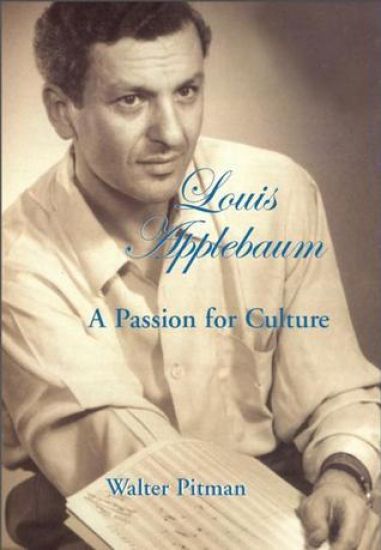
Canadian composer Louis Applebaum devoted his life to the cultural awakening of his native land, and this "magnificent obsession" drove him to become a founder of the Canadian League of Composers and the Canadian Music Centre. He was an instrumental figure in the early development of the National Film Board, the Stratford Festival, and the National Art Centre in Ottawa. For nearly half a century he composed music for the Stratford Festival, television, radio, and films. This illustrated biography explores the man who was beloved by his fellow artists and the icon to whom every Canadian, knowingly or not, is indebted.
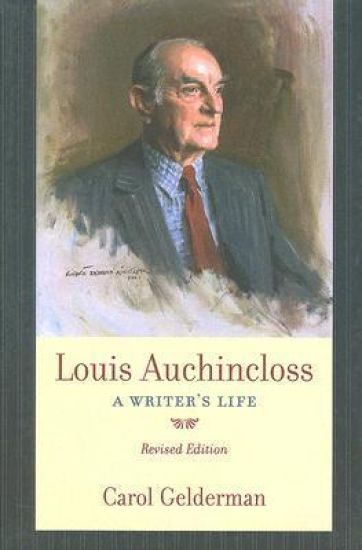
This is the definitive literary biography of a New York ""living landmark"". With more than sixty published novels, short story collections, and works of criticism and history to his credit, Louis Auchincloss is the very definition of prolific. He has garnered widespread acclaim for his unrivaled critical observations of Manhattan circles of wealth and influence, the same elite society in which he moves. In her definitive literary biography of Auchincloss, Carol Gelderman traces the iconic writer from boarding school to his early literary forays at Yale, from law school to naval service in World War II, and then to Wall Street, chronicling his success in both legal and literary careers. Gelderman notes that Auchincloss' greatest personal struggle - and perhaps greatest accomplishment - was to reconcile his competing impulses to follow his father's path to prominence in law and to write the stories of his world. ""Of all our novelists,"" Gore Vidal has observed, ""Auchincloss is the only one who tells us how our rulers behave in their banks and their boardrooms, their law offices and their clubs."" Gelderman shows how Auchincloss came to be our preeminent novelist of manners and power in this update to her 1993 biography of the only writer to be named a ""living landmark"" by the New York Landmarks Conservancy. She offers keen insights into his life, careers, and writings, including his best-selling novels ""Portrait in Brownstone"", ""The House of Five Talents"", and ""The Rector of Justin"" as well as the more recent works ""The Scarlet Letters"", ""East Side Story"", and The Young Apollo and Other Stories.
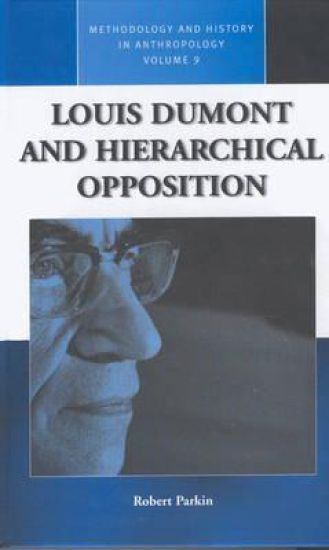
The work of Louis Dumont, who died in 1998, on India and modern individualism represented certain theoretical advances on the earlier structuralism of Claude Lévi-Strauss. One such advance is Dumont's idea of hierarchical opposition, which he proposed as a truer representation of indigenous ideologies than Lévi-Strauss's binary opposition. In this book the author argues that, although structuralism is often thought to have gone out of fashion, Dumont's greater concern with praxis and agency makes his own version of structuralism more contemporary. The work of his followers and fellow travelers, as well as his own, indicates that hierarchical opposition is capable of taking structuralism in new and more realistic directions, reminding us that it has never been the preserve of Lévi-Strauss alone.