

Kirjahaku
Etsi kirjoja tekijän nimen, kirjan nimen tai ISBN:n perusteella.
1000 tulosta hakusanalla Lynn Faherty



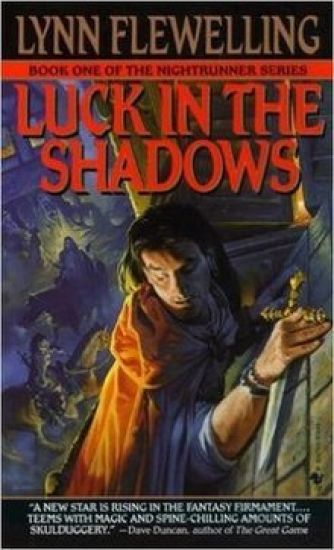

With the Leran threat laid to rest, Alec and Seregil are now able to turn their attention to the ancient evil which threatens their land. The Plenimarans, at war with Skalans, have decided to defeat their ancient enemy by raising up the Dead God, Seriamaius. The early attempts at this reincarnation--masterminded by the sinister Duke Mardus and his sorcerous minion Vargul Ashnazai--once left Seregil in a sorcerous coma. Now, an ancient prophecy points to his continuing role in the quest to stop Mardus in his dread purpose.Seregil's friend and Mentor, the wizard Nysander, has long been the guardian of a deadly secret. In a secret, silver-lined room hidden well beneath the Oreska, he has served for most of his 300 years as the keeper of a nondescript clay cup. But this cup, combined with a crystal crown and some wooden disks, forms the Helm of Seriamaius, and any mortal donning the reconstructed Helm will become the incarnation of the god on earth.Nysander holds the cup and Mardus the wooden disks--one of which was responsible for Seregil's coma--but the crown must still be located. Threatened under pain of death by Nysander to keep his quest a secret even from his loyal companion, Alec, Seregil is dispatched to find the last missing piece of the Helm so that he and Nysander can destroy it. But this is only the beginning of one of his deadliest journeys ever, for the prophecy also holds that four will come together in a time of darkness, and gradually all that Seregil values is placed at risk as he, Alec, Nysander and Micum are drawn into a deadly web of terror and intrigue.

Sometimes the price of destiny is higher than anyone imagined.... Dark Magic, Hidden DestinyFor three centuries a divine prophecy and a line of warrior queens protected Skala. But the people grew complacent and Erius, a usurper king, claimed his young half sister's throne. Now plague and drought stalk the land, war with Skala's ancient rival Plenimar drains the country's lifeblood, and to be born female into the royal line has become a death sentence as the king fights to ensure the succession of his only heir, a son. For King Erius the greatest threat comes from his own line -- and from Illior's faithful, who spread the Oracle's words to a doubting populace. As noblewomen young and old perish mysteriously, the king's nephew -- his sister's only child -- grows toward manhood. But unbeknownst to the king or the boy, strange, haunted Tobin is the princess's daughter, given male form by a dark magic to protect her until she can claim her rightful destiny. Only Tobin's noble father, two wizards of Illior, and an outlawed forest witch know the truth. Only they can protect young Tobin from a king's wrath, a mother's madness, and the terrifying rage of her brother's demon spirit, determined to avenge his brutal murder....
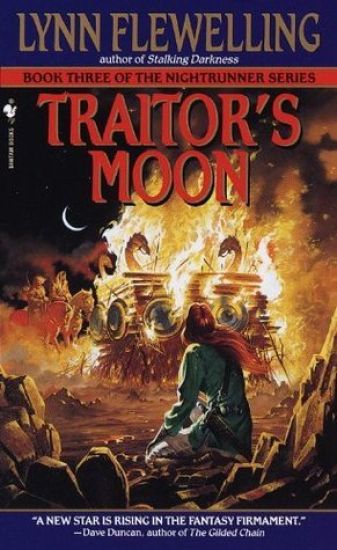

With their most treacherous mission yet behind them, heroes Seregil and Alec resume their double life as dissolute nobles and master spies. But in a world of rivals and charmers, fate has a different plan.... After their victory in Aur nen, Alec and Seregil have returned home to Rh minee. But with most of their allies dead or exiled, it is difficult for them to settle in. Hoping for diversion, they accept an assignment that will take them back to Seregil's homeland. En route, however, they are ambushed and separated, and both are sold into slavery. Clinging to life, Seregil is sustained only by the hope that Alec is alive. But it is not Alec's life his strange master wants--it is his blood. For his unique lineage is capable of producing a rare treasure, but only through a harrowing process that will test him body and soul and unwittingly entangle him and Seregil in the realm of alchemists and madmen--and an enigmatic creature that may hold their very destiny in its inhuman hands.... But will it prove to be savior or monster?
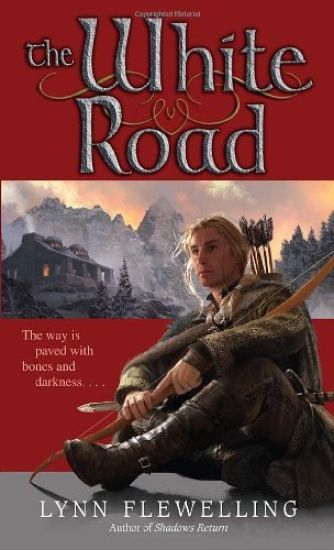
Dissolute nobles, master spies, and the unlikeliest of heroes, Alec and Seregil have survived exile, treachery, and black magic. But the road that lies ahead is the most hazardous they've ever traveled. For with enemies on all sides, they must walk a narrow path between good and evil where one misstep might be their last. Having escaped death and slavery in Plenimar, Alec and Seregil want nothing more than to go back to their nightrunning life in Rh minee. Instead they find themselves saddled with Sebrahn, a strange, alchemically created creature--the prophesied "child of no woman." Its moon-white skin and frightening powers make Sebrahn a danger to all whom Alec and Seregil come into contact with, leaving them no choice but to learn more about Sebrahn's true nature. With the help of trusted friends and Seregil's clan, the duo set out to discover the truth about this living homunculus--a journey that can lead only to danger or death. For Seregil's old nemesis Ulan Sathil of Vir sse and Alec's own long-lost kin are after them, intent on possessing both Alec and Sebrahn. On the run and hunted, Alec and his comrades must fight against time to accomplish their most personal mission ever.

It's Jay's turn now... Months later it's Jay's turn to tell her story. She has a couple of Lesson's to Learn...

What happens when you put aside buying and selling and consider the difference that one clever word can make in your day and your performance? Author Lynn Blackwood answers this question and more in 'C' If You Agree, a book that encompasses over twenty years of sales experience into a collection of words of wisdom geared towards success for individuals and corporate leaders. Even though this book was created to mainly serve men and women whose daily livelihood is in sales, the ideas really have a much broader appeal. This book teaches effective and proven techniques that can be incorporated into your overall business approach, and into your daily life. The advice and examples provided are effective in all corporate environments and industries.

Anoreixa - A Parent's Guide - How To Help Your Child Overcome Anorexia
Lynn Johnson
Lulu.com
2011
pokkari
This is a true story of how I overcame anorexia. It offers useful advice for parent's of anorexic children.
The phrase "like a bride adorned" is one of the ways Revelation describes the new Jerusalem which descends from heaven. This phrase can also be read as describing one of the ways interpreters historically have understood the relationship between Revelation and its metaphorical language. In contrast to views that suggest Revelation's metaphorical language is simple adornment, Huber argues that Revelation's persuasive power resides within the text's metaphorical nature and she articulates a method for exploring how Revelation employs metaphor to shape an audience's thought. In order to gain a sense of how metaphorical language works in Revelation's highly metaphorical text,"Like a Bride Adorned:" Reading Metaphor in John's Apocalypse engages one set of conceptual metaphors in relation to Revelation's literary and social-historical milieu. Specifically, Huber explores the conceptual metaphors undergirding Revelation's nuptial or bridal imagery. Positioned at the culmination of the text's, nuptial imagery serves as one the text's final and arguably one of its most important characterizations of the Christian community.Examining the function of Revelation's nuptial imagery involves investigating how the text redeploys conventional metaphorical constructions used in the writings of the Hebrew prophets and how its imagery engages Greco-Roman depictions of women, weddings, and brides. Discourse about marriage and family was such an important part of Revelation's historical context, especially as it was shaped by the Roman Empire, that any discussion of the text's nuptial imagery must examine how it reflects and responds to this discourse. By addressing these questions, we see that Revelation's nuptial imagery serves to further the text's goal of shaping Christian identity in opposition to the social demands of the Roman Empire. Moreover, exploration of the conceptual metaphors undergirding Revelation's "bride adorned" reveals how John seeks to shape Christian identity as a transitional identity. Through metaphor, Revelation encourages its audience to envision the Christian community as a bride who constructs "her" own identity as she transitions into a new role in relation to God and the Lamb. Through the process of exploring Revelation's nuptial imagery with insights gained from conceptual metaphor theory, we uncover the ways that John employs metaphorical language to persuade his audience's thought about themselves and about others. Consequently, this work contributes both to our understanding of the text's nuptial imagery and to our knowledge of how Revelation employs metaphor as tool for persuasion.
Through a close and informative reading of seven key texts in Acts, Kauppi analyses the appearances of Graeco-Roman religion, offering evidence of practices including divination and oracles, ruler cult and civic foundation myth. Foreign But Familiar Gods then uses a combination of these scriptural texts and other contemporary evidence (including archaeological and literary material) to suggest that one of Luke's subsidiary themes is to contrast Graeco-Roman and Christian religious conceptualizations and practices.
Lynn R. Huber argues that the visionary aspect of Revelation, with its use of metaphorical thinking and language, is the crux of the text's persuasive power. Emerging from a context that employs imagery to promote imperial mythologies, Revelation draws upon a long tradition of using feminine imagery as a tool of persuasion. It does so even while shaping a community identity in contrast to the dominant culture and in exclusive relationship with the Lamb. By drawing upon the work of medieval and modern visionaries, Huber answers a call to examine the way 'real' readers engage with biblical texts. Revealing how Revelation continues to persuade audiences through appeals to the visual and provocative imagery she offers a new sense of how the text metaphorical language simultaneously limits and invites new meaning, unfurling a range of interpretations.

Lynn R. Huber argues that the visionary aspect of Revelation, with its use of metaphorical thinking and language, is the crux of the text's persuasive power. Emerging from a context that employs imagery to promote imperial mythologies, Revelation draws upon a long tradition of using feminine imagery as a tool of persuasion. It does so even while shaping a community identity in contrast to the dominant culture and in exclusive relationship with the Lamb. By drawing upon the work of medieval and modern visionaries, Huber answers a call to examine the way 'real' readers engage with biblical texts. Revealing how Revelation continues to persuade audiences through appeals to the visual and provocative imagery she offers a new sense of how the text metaphorical language simultaneously limits and invites new meaning, unfurling a range of interpretations.

This is a practical guide which aims to make living at home a positive experience. It offers advice on m any different aspects of single life running a home; dealing with finances and resolving relationship issues. '