

Kirjahaku
Etsi kirjoja tekijän nimen, kirjan nimen tai ISBN:n perusteella.
1000 tulosta hakusanalla Manning Marable


How to Sharpen: A Book for the Home Craftsman, Farmer, Mechanic and Others Who Use Edged Tools
Behr-Manning
Literary Licensing, LLC
2012
nidottu

Selected Speeches of Robert M. Strozier: Florida State University Studies, No. 35
Robert Manning Strozier; James A. Preu; Albert L. Leduc
Literary Licensing, LLC
2012
nidottu
""Patterns and Problems of Development"" by Charles Manning Child is a comprehensive study of the various stages of human development, from infancy to adulthood. The book explores the physical, cognitive, emotional, and social changes that occur during each stage of development, and examines the factors that influence these changes. The author analyzes the patterns and problems that may arise during development, such as developmental delays, behavioral issues, and mental health disorders. The book also delves into the role of genetics, environment, and culture in shaping human development. Written in an accessible and engaging style, ""Patterns and Problems of Development"" is an essential resource for students and professionals in the fields of psychology, education, and social work. The book provides a comprehensive overview of human development, and offers insights and strategies for addressing the challenges that may arise during each stage of life. Overall, it is a valuable guide for anyone interested in understanding the complexities of human development and promoting healthy growth and development in individuals of all ages.This scarce antiquarian book is a facsimile reprint of the old original and may contain some imperfections such as library marks and notations. Because we believe this work is culturally important, we have made it available as part of our commitment for protecting, preserving, and promoting the world's literature in affordable, high quality, modern editions, that are true to their original work.

The Art of Leadership, 6th edition, is based on two ideas: 1. Leadership will take place to the extent where the leader cares about the work to be done. Equally important, the leader must care about people. Neither of these qualities is sufficient without the other, and neither can be false. People know when the leader cares. When the leader is committed to the task and is concerned about people, these qualities serve as magnets and motivators to followers, and their potential for achievement becomes enormous.2. Leadership is an art that can be developed through mastery of nine key areas of success. The successful leader must possess knowledge and skills in the following areas: understanding leadership variables, the power of vision, the importance of ethics, the empowerment of people, leadership principles, understanding people, multiplying effectiveness, developing others, and performance management. The difference between most other leadership texts and the Art of Leadership, 6th edition, can be compared to the difference between a lecture and seminar. Although both are good educational vehicles, the lecture is better for conveying large amounts of information, while the seminar is better for developing skills and attitudes. A good lecture is interesting and builds knowledge, while a good seminar is stimulating and builds competency. Without sacrificing either theoretical foundation or important content, the 6th edition of The Art of Leadership emphasizes the interactive, seminar approach to learning.

Loose Leaf for the Art of Leadership
George Manning; Kent Curtis
McGraw-Hill Companies
2021
irtolehti
The Art of Leadership is based on two ideas: 1. Leadership will take place to the extent the leader cares about the work to be done. Equally important, the leader must care about people. Neither of these qualities is sufficient without the other, and neither can be false. People know when the leader cares. When the leader is committed to the task and is concerned about people, these qualities serve as magnets and motivators to followers, and their potential for achievement becomes enormous.2. Leadership is an art that can be developed through mastery of nine key areas of success. The successful leader must possess knowledge and skills in the following areas: understanding leadership variables, the power of vision, the importance of ethics, the empowerment of people, leadership principles, understanding people, multiplying effectiveness, developing others, and performance management. The difference between most other leadership texts and the Art of Leadership can be compared to the difference between a lecture and seminar. Although both are good educational vehicles, the lecture is better for conveying large amounts of information, while the seminar is better for developing skills and attitudes. A good lecture is interesting and builds knowledge, while a good seminar is stimulating and builds competency. Without sacrificing either theoretical foundation or important content, the 7th edition of The Art of Leadership emphasizes the interactive, seminar approach to learning. The 7th edition remains reader-centered, research-based, practical, and personalized. The Instructor Resources for the 7th edition have been vastly enhanced, including the PowerPoint and test bank.

The Art of Leadership: 2025 Release ISE
George Manning; Kent Curtis
McGraw-Hill Education
2025
nidottu
The Art of Leadership, is based on two ideas:1) Leadership will take place to the extent the leader cares about the work to be done. Equally important, the leader must care about people. Neither of these qualities is sufficient without the other, and neither can be false. People know when the leader cares. 2) Leadership is an art that can be developed through mastery of nine key areas of success. The successful leader must possess knowledge and skills in the following areas: understanding leadership variables, the power of vision, the importance of ethics, the empowerment of people, leadership principles, understanding people,multiplying effectiveness, developing others, and performance management.Without sacrificing either theoretical foundation or important content, The Art of Leadership emphasizes the interactive, seminar approach to learning.

Grossdeutschland Division, the premier German WW2, formation fought on the Eastern Front from 1941-45 with campaigns against the Red Army at Moscow, Rzhev, Dnieper, Kursk, Belgorod, East Prussia, Memel and Pillau where the Division was decimated.

General T.F. Meagher, Irish Brigade, Union Army, American Civil War
Michael Manning
Lulu Press Inc
2013
nidottu
General Thomas Francis Meagher created the 69th New York City Infantry Regiment that formed part of the Irish Brigade which Meagher commanded and led at Antietam and Fredericksburg in 1863.

Bees are vital for the pollination of fruit and vegetables representing 70% of food produced for mankind's consumption. Bees are industrious, devoted to the well being of the hive and can be managed by beekeepers to produce honey which is stored by the bees for surviving the winter dormancy period.
Selling Today: Partnering to Create Value, Global Edition
Gerald Manning; Michael Ahearne; Barry Reece
PEARSON EDUCATION LIMITED
2024
pokkari

Selling Today: Partnering to Create Value, Global Edition + MyLab Marketing with Pearson eText
Gerald Manning; Michael Ahearne; Barry Reece
pearson education limited
2024
muu
Selling Today helps you understand the value of developing personal selling skills. The text incorporates academic theory, roleplay scenarios, real-world applications and ethical dilemmas. With the largest number of “learn by doing” materials of any personal selling text, Selling Today offers a wealth of tools to help you develop an ethical, customer-centered mindset. With new discussions, scenarios and videos, the 15th Edition prepares you to succeed as a member of a new generation of sales professionals.


Dr. Renfro C. Manning shares tales and draws lessons from life growing up in Harlan County, Kentucky. These stories depict a time when Appalachia was filled with unique and often unbelievable characters--from bootleggers to snake handlers. Dr. Manning demonstrates how those formative experiences informed decision-making throughout his life and career as Superintendent of Schools in Virginia and South Carolina.

Sylvia Solo is a seventh-grade student at an ultra-expensive private school that she attends by virtue of a violin scholarship. As part of a class assignment, Sylvia visits the Metropolitan Museum's ancient Egyptian collection. While there in Perneb's tomb, the lights go out. As she begins playing her violin, a guard investigates, and his flashlight reveals ancient symbols carved into the stone walls that look to Sylvia like musical notes. She plays the notes and finds herself transported back to the Old Kingdom of ancient Egypt. There, she meets Da'av and his cat Teekay, who guide her on a brief romp into the underworld. Da'av is a protege of Imhapknum, a priest trying to save the spiritual soul of the kingdom from the ambitious Niphut, right-hand lady to the aging Pharaoh. A young adult fantasy, the book can be enjoyed by adults of any age with active imaginations.
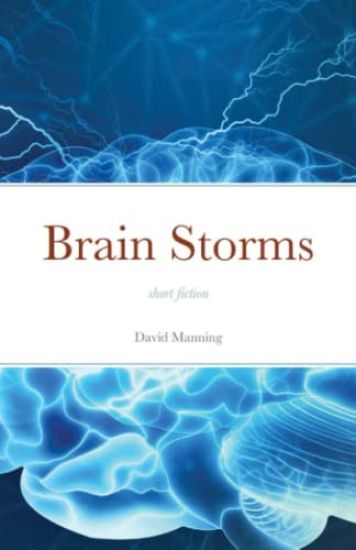
This collection of imaginative short fiction by David Manning is gleaned from a lifetime afflicted with creativity, including selections from his inventive 1970s "Blurbs" column, excerpts from a novel-in-progress set at Duke University in 1968, a metaphysical carnival of short stories, and multi-media formats ranging from radio to stage to film to song lyrics.

Two homeless beggars meet on the streets of New York in the winter of 1870. One is a handicapped Irish Civil War veteran with a low self-esteem trying to find something in life to hang on to; the other a confident, well-educated former slave trying to make the most of his considerable potential as an accomplished chef. An exploration of the two men's lives is augmented by images brought to life through the magic of the ex-slave's cooking. During the course of this exploration, and subsequent events, it becomes apparent that the veteran has emerged from the war half slave and the slave only half free. Rather than a historic drama, the play comments on the present (often in humorous or absurd tones) through parallels between the 1870s and current issues: homelessness, growing extremes of wealth and poverty, corporate greed, a recent controversial war, and racial/ethnic prejudices.