Kirjojen hintavertailu. Mukana 11 548 847 kirjaa ja 12 kauppaa.

Kirjahaku

Etsi kirjoja tekijän nimen, kirjan nimen tai ISBN:n perusteella.

1000 tulosta hakusanalla Maral Atmaca

Moral Agency in Eastern and Western Thought
This volume explores how individuals use moral agency to craft the moral dispositions and moral capabilities needed for living well-lived lives. It draws on Eastern and Western philosophical and ethical traditions to formulate and address key issues concerning character development and moral agency. In both Eastern and Western traditions, the complexities of shaping an individual’s moral agency focus on sustained processes of inner self-cultivation. The chapters in this volume highlight the ways in which one is to manage and direct one’s desires and aspirations, and what is to count as the source of guidance for a well-lived life. They engage with key figures and traditions in the history of Eastern and Western philosophy, including Confucian, Buddhist, and Western sources, from Aristotle to Kant. The juxtaposition of sources from the different parts of the world highlights striking similarities and significant contrasts and provides rich conceptual resources for further exploration of these issues. The volume provides a broader, deeper pursuit of central issues of moral psychology and ethics in ways that highlight the inexhaustible resources in these traditions. The focus on character is a way to draw together perspectives on ethical life, theories of human agency, views of fundamental, life-guiding values, and relations between individuals and society and how persons see their place in the world. Moral Agency in Eastern and Western Thought will appeal to scholars and advanced students working on virtue ethics, moral psychology, comparative philosophy, and history of philosophy.
Moral Agency in Eastern and Western Thought
This volume explores how individuals use moral agency to craft the moral dispositions and moral capabilities needed for living well-lived lives. It draws on Eastern and Western philosophical and ethical traditions to formulate and address key issues concerning character development and moral agency.In both Eastern and Western traditions, the complexities of shaping an individual’s moral agency focus on sustained processes of inner self-cultivation. The chapters in this volume highlight the ways in which one is to manage and direct one’s desires and aspirations, and what is to count as the source of guidance for a well-lived life. They engage with key figures and traditions in the history of Eastern and Western philosophy, including Confucian, Buddhist, and Western sources, from Aristotle to Kant. The juxtaposition of sources from the different parts of the world highlights striking similarities and significant contrasts and provides rich conceptual resources for further exploration of these issues. The volume provides a broader, deeper pursuit of central issues of moral psychology and ethics in ways that highlight the inexhaustible resources in these traditions. The focus on character is a way to draw together perspectives on ethical life, theories of human agency, views of fundamental, life-guiding values, and relations between individuals and society and how persons see their place in the world.Moral Agency in Eastern and Western Thought will appeal to scholars and advanced students working on virtue ethics, moral psychology, comparative philosophy, and history of philosophy.
Moral and Intellectual Virtues in Western and Chinese Philosophy
This is the first book to bring together Western and Chinese perspectives on both moral and intellectual virtues. Editors Chienkuo Mi, Michael Slote, and Ernest Sosa have assembled some of the world’s leading epistemologists and ethicists—located in the U.S., Europe, and Asia—to explore in a global context what they are calling, "the virtue turn." The 15 chapters have never been published previously and by covering topics that bridge epistemology and moral philosophy suggest a widespread philosophical turn away from Kantian and Utilitarian issues and towards character- and agent-based concerns. A goal of this volume is to show students and researchers alike that the (re-)turn toward virtue underway in the Western tradition is being followed by a similar (re-)turn toward virtue in Chinese philosophy.
Moral Dilemmas Involving Self-Driving Cars

Moral Dilemmas Involving Self-Driving Cars

Norbert Paulo; Lando Kirchmair

TAYLOR FRANCIS LTD
2024
sidottu
Experts believe that self-driving cars will be much safer than conventional cars. However, there will still be some accidents, even fatal ones. The innovation of self-driving cars gives us the new, amazing, and, at the same time, arduous opportunity to decide in advance what should happen in which accident situation. It will force us to decide who must die in order to save others in dilemma situations.This book prepares readers to take an informed stance on the difficult moral dilemmas involving self-driving cars. It will convince them that the ethical and legal challenges posed by self-driving cars are real, novel, and unavoidable—and that they require a solution. It presents the problems involved in programming self-driving cars for dilemma situations, putting the reader in the position to develop their own well-informed opinion on the issues. The book also discusses the astonishing discrepancies between existing regulations for collisions involving self-driving cars in some jurisdictions and empirical findings about what people think about how they should be regulated. Finally, it presents advice for policymakers around the globe on how to regulate moral dilemmas involving self-driving cars.Moral Dilemmas Involving Self-Driving Cars will be of interest to a broad range of students, scholars, and policymakers interested in the ethics of self-driving vehicles.
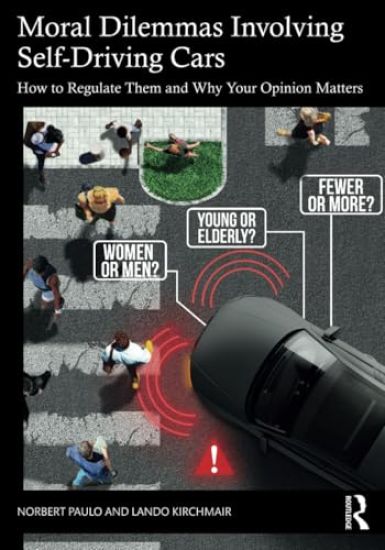
Moral Dilemmas Involving Self-Driving Cars

Moral Dilemmas Involving Self-Driving Cars

Norbert Paulo; Lando Kirchmair

TAYLOR FRANCIS LTD
2024
nidottu
Experts believe that self-driving cars will be much safer than conventional cars. However, there will still be some accidents, even fatal ones. The innovation of self-driving cars gives us the new, amazing, and, at the same time, arduous opportunity to decide in advance what should happen in which accident situation. It will force us to decide who must die in order to save others in dilemma situations.This book prepares readers to take an informed stance on the difficult moral dilemmas involving self-driving cars. It will convince them that the ethical and legal challenges posed by self-driving cars are real, novel, and unavoidable—and that they require a solution. It presents the problems involved in programming self-driving cars for dilemma situations, putting the reader in the position to develop their own well-informed opinion on the issues. The book also discusses the astonishing discrepancies between existing regulations for collisions involving self-driving cars in some jurisdictions and empirical findings about what people think about how they should be regulated. Finally, it presents advice for policymakers around the globe on how to regulate moral dilemmas involving self-driving cars.Moral Dilemmas Involving Self-Driving Cars will be of interest to a broad range of students, scholars, and policymakers interested in the ethics of self-driving vehicles.
Moral Institutions

Moral Institutions

Mario I. Juarez-Garcia

TAYLOR FRANCIS LTD
2025
sidottu
Philosophy, Politics, and Economics (PPE) is a promising approach to understanding our complex world and addressing contemporary social issues. But what is it? In this book, Mario I. Juarez-Garcia, straightforwardly explains to beginners what PPE is and why it’s so useful. The book uses a unified PPE approach for undergraduate students that differs from a simple combination of moral philosophy, political science, and economics so that the reader can appreciate PPE’s distinct and unique virtues. It focuses on two institutions that have been fundamental in making the world a better place: governments and markets. By the end, the reader can see why finding the right answer to many unprecedented questions is so difficult in a morally diverse society. But the take-away message for students is that it is the diversity of our liberal, Open Societies that has made them prosperous and well worth the frustrations of living in a complex, dynamic and uncertain world. Each chapter begins with short lists of “What You Need to Remember” and ends with “Testing the Reading” questions, helping guide the student reader throughout the book.
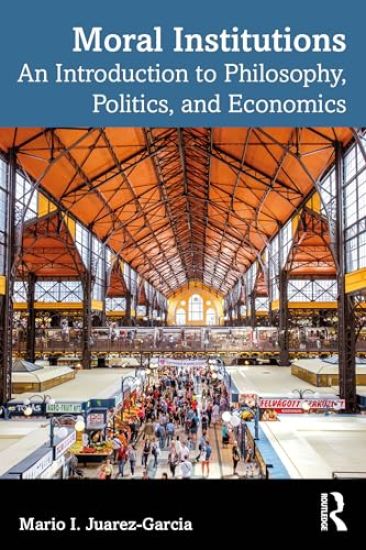
Moral Institutions

Moral Institutions

Mario I. Juarez-Garcia

TAYLOR FRANCIS LTD
2025
nidottu
Philosophy, Politics, and Economics (PPE) is a promising approach to understanding our complex world and addressing contemporary social issues. But what is it? In this book, Mario I. Juarez-Garcia, straightforwardly explains to beginners what PPE is and why it’s so useful. The book uses a unified PPE approach for undergraduate students that differs from a simple combination of moral philosophy, political science, and economics so that the reader can appreciate PPE’s distinct and unique virtues. It focuses on two institutions that have been fundamental in making the world a better place: governments and markets. By the end, the reader can see why finding the right answer to many unprecedented questions is so difficult in a morally diverse society. But the take-away message for students is that it is the diversity of our liberal, Open Societies that has made them prosperous and well worth the frustrations of living in a complex, dynamic and uncertain world. Each chapter begins with short lists of “What You Need to Remember” and ends with “Testing the Reading” questions, helping guide the student reader throughout the book.
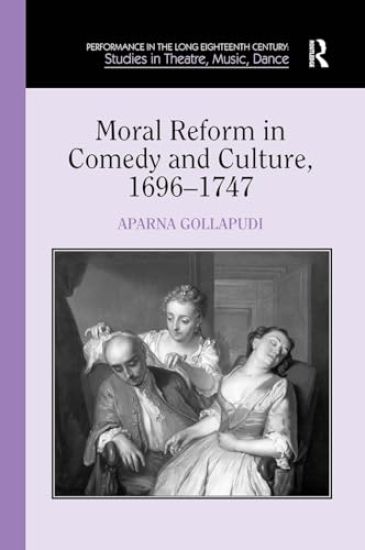
Moral Reform in Comedy and Culture, 1696-1747

Moral Reform in Comedy and Culture, 1696-1747

Aparna Gollapudi

TAYLOR FRANCIS LTD
2024
nidottu
In the first half of the eighteenth century, a new comic plot formula dramatizing the moral reform of a flawed protagonist emerged on the English stage. The comic reform plot was not merely a generic turn towards morality or sentimentality, Aparna Gollapudi argues, but an important social mechanism for controlling and challenging political and economic changes. Gollapudi looks at reform comedies by dramatists such as Colley Cibber, Susanna Centlivre, Richard Steele, Charles Johnson, and Benjamin Hoadly in relation to emergent trends in finance capitalism, imperial nationalism, political factionalism, domestic ideology, and middling class-consciousness. Within the context of the cultural anxieties engendered by these developments, Gollapudi suggests, the reform comedies must be seen not as clichéd and moralistic productions but as responses to vital ideological shifts and cultural transvaluations that impose a reassuring moral schema on everyday conduct. Thoroughly researched and elegantly written, Gollapudi's study shows that reform comedies covered a range of contemporary concerns from party politics to domestic harmony and are crucial for understanding eighteenth-century literature and culture.
Moral Learning

Moral Learning

TAYLOR FRANCIS LTD
2024
nidottu
As moral educators we are more used to teaching others and researching their learning and moral development than reflecting on and writing formally about our own moral learning. We are not just professionals with an interest and supposedly some expertise in morality and education, we also have gendered and culturally differentiated personal and professional lives, in which there are moral issues, puzzles, and conflicts. We are situated in diverse political and institutional contexts whilst participating in an interdisciplinary professional field and interacting in an increasingly globalised world. How do we integrate the personal, professional and political in our moral learning? In this book celebrating the Journal of Moral Education’s 40th anniversary, 15 invited contributors, at different stages in their careers, from a range of disciplinary and cultural backgrounds, and from around the world, offer their academic, analytical and autobiographical reflections. Through their stories, narratives, analyses, questions and concerns, and across many diverse topics central to moral education, we see how they each confront their own moral learning—personally, professionally, and politically. This book offers insights from formative experiences and ongoing issues and challenges to suggest how all educators might take more account of the interrelation of the personal, professional and political in moral teaching and learning. This book was originally published as a special issue of the Journal of Moral Education.
Moral Education in sub-Saharan Africa
The term ‘moral’ has had a chequered history in sub-Saharan Africa, mainly due to the legacy of colonialism and Apartheid (in South Africa). In contrast to moral education as a vehicle of cultural imperialism and social control, this volume shows moral education to be concerned with both private and public morality, with communal and national relationships between human beings, as well as between people and their environment. Drawing on distinctive perspectives from philosophy, economics, sociology and education, it offers the African ethic of Ubuntu/Botho as a plausible alternative to Western approaches to morality and shows how African ethics speaks to political and economic life, including ethnic conflict and HIV/AIDS, and may be an antidote to the current practice of timocracy that values money over people.The volume provides sociological tools for understanding the lived morality of those marginalised by poverty, and analyses the effects of culture, religion and modern secularisation on moral education. With contributions from fourteen African scholars, this book challenges dominant frameworks, and begins conversations for mutual benefit across the North-South divide. It has global implications, not just, but especially, where moral education is undertaken in pluralist contexts and in the presence of economic disparity.This book was published as a special issue of the Journal of Moral Education.
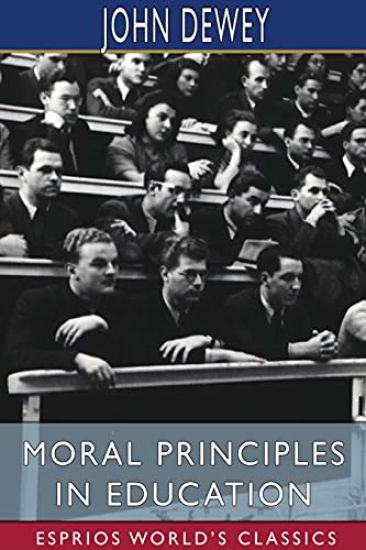
Moral Principles in Education (Esprios Classics)
John Dewey (October 20, 1859 - June 1, 1952) was an American philosopher, psychologist, and educational reformer whose ideas have been influential in education and social reform. He was one of the most prominent American scholars in the first half of the twentieth century. The overriding theme of Dewey's works was his profound belief in democracy, be it in politics, education, or communication and journalism. As Dewey himself stated in 1888, while still at the University of Michigan, "Democracy and the one, ultimate, ethical ideal of humanity are to my mind synonymous." Dewey considered two fundamental elements-schools and civil society-to be major topics needing attention and reconstruction to encourage experimental intelligence and plurality.
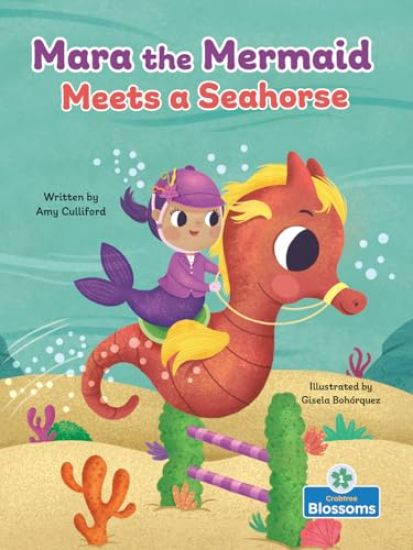
Mara the Mermaid Meets a Seahorse

Mara the Mermaid Meets a Seahorse

Amy Culliford

Crabtree Blossoms
2024
sidottu
Follow along with Mara the mermaid as she learns all about seahorses Early readers will have fun building confidence in their reading skills with simple text and colorful illustrations. Also includes a page for caregivers and teachers that suggests guiding questions to help aid in reading comprehension. Downloadable Teacher Notes available.
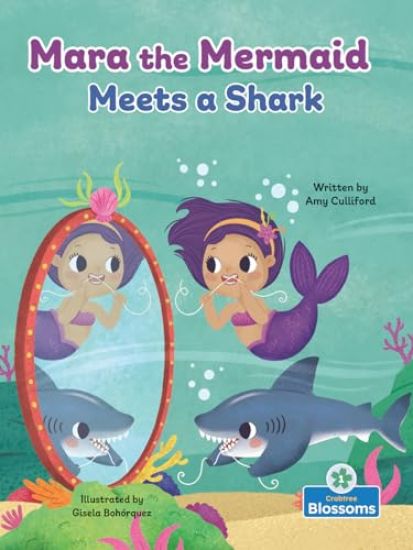
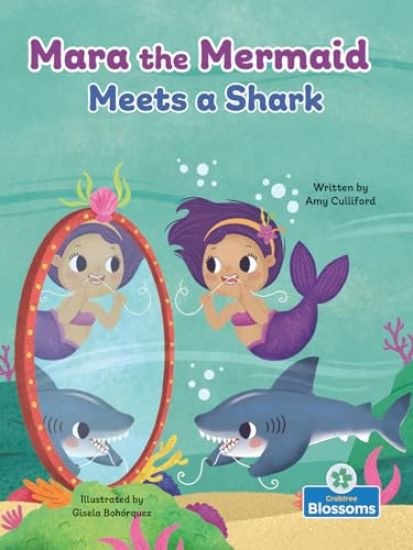
Mara the Mermaid Meets a Shark

Mara the Mermaid Meets a Shark

Amy Culliford

Crabtree Blossoms
2024
sidottu
Look out It's time to learn about sharks Early readers will enjoy following Mara the mermaid as she discovers fun facts about sharks using simple text and colorful illustrations. Also includes a page for caregivers and teachers that suggests guiding questions to help aid in reading comprehension. Downloadable Teacher Notes available.
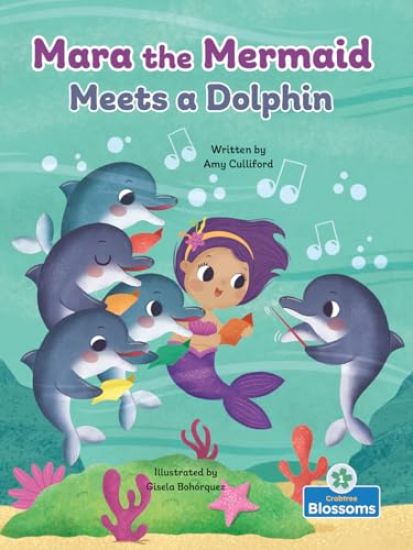
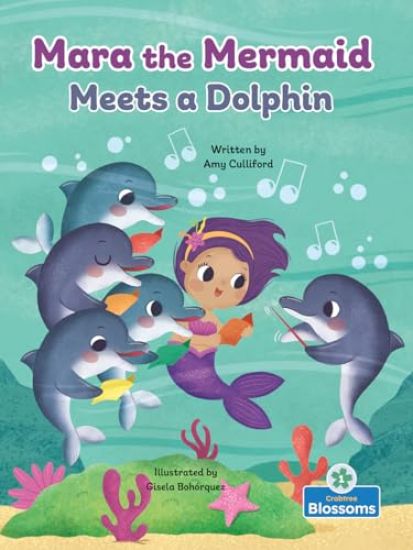
Mara the Mermaid Meets a Dolphin

Mara the Mermaid Meets a Dolphin

Amy Culliford

Crabtree Blossoms
2024
sidottu
Follow along as Mara the mermaid dives into discovering dolphins With colorful illustrations and simple text, early readers will have fun while building confidence in reading. Also includes a page for caregivers and teachers that suggests guiding questions to help aid in reading comprehension. Downloadable Teacher Notes available.
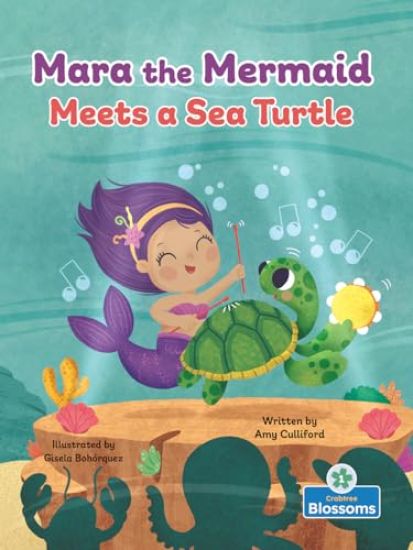
Mara the Mermaid Meets a Sea Turtle

Mara the Mermaid Meets a Sea Turtle

Amy Culliford

Crabtree Blossoms
2024
sidottu
Join Mara the mermaid as she learns all about sea turtles Perfect for early readers, this book uses simple text and colorful illustrations to help build confidence in reading Also includes a page for caregivers and teachers that suggests guiding questions to help aid in reading comprehension. Downloadable Teacher Notes available.
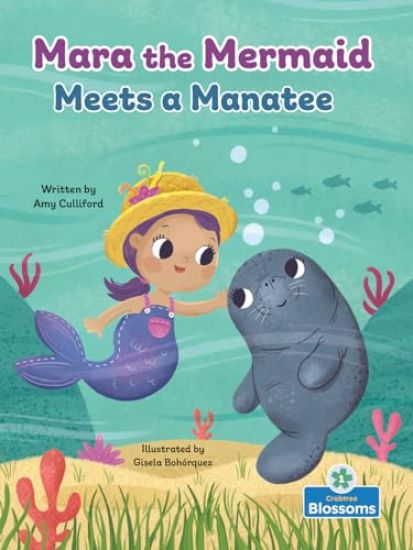
Mara the Mermaid Meets a Manatee

Mara the Mermaid Meets a Manatee

Amy Culliford

Crabtree Blossoms
2024
sidottu
Early readers will enjoy learning all about manatees alongside Mara the mermaid With colorful illustrations and simple text, early readers will have fun while building confidence in reading. Also includes a page for caregivers and teachers that suggests guiding questions to help aid in reading comprehension. Downloadable Teacher Notes available.
Mara the Mermaid Meets a Shark

Mara the Mermaid Meets a Shark

Amy Culliford

Crabtree Blossoms
2024
nidottu
Look out It's time to learn about sharks Early readers will enjoy following Mara the mermaid as she discovers fun facts about sharks using simple text and colorful illustrations. Also includes a page for caregivers and teachers that suggests guiding questions to help aid in reading comprehension. Downloadable Teacher Notes available.
Mara the Mermaid Meets a Dolphin

Mara the Mermaid Meets a Dolphin

Amy Culliford

Crabtree Blossoms
2024
nidottu
Follow along as Mara the mermaid dives into discovering dolphins With colorful illustrations and simple text, early readers will have fun while building confidence in reading. Also includes a page for caregivers and teachers that suggests guiding questions to help aid in reading comprehension. Downloadable Teacher Notes available.
Moral Conversion and Video Games

Moral Conversion and Video Games

Frank G. Bosman

TAYLOR FRANCIS LTD
2025
sidottu
Moral Conversion and Video Games is an in-depth exploration of Spec Ops: The Line, a critically acclaimed video game that subverts its genre by confronting players with the psychological and moral consequences of war. Disguised as a standard third-person shooter, the game gradually reveals a dark, self-critical narrative in which the player’s choices, though seemingly free, lead to horrifying outcomes, most notably a white phosphorus attack on civilians. Praised for its story, aesthetic, and philosophical depth, the game has been interpreted as a critique of glorified violence, American exceptionalism, and the illusion of meaningful choice in video games. Its use of cognitive and ludo-narrative dissonance forces players to reflect on their own complicity in virtual violence. The game’s mirrored reference to Raphael’s Sistine Madonna, recast as a burned mother and child, deepens its ethical and even theological resonance. This insightful and in-depth study will interest researchers and students of video game studies, moral philosophy, and cultural theology.
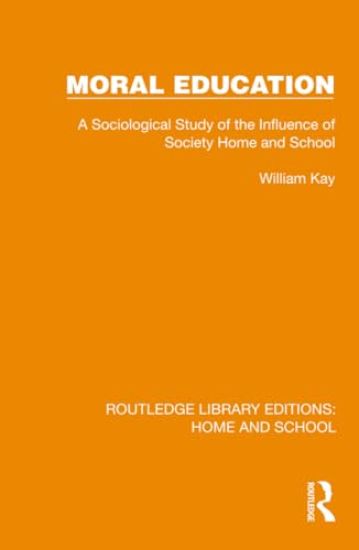
Moral Education

Moral Education

William Kay

TAYLOR FRANCIS LTD
2025
sidottu
In the early 1970s few subjects in schools had grown faster than moral education, and more and more teachers were seeking guidance in a changing and developing field where a training in the ‘traditional’ subjects could not always provide sufficient help. Originally published in 1975, Dr Kay maintained that a study of the sociological factors involved could give considerable insight into the meaning and purpose of moral education, and in this book he examines the effect on the individual pupil of the home, the school and differing socio-economic class structures and ideologies.Using standard sociological analyses Dr Kay discloses some of the determinants of individual morality as they affect children in their homes and schools. He concludes that the alleged moral superiority of the middle-classes merely stresses the fact that the benefits which are currently enjoyed by this minority should become the privilege of all. The analysis of home and school leads him to the view that a democratic milieu is the environment most likely to promote moral growth. And his study of school systems concludes with the view that privileged elitism should be replaced by an ‘aristocracy of service’, with full pupil-participation in every aspect of school life. Today it can be read in its historical context.