

Kirjahaku
Etsi kirjoja tekijän nimen, kirjan nimen tai ISBN:n perusteella.
1000 tulosta hakusanalla Marcel Drouets


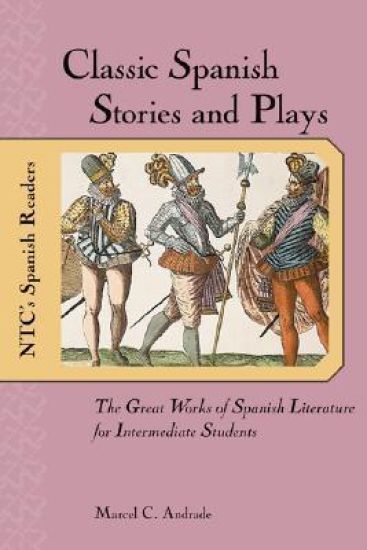
Spanning "El Cid" (1140) to "El Burlador De Sevilla" (1630), "Classic Spanish Stories and Plays" contains eight great Spanish classics works including "Don Quixote", one of the masterpieces of world literature. Expertly abridged and adapted for the intermediate learner, each tale and play includes ample cultural notes and translations of difficult words. An extensive vocabulary is included at the back of the book.
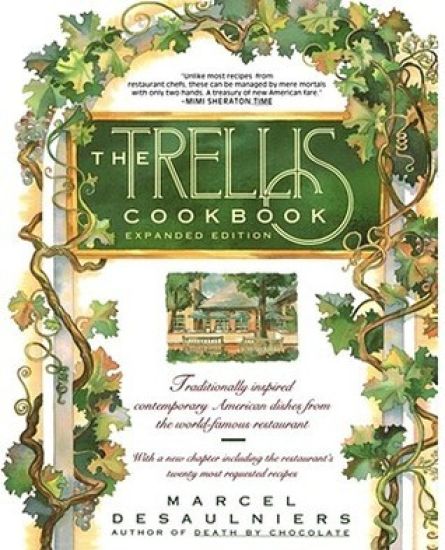
The Trellis Restaurant, located in Colonial Williamsburg, is one of the finest and most innovative restaurants in the country today. Now, award-winning chef Marcel Desaulniers shares his original, yet traditionally inspired, recipes in a cookbook that truly captures the informal elegance of the restaurant itself. With Desaulniers's simple, easy-to-follow directions, anyone can re-create the Trellis hallmarks -- Curried Apple and Onion Soup, Shiitake Mushroom Pate, Chesapeake Bay Clam Chowder -- that will start off any meal with panache. Go on to enticing entrees such as Smoked Catfish with Country Ham, Grilled Duck Breast with Raspberries and Macadamia Nuts, and Loin of Lamb with Fennel and Curry. Pumpkin and Currant Bread and Black Pepper Brioche are the perfect accompaniments to any meal, and delectable desserts -- Strawberry Papaya Sorbet and Death by Chocolate -- provide luscious finales. A new chapter -- twenty of the restaurant's most requested dishes -- and a unique feature, "the Chef's Touch," in which Desaulniers offers his secrets and advice, make "The Trellis Cookbook" the culinary chef d'oeuvre of new American fare -- and the ideal addition to every cook's home library.
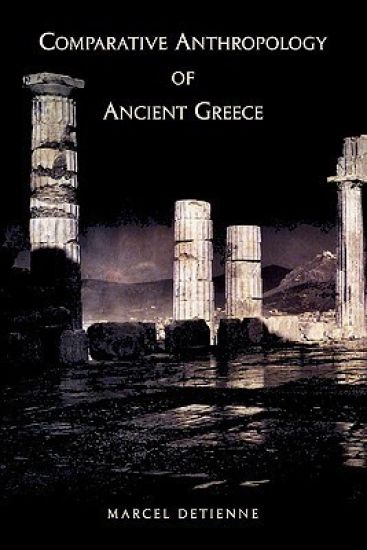
Comparative Anthropology of Ancient Greece
Marcel Detienne
Harvard University, Center for Hellenic Studies
2009
nidottu
Comparative Anthropology of Ancient Greece looks at the anthropology of the Greeks and other cultures across space and time, and in the process discovers aspects of the art of comparability. Historians and ethnologists can pool a wealth of knowledge about different cultures across space and time. Their joint task is to analyze human societies and to understand cultural products. Comparative analysis involves working together in an experimental and constructive enterprise. Marcel Detienne, alerted by dissonances, tries to see how cultural systems react not just to a touchstone category, but also to the questions and concepts that arise from the reaction. What does it mean to found something, or rather to establish a territory, or to have or not have roots? What is a site or a place?
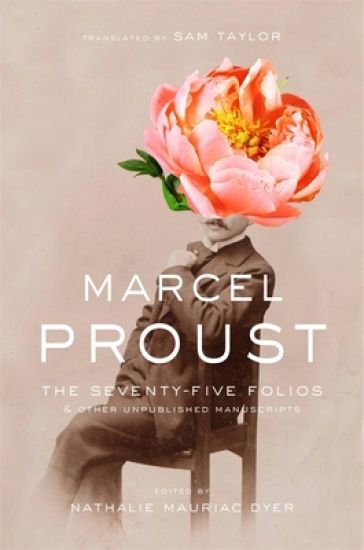
The Seventy-Five Folios and Other Unpublished Manuscripts
Marcel Proust
HARVARD UNIVERSITY PRESS
2023
sidottu
Presented for the first time in English, the recently discovered early manuscripts of the twentieth century’s most towering literary figure offer uncanny glimpses of his emerging genius and the creation of his masterpiece.One of the most significant literary events of the century, the discovery of manuscript pages containing early drafts of Marcel Proust’s In Search of Lost Time put an end to a decades-long search for the Proustian grail. The Paris publisher Bernard de Fallois claimed to have viewed the folios, but doubts about their existence emerged when none appeared in the Proust manuscripts bequeathed to the Bibliothèque Nationale in 1962. The texts had in fact been hidden among Fallois’s private papers, where they were found upon his death in 2018. The Seventy-Five Folios and Other Unpublished Manuscripts presents these folios here for the first time in English, along with seventeen other brief unpublished texts. Extensive commentary and notes by the Proust scholar Nathalie Mauriac Dyer offer insightful critical analysis.Characterized by Fallois as the “precious guide” to understanding Proust’s masterpiece, the folios contain early versions of six episodes included in the novel. Readers glimpse what Proust’s biographer Jean-Yves Tadié describes as the “sacred moment” when the great work burst forth for the first time. The folios reveal the autobiographical extent of Proust’s writing, with traces of his family life scattered throughout. Before the existence of Charles Swann, for example, we find a narrator named Marcel, a testament to what one scholar has called “the gradual transformation of lived experience into (auto)fiction in Proust’s elaboration of the novel.”Like a painter’s sketches and a composer’s holographs, Proust’s folios tell a story of artistic evolution. A “dream of a book, a book of a dream,” Fallois called them. Here is a literary magnum opus finding its final form.
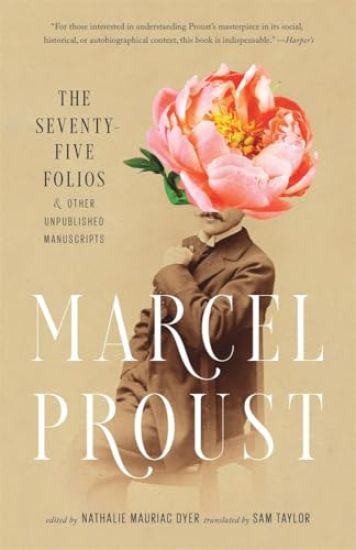
The Seventy-Five Folios and Other Unpublished Manuscripts
Marcel Proust
HARVARD UNIVERSITY PRESS
2025
nidottu
A Washington Post Book That Shouldn’t Be Overlooked“Fascinating…In these drafts, we see the emerging elements of the Recherche as through a glass darkly.” —The Telegraph“If you delight in flickering recollections, glimpses and mirrors, hints and foreshadowings, this is, urgently, the book for you.” —Literary Review“The fascinating, handwritten early drafts of Marcel Proust’s cycle In Search of Lost Time, discovered in 2018, come to life in Taylor’s resplendent translation…This is a magnificent addition to Proust’s oeuvre.” —Publishers WeeklyThe discovery, in 2018, of manuscript pages containing early drafts of Marcel Proust’s In Search of Lost Time was one of the most significant literary events in living memory. The Seventy-Five Folios and Other Unpublished Manuscripts presents these fragments for the first time in English, along with seventeen other brief unpublished texts. Extensive commentary and notes by Proust scholar Nathalie Mauriac Dyer provide insightful critical analysis.A precious guide to understanding Proust’s masterpiece, the folios include early versions of six episodes appearing in the novel. Readers also glimpse the autobiographical extent of Proust’s writing, with traces of his family life scattered throughout. Before the existence of Charles Swann, we find a narrator named Marcel, a testament to what one scholar has called “the gradual transformation of lived experience into (auto)fiction in Proust’s elaboration of the novel.”Like a painter’s sketches and a composer’s holographs, Proust’s folios tell a story of artistic evolution. Here is a literary magnum opus finding its final form.
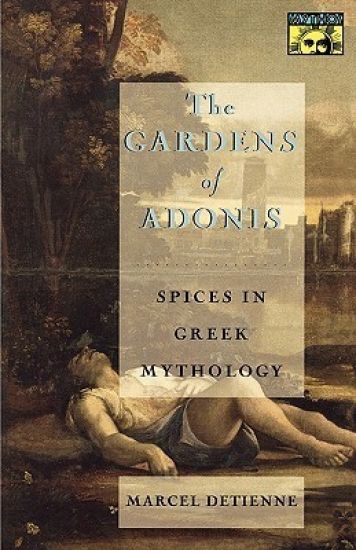
Rich with implications for the history of sexuality, gender issues, and patterns of Hellenic literary imagining, Marcel Detienne's landmark book recasts long-standing ideas about the fertility myth of Adonis. The author challenges Sir James Frazer's thesis that the vegetation god Adonis-- whose premature death was mourned by women and whose resurrection marked a joyous occasion--represented the annual cycle of growth and decay in agriculture. Using the analytic tools of structuralism, Detienne shows instead that the festivals of Adonis depict a seductive but impotent and fruitless deity--whose physical ineptitude led to his death in a boar hunt, after which his body was found in a lettuce patch. Contrasting the festivals of Adonis with the solemn ones dedicated to Demeter, the goddess of grain, he reveals the former as a parody and negation of the institution of marriage. Detienne considers the short-lived gardens that Athenian women planted in mockery for Adonis's festival, and explores the function of such vegetal matter as spices, mint, myrrh, cereal, and wet plants in religious practice and in a wide selection of myths. His inquiry exposes, among many things, attitudes toward sexual activities ranging from "perverse" acts to marital relations.
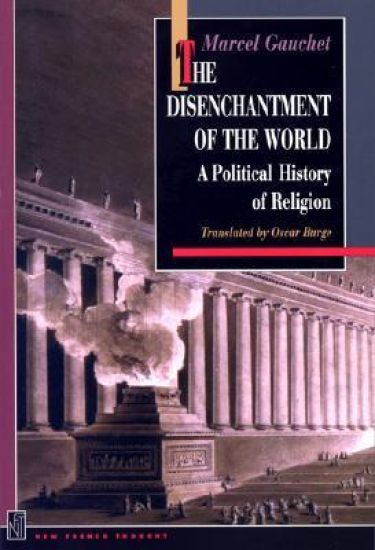
The Disenchantment of the World
Marcel Gauchet; Charles Taylor
Princeton University Press
1999
pokkari
Marcel Gauchet has launched one of the most ambitious and controversial works of speculative history recently to appear, based on the contention that Christianity is "the religion of the end of religion." In The Disenchantment of the World, Gauchet reinterprets the development of the modern west, with all its political and psychological complexities, in terms of mankind's changing relation to religion. He views Western history as a movement away from religious society, beginning with prophetic Judaism, gaining tremendous momentum in Christianity, and eventually leading to the rise of the political state. Gauchet's view that monotheistic religion itself was a form of social revolution is rich with implications for readers in fields across the humanities and social sciences. Life in religious society, Gauchet reminds us, involves a very different way of being than we know in our secular age: we must imagine prehistoric times where ever-present gods controlled every aspect of daily reality, and where ancestor worship grounded life's meaning in a far-off past. As prophecy-oriented religions shaped the concept of a single omnipotent God, one removed from the world and yet potentially knowable through prayer and reflection, human beings became increasingly free. Gauchet's paradoxical argument is that the development of human political and psychological autonomy must be understood against the backdrop of this double movement in religious consciousness--the growth of divine power and its increasing distance from human activity. In a fitting tribute to this passionate and brilliantly argued book, Charles Taylor offers an equally provocative foreword. Offering interpretations of key concepts proposed by Gauchet, Taylor also explores an important question: Does religion have a place in the future of Western society? The book does not close the door on religion but rather invites us to explore its socially constructive powers, which continue to shape Western politics and conceptions of the state.
How Robespierre’s career and legacy embody the dangerous contradictions of democracyMaximilien Robespierre (1758–1794) is arguably the most controversial and contradictory figure of the French Revolution, inspiring passionate debate like no other protagonist of those dramatic and violent events. The fervor of those who defend Robespierre the “Incorruptible,” who championed the rights of the people, is met with revulsion by those who condemn him as the bloodthirsty tyrant who sent people to the guillotine. Marcel Gauchet argues that he was both, embodying the glorious achievement of liberty as well as the excesses that culminated in the Terror.In much the same way that 1789 and 1793 symbolize the two opposing faces of the French Revolution, Robespierre’s contradictions were the contradictions of the revolution itself. Robespierre was its purest incarnation, neither the defender of liberty who fell victim to the corrupting influence of power nor the tyrant who betrayed the principles of the revolution. Gauchet shows how Robespierre’s personal transition from opposition to governance was itself an expression of the tragedy inherent in a revolution whose own prophetic ideals were impossible to implement.This panoramic book tells the story of how the man most associated with the founding of modern French democracy was also the first tyrant of that democracy, and it offers vital lessons for all democracies about the perpetual danger of tyranny.
How Robespierre’s career and legacy embody the dangerous contradictions of democracyMaximilien Robespierre (1758–1794) is arguably the most controversial and contradictory figure of the French Revolution, inspiring passionate debate like no other protagonist of those dramatic and violent events. The fervor of those who defend Robespierre the “Incorruptible,” who championed the rights of the people, is met with revulsion by those who condemn him as the bloodthirsty tyrant who sent people to the guillotine. Marcel Gauchet argues that he was both, embodying the glorious achievement of liberty as well as the excesses that culminated in the Terror.In much the same way that 1789 and 1793 symbolize the two opposing faces of the French Revolution, Robespierre’s contradictions were the contradictions of the revolution itself. Robespierre was its purest incarnation, neither the defender of liberty who fell victim to the corrupting influence of power nor the tyrant who betrayed the principles of the revolution. Gauchet shows how Robespierre’s personal transition from opposition to governance was itself an expression of the tragedy inherent in a revolution whose own prophetic ideals were impossible to implement.This panoramic book tells the story of how the man most associated with the founding of modern French democracy was also the first tyrant of that democracy, and it offers vital lessons for all democracies about the perpetual danger of tyranny.

As an Alaskan living in a small isolated island town, the author, Marcel LaPerriere faces some challenges that he would not face if he lived in a larger city with the medical facilities that a larger city can afford. Through a series of essays LaPerriere shares his frustration of losing his ability to talk and the sadness of his last walk down a magical path in the forest to his son's house. Sometimes written with humor and sometimes sadness, this is an uplifting book that will help anyone living with a terminal disease. LaPerriere is an inspiration, as he does his best to stay positive despite the realities of living with ALS.
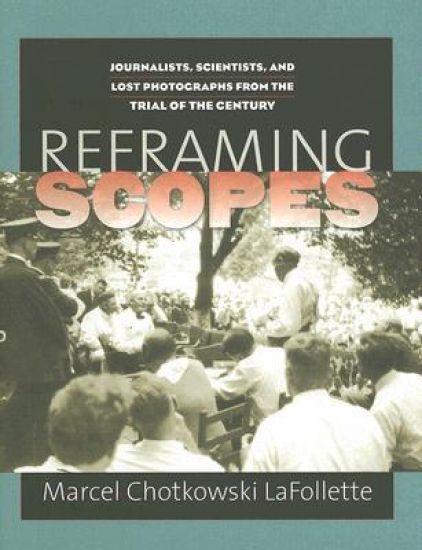
The plight of John T. Scopes dominated headlines for weeks, but behind the scenes of the famous ""Monkey Trial"" were other dramas hidden from public view. Now a serendipitous discovery has opened a new window on the ""Trial of the Century,"" enabling modern readers to comprehend more completely the tensions that gripped a Tennessee community - and the nation - in 1925.Historian Marcel LaFollette discovered at the Smithsonian a cache of more than sixty never-before-published photographs taken at the Scopes trial. Her research on these photos sheds new light on the proceedings, as well as on the journalists and scientists who gathered for this epic confrontation between science and tradition.LaFollette takes readers behind the scenes to witness the trial from the perspective of journalist-photographers Watson Davis and Frank Thone, who had come to cover the trial but became informal liaisons between defense attorneys and the scientific community. They observed visitors and events and even befriended John Scopes in the years following the trial. Their impressions offer new views of Clarence Darrow and William Jennings Bryan and reveal the role of fascinating characters like George Washington Rappleyea, the cocky promoter who saw the trial as a way to bring publicity, tourists, and new business to Dayton.These photos - trial witnesses and visiting celebrities, an outdoor baptism service, defiant ministers assembled in front of a Dayton church - help ground the Scopes trial in southern religion and culture and relate it to a time and place on the cusp of change. The notes of Davis and Thone preserve keen observations of personalities and events, while letters between Scopes and the two reporters in the years after the trial help illuminate the character of an ordinary young man thrust into extraordinary circumstances.LaFollette weaves an engaging story of friendship, newly minted coalitions between scientists and journalists, and acts of goodwill in the midst of turmoil. Her book enables us to understand better the passions that swept one small town and came to divide the nation.
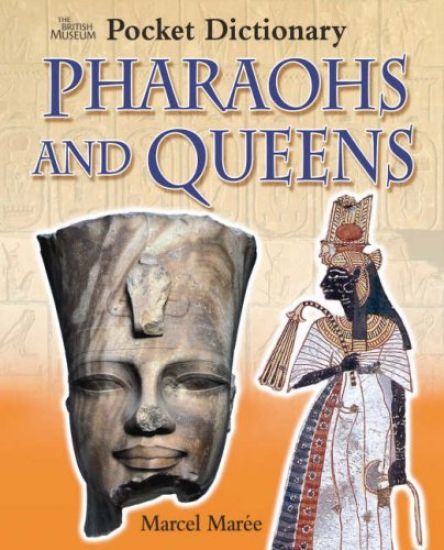
The British Museum Pocket Dictionary of Pharaohs and Queens
Marcel Marée
British Museum Press
2005
sidottu
A new title in the popular Pocket Dictionary series. A handy illustrated dictionary which will introduce the reader to the pharaohs - the great god-kings of ancient Egypt. It was these kings who built the pyramids, and other amazing monuments such as the temples and palaces of Thebes. It was some five thousand years ago that the first king united the whole of Egypt under one ruler. With short breaks, the rule of the pharaohs lasted for almost three thousand years, until the conquest of Egypt by Alexander the Great. It was rare for women to rule ancient Egypt in their own right, but there are notable exceptions, such as Hatshepsut, who took control of the country from her nephew and had herself shown on monuments with the regalia and physical body of a male king. Other queens were famed for their beauty and glamour, such as Nefertiti, and Rameses II's chief wife Nefertari, the inspiration for the wonderful temple at Abu Simbel, and the owner of one of the most beautiful tombs in the Valley of the Queens.

This new book analyzes the security policy of the Russian Federation, internally as well as externally, on all levels of strategy. It describes military and political decision-making from Moscow's grand strategy to the use of a single fighter aircraft in Chechnya. In this analysis, Russia's air forces are used as a model for all services of the armed forces.The Chechen conflicts and NATO's security policy have been dominant factors in the development of Russia's security policy during the period 1992-2002. The use of air power in the Chechen conflicts is used here as a case study for testing political and military-strategic objectives. With regard to NATO's security policy, this study shows that the eastward enlargement of this alliance, as well as its use of force in Bosnia and Kosovo, have caused an increase in anti-Western tendencies in Russian security thinking.

First published in 2006. This book analyses the security policy pf the Russian Federation, internally as well as externally, at all levels of strategy. It describes military-political decision-making from Moscow's grand strategy to the use of single fighter aircraft in Chechnya. In this analysis, Russia's air forces are used as a model for all services of the armed forces.

Après la ‘crise de conscience européenne’ (1680-1715), la question de l’idéal pédagogique révèle les transformations de la société française dont elle est aussi un acteur. Les besoins de la société, les forces religieuses, l’évolution de la pensée scientifique s’y croisent pour un mouvement d’accommodation qui fait toute la richesse de la pensée du dix-huitième siècle. C’est l’objet de cet ouvrage que de chercher a montrer ce mouvement et cette richesse de la pensée pédagogique sous Louis XV et Louis XVI (avant la Révolution), alors que la formation des enfants se trouve être le lieu de convergence de quelques grandes questions que dut affronter la monarchie: la place des ‘arts utiles’, des ‘métiers mécaniques’ dans la société, le rôle de l’Eglise dans la vie du royaume, l’intégration de démarches intellectuelles nouvelles, qui provoquent des conflits avec la pensée chrétienne et qui remettent en cause les sources de la pédagogie, la philosophie de l’entendement et donc des savoirs, connaissances et qualités souhaitées chez les enfants et jeunes gens du peuple et des élites.Pour réaliser ce travail, nous nous sommes appuyés sur la très abondante littérature pédagogique du siècle tout en suivant la réalité du débat pédagogique dans quelques journaux pour en saisir le mouvement et les nombreuses implications. La production générale d’écrits sur l’éducation est proliférante; nous avons retenu ceux qui posaient la question éducative, dans l’axe de notre sujet, en veillant à ce que les genres littéraires soient variés comme l’exigeait le thème de notre étude. Le lecteur trouvera dans cet ouvrage la littérature pédagogique du siècle, même peut connue, en particulier celle des obscurs praticiens des écoles, des collèges et des maisons d’éducation qui ont beaucoup écrit. D’autre part, les questions pédagogiques passionnaient les Français, elles sont régulièrement traitées dans Le Mercure de France, le Journal de Verdun, et les Affiches de province.Le plan suivi est chronologique pour mettre en relief les changements opères au cours du siècle, selon l’importance accordee – ou non – aux sources chrétiennes de l’éducation, la sévère mise en cause des collèges accuses de pratiques ‘gothiques’, l’introduction des modèles nouveaux de la science fondes sur l’observation et l’expérience, l’évolution de la philosophie de la connaissance, selon aussi la pression de la société civile exigeante en ce qui concerne le bonheur, la morale, l’utilité publique de l’éducation pour les besoins de la nation.
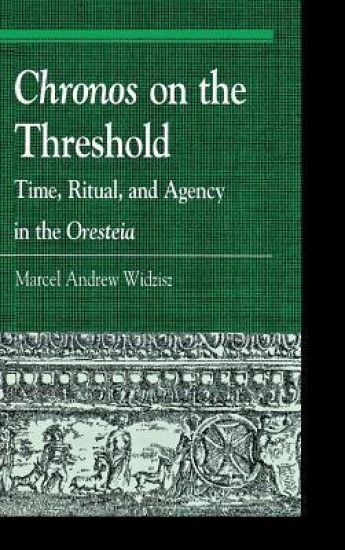
In Chronos on the Threshold: Time, Ritual, and Agency in the Oresteia Marcel Widzisz combines various anthropological, philological, and narratological perspectives in order to consider afresh both the textual details and structural elements of Aeschylus’ Oresteia. Included among the approaches is first a consideration of normative ritual structure in Archaic and Classical Greece and then a demonstration of its regular reconfiguration throughout the many individual scenes and choruses of the trilogy. This framework not only provides a new view of the micro and macro structure of the Oresteia, but also paves the way for an elucidation of the many references to time and its workings, references which, however well attested in the manuscripts, are being more strongly challenged if not altogether removed from recent editions of the Greek text. Time, however, beyond appearing as a subject at these key junctures, pervades the trilogy in a number of subtler ways: in how characters use timing, attempt to control the tempo of on-stage action, and even demonstrate different degrees of temporal perspicuity. The appearance of analepsis and prolepsis, the referencing of past and future (too often presented in previous scholarship in the form of mere cataloguing such instances), is shown to be a dynamic field of contention between opposed agents in a discursive process termed agonistic temporal framing, a practice not only found repeatedly in the Oresteia, but one which can be detected in authors as diverse as Homer and Plato. The manipulation of time and the various constructions of competing temporal horizons allow for a new view of what agency appears as and means in a work such as the Oresteia. The context of the law court in Eumenides brings with it a different type of temporality, specifically suited to resolve conflicting ritual claims, in which temporal framing and individual antagonisms are subsumed into a greater structure, with even wider and more long lasting implications for personal and corporate agency.