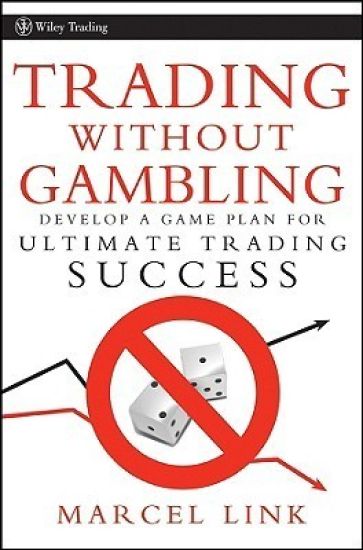
Many people perceive trading as nothing more than a gamble. But there are still people who consistently make money trading. How do they do it? They've learned to separate gambling from trading. And the way they do this, says author Marcel Link, is by developing a proper plan. In Trading Without Gambling, Link shows how to create and use a sound game plan to improve every aspect of trading–including finding trades, timing, knowing how much to trade, where to exit, and how to adjust risk–while leaving very little to gambling.
Tin chemistry retains a place in contemporary science as an important element owing to its wide range of applications. New and exciting research is being generated on an annual basis from all parts of the world – the study of tin and its compounds attracts considerable interest from a range of perspectives such as organic synthesis, medicine, materials chemistry, catalysis and environment. Tin Chemistry – Fundamentals, Frontiers and Applications collects, in one comprehensive volume, authoritative and concise snapshots of modern tin chemistry in a full range of applications. Over forty of the leading tin chemistry experts have contributed reviews in six themes: fundamentals in tin chemistrymaterials chemistry and structural chemistry of tin compoundsmedicinal and biocidal applications of tin compoundstin in the environmenttin in organic synthesistin in catalysis Tin Chemistry – Fundamentals, Frontiers and Applications is an essential overview of modern perspectives on this important element for the specialist and non-specialist alike. It will promote cross-disciplinary interactions and at the same time be an essential teaching resource for advanced university classes.
Organometallic Chemistry comprises of seven essential references. Click on the individual titles for further information about the volumes included in the set.
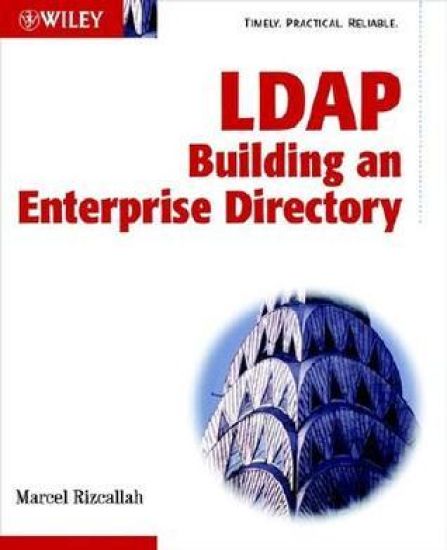
A thorough introduction to the Lightweight Directory Access Protocol (LDAP) technology. The first part of this book offers a detailed overview of the real world applications of the technology. This is followed by an explanation of the technical details of LDAP and a step-by-step demonstration of how to implement an LDAP directory. The book's structure is designed to span the project manager and the specialist IT team and provide each with an understanding of the other's position. Proposes a methodology to help you implement this technology Includes a detailed case study: a global enterprise directory for an extranet Covers all compatible LDAP tools and explores the development of LDAP applications
China’s shop cats are little emperors of their own retail kingdoms, keeping rodents at bay and enticing customers inside. And now they are also the stars of this delightful little book, the companion to Shop Cats of Hong Kong. Marcel Heijnen’s compelling photographs take you from shop to shop across the provinces of China, where traditional retail and street life merge, rolling back the shutters on a little bit of Chinese culture and a whole lot of moggy charm. Meanwhile, Ian Row’s intuitive haiku and stories invite you into the cats’ innermost thoughts – sometimes catty, sometimes sweet, but always with a whisker or two of love.With 90 illustrations in colour
When long-term cat owner and Dutch photographer Marcel Heijnen moved to Hong Kong, he was delighted to find that many of his neighbours were of the feline variety. It was only natural for him to make friends with the local shop cats and their owners, taking photos as he went. And this book is the charming result. Against a background of Hong Kong’s bustling dried goods trade, dusty shelves groaning with traditional products, the beloved cats either stand out as shop mascots or magically melt away behind boxes and jars. Meanwhile, their innermost thoughts, delivered deadpan, are revealed through Ian Row’s intuitive haiku and stories.With 90 illustrations in colour
For cat lovers everywhere, these wonderful photographs highlight the felines who inhabit the streets of Istanbul, a city famous for its love of cats. This stunning photobook delves into the lives of the thousands of cats that roam the streets of Istanbul. The photographs show the unique personalities of these street cats, each with its own story and charm. From lounging on cobblestones and shop fronts, to perching on colourful market stalls, the cats appear in a variety of urban settings, offering a glimpse into the vibrant spirit and culture of Istanbul and its local inhabitants. The book explores how the feral cats of Istanbul are represented in various media, with social media, notably TikTok and Instagram, a particular medium through which Istanbul’s cats have gained widespread popularity. The historical and contemporary cultural significance of cats in Turkish society is presented in essays by the photographer Marcel Heijnen, haiku by Ian Row, and even first-person accounts written from the perspectives of the cats themselves – all interwoven with Marcel’s beautiful photography.
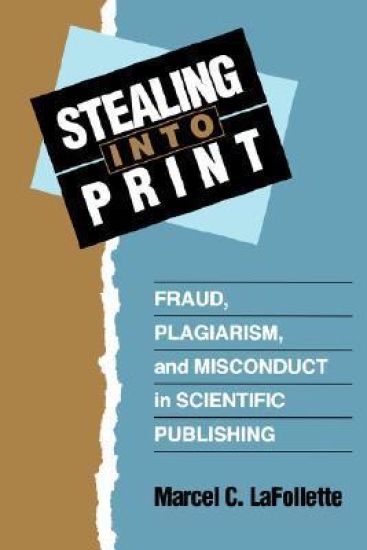
False data published by a psychologist influence policies for treating the mentally retarded. A Nobel Prize-winning molecular biologist resigns the presidency of Rockefeller University in the wake of a scandal involving a co-author accused of fabricating data. A university investigating committee declares that almost half the published articles of a promising young radiologist are fraudulent. Incidents like these strike at the heart of the scientific enterprise and shake the confidence of a society accustomed to thinking of scientists as selfless seekers of truth. Marcel LaFollette's long-awaited book gives a penetrating examination of the world of scientific publishing in which such incidents of misconduct take place. Because influential scientific journals have been involved in the controversies, LaFollette focuses on the fragile 'peer review' process - the editorial system of seeking pre-publication opinions from experts. She addresses the cultural glorification of science, which, combined with a scientist's thirst for achievement, can seem to make cheating worth the danger. She describes the great risks taken by the accusers - often scholars of less prestige and power than the accused - whom she calls 'nemesis figures' for their relentless dedication to uncovering dishonesty. In sober warning, LaFollette notes that impatient calls from Congress, journalists, and taxpayers for greater accountability from scientists have important implications for the entire system of scientific research and communication. Provocative and learned, "Stealing Into Print" is certain to become the authoritative work on scientific fraud, invaluable to the scientific community, policy makers, and the general public.
Philosophy of Experimental Biology explores some central philosophical issues concerning scientific research in experimental biology, including genetics, biochemistry, molecular biology, developmental biology, neurobiology, and microbiology. It seeks to make sense of the explanatory strategies, concepts, ways of reasoning, approaches to discovery and problem solving, tools, models and experimental systems deployed by scientific life science researchers and also integrates developments in historical scholarship, in particular the New Experimentalism. It concludes that historical explanations of scientific change that are based on local laboratory practice need to be supplemented with an account of the epistemic norms and standards that are operative in science. This book should be of interest to philosophers and historians of science as well as to scientists.
Why has European growth slowed down since the 1990s while American productivity growth has speeded up? This book provides a thorough and detailed analysis of the sources of growth from a comparative industry perspective. It argues that Europe's slow growth is the combined result of a severe productivity slowdown in traditional manufacturing and other goods production, and a concomitant failure to invest in and reap the benefits from Information and Communications Technology (ICT), in particular in market services. The analysis is based on rich new databases including the EU KLEMS growth accounting database and provides detailed background of the data construction. As such, the book provides new methodological perspectives and serves as a primer on the use of data in economic growth analysis. More generally, it illustrates to the research and policy community the benefits of analysis based on detailed data on the sources of economic growth.
The essays in this 1994 book aim to integrate labour history within the broader discipline of social history and to demonstrate the continuing vitality and validity of the sub-discipline. Each essay is in itself a response to criticisms of the ways in which labour historians have approached their subjects.
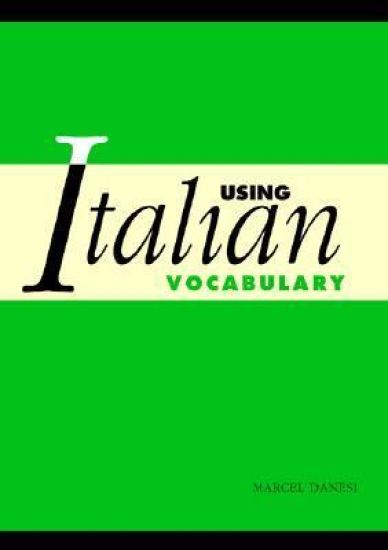
Using Italian Vocabulary provides the student of Italian with an in-depth, structured approach to the learning of vocabulary. It can be used for intermediate and advanced undergraduate courses, or as a supplementary manual at all levels - including elementary level - to supplement the study of vocabulary. The book is made up of twenty units covering topics that range from clothing and jewellery, to politics and environmental issues, with each unit consisting of words and phrases that have been organized thematically and according to levels so as to facilitate their acquisition. The book will enable students to acquire a comprehensive control of both concrete and abstract vocabulary allowing them to carry out essential communicative and interactional tasks. • A practical topic-based textbook that can be inserted into all types of course syllabi • Provides exercises and activities for classroom and self-study • Answers are provided for a number of exercises
Despite the importance of commitment in moral and political philosophy, there has hitherto been little extended analysis of it. Marcel Lieberman examines the conditions under which commitment is possible, and offers at the same time an indirect argument for moral realism. He argues that realist evaluative beliefs are functionally required for commitment - especially regarding its role in self-understanding - and since it is only within a realist framework that such beliefs make sense, realism about values is a condition for the possibility of commitment itself. His ambitious study addresses questions that are of great interest to analytic philosophers but also makes many connections with continental philosophy and with folk psychology, sociology and cognitive science, and will be seen as a novel and distinctive intervention in the debate about moral realism.
Philosophy of Experimental Biology explores some central philosophical issues concerning scientific research in experimental biology, including genetics, biochemistry, molecular biology, developmental biology, neurobiology, and microbiology. It seeks to make sense of the explanatory strategies, concepts, ways of reasoning, approaches to discovery and problem solving, tools, models and experimental systems deployed by scientific life science researchers and also integrates developments in historical scholarship, in particular the New Experimentalism. It concludes that historical explanations of scientific change that are based on local laboratory practice need to be supplemented with an account of the epistemic norms and standards that are operative in science. This book should be of interest to philosophers and historians of science as well as to scientists.
The AIMMS 3.10 Language Reference provides a complete description of the AIMMS modeling language, its underlying data structures and advanced language constructs. It is aimed at model builders only, and provides the ultimate reference to the model constructs that you can use to get the most out of your model formulations.