

Kirjahaku
Etsi kirjoja tekijän nimen, kirjan nimen tai ISBN:n perusteella.
1000 tulosta hakusanalla Marianne Stringer




Saint Bernard on the Love of God
Marianne (TRN) Caroline; Coventry (TRN) Patmore
Kessinger Pub
2009
pokkari

The Son And The Ward Or Selfishness Corrected
Marianne Parrott
KESSINGER PUBLISHING, LLC
2009
pokkari


The memoirs of Tamerla Kendall, a woman who lived in Sarajevo during the Bosnian War of 1992-1995, has it all. Emotionally packed, it tells how she survived the chaos and horror of those years...and what happened after. Hers is a story of courage, fear, ingenuity, and survival. Difficult choices she made then still disturb her peace of mind and life today. During the war, she made a few trips out of Sarajevo, only to return to keep the family restaurant business operating. One secretive trip was made to remove her daughter from the dangers of fighting, but this created a heartbreaking rift in their relationship. For her second trip, Tamerla masqueraded as a United Nations Protection Forces soldier. Her hopes for a return to normalcy at war's end diminished as corruption and religious zealots took control. She married an American, and this marked her as an outcast. When her life was threatened at gunpoint, she faced a critical decision concerning her family's safety in her beloved country.

The memoirs of Tamerla Kendall, a woman who lived in Sarajevo during the Bosnian War of 1992-1995, has it all. Emotionally packed, it tells how she survived the chaos and horror of those years...and what happened after. Hers is a story of courage, fear, ingenuity, and survival. Difficult choices she made then still disturb her peace of mind and life today. During the war, she made a few trips out of Sarajevo, only to return to keep the family restaurant business operating. One secretive trip was made to remove her daughter from the dangers of fighting, but this created a heartbreaking rift in their relationship. For her second trip, Tamerla masqueraded as a United Nations Protection Forces soldier. Her hopes for a return to normalcy at war's end diminished as corruption and religious zealots took control. She married an American, and this marked her as an outcast. When her life was threatened at gunpoint, she faced a critical decision concerning her family's safety in her beloved country.
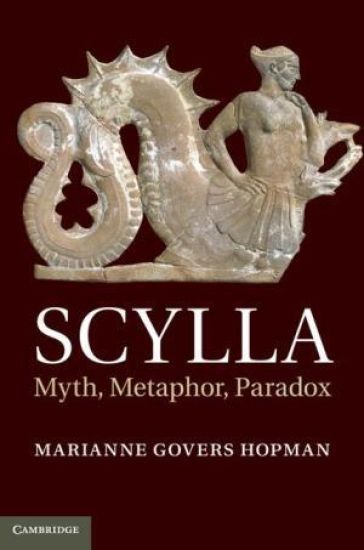
What's in a name? Using the example of a famous monster from Greek myth, this book challenges the dominant view that a mythical symbol denotes a single, clear-cut 'figure' and proposes instead to define the name 'Scylla' as a combination of three concepts - sea, dog and woman - whose articulation changes over time. While archaic and classical Greek versions usually emphasize the metaphorical coherence of Scylla's components, the name is increasingly treated as a well-defined but also paradoxical construct from the late fourth century BCE onward. Proceeding through detailed analyses of Greek and Roman texts and images, Professor Hopman shows how the same name can variously express anxieties about the sea, dogs, aggressive women and shy maidens, thus offering an empirical response to the semiotic puzzle raised by non-referential proper names.

Cambridge HSC Business Studies 3rd Edition Pack (Textbook and Interactive Textbook)
Marianne Hickey
Cambridge University Press
2015
muu
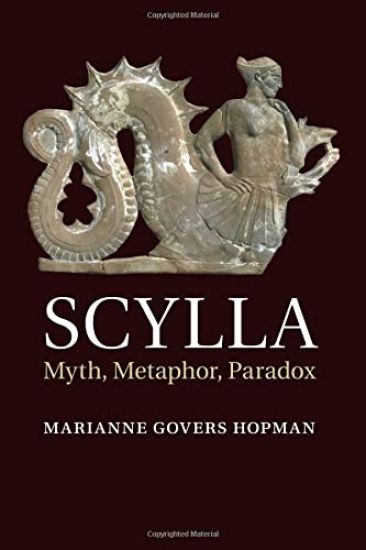
What's in a name? Using the example of a famous monster from Greek myth, this book challenges the dominant view that a mythical symbol denotes a single, clear-cut 'figure' and proposes instead to define the name 'Scylla' as a combination of three concepts - sea, dog and woman - whose articulation changes over time. While archaic and classical Greek versions usually emphasize the metaphorical coherence of Scylla's components, the name is increasingly treated as a well-defined but also paradoxical construct from the late fourth century BCE onward. Proceeding through detailed analyses of Greek and Roman texts and images, Professor Hopman shows how the same name can variously express anxieties about the sea, dogs, aggressive women and shy maidens, thus offering an empirical response to the semiotic puzzle raised by non-referential proper names.

Marianne North (1830–90), the Victorian amateur botanist and painter, travelled to distant countries of the world to paint exotic flora in their natural surroundings. This two-volume collection of her memoirs, edited by her sister and published in 1892, records North's remarkable travels. Laden with her palettes and easels, the independent North travelled alone and fended for herself. Her journals describe how she endured swarms of insects, scaled cliffs, trudged through wilderness and crossed swamps in order to reach the plants she wanted to paint. Volume 1 covers North's early upbringing and the origins of her enthusiasm for nature, and traces her travels through Canada and the United States, Jamaica, Brazil, Japan, Borneo, India and Sri Lanka. This fascinating autobiography reveals the stories behind North's art, which can still be appreciated today since she bequeathed her vivid paintings to Kew Gardens, where they are on display.

Marianne North (1830–90), the Victorian amateur botanist and painter, travelled to distant countries of the world to paint exotic flora in their natural surroundings. This two-volume collection of her memoirs, edited by her sister and published in 1892, records North's remarkable travels. Laden with her palettes and easels, the independent North travelled alone and fended for herself. Her journals describe how she endured swarms of insects, scaled cliffs, trudged through wilderness and crossed swamps in order to reach the plants she wanted to paint. Volume 2 covers North's travels to Australia and New Zealand, which she undertook at the suggestion of Charles Darwin. The work concludes with the last journey she made, to Chile in 1884–5, to paint the monkey-puzzle tree in its natural habitat. This autobiography reveals the stories behind North's art, which can still be appreciated today since her vivid paintings are displayed at Kew Gardens.

Harry Potter fans contribute their immaterial and affective labor in multiple arenas: as peer-to-peer marketers via fan sites and social media; as participants in amateur fan festivals; or as activists for social change. Fans' participation in the Harry Potter universe has contributed to its success. This Element examines how fans' labor might continue to support the franchise for future readers. Starting with the context and theoretical frameworks that support a multidimensional analysis of the Harry Potter fan experience, this Element examines tensions between fans and Warner Bros., as fan participation tests the limits of corporate control.
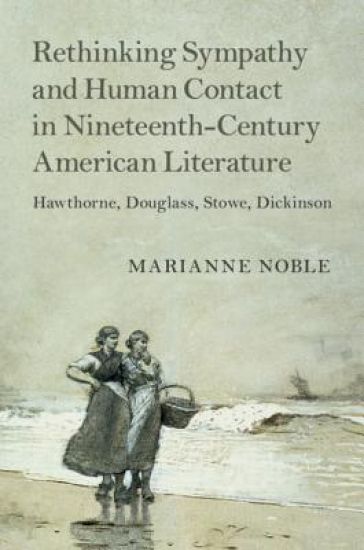
Rethinking Sympathy and Human Contact in Nineteenth-Century American Literature
Marianne Noble
Cambridge University Press
2019
sidottu
In accessible and impassioned discussions of literature and philosophy, this book reveals a surprising approach to the intractable problem of human contact. Nathaniel Hawthorne, Frederick Douglass, Harriet Beecher Stowe, and Emily Dickinson rethought the nature of human contact, turning away from transcendentalist approaches and towards sympathetic ones. Their second and third works portray social masks as insufficient, not deceptive, and thus human contact requires not violent striking through the mask but benevolent skepticism towards persons. They imagine that people feel real in a real world with real others when they care for others for the other's sake and when they make caring relationships the cornerstone of their own being. Grounded in philosophies of sympathy - including Adam Smith and J. G. Herder - and relational psychology - Winnicott and Benjamin - Rethinking Sympathy and Human Contact in Nineteenth-Century American Literature shows that antebellum literature rejects individualist definitions of the human and locates the antidote to human disconnection in sympathy.

Architecture, Society, and Ritual in Viking Age Scandinavia
Marianne Hem Eriksen
Cambridge University Press
2019
sidottu
In this book, Marianne Hem Eriksen explores the social organization of Viking Age Scandinavia through a study of domestic architecture, and in particular, the doorway. A highly charged architectural element, the door is not merely a practical, constructional solution. Doors control access, generate movement, and demark boundaries, yet also serve as potent ritual objects. For this study, Eriksen analyzes and interprets the archaeological data of house remains from Viking Age Norway, which are here synthesized for the first time. Using social approaches to architecture, she demonstrates how the domestic space of the Viking household, which could include masters and slaves, wives and mistresses, children and cattle, was not neutral. Quotidian and ritual interactions with, through, and orchestrated by doorways prove to be central to the production of a social world in the Viking Age. Eriksen's book challenges the male-dominated focus of research on the Vikings and expands research questions beyond topics of seaborne warriors, trade, and craft.
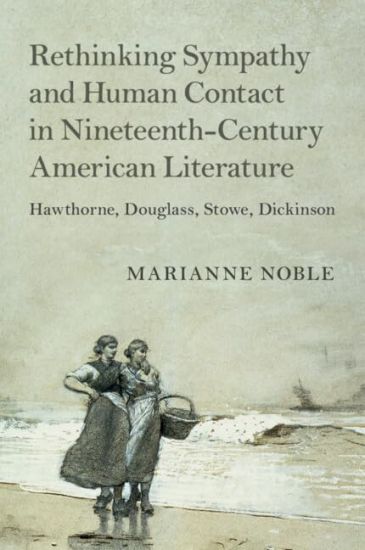
Rethinking Sympathy and Human Contact in Nineteenth-Century American Literature
Marianne Noble
Cambridge University Press
2025
nidottu
In accessible and impassioned discussions of literature and philosophy, this book reveals a surprising approach to the intractable problem of human contact. Nathaniel Hawthorne, Frederick Douglass, Harriet Beecher Stowe, and Emily Dickinson rethought the nature of human contact, turning away from transcendentalist approaches and towards sympathetic ones. Their second and third works portray social masks as insufficient, not deceptive, and thus human contact requires not violent striking through the mask but benevolent skepticism towards persons. They imagine that people feel real in a real world with real others when they care for others for the other's sake and when they make caring relationships the cornerstone of their own being. Grounded in philosophies of sympathy - including Adam Smith and J. G. Herder - and relational psychology - Winnicott and Benjamin - Rethinking Sympathy and Human Contact in Nineteenth-Century American Literature shows that antebellum literature rejects individualist definitions of the human and locates the antidote to human disconnection in sympathy.

Teaching English as a Second or Foreign Language
Marianne Celce-Murcia; Donna M. Brinton; Marguerite Ann Snow
Cengage ELT
2013
nidottu
Now in its fourth edition, this comprehensive, best-selling methodology resource gives both prospective and experienced ESL/ELT teachers the theoretical background and practical applications they need to decide which approaches, materials, and resources can and should be used in their classrooms.