Kirjojen hintavertailu. Mukana 11 342 296 kirjaa ja 12 kauppaa.

Kirjahaku

Etsi kirjoja tekijän nimen, kirjan nimen tai ISBN:n perusteella.

1000 tulosta hakusanalla Michael J. Perry

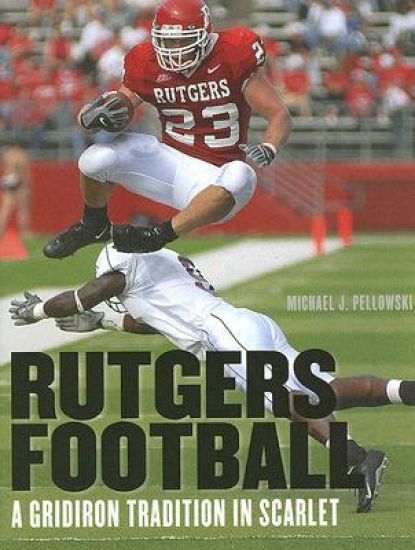
Rutgers Football

Rutgers Football

Michael J. Pellowski

Rutgers University Press
2007
sidottu
Thirteen seconds remaining, score tied at 25, fourth and seven for Rutgers at Louisville's 27. Against the third ranked team in the nation, on a perfect autumn evening, the Scarlet Knights stormed back from 18 down, with Coach Greg Schiano's vaunted defense shutting down Louisville's passing attack. As Jeremy Ito's kick cleared the uprights with seconds on the clock, the Scarlet Knights announced their arrival as one of the most fearsome teams in the nation.""Rutgers Football: A Gridiron Tradition in Scarlet"" is a richly illustrated history of one of the most storied programs in all of college football. From the first intercollegiate contest against Princeton in 1869, which started college football as we know it, through the years that Paul Robeson suited up for the team, the famous undefeated season of 1976, and right up to the Schiano era, former Scarlet Knight Michael Pellowski takes you on a fascinating journey that chronicles the highlights of the first 137 years of Rutgers football. He makes special mention of the Scarlet Knights who have gone on to successful careers in the NFL - Brian Leonard, Mike McMahon, L. J. Smith, Gary Brackett, Ray Lucas, Deron Cherry, among others - and includes a complete listing of letterwinners.Now, with the Empire State Building being lit red in the team's honor, and fans believing that a national championship is within reach, ""Rutgers Football: A Gridiron Tradition in Scarlet"" provides the indispensable backstory for this team as it ""chops"" its way to future greatness.
Every Species of Hope

Every Species of Hope

Michael J Rosen

Trillium
2017
pokkari
In his first book of poetry in twenty years, Michael J. Rosen captures life in the foothills of the Appalachians. Every Species of Hope: Georgics, Haiku, and Other Poems uses a variety of poetic forms, as well as Rosen's own pen-and-ink drawings, to give voice to the predicaments of living among other creatures who share a plot of land we think we claim as home. The poems are an attempt at homeostasis: that balancing act every creature works at every hour of every day-a way of living peacefully, expending the right energy in the most productive ways, avoiding or deflecting trouble, gravitating toward sources of fulfillment and contentment. At the center of this book is a suite of poems inspired by Virgil's Georgics, or "poems of pastoral instruction." In Rosen's case, he is more the student than the teacher. Likewise, five short sections of haiku continue his meditation on-or mediation of-art and nature. As he has written, "Haiku provides a brief and mirror-like calm in the choppy waters-in the undertow-of current events: a stillness in time where more than our singular lives can be reflected." Illustrated with two dozen pages from the author's own journal, Every Species of Hope is the consummation of decades of observation, humility, and awe.
The Key to the C-Suite

The Key to the C-Suite

Michael J. Nick; Jill KONRATH

Amacom
2011
nidottu
In this helpful guide, you will discover ten tangible metrics C-level executives do look for, and teaches you to apply those metrics to build a case for your products and services that will unlock the door to greater sales.With budgets more stringent than ever, important purchasing decisions have moved up the ladder to the C-suite. When it comes to selling to those at the highest level, author Michael Nick has a revelation for you: ROI is no longer the key metric for making purchasing decisions.In The Key to the C-Suite, you’ll learn how to:uncover key financial information on a prospect;determine a corporation’s financial stability;clearly define the value of the product or service you are selling;calculate the value impact of your offerings in financial metrics;and showcase how your sales packages fit into metrics such as return on asset, return on equity, operating costs, net profit, and earnings.These days, it is crucial for sales professionals to be able to communicate the positive effect their products or services will have on a company’s financial statements. The Key to the C-Suite explains how to showcase bottom-line value using individually trackable and measurable metrics that will win over companies’ top decision makers.
Becoming the Good News

Becoming the Good News

Michael J. Sanem

Liturgical Press
2023
pokkari
Perhaps you have seen the signs of the times. Religious faith, on the whole, is declining, and the number of those claiming no religious affiliation is rising. In the face of this, evangelization initiatives permeate the mission and vision statements of Catholic dioceses and parishes across the country, but many of these initiatives are hampered by a strict sense of the tradition. They tend to be an all-or-nothing approach to evangelization, and include some questionable understandings of God, the church, and the world. In Becoming the Good News, Michael Sanem shares an authentically Catholic approach to parish evangelization, grounded in the rich and diverse tradition to which we belong. We the church, as the people of God, are all called, in the common priesthood of all the baptized, to consecrate this world to God in the way we encounter, accompany, and invite people into deeper relationship with Christ. We are called not only to proclaim the good news but to become the good news in a world that desperately needs it.
Forging Napoleon's Grande Armée

Forging Napoleon's Grande Armée

Michael J. Hughes

New York University Press
2012
sidottu
The men who fought in Napoleon's Grande Armée built a new empire that changed the world. Remarkably, the same men raised arms during the French Revolution for liberté, égalité, and fraternité. In just over a decade, these freedom fighters, who had once struggled to overthrow tyrants, rallied to the side of a man who wanted to dominate Europe. What was behind this drastic change of heart? In this ground-breaking study, Michael J. Hughes shows how Napoleonic military culture shaped the motivation of Napoleon's soldiers. Relying on extensive archival research and blending cultural and military history, Hughes demonstrates that the Napoleonic regime incorporated elements from both the Old Regime and French Revolutionary military culture to craft a new military culture, characterized by loyalty to both Napoleon and the preservation of French hegemony in Europe. Underscoring this new, hybrid military culture were five sources of motivation: honor, patriotism, a martial and virile masculinity, devotion to Napoleon, and coercion. Forging Napoleon's Grande Armée vividly illustrates how this many-pronged culture gave Napoleon's soldiers reasons to fight.
The Psychological Foundations of Evidence Law

The Psychological Foundations of Evidence Law

Michael J. Saks; Barbara A. Spellman

New York University Press
2016
pokkari
Identifies and evaluates the psychological choices implicit in the rules of evidence Evidence law is meant to facilitate trials that are fair, accurate, and efficient, and that encourage and protect important societal values and relationships. In pursuit of these often-conflicting goals, common law judges and modern drafting committees have had to perform as amateur applied psychologists. Their task has required them to employ what they think they know about the ability and motivations of witnesses to perceive, store, and retrieve information; about the effects of the litigation process on testimony and other evidence; and about our capacity to comprehend and evaluate evidence. These are the same phenomena that cognitive and social psychologists systematically study. The rules of evidence have evolved to restrain lawyers from using the most robust weapons of influence, and to direct judges to exclude certain categories of information, limit it, or instruct juries on how to think about it. Evidence law regulates the form of questions lawyers may ask, filters expert testimony, requires witnesses to take oaths, and aims to give lawyers and factfinders the tools they need to assess witnesses' reliability. But without a thorough grounding in psychology, is the "common sense" of the rulemakers as they create these rules always, or even usually, correct? And when it is not, how can the rules be fixed? Addressed to those in both law and psychology, The Psychological Foundations of Evidence Law draws on the best current psychological research-based knowledge to identify and evaluate the choices implicit in the rules of evidence, and to suggest alternatives that psychology reveals as better for accomplishing the law's goals.
Cinematic Political Thought

Cinematic Political Thought

Michael J. Shapiro

New York University Press
1999
sidottu
In Cinematic Political Thought, Michael J. Shapiro investigates aspects of contemporary politics and articulates a critical philosophical perspective with politically disposed treatments of contemporary cinema. Reading such films as Hoop Dreams, Lone Star, Father of the Bride II and To Live and Die in LA through the lens of Deleuze, Derrida, Foucault and Lyotard, Shapiro demonstrates what it can mean to think the political both in terms of cinema studies and in wider aesthetic and social contexts. Cinematic Political Thought is a polemical work, aimed at encouraging critical, ethical and political thinking. Its breadth of theoretical scope and empirical reference, and the innovative style of presentation will make it vital reading for anyone with an interest in the conjunction of culture and politics.
Cinematic Political Thought

Cinematic Political Thought

Michael J. Shapiro

New York University Press
1999
pokkari
In Cinematic Political Thought, Michael J. Shapiro investigates aspects of contemporary politics and articulates a critical philosophical perspective with politically disposed treatments of contemporary cinema. Reading such films as Hoop Dreams, Lone Star, Father of the Bride II and To Live and Die in LA through the lens of Deleuze, Derrida, Foucault and Lyotard, Shapiro demonstrates what it can mean to think the political both in terms of cinema studies and in wider aesthetic and social contexts. Cinematic Political Thought is a polemical work, aimed at encouraging critical, ethical and political thinking. Its breadth of theoretical scope and empirical reference, and the innovative style of presentation will make it vital reading for anyone with an interest in the conjunction of culture and politics.
Holocaust Justice

Holocaust Justice

Michael J. Bazyler

New York University Press
2005
pokkari
The first book to tell the complete story of the American attempt at restitution for victims of the Holocaust The Holocaust was not only the greatest murder in history; it was also the greatest theft. Historians estimate that the Nazis stole roughly $230 billion to $320 billion in assets (figured in today's dollars), from the Jews of Europe. Since the revelations concerning the wartime activities of the Swiss banks first broke in the late 1990s, an ever-widening circle of complicity and wrongdoing against Jews and other victims has emerged in the course of lawsuits waged by American lawyers. These suits involved German corporations, French and Austrian banks, European insurance companies, and double thefts of art—first by the Nazis, and then by museums and private collectors refusing to give them up. All of these injustices have come to light thanks to the American legal system. Holocaust Justice is the first book to tell the complete story of the legal campaign, conducted mainly on American soil, to address these injustices. Michael Bazyler, a legal scholar specializing in human rights and international law, takes an in-depth look at the series of lawsuits that gave rise to a coherent campaign to right historical wrongs. Diplomacy, individual pleas for justice by Holocaust survivors and various Jewish organizations for the last fifty years, and even suits in foreign courts, had not worked. It was only with the intervention of the American courts that elderly Holocaust survivors and millions of other wartime victims throughout the world were awarded compensation, and equally important, acknowledgment of the crimes committed against them. The unique features of the American system of justice—which allowed it to handle claims that originated over fifty years ago and in another part of the world—made it the only forum in the world where Holocaust claims could be heard. Without the lawsuits brought by American lawyers, Bazyler asserts, the claims of the elderly survivors and their heirs would continue to be ignored. For the first time in history, European and even American corporations are now being forced to pay restitution for war crimes totaling billions of dollars to Holocaust survivors and other victims. Bazyler deftly tells the unfolding stories: the Swiss banks' attempt to hide dormant bank accounts belonging to Holocaust survivors or heirs of those who perished in the war; German private companies that used slave laborers during World War II—including American subsidiaries in Germany; Italian, Swiss and German insurance companies that refused to pay on prewar policies; and the legal wrangle going on today in American courts over art looted by the Nazis in wartime Europe. He describes both the human and legal dramas involved in the struggle for restitution, bringing the often-forgotten voices of Holocaust survivors to the forefront. He also addresses the controversial legal and moral issues over Holocaust restitution and the ethical debates over the distribution of funds. With an eye to the future, Bazyler discusses the enduring legacy of Holocaust restitution litigation, which is already being used as a model for obtaining justice for historical wrongs on both the domestic and international stage.
Kinship, Capitalism, Change

Kinship, Capitalism, Change

Michael J. Francisconi

CRC Press Inc
1997
sidottu
First Published in 1998. Part of the Native Americans Interdisciplinary Perspectives series, this volume looks at the informal economy of the Navajo from 1868 to 1995. In this study Dine is used in place of Navajo when referring to the people. Since 1868 three major revolutions have integrated the Dine into the world capitalist system: the establishment of military peace, resulting in political control by the U.S. Government, which then guaranteed the establishment of trading posts; the stock reduction of the 1930's, which resulted in money becoming central to economic life; and the importation of highly capital-intensive extractive industries onto the Navajo Reservation.
The Changing Face of Corporate Ownership

The Changing Face of Corporate Ownership

Michael J. Rubach

CRC Press Inc
1999
sidottu
This book examines the shareholder activism of institutional investors, and the effect of this activism on portfolio performance. By focusing on 118 institutional investors headquartered in the United States, the book is unique in addressing the shareholder activism of a large sample. Institutional shareholder activism is defined to include both traditional mechanisms of influence (i.e. filing shareholder proposals) and relationship investing. Institutional owners included private and public pension funds, mutual funds, bank trusts, insurance companies, endowments, and foundations. These institutional owners differ substantially, and these differences lead institutions to use their ownership power to pursue different philosophies and actions. Some institutions follow a passive governance policy, While others adopt an activist role. This book seeks to answer four questions: (1) Are institutional owners actively involved in the strategic affairs of companies in their portfolios? (2)Which forms of activism do institutional owners employ (either confrontational mechanisms, such as filing shareholder proposals, or relationship building mechanisms)? (3)Which forms of activism employed are most effective? and (4) Does the institutional type affect its pursuit of shareholder activism? In answering these questions the author suggests new important results that in many cases are contrary to what prior reports of the activities by a small number of institutional owners may intimate.
Detection Theory

Detection Theory

Michael J. Hautus; Neil A. Macmillan; C. Douglas Creelman

CRC Press Inc
2021
sidottu
Detection Theory: A User’s Guide is an introduction to one of the most important tools for the analysis of data where choices must be made and performance is not perfect. In these cases, detection theory can transform judgments about subjective experiences, such as perceptions and memories, into quantitative data ready for analysis and modeling. For beginners, the first three chapters introduce measuring detection and discrimination, evaluating decision criteria, and the utility of receiver operating characteristics. Later chapters cover more advanced research paradigms, including: complete tools for application, including flowcharts, tables, and software; student-friendly language; complete coverage of content area, including both one-dimensional and multidimensional models; integrated treatment of threshold and nonparametric approaches; an organized, tutorial level introduction to multidimensional detection theory; and popular discrimination paradigms presented as applications of multidimensional detection theory.This modern summary of signal detection theory is both a self-contained reference work for users and a readable text for graduate students and researchers learning the material either in courses or on their own.
Handbook of Plastics Joining

Handbook of Plastics Joining

Michael J. Troughton

William Andrew Publishing
2008
sidottu
The new edition of this bestselling reference provides fully updated and detailed descriptions of plastics joining processes, plus an extensive compilation of data on joining specific materials. The volume is divided into two main parts: processes and materials. The processing section has 18 chapters, each explaining a different joining technique. The materials section has joining information for 25 generic polymer families. Both sections contain data organized according to the joining methods used for that material.
Living Room War

Living Room War

Michael J. Arlen

Syracuse University Press
1997
nidottu
"One doesn't have to be a panjandrum of Communications to realize that television does something to us," Michael Arlen (former TV critic of The New Yorker) writes in the Introduction to Living-Room War. He continues, "Television has a transforming effect on events. It has a transforming effect on the people who watch the transformed events-it's just hard to know what that is."Living-Room War is Arlen's valiant-and entertaining-attempt to figure out exactly what exactly television does to us. This timeless collection of essays provides a poetic look at 1960s television culture, ranging from the Vietnam war to Captain Kangaroo, from the 1968 Democratic convention to televised sports.
Product Liability Entering the Twenty-First Century

Product Liability Entering the Twenty-First Century

Michael J. Moore; W. Kip Viscusi

Brookings Institution
2001
nidottu
"Are liability ""crises"" an inevitable part of the modern industrial landscape? Does the inherent nature of the insurance industry promote recurring liability crises? What have been the effects of the liability reforms of the 1990s? Should lawyers be given de facto regulatory authority? This report provides perspective on these and other key issues concerning the law and economics of products liability. The authors begins with a brief description of the evolution of products liability doctrine in the U.S., up to the point of the liability crisis of the late 1980s. They discuss the economic implications of product risk for both consumers and producers, offer economic hypothesis on the implications of the increased scope of liability and subsequent reforms, and provide an update of trends in litigation and liability law. The book ends with a discussion of pending legislation and prospects for further improvements. Moore and Viscusi make the point that effective liability policy calls for a balancing of the incentives for improved public safety on one hand, and the benefits of new and existing products on the other."
For Moral Ambiguity

For Moral Ambiguity

Michael J. Shapiro

University of Minnesota Press
2001
nidottu
Under the banner of family values, a war of more than words is being waged. At stake is the control of contemporary national culture-and the consciousness of succeeding generations. Michael J. Shapiro enters the fray with this galvanizing book, which exposes the assumptions, misconceptions, and historical inaccuracies that mark the neoconservative campaign to redeem an imagined past and colonize the present and future with a moral and political commitment to the "traditional family."Challenging the neoconservative assumption of a natural relation between a historically constant, traditional family structure and civic life, Shapiro shows how the situation of the family in relation to public life has emerged differently in different historical periods. For Moral Ambiguity juxtaposes moralizing versus historically sensitive, critical treatments of familial and public attachments, revealing how "the family"-as represented in historical and contemporary fiction, cinema, television, and other genres and media-emerges as a contingent cultural and historical structure.Shapiro treats the ways in which family space, however changeable, serves as a critical locus of "enunciation"-as a space from which diverse family personae challenge the relationships and historical narratives that support dominant structures of power and authority and offer ways to renegotiate the problem of "the political." By extending recognition to less heeded voices and genres of expression, he seeks to frame the political within a democratic ethos. Ultimately, the book compels us to understand "the political" as the continuous negotiation of different modes of civic presence.