Kirjahaku
Etsi kirjoja tekijän nimen, kirjan nimen tai ISBN:n perusteella.
1000 tulosta hakusanalla Michael T. Isenberg
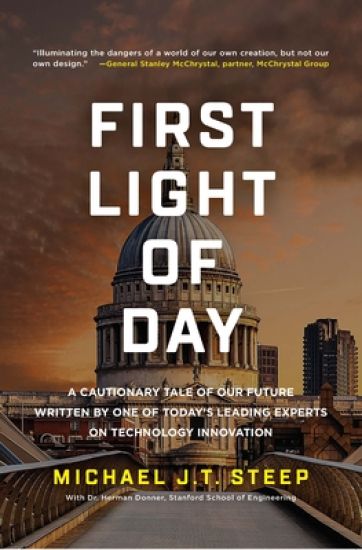
“An expansive trip into our future and the technology to take us there.”—Tom Wheeler, author, From Gutenberg to Google: The History of Our Future; former chairman, Federal Communications CommissionLondon, 2045: Technology has changed everything from travel and work to government and even personal relationships. Society is segregated between knowledge workers who enjoy all the benefits of life in the new digital cities and the majority of the population, so-called Zeroids, who have been rendered economically superfluous.Mikhail Ivanovich Vasiliev is a model “high value citizen,” a top AI engineering architect for Lloyd’s Taiping Group, the world’s premier financial services company. He leads a perfectly ordered life, with his routine optimized by his team of AI agents, but as he nears the creation of the world’s first sentient being, forces converge seeking to prevent or exploit the advent of this new technology. Mikhail and his cohorts and enemies alike struggle with the invention’s potential intellectual, philosophical, and spiritual impacts and the possibility of losing control of their lives to their own creations.This gripping narrative is followed by an overview of the real-life technologies that play crucial roles in the story and that are shaping our world today. As one of today's leading experts on technology innovation, Michael Steep is uniquely qualified to describe the impact of unchecked technology development currently underway.

Who would kill a priest? A Benedictine monk is found dead in a recently discovered priest-hole in a country house in Northamptonshire which, before the reformation, was an Augustinian Priory. Chief Inspector Hood is initially baffled. The monk’s injuries plainly show he was battered to death. But why and by whom? Was his death connected with the search for the Powdrell chalice associated with the family that lived in the house during the reign of Mary Tudor? Or was there some other motive? Hood must work his way through several suspects, investigating their past lives, as he discerns truth from legend. Could the killer be the American Jesuit staying as a guest at the house, in the midst of a crisis of faith? Or was the killer, perhaps, someone from the monk’s own past? Hood’s investigation reveals that while the past is another country you cannot really break away from it. It has always been there first and muddied the trail of truth with its own footprints.
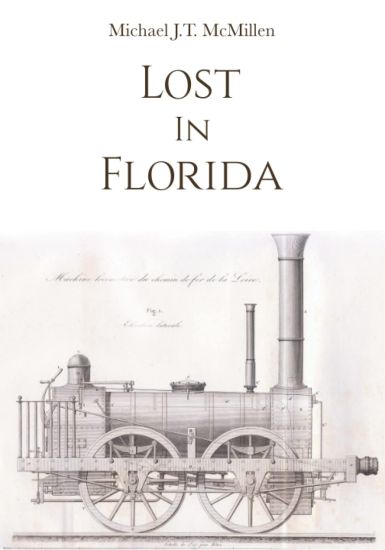
In 1836 The Proprietors of Locks and Canals on Merrimack River sold two locomotives to a start-up railroad in the Florida Territory. The Pensacola Railroad never built an inch of track or a whit of system infrastructure. The railroad was mere conception. Part of a grandiose scheme of a group of Floridians, led by William H. Chase, to channel cotton and lumber from Alabama and Georgia through Pensacola Bay. The Floridians would reap the benefits through a Pensacola real estate development project and the new Bank of Pensacola. The bank controlled the railroad. It was intended to control U.S. federal government largess for building forts and military installations in Pensacola and the Gulf of Mexico. The Bank of Pensacola issued bonds to finance the scheme. The Florida Territory guaranteed the bonds. Northern financiers were enlisted to purchase the bonds. Those financiers took control of the Bank of Pensacola and the real estate development project. The Bank of Pensacola collapsed in the Panic of 1837. Florida repudiated its bond guarantee. The two locomotive engines disappeared. Patrick Tracy Jackson, the Locks & Canals treasurer, took his lessons from the Pensacola Railroad debacle. In subsequent engine sale transactions, Jackson developed the core elements of an equipment finance structure. The structure was refined in rolling stock sales to the Baltimore & Susquehanna and the Philadelphia & Reading. It was the core of the Schuylkill Navigation boat loans and the car and equipment trusts of Lehigh Coal & Navigation, the Jersey Central, and the Pennsylvania Railroad. It is used still for financing acquisitions of all manner of equipment and projects. This book explores the intricate web of transactions surrounding the Locks & Canals sale of locomotives to the Pensacola Railroad and the mystery of the two lost engines. Available formats: (a) hardcover with color interior; (b) paperback with color interior; and (c) paperback with black and white interior.
WordPress And The Digital Effect is a pretty simple book that talks about the Digital Effect, it's importance and how you can get started using the World's Best Content Manegement System - WordPress. As a techpreneur or aspiring to be one, it's quite important to minimize resources and maximize outcome. This very notion guides us throughout this book. As such it's kept to its simplest level as far as possible in order to address almost all category of audience. The book is more of a scratch guide in getting started. Understand your domain name, and other features about getting a hosting and good practice when searching for a domain name and finally getting to master the WordPress Dashboard.

WordPress und der digitale Effekt ist ein ziemlich einfaches Buch, das ber den digitalen Effekt spricht, seine Bedeutung und wie Sie mit dem weltbesten Content-Management-System - WordPress - loslegen k nnen. Als Tech-Unternehmer oder derjenige, der es werden will, ist es wichtig, die Ressourcen zu minimieren und das Ergebnis zu maximieren. Genau dieser Gedanke leitet uns durch dieses Buch. Als solches ist es so einfach wie m glich gehalten, um fast alle Kategorien des Publikums anzusprechen. Das Buch ist eher ein Leitfaden f r die ersten Schritte. Verstehen Sie Ihren Domain-Namen, und andere Funktionen ber ein Hosting und gute Praxis bei der Suche nach einem Domain-Namen und schlie lich immer auf die WordPress Dashboard zu meistern.


WordPress et l'effet num rique est un livre assez simple qui parle de l'effet num rique, de son importance et de la fa on dont vous pouvez commencer utiliser le meilleur syst me de gestion de contenu au monde - WordPress. En tant qu'entrepreneur technologique ou aspirant le devenir, il est important de minimiser les ressources et de maximiser les r sultats. C'est cette notion qui nous guide tout au long de ce livre. En tant que tel, il a t r duit son niveau le plus simple possible afin de s'adresser presque toutes les cat gories de public. Ce livre est plut t un guide de d marrage. Comprendre votre nom de domaine, et d'autres caract ristiques concernant l'obtention d'un h bergement et les bonnes pratiques lors de la recherche d'un nom de domaine, et enfin ma triser le tableau de bord de WordPress.

WordPress e l'Effetto Digitale un libro piuttosto semplice che parla dell'Effetto Digitale, della sua importanza e di come si possa iniziare a utilizzare il miglior sistema di gestione dei contenuti al mondo: WordPress. Come imprenditore tecnologico o aspirante tale, molto importante minimizzare le risorse e massimizzare i risultati. Questo concetto ci guida in tutto il libro. Per questo motivo, il libro stato mantenuto il pi possibile al livello pi semplice, in modo da rivolgersi a quasi tutte le categorie di pubblico. Il libro pi che altro una guida per iniziare. Capire il nome del dominio e altre caratteristiche dell'hosting e le buone pratiche per la ricerca di un nome di dominio e infine padroneggiare la dashboard di WordPress.

WordPress E O Efeito Digital um livro bastante simples que fala do Efeito Digital, da sua import ncia e de como se pode come ar a usar o World's Best Content Manegement System - WordPress. Como empreendedor tecnol gico ou aspirante a ser um, bastante importante minimizar os recursos e maximizar o resultado. Esta mesma no o guia-nos ao longo deste livro. Como tal, mantido ao seu n vel mais simples, na medida do poss vel, a fim de abordar quase todas as categorias de audi ncia. O livro mais um guia de arranh es para come ar. Compreenda o seu nome de dom nio, e outras caracter sticas sobre como obter um alojamento e boas pr ticas ao procurar um nome de dom nio e finalmente dominar o Painel de Controlo WordPress.
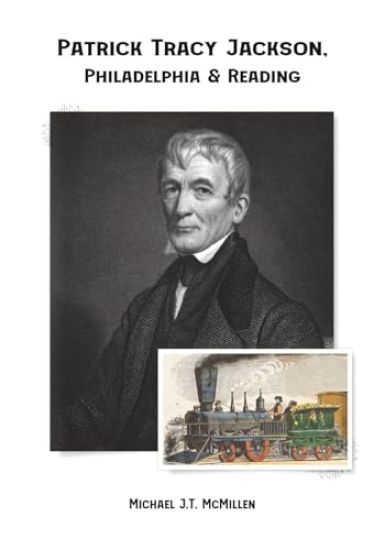
Patrick Tracy Jackson, Philadelphia & Reading
Michael J T McMillen
River Stone Publishing Group
2025
pokkari
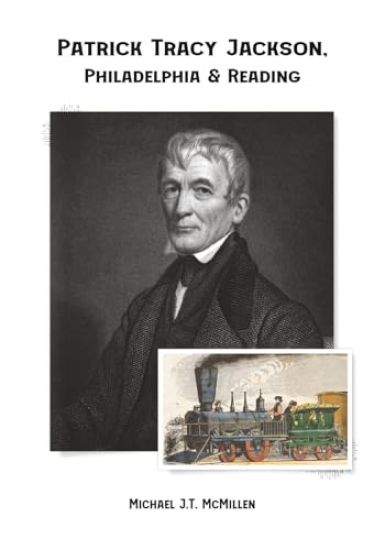
After the Panic of 1837, the Locks & Canals machine shop had little work; it was to be sold or converted to a twist mill. The L&C treasurer, Patrick Tracy Jackson, strove to keep the shop busy pending sale or conversion. An 1841 plea to Jackson from Elihu Chauncey, president of the Philadelphia & Reading railroad, seemed salvation. Despite incomplete infrastructure, the P&R would begin operating in 1842. It urgently needed coal cars and locomotives to carry anthracite from Pennsylvania fields to Philadelphia. But its financial situation was dire, its debt in default, its assets being seized by sheriffs. It struggled to borrow. Its bridges suffered arson; its trains were derailed. Statutory completion deadlines loomed. Despite the risks, L&C built P&R cars and engines.There were conditions to award of the teased building contracts. Chauncey wanted L&C to make loans to the P&R. L&C had no interest in lending. Jackson sought P&R equity enabling participation in two infant industries: railroads and coal. Chauncey concocted a surreptitious scheme to acquire P&R stock from the Bank of the United States for sale to L&C, thereby diminishing the bank's power over the P&R.Nine months later, the P&R and L&C entered into the 1842 Running Gear Contract for running gear for wood jimmies. Developing a financial structure for the locomotives transaction consumed a year: the Engines Contract for locomotives and coal cars was signed in 1843. For the contracts, Jackson developed unique financial structures to protect L&C, as builder and financier, while allowing P&R use of the equipment for revenue generation. How could L&C sell equipment to, and ensure receipt and retention of payments from, an insolvent railroad (the P&R) that had not yet, or had only recently, commenced operations, during a severe economic depression or other adverse financial circumstances?The transaction went badly. Neither Jackson nor the P&R anticipated new iron coal cars or Baldwin's flexible beam truck: they rendered small L&C engines inadequate. Builders of large engines were paid; L&C received little. Payment defaults were continuous (for years), diminishing L&C's ability to sell the machine shop.This is a story of desperation, debt, and default: of balancing on the brink of bankruptcy. Jackson began with payment admonitions, eventually including favonian, then whetted, threats of resort to legal remedies. L&C acquired P&R stock and bonds and aligned with P&R stockholders and bond holders. His focus expanded beyond the equipment debt to the P&R's financial health, especially elimination of floating debt. In 1845, L&C and P&R bond holders initiated one of the first audits of managerial custodianship in U.S. corporate history. A Pennsylvania law was enacted allowing bond holders voting rights on a parity with stockholders.When further efforts at suasion and blandishment failed, Jackson sought legal advice from the eminent Philadelphia lawyer Horace Binney. Binney and Jackson developed an elegant four-step plan to take control of the trusts and debt under the Rolling Stock Contracts and neutralize the P&R. The plan derived from contract terms, threats of legal remedies (including personal liability for trustees), and extra-legal mechanisms. Within two months, L&C took control of the remedies relating to the P&R debt from the trustees, neutralized the P&R, and forced a P&R financial restructuring. Its value enhanced, L&C rid itself of the P&R debt. But more was needed.
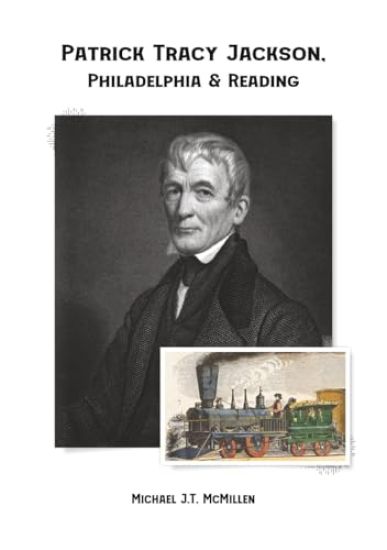
Patrick Tracy Jackson, Philadelphia & Reading
Michael J T McMillen
River Stone Publishing Group
2025
pokkari
After the Panic of 1837, the Locks & Canals machine shop had little work; it was to be sold or converted to a twist mill. The L&C treasurer, Patrick Tracy Jackson, strove to keep the shop busy pending sale or conversion. An 1841 plea to Jackson from Elihu Chauncey, president of the Philadelphia & Reading railroad, seemed salvation. Despite incomplete infrastructure, the P&R would begin operating in 1842. It urgently needed coal cars and locomotives to carry anthracite from Pennsylvania fields to Philadelphia. But its financial situation was dire, its debt in default, its assets being seized by sheriffs. It struggled to borrow. Its bridges suffered arson; its trains were derailed. Statutory completion deadlines loomed. Despite the risks, L&C built P&R cars and engines.There were conditions to award of the teased building contracts. Chauncey wanted L&C to make loans to the P&R. L&C had no interest in lending. Jackson sought P&R equity enabling participation in two infant industries: railroads and coal. Chauncey concocted a surreptitious scheme to acquire P&R stock from the Bank of the United States for sale to L&C, thereby diminishing the bank's power over the P&R.Nine months later, the P&R and L&C entered into the 1842 Running Gear Contract for running gear for wood jimmies. Developing a financial structure for the locomotives transaction consumed a year: the Engines Contract for locomotives and coal cars was signed in 1843. For the contracts, Jackson developed unique financial structures to protect L&C, as builder and financier, while allowing P&R use of the equipment for revenue generation. How could L&C sell equipment to, and ensure receipt and retention of payments from, an insolvent railroad (the P&R) that had not yet, or had only recently, commenced operations, during a severe economic depression or other adverse financial circumstances?The transaction went badly. Neither Jackson nor the P&R anticipated new iron coal cars or Baldwin's flexible beam truck: they rendered small L&C engines inadequate. Builders of large engines were paid; L&C received little. Payment defaults were continuous (for years), diminishing L&C's ability to sell the machine shop.This is a story of desperation, debt, and default: of balancing on the brink of bankruptcy. Jackson began with payment admonitions, eventually including favonian, then whetted, threats of resort to legal remedies. L&C acquired P&R stock and bonds and aligned with P&R stockholders and bond holders. His focus expanded beyond the equipment debt to the P&R's financial health, especially elimination of floating debt. In 1845, L&C and P&R bond holders initiated one of the first audits of managerial custodianship in U.S. corporate history. A Pennsylvania law was enacted allowing bond holders voting rights on a parity with stockholders.When further efforts at suasion and blandishment failed, Jackson sought legal advice from the eminent Philadelphia lawyer Horace Binney. Binney and Jackson developed an elegant four-step plan to take control of the trusts and debt under the Rolling Stock Contracts and neutralize the P&R. The plan derived from contract terms, threats of legal remedies (including personal liability for trustees), and extra-legal mechanisms. Within two months, L&C took control of the remedies relating to the P&R debt from the trustees, neutralized the P&R, and forced a P&R financial restructuring. Its value enhanced, L&C rid itself of the P&R debt. But more was needed.
Patrick Tracy Jackson, Philadelphia & Reading
Michael J T McMillen
River Stone Publishing Group
2025
sidottu
After the Panic of 1837, the Locks & Canals machine shop had little work; it was to be sold or converted to a twist mill. The L&C treasurer, Patrick Tracy Jackson, strove to keep the shop busy pending sale or conversion. An 1841 plea to Jackson from Elihu Chauncey, president of the Philadelphia & Reading railroad, seemed salvation. Despite incomplete infrastructure, the P&R would begin operating in 1842. It urgently needed coal cars and locomotives to carry anthracite from Pennsylvania fields to Philadelphia. But its financial situation was dire, its debt in default, its assets being seized by sheriffs. It struggled to borrow. Its bridges suffered arson; its trains were derailed. Statutory completion deadlines loomed. Despite the risks, L&C built P&R cars and engines.There were conditions to award of the teased building contracts. Chauncey wanted L&C to make loans to the P&R. L&C had no interest in lending. Jackson sought P&R equity enabling participation in two infant industries: railroads and coal. Chauncey concocted a surreptitious scheme to acquire P&R stock from the Bank of the United States for sale to L&C, thereby diminishing the bank's power over the P&R.Nine months later, the P&R and L&C entered into the 1842 Running Gear Contract for running gear for wood jimmies. Developing a financial structure for the locomotives transaction consumed a year: the Engines Contract for locomotives and coal cars was signed in 1843. For the contracts, Jackson developed unique financial structures to protect L&C, as builder and financier, while allowing P&R use of the equipment for revenue generation. How could L&C sell equipment to, and ensure receipt and retention of payments from, an insolvent railroad (the P&R) that had not yet, or had only recently, commenced operations, during a severe economic depression or other adverse financial circumstances?The transaction went badly. Neither Jackson nor the P&R anticipated new iron coal cars or Baldwin's flexible beam truck: they rendered small L&C engines inadequate. Builders of large engines were paid; L&C received little. Payment defaults were continuous (for years), diminishing L&C's ability to sell the machine shop.This is a story of desperation, debt, and default: of balancing on the brink of bankruptcy. Jackson began with payment admonitions, eventually including favonian, then whetted, threats of resort to legal remedies. L&C acquired P&R stock and bonds and aligned with P&R stockholders and bond holders. His focus expanded beyond the equipment debt to the P&R's financial health, especially elimination of floating debt. In 1845, L&C and P&R bond holders initiated one of the first audits of managerial custodianship in U.S. corporate history. A Pennsylvania law was enacted allowing bond holders voting rights on a parity with stockholders.When further efforts at suasion and blandishment failed, Jackson sought legal advice from the eminent Philadelphia lawyer Horace Binney. Binney and Jackson developed an elegant four-step plan to take control of the trusts and debt under the Rolling Stock Contracts and neutralize the P&R. The plan derived from contract terms, threats of legal remedies (including personal liability for trustees), and extra-legal mechanisms. Within two months, L&C took control of the remedies relating to the P&R debt from the trustees, neutralized the P&R, and forced a P&R financial restructuring. Its value enhanced, L&C rid itself of the P&R debt. But more was needed.
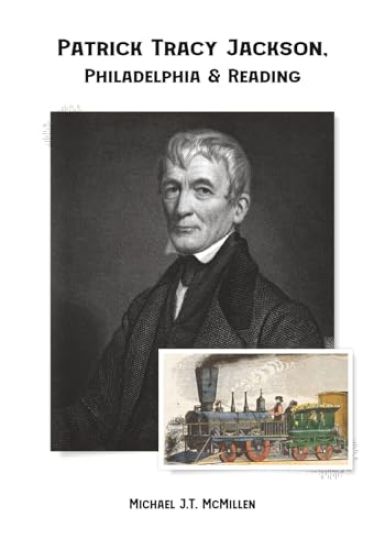
Patrick Tracy Jackson, Philadelphia & Reading
Michael J T McMillen
River Stone Publishing Group
2025
pokkari
After the Panic of 1837, the Locks & Canals machine shop had little work; it was to be sold or converted to a twist mill. The L&C treasurer, Patrick Tracy Jackson, strove to keep the shop busy pending sale or conversion. An 1841 plea to Jackson from Elihu Chauncey, president of the Philadelphia & Reading railroad, seemed salvation. Despite incomplete infrastructure, the P&R would begin operating in 1842. It urgently needed coal cars and locomotives to carry anthracite from Pennsylvania fields to Philadelphia. But its financial situation was dire, its debt in default, its assets being seized by sheriffs. It struggled to borrow. Its bridges suffered arson; its trains were derailed. Statutory completion deadlines loomed. Despite the risks, L&C built P&R cars and engines.There were conditions to award of the teased building contracts. Chauncey wanted L&C to make loans to the P&R. L&C had no interest in lending. Jackson sought P&R equity enabling participation in two infant industries: railroads and coal. Chauncey concocted a surreptitious scheme to acquire P&R stock from the Bank of the United States for sale to L&C, thereby diminishing the bank's power over the P&R.Nine months later, the P&R and L&C entered into the 1842 Running Gear Contract for running gear for wood jimmies. Developing a financial structure for the locomotives transaction consumed a year: the Engines Contract for locomotives and coal cars was signed in 1843. For the contracts, Jackson developed unique financial structures to protect L&C, as builder and financier, while allowing P&R use of the equipment for revenue generation. How could L&C sell equipment to, and ensure receipt and retention of payments from, an insolvent railroad (the P&R) that had not yet, or had only recently, commenced operations, during a severe economic depression or other adverse financial circumstances?The transaction went badly. Neither Jackson nor the P&R anticipated new iron coal cars or Baldwin's flexible beam truck: they rendered small L&C engines inadequate. Builders of large engines were paid; L&C received little. Payment defaults were continuous (for years), diminishing L&C's ability to sell the machine shop.This is a story of desperation, debt, and default: of balancing on the brink of bankruptcy. Jackson began with payment admonitions, eventually including favonian, then whetted, threats of resort to legal remedies. L&C acquired P&R stock and bonds and aligned with P&R stockholders and bond holders. His focus expanded beyond the equipment debt to the P&R's financial health, especially elimination of floating debt. In 1845, L&C and P&R bond holders initiated one of the first audits of managerial custodianship in U.S. corporate history. A Pennsylvania law was enacted allowing bond holders voting rights on a parity with stockholders.When further efforts at suasion and blandishment failed, Jackson sought legal advice from the eminent Philadelphia lawyer Horace Binney. Binney and Jackson developed an elegant four-step plan to take control of the trusts and debt under the Rolling Stock Contracts and neutralize the P&R. The plan derived from contract terms, threats of legal remedies (including personal liability for trustees), and extra-legal mechanisms. Within two months, L&C took control of the remedies relating to the P&R debt from the trustees, neutralized the P&R, and forced a P&R financial restructuring. Its value enhanced, L&C rid itself of the P&R debt. But more was needed.