
Kirjahaku
Etsi kirjoja tekijän nimen, kirjan nimen tai ISBN:n perusteella.
1000 tulosta hakusanalla Miriam Plotinsky


The Work Of The United States Department Of Agriculture For The South, 1865-1875
Miriam Augusta Compton
Hutson Street Press
2025
sidottu

The Work Of The United States Department Of Agriculture For The South, 1865-1875
Miriam Augusta Compton
Hutson Street Press
2025
pokkari
Social media and digital technologies are transforming what and how we read. Books and Social Media considers the way in which readers and writers come together in digital communities to discover and create new works of fiction. This new way of engaging with fiction stretches the boundaries of what has been considered a book in the past by moving beyond the physical or even digitally bound object to the consideration of content, containers, and the ability to share. Using empirical data and up-to-date research methods, Miriam Johnson introduces the ways in which digitally social platforms give rise to a new type of citizen author who chooses to sidestep the industry’s gatekeepers and share their works directly with interested readers on social platforms. Gender and genre, especially, play a key role in developing the communities in which these authors write. The use of surveys, interviews, and data mining brings to the fore issues of gender, genre, community, and power, which highlight the push and pull between these writers and the industry.Questioning what we always thought we knew about what makes a book and traditional publishing channels, this book will be of interest to anyone studying or researching publishing, book history, print cultures, and digital and contemporary literatures.
Social media and digital technologies are transforming what and how we read. Books and Social Media considers the way in which readers and writers come together in digital communities to discover and create new works of fiction. This new way of engaging with fiction stretches the boundaries of what has been considered a book in the past by moving beyond the physical or even digitally bound object to the consideration of content, containers, and the ability to share. Using empirical data and up-to-date research methods, Miriam Johnson introduces the ways in which digitally social platforms give rise to a new type of citizen author who chooses to sidestep the industry’s gatekeepers and share their works directly with interested readers on social platforms. Gender and genre, especially, play a key role in developing the communities in which these authors write. The use of surveys, interviews, and data mining brings to the fore issues of gender, genre, community, and power, which highlight the push and pull between these writers and the industry.Questioning what we always thought we knew about what makes a book and traditional publishing channels, this book will be of interest to anyone studying or researching publishing, book history, print cultures, and digital and contemporary literatures.
With cities increasingly following rigid rules for designing out crime and producing spaces under surveillance, this book asks how information shapes bodies, space, and, ultimately, policymaking. In recent years, public spaces have changed in Western countries, with the urban realm becoming an ever-more monitored, privatised, homogeneous, and aseptic space that has lost its character, uniqueness, and diversity in the name of ‘security’. This underpins precise moral and political choices in terms of what a space should be, how it can be used, and by whom. These choices generate material consequences concerning urban inequality and freedom, or otherwise, of movement. Based on ethnographic and autoethnographic explorations in London’s ‘criminal’ spaces, this book illustrates how rules, policies, and moral values, far from being abstract concepts, are in fact material. Outlining the basis of a new urban information ethics, the book both exposes and challenges how moral values and predefined categories are applied to, and materially shape, the movement of bodies in urban space with regard to crime and security policies. Drawing on Gilbert Simondon’s information theory and a wide range of work in urban studies, geography, and planning, as well as in surveillance studies, object-oriented ontology, and contemporary theoretical work on both materiality and affect, the book provides a radically new perspective on urban space in general, and crime and security in particular. This book uses a balanced mix of theoretical concepts and empirical study to bring theory and practice together in an intertwining of ethnography and autoethnography.This book will be of interest to students and scholars in the fields of urban studies, urban geography, sociology, surveillance studies, legal theory, socio-legal studies, planning law, environmental law, and land law.
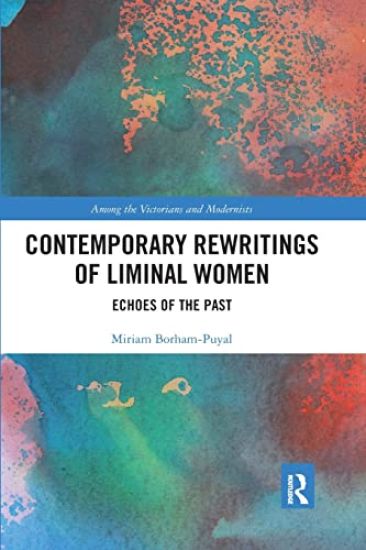
This book explores the concept of liminality in the representation of women in eighteenth and nineteenth century literature, as well as in contemporary rewritings, such as novels, films, television shows, videogames, and graphic novels. In particular, the volume focuses on vampires, prostitutes, quixotes, and detectives as examples of new women who inhabit the margins of society and populate its narratives. Therefore, it places together for the first time four important liminal identities, while it explores a relevant corpus that comprises four centuries and several countries. Its diachronic, transnational, and comparative approach emphasizes the representation across time and space of female sexuality, gender violence, and women’s rights, also employing a liminal stance in its literary analysis: facing the past in order to understand the present. By underlining the dialogue between past and present this monograph contributes to contemporary debates on the representation of women and the construction of femininity as opposed to hegemonic masculinity, for it exposes the line of thought that has brought us to the present moment, hence, challenging assumed stereotypes and narratives. In addition, by using popular narratives and media, the present work highlights the value of literature, films, or alternative forms of storytelling to understand how women’s place in society, their voice, and their presence have been and are still negotiated in spaces of visibility, agency, and power.

This book connects a rhetorical examination of medical and public health policy documents with a humanistic investigation of cultural texts to uncover the link between gendered representations of health and cancer. The author argues that in western biomedical contexts cancer is considered a women’s disease and their bodies are treated as inherently oncogenic or cancer-producing, which leads to biomedical practices that adversely impact their bodily autonomy. She examines how these biases traverse national boundaries by examining the transmission of biomedical cancer practices from the US and international organizations to Kenya. This book is suited to scholars and students working in the fields of Rhetorics of Health and Medicine, Medical Humanities and Gender Studies. It is also of interest to medical professionals and readers interested in globalism and global health.

Networked Music Performance (NMP) is the essential guide to both playing music online and ensemble music through networks. Offering a range of case studies, from highly technical solutions to inclusive community projects, this book provides inspiration to musicians to try NMP whatever their level of technical expertise.Drawing upon recent research to examine the background and history of the practice as well as specific practical approaches, technical and musical considerations are included for readers, as are ideas around accessibility and creativity. Accessibility is considered in the context of the opportunities that NMP gives to musicians working remotely, as well as some of the barriers to participation in NMP and how these can be overcome. Synchronous and asynchronous approaches to NMP are explored in detail, examining the technical and musical affordances and challenges of working remotely for musicians.Networked Music Performance will appeal to music and music technology students as well as professional musicians and technicians who have started working online and wish to improve their practice. As NMP in the context of music education and community music are also explored, this book supplies educators and community leaders with knowledge and practical guidance on how to move their practice online.

Networked Music Performance (NMP) is the essential guide to both playing music online and ensemble music through networks. Offering a range of case studies, from highly technical solutions to inclusive community projects, this book provides inspiration to musicians to try NMP whatever their level of technical expertise.Drawing upon recent research to examine the background and history of the practice as well as specific practical approaches, technical and musical considerations are included for readers, as are ideas around accessibility and creativity. Accessibility is considered in the context of the opportunities that NMP gives to musicians working remotely, as well as some of the barriers to participation in NMP and how these can be overcome. Synchronous and asynchronous approaches to NMP are explored in detail, examining the technical and musical affordances and challenges of working remotely for musicians.Networked Music Performance will appeal to music and music technology students as well as professional musicians and technicians who have started working online and wish to improve their practice. As NMP in the context of music education and community music are also explored, this book supplies educators and community leaders with knowledge and practical guidance on how to move their practice online.
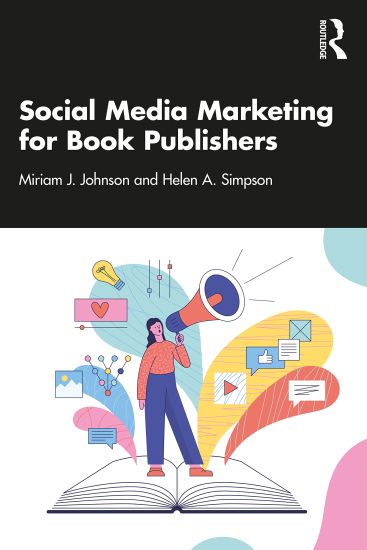
Social Media Marketing for Book Publishers
Miriam J. Johnson; Helen A. Simpson
TAYLOR FRANCIS LTD
2022
nidottu
Providing a concise toolbox for publishing professionals and students of publishing, this book explores the skills needed to master the key elements of social media marketing and therefore stay relevant in this ever-competitive industry.Taking a hands-on, practical approach, Social Media Marketing for Book Publishers covers topics including researching and identifying actionable insights, developing a strategy, producing content, promotion types, community building, working with influencers, and how to measure success. Pulling from years of industry experience, the authors’ main focus is on adult fiction publishing, but they also address other areas of the industry including children’s, young adult (YA), academic, and non-fiction. The book additionally brings in valuable voices from the wider digital marketing industries, featuring excerpts from interviews with experts across search engine optimisation (SEO), AdWords, social platforms, community management, influencer management, and content strategists.Social Media Marketing for Book Publishers is a key text for any publishing courses covering how to market books, and should find a place on every publishers' bookshelf.

Social Media Marketing for Book Publishers
Miriam J. Johnson; Helen A. Simpson
TAYLOR FRANCIS LTD
2022
sidottu
Providing a concise toolbox for publishing professionals and students of publishing, this book explores the skills needed to master the key elements of social media marketing and therefore stay relevant in this ever-competitive industry.Taking a hands-on, practical approach, Social Media Marketing for Book Publishers covers topics including researching and identifying actionable insights, developing a strategy, producing content, promotion types, community building, working with influencers, and how to measure success. Pulling from years of industry experience, the authors’ main focus is on adult fiction publishing, but they also address other areas of the industry including children’s, young adult (YA), academic, and non-fiction. The book additionally brings in valuable voices from the wider digital marketing industries, featuring excerpts from interviews with experts across search engine optimisation (SEO), AdWords, social platforms, community management, influencer management, and content strategists.Social Media Marketing for Book Publishers is a key text for any publishing courses covering how to market books, and should find a place on every publishers' bookshelf.

The U.S. military economy incorporates hundreds of American communities. This is the first book to connect our national security apparatus to the local level via deeply reported portraits of six carefully selected locations, including military Meccas and out-of-the-way places. They are woven into the warfare economy by bases, nuclear weapons labs, and production sites. The book includes an invaluable overview of how the military is structured, how its budget is made, and what it costs. It also shows how the military economy perpetuates itself. In on-the-ground reporting, Pemberton traces the lines of connection between the tour stops presented here and our country’s foreign policy, industrial policy, and budget priorities. She examines the meaning of national security in the current moment, as climate change becomes what the military itself calls "an urgent and growing threat." And she dramatically demonstrates how redirecting our militarized foreign and industrial policy toward climate security can help these communities become part of the solution. For students, scholars, public servants, and all concerned citizens, this book is essential reading.
Why did working-class women become the central labour force on assembly lines in the new consumer goods’ industries of the inter-war period? What was the long-term significance of this for the pattern of women’s work, both in paid employment and in the home?Originally published in 1990, Women Assemble fills a major gap in the history of women and work, and develops a theory of women’s class relations, and of course gender and class more generally, by means of an original case-study. Taken from a wide variety of sources, it uses a multidisciplinary approach and is brought to life by interviews with people who worked in assembly-line industries during the inter-war period.This extremely readable study is important to feminists, historians, and sociologists, as well as to all those concerned with issues of gender, class, and the labour process.
Why did working-class women become the central labour force on assembly lines in the new consumer goods’ industries of the inter-war period? What was the long-term significance of this for the pattern of women’s work, both in paid employment and in the home?Originally published in 1990, Women Assemble fills a major gap in the history of women and work, and develops a theory of women’s class relations, and of course gender and class more generally, by means of an original case-study. Taken from a wide variety of sources, it uses a multidisciplinary approach and is brought to life by interviews with people who worked in assembly-line industries during the inter-war period.This extremely readable study is important to feminists, historians, and sociologists, as well as to all those concerned with issues of gender, class, and the labour process.

Revealing the limitations of human decision-making, this book explores how Artificial Intelligence (AI) can be used to optimize decisions for improved business outcomes and efficiency, as well as looking ahead to the significant contributions Decision Intelligence (DI) can make to society and the ethical challenges it may raise.From the theories and concepts used to design autonomous intelligent agents to the technologies that power DI systems and the ways in which companies use decision-making building blocks to build DI solutions that enable businesses to democratize AI, this book presents an impressive framework to integrate artificial and human intelligence for the success of different types of business decisions.Replete with case studies on DI applications, as well as wider discussions on the social implications of the technology, Decision Intelligence: Human–Machine Integration for Decision Making appeals to both students of AI and data sciences and businesses considering DI adoption.

Revealing the limitations of human decision-making, this book explores how Artificial Intelligence (AI) can be used to optimize decisions for improved business outcomes and efficiency, as well as looking ahead to the significant contributions Decision Intelligence (DI) can make to society and the ethical challenges it may raise.From the theories and concepts used to design autonomous intelligent agents to the technologies that power DI systems and the ways in which companies use decision-making building blocks to build DI solutions that enable businesses to democratize AI, this book presents an impressive framework to integrate artificial and human intelligence for the success of different types of business decisions.Replete with case studies on DI applications, as well as wider discussions on the social implications of the technology, Decision Intelligence: Human–Machine Integration for Decision Making appeals to both students of AI and data sciences and businesses considering DI adoption.

First published in 1959, Novelists on the Novel makes an attempt to set out fully what novelists both major and minor have to say about the practice of their art. It draws on the experience of English, French and Russian novelists so that the general reader and the more serious literature student can find out what they have to say about the novel as a literary form. The included passages come from novels themselves, from diaries, letters, notebooks, etc., and together constitute something like an aesthetic of the novel. Using these sources, the book tries to answer the following questions: What is a novel? what are the problems which face the novelist when he sits down to write a work of fiction? How is he to tell his story? What exactly is meant by the ‘point of view’? How should he manipulate time? How is he, in one of the possible senses of the word, to make his characters seem ‘real’? What are the functions of dialogue and how should it be dovetailed into narrative?

First published in 1959, Novelists on the Novel makes an attempt to set out fully what novelists both major and minor have to say about the practice of their art. It draws on the experience of English, French and Russian novelists so that the general reader and the more serious literature student can find out what they have to say about the novel as a literary form. The included passages come from novels themselves, from diaries, letters, notebooks, etc., and together constitute something like an aesthetic of the novel. Using these sources, the book tries to answer the following questions: What is a novel? what are the problems which face the novelist when he sits down to write a work of fiction? How is he to tell his story? What exactly is meant by the ‘point of view’? How should he manipulate time? How is he, in one of the possible senses of the word, to make his characters seem ‘real’? What are the functions of dialogue and how should it be dovetailed into narrative?