Kirjojen hintavertailu. Mukana 12 390 323 kirjaa ja 12 kauppaa.

Kirjahaku

Etsi kirjoja tekijän nimen, kirjan nimen tai ISBN:n perusteella.

1000 tulosta hakusanalla Monet Thompson

Money, Obedience, and Affection
This book, first published in 1985, presents a key collection of essays on Berkeley’s moral and political philosophy. They form an introduction to, and analysis of, Berkeley’s immaterialist arguments, part of his consciously adopted strategy to subvert Enlightenment thought, which he saw as a danger to civil society.
Money, Obedience, and Affection
This book, first published in 1985, presents a key collection of essays on Berkeley’s moral and political philosophy. They form an introduction to, and analysis of, Berkeley’s immaterialist arguments, part of his consciously adopted strategy to subvert Enlightenment thought, which he saw as a danger to civil society.
Monte Carlo Methods for Particle Transport
Fully updated with the latest developments in the eigenvalue Monte Carlo calculations and automatic variance reduction techniques and containing an entirely new chapter on fission matrix and alternative hybrid techniques. This second edition explores the uses of the Monte Carlo method for real-world applications, explaining its concepts and limitations. Featuring illustrative examples, mathematical derivations, computer algorithms, and homework problems, it is an ideal textbook and practical guide for nuclear engineers and scientists looking into the applications of the Monte Carlo method, in addition to students in physics and engineering, and those engaged in the advancement of the Monte Carlo methods. Describes general and particle-transport-specific automated variance reduction techniques Presents Monte Carlo particle transport eigenvalue issues and methodologies to address these issues Presents detailed derivation of existing and advanced formulations and algorithms with real-world examples from the author’s research activities
Money, Social Ontology and Law

Money, Social Ontology and Law

Angela Condello; Maurizio Ferraris; John Rogers Searle

Routledge
2019
sidottu
Presenting legal and philosophical essays on money, this book exploresthe conditions according to which an object like a piece of paper, or anelectronic signal, has come to be seen as having a value.Money plays a crucial role in the regulation of social relationships andtheir normative determination. It is thus integral to the very nature of the“social”, and the question of how society is kept together by a networkof agreements, conventions, exchanges, and codes. All of which mustbe traced down. The technologies of money discussed here by Searle,Ferraris, and Condello show how we conceive the category of the social atthe intersection of individual and collective intentionality, documentality,and materiality. All of these dimensions, as the introduction to this volumedemonstrates, are of vital importance for legal theory and for a whole set oflegal concepts that are crucial in reflections on the relationship between law,philosophy, and society.
Money as a Social Institution
Money is usually understood as a valuable object, the value of which is attributed to it by its users and which other users recognize. It serves to link disparate institutions, providing a disguised whole and prime tool for the “invisible hand” of the market.This book offers an interpretation of money as a social institution. Money provides the link between the household and the firm, the worker and his product, making that very division seem natural and money as imminently practical. Money as a Social Institution begins in the medieval period and traces the evolution of money alongside consequent implications for the changing models of the corporation and the state. This is then followed with double-entry accounting as a tool of long-distance merchants and bankers, then the monitoring of the process of production by professional corporate managers. Davis provides a framework of analysis for examining money historically, beyond the operation of those particular institutions, which includes the possibility of conceptualizing and organizing the world differently.This volume is of great importance to academics and students who are interested in economic history and history of economic thought, as well as international political economics and critique of political economy.
Money and Capital

Money and Capital

Laurent Baronian

TAYLOR FRANCIS LTD
2022
sidottu
This book renews the Marxian theory of the general equivalent by highlighting the contradiction between the social functions of money (unit of account, means of circulation) and its private functions (store of value, accumulation).It draws a clear distinction between the monetary base and the commodity base of money and thus avoids the confusion between money and credit on the one hand, and money and capital on the other, which are found in other heterodox monetary theories. It accounts for the new forms of monetary constraints weighing on the banking systems under and inconvertible fiat money standard, the class relationships underlying the interventions of monetary authorities and governments, and presents a definition of the state which emphasises its mode of intervention on the collective and social conditions of capitalisms which are money and labour power. The emphasis on the contradiction between these two types of monetary functions gives a more fundamental account of the conflict between the international role and the national origin of the dollar than the Triffin dilemma, which has been constantly overcome or deferred by the US since 1960. The author explains this evolution by demonstrating how, from the 1950s onwards, the dollar began a process of acquiring relative autonomy from the US economy. By focusing on the role and international functions of the dollar, he offers a fresh look at the 2008 crisis and its consequences for the international monetary system, but also for a possible post-capitalist financial system – which post-revolutionary Russia experimented with in the form of the NEP, and whose contemporary implementation is foreshadowed by the rise of digital central bank currencies.The book thereby provides a necessary update to the tools and concepts inherited from Marx for analysing and understanding money, capital and the state.
Money and the Governance of Punishment
Money is the most frequently means used in the legal system to punish and regulate. Monetary penalties outnumber all other sanctions delivered by criminal justice in many jurisdictions, imprisonment included. More people pay fines than go to prison and in some jurisdictions many of those in prison are there because of failure to pay their fines. Therefore, it is surprising how little has been written in the Anglophone academic world about the nature of money sanctions and their specific characteristics as legal sanctions.In many ways, legal innovations related to money sanctions have been poorly understood. This book argues that they are a direct consequence of the changing meaning of money. Considering the ‘meaninglessness’ of modern money, the book aims to examine the history of changing conceptions in how fines have been conceived and used. Using a set of interpretative techniques sensitive to how money and freedom are perceived, the genealogy of the penal fine is presented as a story of constant reformulation in response to shifting political pressures and changes in intellectual developments that influenced ideological commitments of legislators and practitioners.This book is multi-disciplinary and will appeal to those engaged with criminology, sociology and philosophy of punishment, socio-legal studies, and criminal law.
Money Power and Financial Capital in Emerging Markets
This book provides a comprehensive investigation of the messy and crisis-ridden relationship between the operations of capitalist finance, global capital flows, and state power in emerging markets. The politics, drivers of emergence, and diversity of these myriad forms of state power are explored in light of the positionality of emerging markets within the network of space and power relations that characterises contemporary global finance. The book develops a multi-disciplinary perspective and combines insights from Marxist political economy, post-Keynesian economics, economic geography, and postcolonial and feminist International Political Economy. Alami comprehensively reviews the theories, histories, and geographies of cross-border finance management, and develops a conceptual framework which allows unpacking the complex entanglement of constraint and opportunities, of growing integration and tight discipline, that cross-border finance represents for emerging markets. Extensive fieldwork research provides an in-depth comparative critical interrogation of the policies and regulations deployed in Brazil and South Africa.This volume will be especially useful to those researching and working in the areas of international political economy, contemporary geographies of money and finance, and critical development studies. It should also prove of interest to policy makers, practitioners, and activists concerned with the relation between finance and development in emerging markets and beyond.
Money Rules

Money Rules

Anthony Gierzynski

Routledge
2019
sidottu
The role of money in the U.S. electoral process has become more and more controversial in recent years. Following the Buckley ruling and other legislation in 1996, candidates and political parties are free to raise virtually unlimited ?soft? money, making money perhaps the most significant factor in a campaign's success. In Moey Rules, Anthony Gier
Money as Emotional Currency
This book explores the trace of the emotional undercurrent stirred by money from its beginnings in childhood to its consolidation into adult life, through love and work, for individuals and society alike, and with an emphasis on ordinary development, rather than on pathology.
Money

Money

Nico Stehr; Dustin Voss

Routledge
2019
sidottu
Since the publication of Georg Simmel’s Philosophy of Money more than a century ago, social science has primarily considered money a medium of exchange. This new book treats money as a more inclusive social concept that has profoundly influenced the emergence of modern society. Money is also a moral and political category. It communicates prices and thus embodies innumerable evaluations and judgments of objects and services, of social relationships and associations.At the same time, modern societies are undergoing fundamental transformations in which money assumes an ever-important role, while banking and financial services constitute the new primary sector of modern service economies. In this book, the authors trace the transformational scope of monetarization and financialization along the four classical productive forces—land, capital, labor, and knowledge—and evaluate the consequences of an irrepressible urge to quantify and monetarize almost everything social. What happens to a society in which the tangible products of the real economy lose their preeminent status, and everything is judged purely according to its economic value? The authors identify an increasing disconnect between market prices and social values with serious social, political, economic, and environmental consequences.
Money

Money

Nico Stehr; Dustin Voss

Routledge
2019
nidottu
Since the publication of Georg Simmel’s Philosophy of Money more than a century ago, social science has primarily considered money a medium of exchange. This new book treats money as a more inclusive social concept that has profoundly influenced the emergence of modern society. Money is also a moral and political category. It communicates prices and thus embodies innumerable evaluations and judgments of objects and services, of social relationships and associations.At the same time, modern societies are undergoing fundamental transformations in which money assumes an ever-important role, while banking and financial services constitute the new primary sector of modern service economies. In this book, the authors trace the transformational scope of monetarization and financialization along the four classical productive forces—land, capital, labor, and knowledge—and evaluate the consequences of an irrepressible urge to quantify and monetarize almost everything social. What happens to a society in which the tangible products of the real economy lose their preeminent status, and everything is judged purely according to its economic value? The authors identify an increasing disconnect between market prices and social values with serious social, political, economic, and environmental consequences.
Monte Carlo Simulation with Applications to Finance
Developed from the author’s course on Monte Carlo simulation at Brown University, Monte Carlo Simulation with Applications to Finance provides a self-contained introduction to Monte Carlo methods in financial engineering. It is suitable for advanced undergraduate and graduate students taking a one-semester course or for practitioners in the financial industry.The author first presents the necessary mathematical tools for simulation, arbitrary free option pricing, and the basic implementation of Monte Carlo schemes. He then describes variance reduction techniques, including control variates, stratification, conditioning, importance sampling, and cross-entropy. The text concludes with stochastic calculus and the simulation of diffusion processes. Only requiring some familiarity with probability and statistics, the book keeps much of the mathematics at an informal level and avoids technical measure-theoretic jargon to provide a practical understanding of the basics. It includes a large number of examples as well as MATLAB® coding exercises that are designed in a progressive manner so that no prior experience with MATLAB is needed.
Monte Carlo Methods for Electromagnetics

Monte Carlo Methods for Electromagnetics

Matthew N.O. Sadiku

CRC Press
2019
nidottu
Until now, novices had to painstakingly dig through the literature to discover how to use Monte Carlo techniques for solving electromagnetic problems. Written by one of the foremost researchers in the field, Monte Carlo Methods for Electromagnetics provides a solid understanding of these methods and their applications in electromagnetic computation. Including much of his own work, the author brings together essential information from several different publications.Using a simple, clear writing style, the author begins with a historical background and review of electromagnetic theory. After addressing probability and statistics, he introduces the finite difference method as well as the fixed and floating random walk Monte Carlo methods. The text then applies the Exodus method to Laplace’s and Poisson’s equations and presents Monte Carlo techniques for handing Neumann problems. It also deals with whole field computation using the Markov chain, applies Monte Carlo methods to time-varying diffusion problems, and explores wave scattering due to random rough surfaces. The final chapter covers multidimensional integration.Although numerical techniques have become the standard tools for solving practical, complex electromagnetic problems, there is no book currently available that focuses exclusively on Monte Carlo techniques for electromagnetics. Alleviating this problem, this book describes Monte Carlo methods as they are used in the field of electromagnetics.
Monte Carlo Methods for Particle Transport

Monte Carlo Methods for Particle Transport

Alireza Haghighat

TAYLOR FRANCIS LTD
2022
nidottu
Fully updated with the latest developments in the eigenvalue Monte Carlo calculations and automatic variance reduction techniques and containing an entirely new chapter on fission matrix and alternative hybrid techniques. This second edition explores the uses of the Monte Carlo method for real-world applications, explaining its concepts and limitations. Featuring illustrative examples, mathematical derivations, computer algorithms, and homework problems, it is an ideal textbook and practical guide for nuclear engineers and scientists looking into the applications of the Monte Carlo method, in addition to students in physics and engineering, and those engaged in the advancement of the Monte Carlo methods. Describes general and particle-transport-specific automated variance reduction techniques Presents Monte Carlo particle transport eigenvalue issues and methodologies to address these issues Presents detailed derivation of existing and advanced formulations and algorithms with real-world examples from the author’s research activities
Money, Markets and Capital

Money, Markets and Capital

Jean Cartelier

Routledge
2020
nidottu
Money and payments are familiar to everybody. Economists however are often at a loss in assessing the extent to which money matters. As a matter of fact, money is at the origin of the main cleavage in economic theory. Beyond sophisticated models what is at stake is whether money is just an appearance which hides the essence of economic life (value and happiness of people) or, on the contrary, the very substance of economic relations, not limited to exchanges, in which power and sovereignty are ever present. In a first part, the author shows how fragile and shaky are the attempts made by value theoreticians to integrate money into their analysis. In a second part, he develops a rigorous alternative theory by giving strong logical foundations to a monetary analysis in the spirit of Keynes. Many important economic phenomena left unexplained by academic theory are accounted for (involuntary equilibrium unemployment), a new method in dynamics is resorted to (viability theory) and various economic relations are elucidated which are not reducible to exchange, the only one dealt with by academic theoreticians. This is the case of the wage relationship.Although written in view of an audience acquainted with economic theory, this book can be read nevertheless by a larger circle since the technicalities have been reduced to what is strictly necessary to understand what is at stake.
Money Machines

Money Machines

Mark Coeckelbergh

Routledge
2020
nidottu
While we have become increasingly vulnerable to the ebb and flow of global finance, most of us know very little about it. This book focuses on the role of technology in global finance and reflects on the ethical and societal meaning and impact of financial information and communication technologies (ICTs). Exploring the history, metaphysics, and geography of money, algorithms, and electronic currencies, the author argues that financial ICTs contribute to impersonal, disengaged, placeless, and objectifying relations, and that in the context of globalization these 'distancing' effects render it increasingly difficult to exercise and ascribe responsibility. Caught in the currents of capital, it seems that both experts and lay people have lost control and lack sufficient knowledge of what they are doing. There is too much epistemic, social, and moral distance. At the same time, the book also shows that these electronically mediated developments do not render global finance merely 'virtual', for its technological practices remain material and place-bound, and the ethical and social vulnerabilities they create are no less real. Moreover, understood in terms of technological practices, global finance remains human through and through, and there is no technological determinism. Therefore, Money Machines also examines the ways in which contemporary techno-financial developments can be resisted or re-oriented in a morally and socially responsible direction - not without, but with technology. As such, it will appeal to philosophers and scholars across the humanities and the social sciences with interests in science and technology, finance, ethics and questions of responsibility.
Monte-Carlo Methods and Stochastic Processes
Developed from the author’s course at the Ecole Polytechnique, Monte-Carlo Methods and Stochastic Processes: From Linear to Non-Linear focuses on the simulation of stochastic processes in continuous time and their link with partial differential equations (PDEs). It covers linear and nonlinear problems in biology, finance, geophysics, mechanics, chemistry, and other application areas. The text also thoroughly develops the problem of numerical integration and computation of expectation by the Monte-Carlo method.The book begins with a history of Monte-Carlo methods and an overview of three typical Monte-Carlo problems: numerical integration and computation of expectation, simulation of complex distributions, and stochastic optimization. The remainder of the text is organized in three parts of progressive difficulty. The first part presents basic tools for stochastic simulation and analysis of algorithm convergence. The second part describes Monte-Carlo methods for the simulation of stochastic differential equations. The final part discusses the simulation of non-linear dynamics.
Money, Inflation and Business Cycles

Money, Inflation and Business Cycles

Arkadiusz Sieron

Routledge
2020
nidottu
Who would disagree that money matters? Economists have yet to sufficiently explore issues related to monetary inflation in relation to the Cantillon effect, i.e. distribution and price effects resulting from uneven changes in the money supply and their impact on the economy. This book fills this important gap in the existing literature. The author classifies the various channels through which new money can be injected into the economy and demonstrates that it is not only the increase in money supply that is important, but also the way in which it occurs. Since the increase in money supply does not affect the cash balance of all economic entities in the same proportion and at the same time – new money is introduced into the economy through specific channels – a distribution of income and changes in the structure of relative prices and production occur. The study of money supply growth, carried out in the spirit of Richard Cantillon, offers an important analytical framework that facilitates the development of a number of sub-disciplines within economics and provides a better understanding of many economic processes. It significantly explores the theory of money and inflation, the business cycle and price bubbles, but also the theory of banking and central banking, income distribution, income and wealth inequalities, and the theory of public choice.This book is therefore an important voice in the fundamental debate on the role of monetary factors in the economy, as well as on the effects and legitimacy of a loose monetary policy. In 2017, the doctoral dissertation on which the book is based was awarded the Polish Prime Minister’s prize. In these times of non-standard monetary policy and rising income inequalities in OECD countries, the focus on the distribution effect of monetary inflation makes this a must read for researchers and policy-makers and for anyone working in monetary economics. This title was translated from Polish by Martin Turnau.
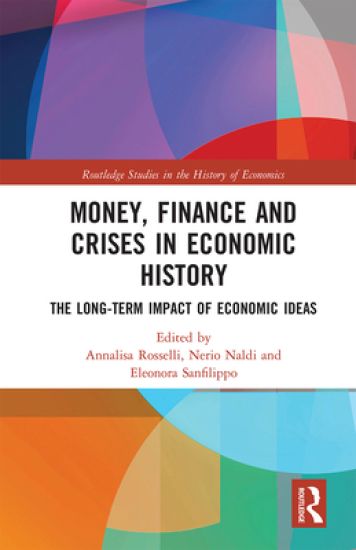
Money, Finance and Crises in Economic History
Recently, students and scholars have expressed dissatisfaction with the current state of economics and have called for the reintroduction of historical perspectives into economic thinking.Supporting the idea that fruitful lessons can be drawn from the work of past economists, this volume brings together an international cross section of leading economists and historians of economic thought to reflect on the crucial role that money, crises and finance play in the economy. The book draws on the work of economists throughout history to consider afresh themes such as financial and real explanations of economic crises, the role of central banks, and the design of macroeconomic policies. These themes are all central to the work of Maria Cristina Marcuzzo, and the contributions both reflect on and further her research agenda.This book will be of interest to researchers in the history of economic thought, and those who wish to gain a deeper understanding of the variety and diversity in approaches to economic ideas throughout history.