Kirjojen hintavertailu. Mukana 11 717 486 kirjaa ja 12 kauppaa.

Kirjahaku

Etsi kirjoja tekijän nimen, kirjan nimen tai ISBN:n perusteella.

1000 tulosta hakusanalla Natalie Labarre

Pretty Liar

Pretty Liar

Natalie Khazaal

Syracuse University Press
2018
nidottu
How did a new, irresistible brand of television emerge from the Lebanese Civil War (1975-91) to conquer the Arab region in the satellite era? What role did seductive news anchors, cool language teachers, superheroes, and gossip magazines play in negotiating a modern relationship between television and audiences? How did the government lose its television monopoly to sectarian militias?Pretty Liar explores the rise of language and gender politics in Lebanese television during the Civil War of 1975-91. Khazaal tells the untold story of the coevolution of Lebanese television and its audience, and the ways in which the war influenced that transformation. Khazaal analyzes news, entertainment, and educational shows from Télé Liban and LBC, novels, periodicals, and popular culture to explain how controversies over language and gender became a referendum on television's relevance. Based on empirical data, Khazaal shows how television became a site for politics and political resistance, feminism, and the cradle for postwar Lebanon. Pretty Liar challenges the narrow focus on present-day satellite television and social media, offering the first account of how broadcast television transformed media's legitimacy in the Arab world. This groundbreaking book shows how the history of television in Lebanon is a history not merely of corporate technology but of a people and their continuing demand for responsive media, especially during times of civil unrest.

The Problem South

The Problem South

Natalie J. Ring

University of Georgia Press
2012
sidottu
For most historians, the late nineteenth and early twentieth centuries saw the hostilities of the Civil War and the dashed hopes of Reconstruction give way to the nationalizing forces of cultural reunion, a process that is said to have downplayed sectional grievances and celebrated racial and industrial harmony. In truth, says Natalie J. Ring, this buoyant mythology competed with an equally powerful and far-reaching set of representations of the backward Problem South—one that shaped and reflected attempts by northern philanthropists, southern liberals, and federal experts to rehabilitate and reform the country’s benighted region. Ring rewrites the history of sectional reconciliation and demonstrates how this group used the persuasive language of social science and regionalism to reconcile the paradox of poverty and progress by suggesting that the region was moving through an evolutionary period of “readjustment” toward a more perfect state of civilization.In addition, The Problem South contends that the transformation of the region into a mission field and laboratory for social change took place in a transnational moment of reform. Ambitious efforts to improve the economic welfare of the southern farmer, eradicate such diseases as malaria and hookworm, educate the southern populace, “uplift” poor whites, and solve the brewing “race problem” mirrored the colonial problems vexing the architects of empire around the globe. It was no coincidence, Ring argues, that the regulatory state's efforts to solve the “southern problem” and reformers’ increasing reliance on social scientific methodology occurred during the height of U.S. imperial expansion.
The Problem South

The Problem South

Natalie J. Ring

University of Georgia Press
2012
pokkari
For most historians, the late nineteenth and early twentieth centuries saw the hostilities of the Civil War and the dashed hopes of Reconstruction give way to the nationalizing forces of cultural reunion, a process that is said to have downplayed sectional grievances and celebrated racial and industrial harmony. In truth, says Natalie J. Ring, this buoyant mythology competed with an equally powerful and far-reaching set of representations of the backward Problem South—one that shaped and reflected attempts by northern philanthropists, southern liberals, and federal experts to rehabilitate and reform the country’s benighted region. Ring rewrites the history of sectional reconciliation and demonstrates how this group used the persuasive language of social science and regionalism to reconcile the paradox of poverty and progress by suggesting that the region was moving through an evolutionary period of “readjustment” toward a more perfect state of civilization.In addition, The Problem South contends that the transformation of the region into a mission field and laboratory for social change took place in a transnational moment of reform. Ambitious efforts to improve the economic welfare of the southern farmer, eradicate such diseases as malaria and hookworm, educate the southern populace, “uplift” poor whites, and solve the brewing “race problem” mirrored the colonial problems vexing the architects of empire around the globe. It was no coincidence, Ring argues, that the regulatory state's efforts to solve the “southern problem” and reformers’ increasing reliance on social scientific methodology occurred during the height of U.S. imperial expansion.
Brothers and Friends

Brothers and Friends

Natalie R. Inman

University of Georgia Press
2017
sidottu
By following key families in Cherokee, Chickasaw, and Anglo-American societies from the Seven Years’ War through 1845, this study illustrates how kinship networks—forged out of natal, marital, or fictive kinship relationships—enabled and directed the actions of their members as they decided the futures of their nations. Natalie R. Inman focuses in particular on the Chickasaw Colbert family, the Anglo-American Donelson family, and the Cherokee families of Attakullakulla (Little Carpenter) and Major Ridge. Her research shows how kinship facilitated actions and goals for people in early America across cultures, even if the definitions and constructions of family were different in each society. To open new perspectives on intercultural relations in the colonial and early republic eras, Inman describes the formation and extension of these networks, their intersection with other types of personal and professional networks, their effect on crucial events, and their mutability over time.The Anglo-American patrilineal kinship system shaped patterns of descent, inheritance, and migration. The matrilineal native system was an avenue to political voice, connections between towns, and protection from enemies. In the volatile trans-Appalachian South, Inman shows, kinship networks helped to further political and economic agendas at both personal and national levels even through wars, revolutions, fiscal change, and removals.Comparative analysis of family case studies advances the historiography of early America by revealing connections between the social institution of family and national politics and economies. Beyond the British Atlantic world, these case studies can be compared to other colonial scenarios in which the cultures and families of Europeans collided with native peoples in the Americas, Africa, Australia, and other contexts.
Begin with a Failed Body

Begin with a Failed Body

Natalie J. Graham

University of Georgia Press
2017
pokkari
This collection of poems begins rooted in the landscape of the U.S. South as it voices singular lives carved out of immediate and historical trauma. While these poems dwell in the body, often meditating on its frailty and desire, they also question the weight that literary, historical, and religious icons are expected to bear. Within the vast scope of this volume, the poems arc from a pig farmer’s funeral to Georges de la Tour’s paintings and Toni Morrison’s Beloved. With an ear tuned to the lift and lilt of speech, they wring song from sorrow and plant in every dirge a seed of jubilation. Rich in clarity and decisive in her attention to image, Natalie J. Graham writes resonant, lush poetry.
Global City Futures

Global City Futures

Natalie Oswin

University of Georgia Press
2019
sidottu
Global City Futures offers a queer analysis of urban and national development in Singapore, the Southeast Asian city-state commonly cast as a leading “global city.” Much discourse on Singapore focuses on its extraordinary socioeconomic development and on the fact that many city and national governors around the world see it as a developmental model. But counternarratives complicate this success story, pointing out rising income inequalities, the lack of a social safety net, an unjust migrant labor regime, significant restrictions on civil liberties, and more.With Global City Futures Natalie Oswin contributes to such critical perspectives by centering recent debates over the place of homosexuality in the city-state. She extends out from these debates to consider the ways in which the race, class, and gender biases that are already well critiqued in the literature on Singapore (and on other cities around the world) are tied in key ways to efforts to make the city-state into not just a heterosexual space that excludes “queer” subjects but a heteronormative one that “queers” many more than LGBT people. Oswin thus argues for the importance of taking the politics of sexuality and intimacy much more seriously within both Singapore studies and the wider field of urban studies.
Global City Futures

Global City Futures

Natalie Oswin

University of Georgia Press
2019
pokkari
Global City Futures offers a queer analysis of urban and national development in Singapore, the Southeast Asian city-state commonly cast as a leading “global city.” Much discourse on Singapore focuses on its extraordinary socioeconomic development and on the fact that many city and national governors around the world see it as a developmental model. But counternarratives complicate this success story, pointing out rising income inequalities, the lack of a social safety net, an unjust migrant labor regime, significant restrictions on civil liberties, and more.With Global City Futures Natalie Oswin contributes to such critical perspectives by centering recent debates over the place of homosexuality in the city-state. She extends out from these debates to consider the ways in which the race, class, and gender biases that are already well critiqued in the literature on Singapore (and on other cities around the world) are tied in key ways to efforts to make the city-state into not just a heterosexual space that excludes “queer” subjects but a heteronormative one that “queers” many more than LGBT people. Oswin thus argues for the importance of taking the politics of sexuality and intimacy much more seriously within both Singapore studies and the wider field of urban studies.
Brothers and Friends

Brothers and Friends

Natalie R. Inman

University of Georgia Press
2020
pokkari
By following key families in Cherokee, Chickasaw, and Anglo-American societies from the Seven Years’ War through 1845, this study illustrates how kinship networks—forged out of natal, marital, or fictive kinship relationships—enabled and directed the actions of their members as they decided the futures of their nations. Natalie R. Inman focuses in particular on the Chickasaw Colbert family, the Anglo-American Donelson family, and the Cherokee families of Attakullakulla (Little Carpenter) and Major Ridge. Her research shows how kinship facilitated actions and goals for people in early America across cultures, even if the definitions and constructions of family were different in each society. To open new perspectives on intercultural relations in the colonial and early republic eras, Inman describes the formation and extension of these networks, their intersection with other types of personal and professional networks, their effect on crucial events, and their mutability over time.The Anglo-American patrilineal kinship system shaped patterns of descent, inheritance, and migration. The matrilineal native system was an avenue to political voice, connections between towns, and protection from enemies. In the volatile trans-Appalachian South, Inman shows, kinship networks helped to further political and economic agendas at both personal and national levels even through wars, revolutions, fiscal change, and removals.Comparative analysis of family case studies advances the historiography of early America by revealing connections between the social institution of family and national politics and economies. Beyond the British Atlantic world, these case studies can be compared to other colonial scenarios in which the cultures and families of Europeans collided with native peoples in the Americas, Africa, Australia, and other contexts.
Go-Go Live

Go-Go Live

Natalie Hopkinson

Duke University Press
2012
sidottu
Go-go is the conga drum–inflected black popular music that emerged in Washington, D.C., during the 1970s. The guitarist Chuck Brown, the "Godfather of Go-Go," created the music by mixing sounds borrowed from church and the blues with the funk and flavor that he picked up playing for a local Latino band. Born in the inner city, amid the charred ruins of the 1968 race riots, go-go generated a distinct culture and an economy of independent, almost exclusively black-owned businesses that sold tickets to shows and recordings of live go-gos. At the peak of its popularity, in the 1980s, go-go could be heard around the capital every night of the week, on college campuses and in crumbling historic theaters, hole-in-the-wall nightclubs, backyards, and city parks. Go-Go Live is a social history of black Washington told through its go-go music and culture. Encompassing dance moves, nightclubs, and fashion, as well as the voices of artists, fans, business owners, and politicians, Natalie Hopkinson's Washington-based narrative reflects the broader history of race in urban America in the second half of the twentieth century and the early twenty-first. In the 1990s, the middle class that had left the city for the suburbs in the postwar years began to return. Gentrification drove up property values and pushed go-go into D.C.'s suburbs. The Chocolate City is in decline, but its heart, D.C.'s distinctive go-go musical culture, continues to beat. On any given night, there's live go-go in the D.C. metro area.
Go-Go Live

Go-Go Live

Natalie Hopkinson

Duke University Press
2012
pokkari
Go-go is the conga drum–inflected black popular music that emerged in Washington, D.C., during the 1970s. The guitarist Chuck Brown, the "Godfather of Go-Go," created the music by mixing sounds borrowed from church and the blues with the funk and flavor that he picked up playing for a local Latino band. Born in the inner city, amid the charred ruins of the 1968 race riots, go-go generated a distinct culture and an economy of independent, almost exclusively black-owned businesses that sold tickets to shows and recordings of live go-gos. At the peak of its popularity, in the 1980s, go-go could be heard around the capital every night of the week, on college campuses and in crumbling historic theaters, hole-in-the-wall nightclubs, backyards, and city parks. Go-Go Live is a social history of black Washington told through its go-go music and culture. Encompassing dance moves, nightclubs, and fashion, as well as the voices of artists, fans, business owners, and politicians, Natalie Hopkinson's Washington-based narrative reflects the broader history of race in urban America in the second half of the twentieth century and the early twenty-first. In the 1990s, the middle class that had left the city for the suburbs in the postwar years began to return. Gentrification drove up property values and pushed go-go into D.C.'s suburbs. The Chocolate City is in decline, but its heart, D.C.'s distinctive go-go musical culture, continues to beat. On any given night, there's live go-go in the D.C. metro area.
Bunnybirds #1

Bunnybirds #1

Natalie Linn

Holiday House
2024
sidottu
Princess Aster must leave home to discover why her people are disappearing--even if it means journeying over the rim of the world itself--in this animal fantasy graphic novel perfect for fans of blockbuster series like Warriors and Wings of Fire. The Bunny who worries is heavy and slow. To fly with the flock, one must learn to let go. Be content and with joy Lay fears to rest: the bunny who smiles suits the bunny flock best. In Princess Aster's world, Bunnybirds live in contented isolation, keeping themselves detached from the world in order to practice magic and receive prophetic visions. Nothing is ever wrong, and no one is ever angry. . . even as Aster's people seem to be slowly disappearing. But when her father is next to go, her goal is as definite and unclouded as her heart: she's going to rescue him, no matter how. To find her people, she must leave the royal Home Tree and travel to the Court of Dragons--and then across sea flats, through deserts, and over the rim of the world itself--to find out what's happened, with only the exiled bunnybird thief Carlin and the lackadaisical centipede-dog Feet for company. The further Aster travels from home, the more questions she has: Are the Bunnybirds truly as happy as they say? And if they aren't, can she let go of age-old traditions in order to rescue her friends? A sweet but sweeping graphic novel adventure, Bunnybirds offers readers a richly imagined animal world full of magic, danger, and excitement.
Take All of Us

Take All of Us

Natalie Leif

HOLIDAY HOUSE INC
2024
sidottu
A YA unbury-your-gays horror in which an undead teen must find the boy he loves before he loses his mind and body. Five years ago, a parasite poisoned the water of Ian's West Virginia hometown, turning dozens of locals into dark-eyed, oil-dripping shells of their former selves. With chronic migraines and seizures limiting his physical abilities, Ian relies on his best friend and secret love Eric to mercy-kill any infected people they come across. Until a new health report about the contamination triggers a mandatory government evacuation, and Ian cracks his head in the rush. Used to hospitals and health scares, Ian always thought he'd die young... but he wasn't planning on coming back. Much less face the slow, painful realization that Eric left him behind to die. Desperate to find Eric and the truth before the parasite takes over him, Ian along with two others left behind--his old childhood rival Monica and the jaded prepper Angel--journey to track down Eric. What they don't know is that Eric is also looking for Ian, and he's determined to mercy-kill him.
Bunnybirds #1

Bunnybirds #1

Natalie Linn

HOLIDAY HOUSE INC
2024
pokkari
Princess Aster must leave home to discover why her people are disappearing--even if it means journeying over the rim of the world itself--in this animal fantasy graphic novel perfect for fans of blockbuster series like Warriors and Wings of Fire. The Bunny who worries is heavy and slow. To fly with the flock, one must learn to let go. Be content and with joy Lay fears to rest: the bunny who smiles suits the bunny flock best. In Princess Aster's world, Bunnybirds live in contented isolation, keeping themselves detached from the world in order to practice magic and receive prophetic visions. Nothing is ever wrong, and no one is ever angry. . . even as Aster's people seem to be slowly disappearing. But when her father is next to go, her goal is as definite and unclouded as her heart: she's going to rescue him, no matter how. To find her people, she must leave the royal Home Tree and travel to the Court of Dragons--and then across sea flats, through deserts, and over the rim of the world itself--to find out what's happened, with only the exiled bunnybird thief Carlin and the lackadaisical centipede-dog Feet for company. The further Aster travels from home, the more questions she has: Are the Bunnybirds truly as happy as they say? And if they aren't, can she let go of age-old traditions in order to rescue her friends? A sweet but sweeping graphic novel adventure, Bunnybirds offers readers a richly imagined animal world full of magic, danger, and excitement.
Introducing Feminist Ecclesiology

Introducing Feminist Ecclesiology

Natalie Watson

Continuum International Publishing Group Ltd.
2002
nidottu
The church has always been a place of profound ambivalence for women. While the majority of those who attend church are women, women experience hierarchical exclusion and invisibility within its institutional structures. Throughout most of its history, women have not participated in the church's reflections on its own nature. And yet, feminist theologians claim that women are church and always have been church. This book explores women's experiences of being church and reclaiming the church in order to rebuild it as meaningful, open, sacramental space where everybody's presence is celebrated. Natalie Watson proposes a creative and constructive dialogue with existing theological approaches to the church, from different Christian traditions as well as more recent feminist theologians, and suggests the development of criteria which hear women's experiences of being church and reclaiming church into speech. The church is the embodied reality of all women, children and men whose stories tell the story of the Triune God.
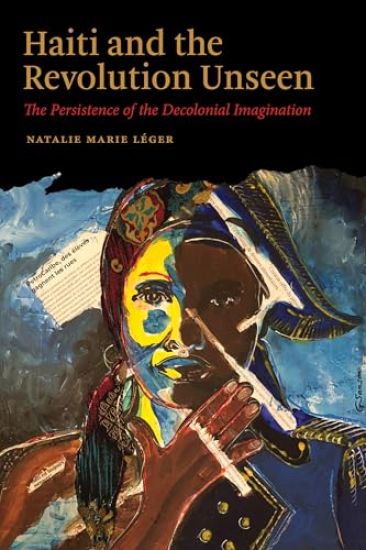
Haiti and the Revolution Unseen: The Persistence of the Decolonial Imagination
With Haiti and the Revolution Unseen, Natalie Marie L ger alters the genealogy of the Haitian revolutionary subject in the archive of Caribbean cultural thought and shifts our attention to the revolutionists previously left out of the archive: Saint Domingue's Africanized captives. She posits that canonical Caribbean writers of the Haitian Revolution (1791-1804), like C. L. R. James, Aim C saire, Alejo Carpentier, and douard Glissant, ignore the conditions of difference that inspired the captive populace's dreams of freedom from French colonial rule. These authors replicate the forms of colonial power that they sought to vilify with their Haitian revolutionist texts because they excise the African Haitian revolutionist from the story of the Revolution. Despite the fact that two-thirds of the enslaved population were African born on the eve of the Revolution, canonized Caribbean literature of the Revolution writes the Haitian revolutionist as acculturated into the West. The absence of African Haitian revolutionists results in narratives that do not see Haitian ideas about Haiti and the Haitian Revolution. They are the stories of a Haiti and the Haitian Revolution unseen. L ger writes against a Haiti- and Haitians-less idea of the Revolution. She asks scholars and artists of the Revolution to know Haitians as Ginens (African Haitians) and Haiti as Ayiti Ginen (Africa Haiti). This form of knowing demands a decolonial understanding of the Haitian Revolution and a reevaluation of its stories as told by influential twentieth-century Caribbean writers. The story she tells showcases the immense political impact of the African Haitian revolutionist's philosophies of freedom in Saint Domingue and Haiti thereafter; and she argues that the absence of these philosophies in Caribbean classics of the Revolution demands consideration of why these classics continue to shape how the Revolution and Haiti are discussed in Caribbean Studies, Black Studies, Postcolonial Studies and Haitian Studies. More pressingly, L ger calls on artists and scholars of the Revolution to be mindful of how Haiti and Haitians are figured in narratives of the Revolution. The immense space Haiti holds in Caribbean imaginings of freedom and revolution makes mediating it, its Revolution, and peoples through a prejudiced gaze that serves the West hugely problematic, since a denigrated Haiti yields stunted visions of the Caribbean's future. These conditions require attention to the pervasive presence of colonial paradigms for being in classic literatures of the Revolution and the way they undermine the generative manner Caribbean writers have used Haiti to think through their past, present, and future.
Haiti and the Revolution Unseen: The Persistence of the Decolonial Imagination
With Haiti and the Revolution Unseen, Natalie Marie L ger alters the genealogy of the Haitian revolutionary subject in the archive of Caribbean cultural thought and shifts our attention to the revolutionists previously left out of the archive: Saint Domingue's Africanized captives. She posits that canonical Caribbean writers of the Haitian Revolution (1791-1804), like C. L. R. James, Aim C saire, Alejo Carpentier, and douard Glissant, ignore the conditions of difference that inspired the captive populace's dreams of freedom from French colonial rule. These authors replicate the forms of colonial power that they sought to vilify with their Haitian revolutionist texts because they excise the African Haitian revolutionist from the story of the Revolution. Despite the fact that two-thirds of the enslaved population were African born on the eve of the Revolution, canonized Caribbean literature of the Revolution writes the Haitian revolutionist as acculturated into the West. The absence of African Haitian revolutionists results in narratives that do not see Haitian ideas about Haiti and the Haitian Revolution. They are the stories of a Haiti and the Haitian Revolution unseen. L ger writes against a Haiti- and Haitians-less idea of the Revolution. She asks scholars and artists of the Revolution to know Haitians as Ginens (African Haitians) and Haiti as Ayiti Ginen (Africa Haiti). This form of knowing demands a decolonial understanding of the Haitian Revolution and a reevaluation of its stories as told by influential twentieth-century Caribbean writers. The story she tells showcases the immense political impact of the African Haitian revolutionist's philosophies of freedom in Saint Domingue and Haiti thereafter; and she argues that the absence of these philosophies in Caribbean classics of the Revolution demands consideration of why these classics continue to shape how the Revolution and Haiti are discussed in Caribbean Studies, Black Studies, Postcolonial Studies and Haitian Studies. More pressingly, L ger calls on artists and scholars of the Revolution to be mindful of how Haiti and Haitians are figured in narratives of the Revolution. The immense space Haiti holds in Caribbean imaginings of freedom and revolution makes mediating it, its Revolution, and peoples through a prejudiced gaze that serves the West hugely problematic, since a denigrated Haiti yields stunted visions of the Caribbean's future. These conditions require attention to the pervasive presence of colonial paradigms for being in classic literatures of the Revolution and the way they undermine the generative manner Caribbean writers have used Haiti to think through their past, present, and future.
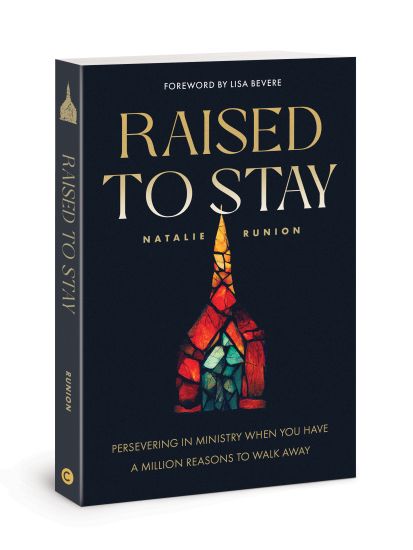
Raised to Stay

Raised to Stay

Natalie Runion

DAVID C COOK PUBLISHING COMPANY
2023
nidottu
An honest exploration of disappointment with the Church, Raised to Stay is for anyone weary of God's people but longing to keep their faith in God. God might seem silent right now. God's people might seem not worth the wounds. But hold on as Natalie Runion embarks on a journey for all who are wandering, wondering, and wrestling. Together, we will move toward trusting God again, knowing that even though Christian community may fail us, the love of God never fails. When we say yes to God, we don't say yes to church politics, ladder climbing, or burnout. We say yes to Jesus. We say yes to hope. We say yes to much that we can still embrace. Through honest words and deeply personal story, Runion challenges us to be part of a generation known for the passionate pursuit of Christ. To be remembered for loving one another, forgiving one another, and persevering with one another in our hunger for God. We aren't quitters. We are the stayers.
I Don't Even Like Women: And Other Lies That Get in the Way of Sacred Sisterhood
Collaborator or competition? Trusted friend or backstabbing rival? Bestselling author Natalie Runion flips the script on narratives that keep us from enjoying God's design for female friendships.Even women in the Church often find it hard to trust--or like--other women. But when we see one another as a refuge, rather than an enemy, we can delight in God's life-giving design for sacred sisterhood. In I Don't Even Like Women, Natalie Runion shows us how meaningful female friendships not only foster spiritual growth, they equip women to live out their calling with boldness and joy. You'll find yourself in these pages as Natalie: Breaks down the lies that distance us from other women Validates the reality of past trauma and equips us to find healingShares stories (with a good dose of humor ) that help us move beyond insecurities, fear of rejection, and the comparison gameOffers practical help for strengthening current relationships and building new ones When we take apart our own false narratives and assumptions, we see that spiritually enriching, healthy friendships are essential to the Body of Christ. A refreshing recognition of how God made each of us in His image--and not only likes us but cherishes us--I Don't Even Like Women focuses on how the unique experiences of women can unify us rather than divide us--for the good of God's Kingdom.
The House That Jesus Built

The House That Jesus Built

Natalie Runion

DAVID C COOK PUBLISHING COMPANY
2024
nidottu
From the bestselling author of Raised to Stay comes a hope-filled, practical path forward for our churches to rebuild from the rubble of deconstruction and the discouragement of recent years and become the world-changing family of God again. God's Word provides us the foundation, floor plan, and framework for a holy, healthy, and safe Church. Yet in recent years, our culture's deconstruction of faith, the "great resignation" in Church leadership and attendance, and the devastation of spiritual abuse have broken down God's beautiful design. In The House that Jesus Built, bestselling author Natalie Runion gives insight and encouragement to all the "stayers" who want to be a part of rebuilding our churches, brick by brick. With personal stories and practical ideas, she shows us how we can: Reengage our church communities while acknowledging past hurt and disappointment Reflect and pray as we ask how we as leaders and Christ followers have contributed to pain in our churches today Use the book of Acts as the blueprint for empowering the family of God to be the family of God Understand how even the apostles wrestled with their role in the early Church but remained committed to love God, love people, and make disciples Be unified on the one foundation of Jesus Christ The House That Jesus Built will stir your heart to see God's churches become healthy, whole, and back on mission with the Great Commission and Great Command. As Natalie reminds us, we are the Church. We are the ones who can partner with Jesus to rebuild something beautiful out of the rubble--and back on the Rock.