Discover your family's roots with this comprehensive genealogy of the Horton family, spanning centuries of history in England and America. This book includes detailed biographical information, family trees, and historical context, helping you to trace your lineage back to the 14th century. Whether you're a serious genealogist or simply interested in history, this book is an essential resource for understanding the Horton family.This work has been selected by scholars as being culturally important, and is part of the knowledge base of civilization as we know it.This work is in the "public domain in the United States of America, and possibly other nations. Within the United States, you may freely copy and distribute this work, as no entity (individual or corporate) has a copyright on the body of the work.Scholars believe, and we concur, that this work is important enough to be preserved, reproduced, and made generally available to the public. We appreciate your support of the preservation process, and thank you for being an important part of keeping this knowledge alive and relevant.
The 18th century was a wealth of knowledge, exploration and rapidly growing technology and expanding record-keeping made possible by advances in the printing press. In its determination to preserve the century of revolution, Gale initiated a revolution of its own: digitization of epic proportions to preserve these invaluable works in the largest archive of its kind. Now for the first time these high-quality digital copies of original 18th century manuscripts are available in print, making them highly accessible to libraries, undergraduate students, and independent scholars.Medical theory and practice of the 1700s developed rapidly, as is evidenced by the extensive collection, which includes descriptions of diseases, their conditions, and treatments. Books on science and technology, agriculture, military technology, natural philosophy, even cookbooks, are all contained here.++++The below data was compiled from various identification fields in the bibliographic record of this title. This data is provided as an additional tool in helping to insure edition identification: ++++British LibraryT130926"An address to the tories." dated: October 8, 1776. Horizontal chain lines.America. Boston: printed by J. Gill, and T. and J. Fleet, 1777]. 24]p.: ill.; 8
The 18th century was a wealth of knowledge, exploration and rapidly growing technology and expanding record-keeping made possible by advances in the printing press. In its determination to preserve the century of revolution, Gale initiated a revolution of its own: digitization of epic proportions to preserve these invaluable works in the largest archive of its kind. Now for the first time these high-quality digital copies of original 18th century manuscripts are available in print, making them highly accessible to libraries, undergraduate students, and independent scholars.This collection reveals the history of English common law and Empire law in a vastly changing world of British expansion. Dominating the legal field is the Commentaries of the Law of England by Sir William Blackstone, which first appeared in 1765. Reference works such as almanacs and catalogues continue to educate us by revealing the day-to-day workings of society.++++The below data was compiled from various identification fields in the bibliographic record of this title. This data is provided as an additional tool in helping to insure edition identification: ++++British LibraryT030242Sale conditions signed: Leigh and Sotheby. London, 1790]. 4],116p.; 8
The 18th century was a wealth of knowledge, exploration and rapidly growing technology and expanding record-keeping made possible by advances in the printing press. In its determination to preserve the century of revolution, Gale initiated a revolution of its own: digitization of epic proportions to preserve these invaluable works in the largest archive of its kind. Now for the first time these high-quality digital copies of original 18th century manuscripts are available in print, making them highly accessible to libraries, undergraduate students, and independent scholars.The Age of Enlightenment profoundly enriched religious and philosophical understanding and continues to influence present-day thinking. Works collected here include masterpieces by David Hume, Immanuel Kant, and Jean-Jacques Rousseau, as well as religious sermons and moral debates on the issues of the day, such as the slave trade. The Age of Reason saw conflict between Protestantism and Catholicism transformed into one between faith and logic -- a debate that continues in the twenty-first century.++++The below data was compiled from various identification fields in the bibliographic record of this title. This data is provided as an additional tool in helping to insure edition identification: ++++Library of CongressW022180Half-title: Doctor Thacher's sermon on the death, and Doctor Welsh's eulogy to the memory, of the Honourable Nathaniel Gorham, Esq. MDCCXCVI. "An eulogy, delivered June 29, 1796, at the meeting-house in Charlestown, in the Commonwealth of Massachusetts, in memory of the Honourable Nathaniel Gorham, Esquire, who died June 11, 1796. By Doctor Thomas Welsh .."--15, 1] p., 2nd count, with separate title page. "A dirge, to the memory of the Honourable Nathaniel Gorham, Esq. By the Rev. Thaddeus Mason Harris. Set to music by Mr. Oliver Holden."--p. 16]. Boston]: Printed by Samuel Hall, in Cornhill, Boston, MDCCXCVI. 1796]. 25, 1], 15, 1] p.; 4
The 18th century was a wealth of knowledge, exploration and rapidly growing technology and expanding record-keeping made possible by advances in the printing press. In its determination to preserve the century of revolution, Gale initiated a revolution of its own: digitization of epic proportions to preserve these invaluable works in the largest archive of its kind. Now for the first time these high-quality digital copies of original 18th century manuscripts are available in print, making them highly accessible to libraries, undergraduate students, and independent scholars.The Age of Enlightenment profoundly enriched religious and philosophical understanding and continues to influence present-day thinking. Works collected here include masterpieces by David Hume, Immanuel Kant, and Jean-Jacques Rousseau, as well as religious sermons and moral debates on the issues of the day, such as the slave trade. The Age of Reason saw conflict between Protestantism and Catholicism transformed into one between faith and logic -- a debate that continues in the twenty-first century.++++The below data was compiled from various identification fields in the bibliographic record of this title. This data is provided as an additional tool in helping to insure edition identification: ++++British LibraryT143260The first and second books of Brothers's 'A revealed knowledge .. ' and Halhed's 'testimony' are separately paginated, but the register is continuous.Dublin: printed in the year of Christ, 1795. 43, 1],66,22p.; 8
The 18th century was a wealth of knowledge, exploration and rapidly growing technology and expanding record-keeping made possible by advances in the printing press. In its determination to preserve the century of revolution, Gale initiated a revolution of its own: digitization of epic proportions to preserve these invaluable works in the largest archive of its kind. Now for the first time these high-quality digital copies of original 18th century manuscripts are available in print, making them highly accessible to libraries, undergraduate students, and independent scholars.The Age of Enlightenment profoundly enriched religious and philosophical understanding and continues to influence present-day thinking. Works collected here include masterpieces by David Hume, Immanuel Kant, and Jean-Jacques Rousseau, as well as religious sermons and moral debates on the issues of the day, such as the slave trade. The Age of Reason saw conflict between Protestantism and Catholicism transformed into one between faith and logic -- a debate that continues in the twenty-first century.++++The below data was compiled from various identification fields in the bibliographic record of this title. This data is provided as an additional tool in helping to insure edition identification: ++++British LibraryT099608Bristol: printed in the year, 1766. 28p.; 8
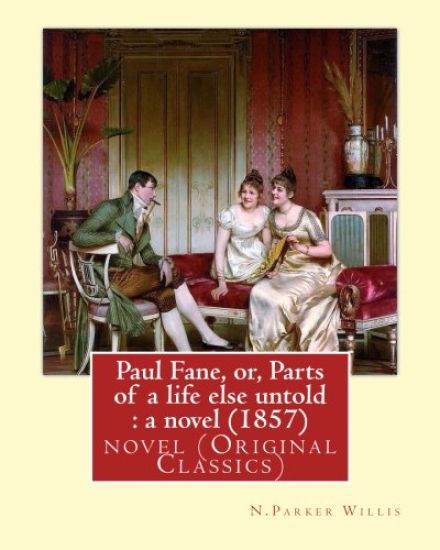
Nathaniel Parker Willis (January 20, 1806 - January 20, 1867), also known as N. P. Willis, was an American author, poet and editor who worked with several notable American writers including Edgar Allan Poe and Henry Wadsworth Longfellow. He became the highest-paid magazine writer of his day. For a time, he was the employer of former slave and future writer Harriet Jacobs. His brother was the composer Richard Storrs Willis and his sister Sara wrote under the name Fanny Fern. Born in Portland, Maine, Willis came from a family of publishers. His grandfather Nathaniel Willis owned newspapers in Massachusetts and Virginia, and his father Nathaniel Willis was the founder of Youth's Companion, the first newspaper specifically for children. Willis developed an interest in literature while attending Yale College and began publishing poetry. After graduation, he worked as an overseas correspondent for the New York Mirror. He eventually moved to New York and began to build his literary reputation. Working with multiple publications, he was earning about $100 per article and between $5,000 and $10,000 per year.In 1846, he started his own publication, the Home Journal, which was eventually renamed Town & Country. Shortly after, Willis moved to a home on the Hudson River where he lived a semi-retired life until his death in 1867. Willis embedded his own personality into his writing and addressed his readers personally, specifically in his travel writings, so that his reputation was built in part because of his character. Critics, including his sister in her novel Ruth Hall, occasionally described him as being effeminate and Europeanized. Willis also published several poems, tales, and a play. Despite his intense popularity for a time, at his death Willis was nearly forgotten. Nathaniel Parker Willis was born on January 20, 1806, in Portland, Maine.His father Nathaniel Willis was a newspaper proprietor there and his grandfather owned newspapers in Boston, Massachusetts and western Virginia.His mother was Hannah Willis (n e Parker) from Holliston, Massachusetts and it was her husband's offer to edit the Eastern Argus in Maine that caused their move to Portland.Willis's younger sister was Sara Willis Parton, who would later become a writer under the pseudonym Fanny Fern. His brother, Richard Storrs Willis, became a musician and music journalist known for writing the melody for "It Came Upon the Midnight Clear".His other siblings were Lucy Douglas (born 1804), Louisa Harris (1807), Julia Dean (1809), Mary Perry (1813), Edward Payson (1816), and Ellen Holmes (1821). In 1816, the family moved to Boston, where Willis's father established the Boston Recorder and, nine years later, the Youth's Companion, 9] the world's first newspaper for children.The elder Willis's emphasis on religious themes earned him the nickname "Deacon" Willis.After attending a Boston grammar school and Phillips Academy at Andover, Nathaniel Parker Willis entered Yale College in October 1823 where he roomed with Horace Bushnell.Willis credited Bushnell with teaching him the proper technique for sharpening a razor by "drawing it from heel to point both ways ... the two cross frictions correct each other".At Yale, he further developed an interest in literature, often neglecting his other studies.He graduated in 1827 and spent time touring parts of the United States and Canada. In Montreal, he met Chester Harding, with whom he would become a lifelong friend. Years later, Harding referred to Willis during this period as "the 'lion' of the town".Willis began publishing poetry in his father's Boston Periodical, often using one of two literary personalities under the pen names "Roy" (for religious subjects) and "Cassius" (for more secular topics).The same year, Willis published a volume of poetical Sketches.
This book has been considered by academicians and scholars of great significance and value to literature. This forms a part of the knowledge base for future generations. So that the book is never forgotten we have represented this book in a print format as the same form as it was originally first published. Hence any marks or annotations seen are left intentionally to preserve its true nature.
The book, Trappers Of New York, Or, A Biography Of Nicholas Stoner & Nathaniel Foster: Together With Anecdotes Of Other Celebated Hunters, And Some Account Of Sir William Johnson, And His Style Of Living, has been considered by academicians and scholars of great significance and value to literature. This forms a part of the knowledge base for future generations. So that the book is never forgotten we have represented this book in a print format as the same form as it was originally first published. Hence any marks or annotations seen are left intentionally to preserve its true nature.
Derniers Contes, is a classical book and has been considered important throughout the human history. So that this book is never forgotten we at Alpha Editions have made efforts in its preservation by republishing this again in a modern format book for present and future generations. This whole book has been reformatted, retyped and designed. These books are not made of scanned copies of their original work and hence the text is clear and readable.