Kirjojen hintavertailu. Mukana 11 239 951 kirjaa ja 12 kauppaa.

Kirjahaku

Etsi kirjoja tekijän nimen, kirjan nimen tai ISBN:n perusteella.

1000 tulosta hakusanalla Neil Root

Camouflage

Camouflage

Neil Leach

MIT Press
2006
pokkari
An exploration of the urge in human beings to feel at home in the world, and the role that architecture plays in this process.We human beings are governed by the urge to conform and blend in with our surroundings. We follow fashion. We become part of cultures of conformity-religious communities, military groups, sports teams; we take on corporate identities. Likewise, we seem to have the capacity to grow into our built environment, to familiarize ourselves with it, and eventually to find ourselves at home there. We have a chameleonlike urge to adapt, and, given the increasing mobility of contemporary life, we are constantly having to do so.The desire for camouflage is a desire to feel connected-to find our place in the world and to feel at home. In Camouflage Neil Leach analyzes this desire and its consequences for architectural concerns. Design, Leach argues, can aid the process of assimilation we go through when we adapt to our surroundings. Design can provide a form of connectivity-a mediation between us and our environment-and it can contribute to a sense of belonging. Architecture, and indeed all forms of design and creativity-fashion, art, cinema, and others-can be an effective realm for forging a sense of belonging and establishing an identity.Camouflage offers a range of overlapping and intersecting theoretical perspectives-from an overview of psychoanalytic insights to an account of the magical properties of architectural models-that together suggest a way to rethink our relationship to the world and the role that design plays in that relationship.
Eucharist in Pre-Norman Ireland

Eucharist in Pre-Norman Ireland

Neil Xavier O'Donoghue

University of Notre Dame Press
2011
nidottu
A significant body of scholarship addresses pre-Norman Irish life and history, including the archaeology, art, and architecture from the time of St. Patrick (d. 493) to the arrival of the Normans in the twelfth century. While the place of the church and its organization in pre-Norman Ireland have been extensively studied, relatively little has been published on the eucharistic liturgy as celebrated in the pre-Norman church or on the attitudes of its worshippers to the Eucharist. But, as Neil Xavier O'Donoghue notes, many of Ireland's national treasures—including the Ardagh Chalice, the Book of Kells, and Cormac's Chapel—date from this time and are directly connected with the celebration of the Eucharist. Additionally, many of the textual and archaeological sources for the study of pre-Norman Ireland—saints' lives, penitentials, monastic rules, manuscripts, eucharistic vessels, church buildings, and ecclesiastical complexes—directly relate to the Eucharist. There has been no attempt to provide a useful synthesis since F. E. Warren's 1881 Liturgy and Ritual of the Celtic Church. O'Donoghue's The Eucharist in Pre-Norman Ireland provides a necessary, updated synthesis, one that incorporates advances made in liturgical studies and liturgical theology since the early twentieth century. In addition to reassessing and supplementing the texts discussed by Warren, O'Donoghue considers the social dimension of the Eucharist, its treatment in art and architecture, and its treatment as reflected by the spirituality of the time, placing this new analysis within a better understood Western European cultural and liturgical context. Most importantly, O'Donoghue shows that pre-Norman Ireland was very much a part of the Western (Gallican) liturgical tradition; he argues that what we know of the Eucharist in Ireland must be integrated into what we know of it in Britain and Gaul in order to understand the central role of the Eucharist in the Christianization of the West.
Eucharist in Pre-Norman Ireland

Eucharist in Pre-Norman Ireland

Neil Xavier O'Donoghue

UNIVERSITY OF NOTRE DAME PRESS
2022
sidottu
A significant body of scholarship addresses pre-Norman Irish life and history, including the archaeology, art, and architecture from the time of St. Patrick (d. 493) to the arrival of the Normans in the twelfth century. While the place of the church and its organization in pre-Norman Ireland have been extensively studied, relatively little has been published on the eucharistic liturgy as celebrated in the pre-Norman church or on the attitudes of its worshippers to the Eucharist. But, as Neil Xavier O'Donoghue notes, many of Ireland's national treasures—including the Ardagh Chalice, the Book of Kells, and Cormac's Chapel—date from this time and are directly connected with the celebration of the Eucharist. Additionally, many of the textual and archaeological sources for the study of pre-Norman Ireland—saints' lives, penitentials, monastic rules, manuscripts, eucharistic vessels, church buildings, and ecclesiastical complexes—directly relate to the Eucharist. There has been no attempt to provide a useful synthesis since F. E. Warren's 1881 Liturgy and Ritual of the Celtic Church. O'Donoghue's The Eucharist in Pre-Norman Ireland provides a necessary, updated synthesis, one that incorporates advances made in liturgical studies and liturgical theology since the early twentieth century. In addition to reassessing and supplementing the texts discussed by Warren, O'Donoghue considers the social dimension of the Eucharist, its treatment in art and architecture, and its treatment as reflected by the spirituality of the time, placing this new analysis within a better understood Western European cultural and liturgical context. Most importantly, O'Donoghue shows that pre-Norman Ireland was very much a part of the Western (Gallican) liturgical tradition; he argues that what we know of the Eucharist in Ireland must be integrated into what we know of it in Britain and Gaul in order to understand the central role of the Eucharist in the Christianization of the West.
Monumental Intolerance

Monumental Intolerance

Neil McWilliam

Pennsylvania State University Press
2000
sidottu
Little known today, Jean Baffier (1851–1920) was never far from the headlines during his own lifetime. Born into a poor peasant family, he became a self-taught sculptor whose work ranged from decorative objects to portrayals of peasant life and public monuments. But Baffier would probably not have received wide public attention if he had not also become a folklorist, a promoter of regional culture, and a militant nationalist with beliefs so violent that he attempted a political assassination. Monumental Intolerance explores the full gamut of Baffier’s activities and shows that he was pursuing a vast scheme of national purification and rebirth. Neil McWilliam’s discussion of the historical issues surrounding Baffier opens an extraordinary perspective on the culture wars and political struggles of a turbulent period in French history.This book will interest the art-historical community and historians of fin-de-siècle France.
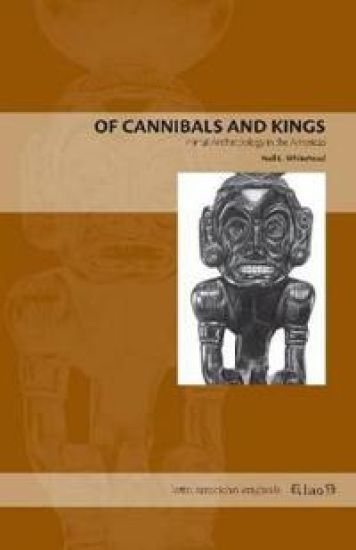
Of Cannibals and Kings

Of Cannibals and Kings

Neil L. Whitehead

Pennsylvania State University Press
2011
pokkari
Of Cannibals and Kings collects the very earliest accounts of the native peoples of the Americas, including selections from the descriptions of Columbus’s first two voyages; documents reflecting the initial colonial occupation in Haiti, Venezuela, and Guyana; and the first ethnographic account of the Taínos by the missionary Ramón Pané. This primal anthropology directly guided a rapacious discovery of the lands of both wild cannibals and golden kings.
Brilliant Business Writing

Brilliant Business Writing

Neil Taylor

Pearson Education Limited
2011
pokkari
Full of tips, examples and exercises that will transform your writing from the same old same old into something that'll mark you out from the crowd. Get the confidence and creativity to take your business writing from something that does the job into something that's brilliant. Brilliant outcomesProduce business writing people actually want to readPersuade and inspire people, sell more, or get that jobGet a distinctive, powerful and engaging writing voice
The Last Years of the Soviet Empire

The Last Years of the Soviet Empire

Neil F. O'Donnell

Praeger Publishers Inc
1993
sidottu
Between 1985 and 1991, the Soviet Union was shaken to its core by a series of remarkable social and political developments. Throughout the period, the eminent Sovietologist Vladimir Shlapentokh monitored the revolution and recorded his impressions in a series of essays which were published in major North American newspapers and periodicals. Here Shlapentokh collects these snapshots of current events that detail the progression of perestroika and glasnost. The essays and accompanying narrative form a kind of political diary, reflecting not only the facts of history, but the author's perspective as a Soviet/Western observer. Each chapter focuses on a single year. The snapshots from that year are woven together with narrative describing the year's most important milestones, including events in Moscow, results of new polls, new social trends, and revelations in the Soviet mass media. Surprisingly, Shlapentokh concludes that perestroika was not inevitable, and that the Soviet Union was not, as many scholars assert, doomed to collapse. The author's unusual perspective is preserved throughout the book, since none of the essays, including those that predicted future events, have been altered to more closely approximate events that actually took place. Recommended for scholars of sociology, political science, and Soviet history.
Turning the World Upside Down

Turning the World Upside Down

Neil L. York

Praeger Publishers Inc
2003
sidottu
York illustrates how Revolutionary Americans founded an empire as well as a nation, and how they saw the two as inseparable. While they had rejected Britain and denounced power politics, they would engage in realpolitik and mimic Britain as they built their empire of liberty. England had become Great Britain as an imperial nation, and Britons believed that their empire promised much to all fortunate enough to be part of it. Colonial Americans shared that belief and sense of pride. But as clashing interests and changing identities put them at odds with the prevailing view in London, dissident colonists displaced Anglo-American exceptionalism with their own sense of place and purpose, an American vision of manifest destiny.Revolutionary Americans wanted to believe that creating a new nation meant that they had left behind the old problems of empire. What they discovered was that the basic problems of empire unavoidably came with them into the new union. They too found it difficult to build a union in the midst of rival interests and competing ideologies. Ironically, they learned that they could only succeed by aping the balance of power politics used by Britain that they had only recently decried.
Performing Opposition

Performing Opposition

Neil Blackadder

Praeger Publishers Inc
2003
sidottu
Modern theater history is punctuated by instances of scandalized audience members disrupting and in some cases suspending the first production of a new play. Such incidents are usually dismissed as riots, as self-evident displays of philistinism. Neil Blackadder's intriguing new study reveals them in fact to be multifaceted conflicts, showing the ways in which these protesters-acting against plays by such notables as Jarry, Synge, and Brecht-creatively devised and enacted resistance through verbal rejoinders, physical gestures, and organized group demonstrations. Performing Opposition draws on reviews, memoirs, interviews, and court records to present engaging and insightful accounts of these clashes—clashes that Blackadder proposes as a unique and distinct category of event in a time when unprecedentedly restrained norms of auditorium behavior coincided with a regeneration of writing for the stage. Offering the first detailed examination of affronted theatergoers' counter-performances, the volume represents an intriguing illumination of a largely overlooked aspect of performed drama and its history.
Developing in Ministry

Developing in Ministry

Neil Evans

SPCK Publishing
2012
nidottu
This book describes how, in adopting an organic approach to ministry development, it is possible to make a real impact on people's lives and ministries; this approach is based on the organics model proposed by James Hopewell. Backed by thorough research, and wide reading in the literature, this book nevertheless keeps in touch with what is happening in the grassroots and is realistic as well as hopeful, about what can be achieved.
Under Construction: Working with the Architect
Imagine yourself as a house under construction. What does it mean to develop as a follower of Jesus? Jesus wants to remake us, from the ground up, to reconstruct us so that we become the people he had in mind. Christians are built on his firm foundation. But if we barely allow Jesus through the front door, it is no surprise that we are left wondering whether this really is as good as it gets. Neil O'Boyle shows us what it means to open ourselves up, so that the light of Christ shines into the dark nooks and exposes the sagging rafters. In the living room, what are we watching? In the bathroom, do we take care of ourselves? In the privacy of our bedroom, what are we like? In the dining room, what are our guests doing? In the garden, will there be fruit? In the garden shed, what tools has Jesus given us? Neil is National Director for British Youth for Christ. He has served as a missionary in Cyprus, the Arabian Gulf, Thailand and America. He is passionate about evangelism and has a wealth of experience as a leader and team builder. He and his wife Joy have four children.
Morning Tide

Morning Tide

Neil M. Gunn

Souvenir Press Ltd
1993
nidottu
Twelve-year-old Hugh MacBeth lives in a small fishing village near Caithness at the end of the nineteenth century. He is becoming aware of his mother's worries that he and his brother will follow their father to sea, and is becoming to realise that the fishing industry is doomed to decline, a decline that will result in the death of his village. A lyrical and poignant novel, Morning Tide, describes how a young boy learns to become a man. It is a poetic testimony to the intensity of feeling in physical experience, the touch of the earth and the coldness of the sea, and in the need to be free. Sensitivity and wildness are pitted against the restrictions of family and social life, and it is more than a complete picture of childhood; unfolding into a set of values that speaks powerfully to the present.
Appointment of Judges

Appointment of Judges

Neil D. McFeeley

University of Texas Press
1987
nidottu
The selection of federal judges constitutes one of the more significant legacies of any president; the choices of Lyndon Baines Johnson affected important social policies for decades. This book explores the process of making judicial appointments, examining how judges were selected during Johnson's administration and the president's own participation in the process. Appointment of Judges: The Johnson Presidency is the first in-depth study of the judicial selection process in the Johnson years and is one of the few books that has analyzed any individual president's process. Based on sources in the archives of the Lyndon Baines Johnson Library and correspondence from senators, party officials, Justice Department officers, the American Bar Association, Supreme Court justices, and the candidates themselves, the book is an important exploration of a significant aspect of presidential power. The author shows that Johnson recognized the great impact for social and economic policy the judiciary could have in America and sought out judges who shared his vision of the Great Society. More than any previous president since William Howard Taft, Johnson took an active personal role in setting up the criteria for choosing judges and in many cases participated in decisions on individual nominees. The president utilized the resources of the White House, the Department of Justice, other agencies, and private individuals to identify judicial candidates who met criteria of compatible policy perspective, excellent legal qualifications, political or judicial experience, youth, and ethnic diversity. The book notes how the criteria and judicial selection process evolved over time and how it operated during the transitions between Kennedy and Johnson and between Johnson and Nixon.
Endeavouring Banks

Endeavouring Banks

Neil Chambers

University of Washington Press
2016
sidottu
When English naturalist Joseph Banks (1743-1820) accompanied Captain James Cook (1728-1779) on his historic mission into the Pacific, the Endeavour voyage of 1768-1771, he took with him a team of collectors and illustrators. They returned with unprecedented collections of artifacts and specimens of stunning birds, fish, and other animals, as well as thousands of plants, most seen for the first time in Europe. They produced, too, remarkable landscape and figure drawings of the peoples encountered on the voyage along with detailed journals and descriptions of the places visited, which, with the first detailed maps of these lands (Tahiti, New Zealand, and the east coast of Australia), were later used to create lavishly illustrated accounts of the mission. These caused a storm of interest in Europe where plays, poems, and satirical caricatures were later produced to celebrate and examine the voyage, its personnel, and many "new" discoveries. Along with contemporary portraits of key personalities aboard the ship, scale models and plans of the ship itself, scientific instruments taken on the voyage, commemorative medals and sketches, the objects (over 140) featured in this book tell the story of the Endeavour voyage and its impact ahead of the 250th anniversary in 2018 of the launch of this seminal mission. Artwork made both during and after the voyage will be seen alongside actual specimens. By comparing the voyage originals with the often stylized engravings later produced in London for the official account, Endeavouring Banks investigates how knowledge gained on the mission was gathered, revised, and later received in Europe. Items that had been separated in some cases for more than two centuries are brought together to reveal their fascinating history not only during but since that mission. Original voyage specimens are featured together with illustrations and descriptions of them, showing a rich diversity of newly discovered species and how Banks organized this material, planning but ultimately failing to publish it. In fact, many of the objects in the book have never been published before. Focusing on the contribution of Banks's often neglected artists--Sydney Parkinson, Herman Diedrich Sporing, and Alexander Buchan, as well as the priest Tupaia, who joined Endeavour in the Society Islands--none of whom survived the mission, the surviving Endeavour voyage illustrations are the most important body of images produced since Europeans entered this region, matching the truly historic value of the plant specimens and artifacts that will be seen alongside them.
Welfare Justice

Welfare Justice

Neil Gilbert

Yale University Press
1997
pokkari
Over the past several decades the welfare state has become increasingly unfair, says Neil Gilbert in this fresh and provocative book. He analyzes some critical developments: traditional welfare arrangements have failed to accommodate the changing character of family life and gender equality; groups identifying themselves as victims (feminists, gays, disabled people, older people, and others) have increasingly demanded new social rights while ignoring the need to enlarge civic responsibilities; advocates have exaggerated the prevalence of such social ills as rape and child abuse, thus muddying policy deliberations; and a hidden welfare state has evolved that delivers huge subsidies to the middle and upper classes—for health, housing, daycare, and pensions—in the midst of growing resentment against welfare spending for the poor.Gilbert argues that policymakers need to develop programs that balance the rights and responsibilities of citizens, and they need to take a hard look at exactly who benefits from government resources. He calls for a new form of social protection to supersede the welfare state: the "enabling state," where citizens are treated not as passive recipients of public benefits and care but as individuals capable of looking after themselves with occasional assistance from the government. The central challenge of the enabling state will be to create a system of social protection that encourages private responsibility while maintaining an equitable framework of humane public care for those unable to assist themselves.
Daimler-Benz in the Third Reich

Daimler-Benz in the Third Reich

Neil Gregor

Yale University Press
1998
sidottu
What was the relationship between German big business and the Third Reich? To what extent did business leaders collaborate with the Nazis? This book examines the experience of the Daimler-Benz company—one of Germany’s most important armament manufacturers and automobile makers—from its formation in 1926 through the end of World War II. Based on a substantial body of new material from formerly inaccessible East German archives and previously closed Mercedes-Benz AG records, the book reveals for the first time a close association between the car manufacturer and the Nazi system, from 1933 onwards.Neil Gregor traces the early history of the Daimler-Benz company and examines how opportunities offered by Nazi rearmament in the 1930s led to its rapid expansion and a surge in profits. Focusing mainly on the war years, Gregor demonstrates how the company succeeded in exploiting the demands of the war economy while situating its operations most advantageously for resumption of commercial activity in peacetime. Despite Allied bombing, says Gregor, Daimler-Benz AG emerged from the war in good shape—with a clear operating strategy, a largely intact inventory, and core production lines geared for the peacetime market. With its own interests and preservation as prime motives, the company acquiesced in the exploitation of forced labor, thereby actively intensifying the suffering of civilians, prisoners of war, and Jews and other victims of concentration camps. He concludes that the ability of Daimler-Benz to protect its interests during the war and to manage the transition to peace was predicated upon collusion in the racial barbarism of the Nazi regime.
Haunted City

Haunted City

Neil Gregor

Yale University Press
2008
sidottu
Nuremberg—a city associated with Nazi excesses, party rallies, and the extreme anti-Semitic propaganda published by Hitler ally Julius Streicher—has struggled since the Second World War to come to terms with the material and moral legacies of Nazism. This book explores how the Nuremberg community has confronted the implications of the genocide in which it participated, while also dealing with the appalling suffering of ordinary German citizens during and after the war. Neil Gregor’s compelling account of the painful process of remembering and acknowledging the Holocaust offers new insights into postwar memory in Germany and how it has operated. Gregor takes a novel approach to the theme of memory, commemoration, and remembrance, and he proposes a highly nuanced explanation for the failure of Germans to face up to the Holocaust for years after the war. His book makes a major contribution to the social and cultural history of Germany.
Grenadine

Grenadine

Neil Wechsler; Edward Albee

Yale University Press
2009
pokkari
Neil Wechsler’s Grenadine has been chosen as the second winner of the Yale Drama Series. The play was selected by Pulitzer Prize–winning playwright and contest judge Edward Albee. Grenadine is the fantastical story of a man’s quest for love in the company of three devoted friends. Albee writes, “I found it highly original. . . . The questions the play asks and the answers it proposes are provocative; the play stretched my mind.” About the Yale Drama SeriesYale University Press, the Yale Repertory Theatre, and the David Charles Horn Foundation are proud co-sponsors of this major competition to support emerging playwrights. Each year’s winner receives the David C. Horn Prize of $10,000, publication of the manuscript by Yale University Press, and a staged reading at Yale Repertory Theatre. For more information and complete rules for the Yale Drama Series, visit yalebooks.com.