Following the Second World War, modern systems of urban and regional planning were established in Britain and most other developed countries. In this book, Nigel Taylor describes the changes in planning thought which have taken place since then. He outlines the main theories of planning, from the traditional view of urban planning as an exercise in physical design, to the systems and rational process views of planning of the 1960s; from Marxist accounts of the role of planning in capitalist society in the 1970s, to theories about planning implementation, and more recent views of planning as a form of `communicative action'.
Agatha Christie's 80 novels and short story collections have sold over two-billion copies in more than 45 languages, more than any other author. This Brief Guide explores Christie's life and work from her first novel, The Mysterious Affair at the Styles, to her last, Sleeping Murder.
What makes travel special? Perhaps the chill realization that a polar bear's eyes are fixed on you. Maybe it is the chance meeting with a man who buries sharks in a beach, only to dig them up months later, not out of morbid curiosity, but for food. Perhaps it is the undulating wing-beat of a dark shell-less gastropod in the canal of a 17th Century French sea port, or the criminal history of a rusting ship with a tree growing from its hold.Encounters in a Kayak brings the reader along on the magical experiences that surround sea kayaking. It's about the animals, people, and special places around the globe that have grabbed the attention of renowned kayaker and writer Nigel Foster. His irrepressible curiosity drives him to tease out the unexpected stories hidden behind his subjects. These nuggets from around the world are bound together by water and a centuries-old form of sea travel: kayak. The result is a book of broad appeal for those interested in kayaking, traveling, and adventure.
Learn traditional leather craft methods from a custom craftsman, then apply them as you make projects that will become heirlooms In this modern age of technology and speed, what is taught in master leather crafter Nigel Armitage's renowned workshop follows a very traditional and timeless theme. Here, for the first time, he offers a learning resource and projects for leather crafters who believe that high quality matters, both in how you make things, and in the finished results. Enjoy learning the time-tested approach to leathercrafting, as Armitage helps you learn traditional techniques and projects that use them in modern ways. From beginner projects like a simple card holder, to intermediate projects like a belt, to advanced projects like a round-bottom bag, each project, while modern in terms of using new tools and materials, is still very much seated in the foundations of the craft. If you appreciate longevity that spans generations, the latter, then this book will meet your expectations and take your leather creations further than you might think possible.
Leather expert Nigel Armitage presents an easy-to-follow guide to the skills and techniques required to make high-quality leather belts. For leather crafters of all levels and anyone interested in crafting their own leather belts. Belts are underestimated as simple and easy, but a lot of planning and measuring are required to ensure the production of a good leather belt that fits its owner, serves its purpose, looks good, is durable, and, most importantly, is of high quality. But designing and creating leather belts can also be enjoyable and satisfying for leatherworkers of all levels. A clear and easy-to-follow guide both for makers of belts and those just starting their leatherworking journey.The 12 projects in these pages include a Yeoman's Belt, Ranger Belt, Sam Browne Belt, Bushcraft Belt, and much more. Armitage guides you step by step through the tools and techniques you’ll need to create leather belts that will last for generations and be the envy of everyone who sees them.
Nineteenth-century commentators often claimed that Russia burned to the ground every thirty years. In an empire whose cities were built of wood, firefighters had a visible presence throughout Russia's urban centres and became politically active across the country. Democracy Burning? studies the political, cultural, and social values of volunteer firefighters and reveals the ways in which their public organizations cooperated with the authoritarian state.
Earthquakes, nuclear accidents, and floods were among the many unexpected tragedies that struck the Soviet Union over its history. Requiring the immediate mobilization of vast resources and aid, and embedded within a specific context and time, these catastrophes provide critical insights into the nature of the twentieth-century Communist state. All Shook Up takes a close look at the representation in film, the political repercussions, and the social opportunities of large-scale catastrophes in separate Soviet epochs, including the 1927 earthquake in the Crimean peninsula, the 1948 earthquake in Ashgabat, the Tashkent earthquake in 1966, the Chernobyl explosion in 1986, and the Armenian earthquake in 1988. Juxtaposing various disaster responses and demonstrating the ways both Soviet authorities and citizens molded them to their own cultural needs, Nigel Raab highlights the radical shifts in disaster policy from one leader to the next. Given the opportunity to act outside regular parameters, Soviet residents not only rebuilt their devastated cities, but also experimented with new values and crafted their own worldview while the state struggled to return the situation to normal. Based on archival research conducted in Russia and Ukraine, All Shook Up fills a gap in a global literature and challenges stereotypical representations of the Soviet Union as a monolithic state.
“Do you want to be made well?”Jesus asked this question of the lame man in John 5:6. And it’s the same question those who endeavor to initiate or grow a healing ministry must ask their supplicants.With nearly thirty years of experience in healing ministry, author Nigel Mumford knows that human needs for healing are as unique as the individuals making the requests. No two supplicants are the same and come from every imaginable background and walk of life—men, women, and children of all ages, wealthy and poor, believers and nonbelievers.How can a healing ministry meet the diverse needs of those seeking relief?In This Is Where Your Healing Begins, the author guides readers on a journey to understand and discoverthe foundations of healing, such as spiritual gifts, authority, and couragechallenges to healing, including various spiritual and mental roadblocksemotions needing healing—depression, unworthiness, guilt, and moreThrough the pages in this book, both healing ministers and supplicants will experience renewed faith in God’s ability to heal, trusting that He can do far more than we could ever ask or imagine.
Eubie Blake, Duke Ellington, Johnny Mercer, Cole Porter… This is a comprehensive guide to 1,054 composers and lyricists (in English) from all the popular genres, including Tin Pan Alley, rhythm & blues, country & western, jazz, rap, and film and show tunes. Each artist's entry includes birth name (if different), date and place of birth, principal musical genre, main instruments played (if any), a short biography, a list of compositions, a list of long playing albums or CDs (with year of release, record label and peak chart position) and any noteworthy compilation albums. Artists are cross-referenced with musical group and co-writers, when applicable, and the final section of most entries is an alphabetical list of every known chart version of any song written by that particular artist since 1890 (when Billboard first compiled a pop chart).
English writer and raconteur Quentin Crisp (1908-1999) became a celebrity and gay icon at the age of 60 with the publication and televising of his 1968 memoir, The Naked Civil Servant. Unapologetically unconventional, he filled books and articles with his witticisms and opinions on popular culture, and packed theaters worldwide with his one-man show An Evening with Quentin Crisp. This biography chronicles Crisp's life, including his birth in pre-World War I England; his life as a gay youth on the streets of London; his early attempts at writing and job-seeking; his entry into the world of modeling; and his sudden success late in life. With this definitive chronicle, Quentin Crisp and his unique worldview are once again on display.
Formative Assessment and Science Education documents the findings of a research project which investigated the ways in which teachers and students used formative assessment to improve the teaching and learning of science in some New Zealand classrooms. The research documented in this book used the definition of formative assessment as `the process used by teachers and students to recognise and respond to students' learning, in order to enhance that learning, during the learning'. The book contains one detailed case study from the research, as well as cameos of instances of formative assessment. The book also contains two summaries of the research findings - a model developed to describe the process of formative assessment used by the teachers and students involved in the research, and a summary of the characteristics of formative assessment. The findings are also theorised with respect to sociocultural and discursive views of learning. This research will be of interest to graduate students and researchers, as well as teacher educators, curriculum developers, and assessment specialists.
Formative Assessment and Science Education documents the findings of a research project which investigated the ways in which teachers and students used formative assessment to improve the teaching and learning of science in some New Zealand classrooms. The research documented in this book used the definition of formative assessment as `the process used by teachers and students to recognise and respond to students' learning, in order to enhance that learning, during the learning'. The book contains one detailed case study from the research, as well as cameos of instances of formative assessment. The book also contains two summaries of the research findings - a model developed to describe the process of formative assessment used by the teachers and students involved in the research, and a summary of the characteristics of formative assessment. The findings are also theorised with respect to sociocultural and discursive views of learning. This research will be of interest to graduate students and researchers, as well as teacher educators, curriculum developers, and assessment specialists.
The remains of ancient Thebes constitute one of the largest and most remarkable archaeological sites in all of Egypt and indeed the world. The discoveries made at this site, now the modern town of Luxor, are responsible for much of our knowledge of ancient Egyptian civilization. After excavating and researching the city of Thebes for many years, Nigel and Helen Strudwick here offer the first comprehensive introduction to it, one that will be welcomed by both armchair travelers and visitors to that popular tourist destination. Handsomely illustrated, the book features eighty photographs—thirty in color—and twenty maps and plans.After reviewing the topography of the site, the Strudwicks recount the history of Thebes from the city's rise in the late Old Kingdom to the peak of its power in the New Kingdom and to its gradual decline in the Greco-Roman period. They discuss the central role played by the gods in the community's religious life, and take us on a tour of the great temples of Karnak and Luxor on the East Bank of the Nile and of the temples and tombs of kings, queens, princes, and ordinary individuals on the West Bank.Drawing on their intimate acquaintance with ancient Egyptian society, the authors re-create the lives of Thebans during the New Kingdom. They conclude by assessing Greek, Roman, Coptic, and Islamic influences on the area as it exists today and by providing an overview of the archaeological research undertaken there.
The tropics are the source of many of our familiar fruits, vegetables, oils, and spice, as well as such commodities as rubber and wood. Moreover, other tropical fruits and vegetables are being introduced into our markets to offer variety to our diet. Now, as tropical forests are increasingly threatened, we face a double-fold crisis: not only the loss of the plants but also rich pools of potentially useful genes. Wild populations of crop plants harbor genes that can improve the productivity and disease resistance of cultivated crops, many of which are vital to developing economies and to global commerce. Eight chapters of this book are devoted to a variety of tropical crops—beverages, fruit, starch, oil, resins, fuelwood, fodder, spices, timber, and nuts—the history of their domestication, their uses today, and the known extent of their gene pools, both domesticated and wild. Drawing on broad research, the authors also consider conservation strategies such as parks and reserves, corporate holdings, gene banks and tissue culture collections, and debt-for-nature swaps. They stress the need for a sensitive balance between conservation and the economic well-being of local populations. If economic growth is part of the conservation effort, local populations and governments will be more strongly motivated to save their natural resources. Distinctly practical and soundly informative, this book provides insight into the overwhelming abundance of tropical forests, an unsettling sense of what we may lose if they are destroyed, and a deep appreciation for the delicate relationships between tropical forest plants and people around the world.
The remains of ancient Thebes constitute one of the largest and most remarkable archaeological sites in all of Egypt and indeed the world. The discoveries made at this site, now the modern town of Luxor, are responsible for much of our knowledge of ancient Egyptian civilization. After excavating and researching the city of Thebes for many years, Nigel and Helen Strudwick here offer the first comprehensive introduction to it, one that will be welcomed by both armchair travelers and visitors to that popular tourist destination. Handsomely illustrated, the book features eighty photographs—thirty in color—and twenty maps and plans.After reviewing the topography of the site, the Strudwicks recount the history of Thebes from the city's rise in the late Old Kingdom to the peak of its power in the New Kingdom and to its gradual decline in the Greco-Roman period. They discuss the central role played by the gods in the community's religious life, and take us on a tour of the great temples of Karnak and Luxor on the East Bank of the Nile and of the temples and tombs of kings, queens, princes, and ordinary individuals on the West Bank.Drawing on their intimate acquaintance with ancient Egyptian society, the authors re-create the lives of Thebans during the New Kingdom. They conclude by assessing Greek, Roman, Coptic, and Islamic influences on the area as it exists today and by providing an overview of the archaeological research undertaken there.
To modern sensibilities, nineteenth-century zoos often seem to be unnatural places where animals led miserable lives in cramped, wrought-iron cages. Today zoo animals, in at least the better zoos, wander in open spaces that resemble natural habitats and are enclosed, not by bars, but by moats, cliffs, and other landscape features. In Savages and Beasts, Nigel Rothfels traces the origins of the modern zoo to the efforts of the German animal entrepreneur Carl Hagenbeck. By the late nineteenth century, Hagenbeck had emerged as the world's undisputed leader in the capture and transport of exotic animals. His business included procuring and exhibiting indigenous peoples in highly profitable spectacles throughout Europe and training exotic animals-humanely, Hagenbeck advertised-for circuses around the world. When in 1907 the Hagenbeck Animal Park opened in a village near Hamburg, Germany, Hagenbeck brought together all his business interests in a revolutionary zoological park. He moved wild animals out of their cages and into "natural landscapes" alongside "primitive" peoples from Africa, Asia, the Americas, and the islands of the Pacific. Hagenbeck had invented a new way of imagining captivity: the animals and people on exhibit appeared to be living in the wilds of their native lands. By looking at Hagenbeck's multiple enterprises, Savages and Beasts demonstrates how seemingly enlightened ideas about the role of zoos and the nature of animal captivity developed within the essentially tawdry business of placing exotic creatures on public display. Rothfels provides both fascinating reading and much-needed historical perspective on the nature of our relationship with the animal kingdom.
Opens up a way forward for Christian ethics in the public sphere Too often, says Nigel Biggar, contemporary Christian ethics poses a false choice -- either -conservative- theological integrity or -liberal- secular consensus. Behaving in Public explains both why and how Christians should resist these polar options. Informed by a frankly Christian theological vision of moral life and so turning toward the world with openness and curiosity, Biggar's succinct argument charts a third way forward.
The use of computers in qualitative research has redefined the way social researchers handle qualitative data. Two leading researchers in the field have written this lucid and accessible text on the principal approaches in qualitative research and show how the leading computer programs are used in computer-assisted qualitative data analysis (CAQDAS). The authors examine the advantages and disadvantages of computer use, the impact of research resources and the research environment on the research process, and the status of qualitative research. They provide a framework for developing the craft and practice of CAQDAS and conclude by examining the latest techniques and their implications for the evolution of qualitative research.
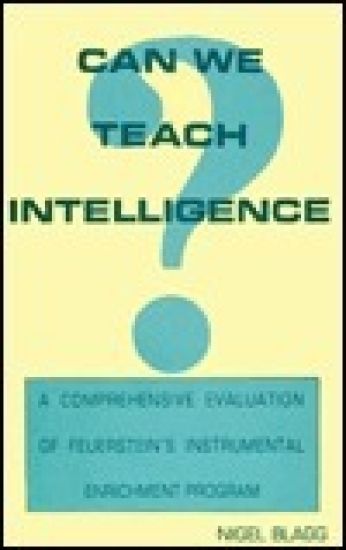
This compelling book provides one of the most comprehensive and detailed evaluations of a very popular cognitive skills course -- Reuven Feuerstein's Instrumental Enrichment Programme. Feuerstein claims that his program, a model for diagnosing and remedying cognitive deficiencies in poor attainers, can equip pupils with the basic prerequisites of thinking, thereby enabling them to become more effective learners. Combining innovative and traditional experimental techniques, this text analyzes both teacher and pupil outcomes on a wide range of issues including abilities, accomplishments, and behavioral characteristics. The implications of the study are set against theoretical and practical issues involved in other popular intellectual skills training programs. "Real world" concerns that have been largely ignored by research literature are addressed, as are their effects on the teaching of thinking skills.
The book is designed as an introduction to the scientific study of speech. No prior knowledge of phonetics is assumed. As far as mathematical knowlege is concerned, all that is assumed is a knowledge of simple arithmetic and as far as possible concepts are dealt with on an intuitive rather than mathematical level. The anatomical material is all fully explained and illustrated. The book is arranged in four parts. Part 1, Basic Principles, provides an introduction to established phonetic theory and to the principles of phonetic analysis and description, including phonetic transcription. Part 2, Acoustic Phonetics, considers the physical nature of speech sounds as they pass through the air between speaker and hearer. It includes sections on temporal measurement, fundamental frequency, spectra and spectrograms. Part 3, Auditory Phonetics, covers the anatomy of the ear and the perception of loudness, pitch and quality. The final part, Part 4, covers the articulatory production of speech, and shows how experimental techniques and tools can enhance our understanding of the complexities of speech production.Though the audience for this book is mainly students and professors in the Speech Sciences, it will also be valuable to any students studying hearing science and acoustics. The book is well supported with figures, tables, and practice boxes with experiments.