Kirjojen hintavertailu. Mukana 11 417 157 kirjaa ja 12 kauppaa.

Kirjahaku

Etsi kirjoja tekijän nimen, kirjan nimen tai ISBN:n perusteella.

1000 tulosta hakusanalla Oliver Postgate

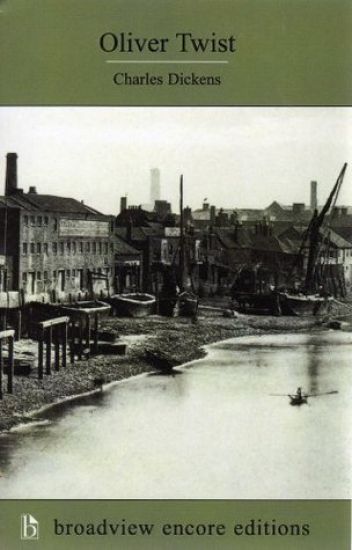
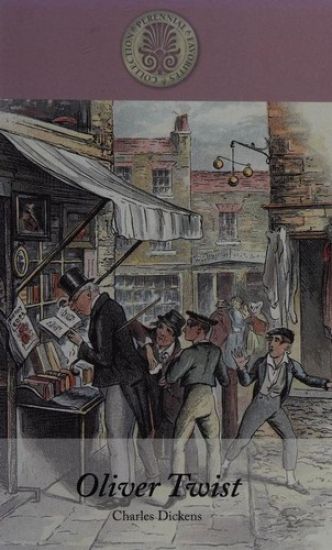
Oliver Twist

Oliver Twist

Charles Dickens

Broadview Press Ltd
2005
nidottu
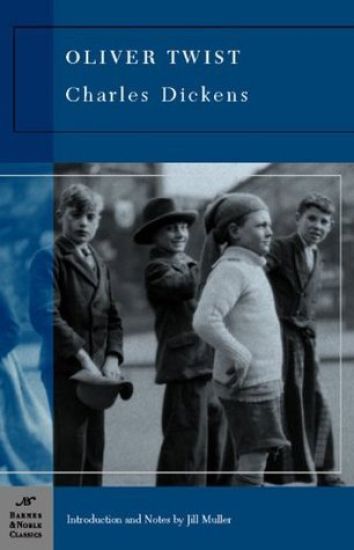
Charles Dickens's famous second novel recounts the story of a boy born in the workhouse and raised in an infant farm as he tries to make his way in the world. Intended to raise feeling against the Poor Law Amendment Act of 1834 (which had emphasized the workhouse as an appropriate means of dealing with the problem of poverty), Oliver Twist also provides a sweeping portrait of London life in the 1830s-including the life of the criminal elements in society.Oliver Twist was first published in serialised form (with illustrations by George Cruikshank) in Bentley's Miscellany between February 1837 and April 1839. It was issued with some corrections and revisions in ten numbers in 1846 by Bradbury and Evans (which then also issued the same text in a single volume). Each of these ten numbers, including the Cruikshank illustrations and the advertisements, is included in this facsimile reprint of the 1846 edition.This is one of a series from Broadview Press of facsimile reprint editions-editions that provide readers with a direct sense of these works as the Victorians themselves experienced them.
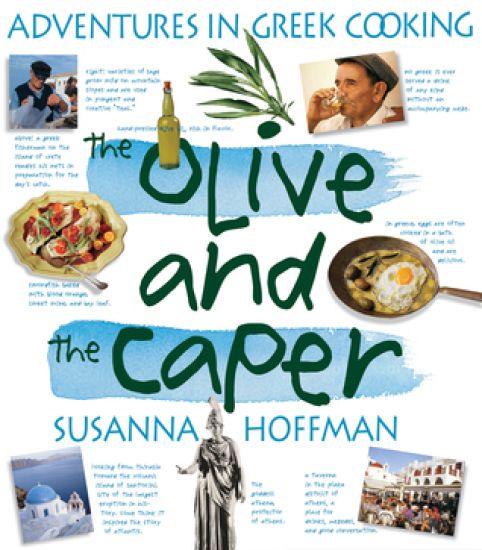
Oliver and Caper

Oliver and Caper

Hoffman Susanna

Workman Publishing
2007
nidottu
This is the year "It's Greek to me" becomes the happy answer to what's for dinner. My Big Fat Greek Wedding, the upcoming epic Troy, the 2004 Summer Olympics returning to Athens--and now, yet another reason to embrace all things Greek: The Olive and the Caper, Susanna Hoffman's 700-plus-page serendipity of recipes and adventure. In Corfu, Ms. Hoffman and a taverna owner cook shrimp fresh from the trap--and for us she offers the boldly-flavored Shrimp with Fennel, Green Olives, Red Onion, and White Wine. She gathers wild greens and herbs with neighbors, inspiring Big Beans with Thyme and Parsley, and Field Greens and Ouzo Pie. She learns the secret to chewy country bread from the baker on Santorini and translates it for American kitchens. Including 325 recipes developed in collaboration with Victoria Wise (her co-author on The Well-Filled Tortilla Cookbook, with over 258,000 copies in print), The Olive and the Caper celebrates all things Greek: Chicken Neo-Avgolemeno. Fall-off-the-bone Lamb Shanks seasoned with garlic, thyme, cinnamon and coriander. Siren-like sweets, from world-renowned Baklava to uniquely Greek preserves: Rose Petal, Cherry and Grappa, Apricot and Metaxa. In addition, it opens with a sixteen-page full-color section and has dozens of lively essays throughout the book--about the origins of Greek food, about village life, history, language, customs--making this a lively adventure in reading as well as cooking.
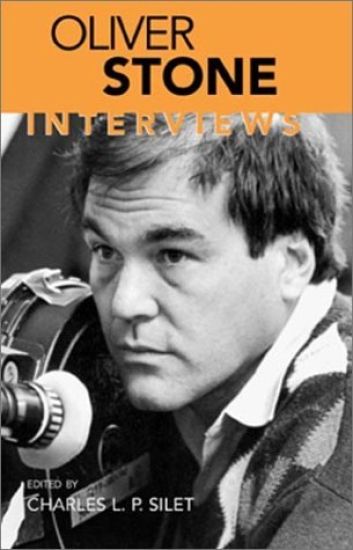
Oliver Stone

Oliver Stone

University Press of Mississippi
2001
nidottu
Throughout his career Oliver Stone (b. 1946) has broken traditions and challenged audiences with a series of daring, angry, violent, and often confrontational films. Politically charged movies such as Nixon (1995), JFK (1991), and Wall Street (1987), and his Vietnam trilogy of Platoon (1986), Born on the 4th of July (1989), and Heaven and Earth (1993) provoke and enrage critics and audiences from all ideological walks. In a short time, Stone has established himself as one of the most admired and most reviled directors in American cinema. Ranging from 1981 to 1997, the fifteen conversations featured in Oliver Stone: Interviews reveal a man frustrated by what he sees as the hypocrisies of American politics, of conservatism, and of the Hollywood film industry. But the conflicts and tensions these issues generate spellbind him. In the interviews, Stone comes off as a man as brash, outspoken, confident, and complicated as his movies. His obsessions -- the 1960s, the ways in which Vietnam shaped the country, the nature of violence, and the role of the media in shaping it -- resurface again and again, no matter what film Stone is discussing. Though the subjects of Nixon, JFK, Born on the 4th of July, The Doors (1991), and Heaven and Earth are rooted in the turbulent 1960s, Stone as interviewee and filmmaker is firmly entrenched in the present. He fiercely discusses how the attitudes and political effects of the 1960s have defined later decades and generations, as he talks about his satire of the stock market (Wall Street, 1987) and media exposure (Natural Born Killers, 1994). Bolts of the director's raw wit and enthusiasm for the cinema shine through all of Stone's ferocious rage. Stone loves writing as well as directing. Whether discussing his screenplays written for other directors -- which include Scarface (1983), Midnight Express (1978), or Conan the Barbarian (1982, with director John Milius) -- or his own films, Stone emphasizes how crucial screenwriting is to making great movies. ""Directing is a natural extension of writing,"" he says in a 1987 interview with Michel Ciment. ""A director can always pull through with noise everywhere and his colleagues around. I don't think a good director can make a good film with a bad screenplay, but a bad director can deliver an acceptable film if he has a good screenplay. So for me, that's the number one priority."" Charles L. P. Silet is a professor of English at Iowa State University.
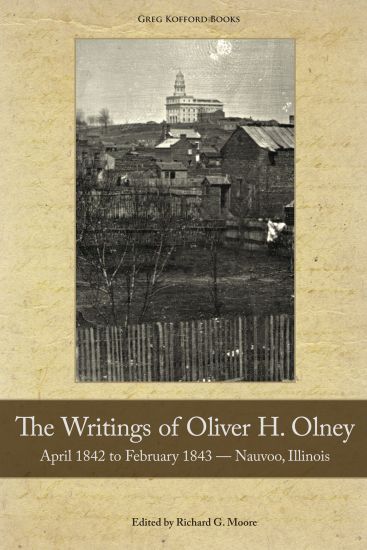
The Writings of Oliver Olney

The Writings of Oliver Olney

Oliver H Olney

Greg Kofford Books, Inc.
2020
sidottu
Oliver H. Olney, an early convert to The Church of Jesus Christ of Latter-day Saints, fled to Nauvoo, Illinois, following persecution in Missouri. In Nauvoo, Olney became disgruntled with church leadership and viewed Joseph Smith as a fallen prophet. His writings, consisting of journal entries, letters, and booklets, express his concerns about what he viewed as serious iniquity within the Church. Despite his opposition to church leadership resulting in his excommunication, Olney remained in Nauvoo and wrote about the things he witnessed. The handwritten papers of Oliver Olney are housed in the Beinecke Rare Book and Manuscript Library at Yale University and are made available in published form for the first time. They offer historical researchers and interested readers of the early Latter-day Saint movement a unique glimpse from the margins of religious society in Nauvoo. Olney's writings add light to key events in early Mormonism such as rumors of polygamy, the influence of Free Masonry in Nauvoo, plans to migrate westward to the Rocky Mountains, as well as growing tensions with disaffected church members and rising conflict with Nauvoo's non-Mormon neighbors.
Oliver Twist

Oliver Twist

Focus on the Family

Tyndale House Publishers
2012
muu
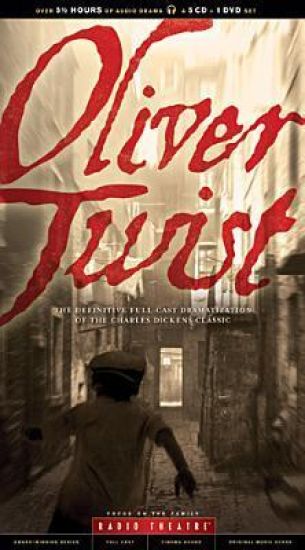
Focus on the Family's Radio Theatre's edition of Charles Dickens' classic story, "Oliver Twist." Oliver is born in a workhouse about 70 miles from London, England in the early 1800s. He is brought up at a "child farm" in the country until the parish officials running the child farm decide it's time for him to start working, and send him back to the workhouse. When Oliver commits the unpardonable offense of asking for more food, the parish officials offer five pounds to anyone who's willing to take him on as an apprentice. Oliver is sent off with a coffin-maker whose wife mistreats him. Oliver finally runs away to London, where he meets the Artful Dodger and Fagin. Fagin trains kids to be pickpockets, and then sells off what they steal. Oliver goes through many trials and hardships, but finally gets his happy ending.Recorded in London with an award-winning cast, "Oliver Twist" will steal your heart and take you back in time as the characters are brought to life in this audio drama.
Oliver Hazard Perry

Oliver Hazard Perry

David C. Skaggs

Naval Institute Press
2013
sidottu
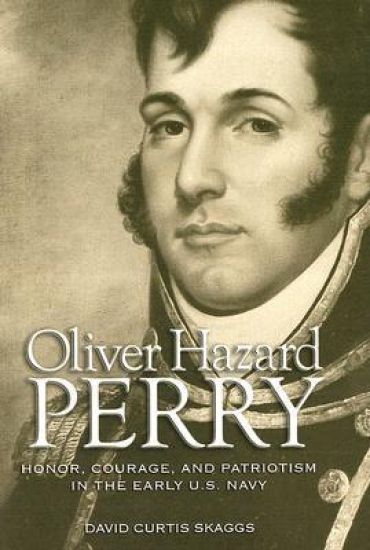
Hailed for his decisive victory over a Royal Navy squadron on Lake Erie in September 1813 and best known for his after-action report proclamation ‘We have met the enemy and they are ours’, Oliver Hazard Perry was one the early U.S. Navy s most famous heroes. In this modern, scholarly reassessment of the man and his career, Professor David Skaggs emphasizes Perry s place in naval history as an embodiment of the code of honour, an exemplar of combat courage, and a symbol of patriotism to his fellow officers and the American public. It is the first biography of Perry to be published in more than a quarter of a century and the first to offer an even-handed analysis of his career.After completing a thorough examination of primary sources, Skaggs traces Perry s development from a midshipman to commodore where he personified the best in seamanship, calmness in times of stress, and diplomatic skills. But this work is not a hagiographic treatment, for it offers a candid analysis of Perry s character flaws, particularly his short temper and his sometimes ineffective command and control procedures during the battle of Lake Erie. Skaggs also explains how Perry’s short but dramatic naval career epitomized the emerging naval professionalism of the young republic, and he demonstrates how the ‘Hero of Lake Erie’ fits into the most recent scholarship concerning the role of post-revolutionary generation in the development of American national identity. Finally, Skaggs explores in greater detail than anyone before the controversy over the conduct of his Lake Erie second, Jesse Duncan Elliott, that raged on for over a quarter century after Perry s death in 1819.
The Beckoning Fair One by Oliver Onions, Fiction, Horror
"As far as the chief business of his life--his writing--was concerned., Paul Oleron treated the world a good deal better than he was treated by it; but he seldom took the trouble to strike a balance, or to compute how far, at forty-four years of age, he was behind his points on the handicap. To have done so wouldn't have altered matters, and it might have depressed Oleron. He had chosen his path, and was committed to it beyond possibility of withdrawal. Perhaps he had chosen it in the days when he had been easily swayed by some thing a little disinterested, a little generous, a little noble and had he ever thought of questioning himself he would still have held to it that a life without nobility and generosity and disinterestedness was no life for him. Only quite recently and rarely, had he even vaguely suspected that there was more in it than this; but it was no good anticipating the day when, he supposed, he would reach that maximum point of his powers beyond which he must inevitably decline, and be left face to face with the question whether it would not have profited him better to have ruled his life by less exigent ideals."
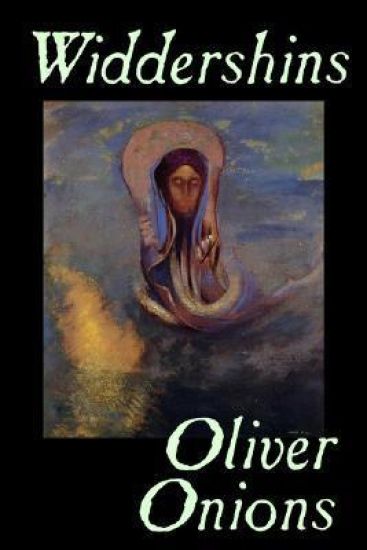
Widdershins by Oliver Onions, Fiction, Horror, Fantasy, Classics
At first blush, Widdershins a conventional haunted house story involving an unsuccessful writer, who moves into an empty house in hope that isolation will help his failing creativity. His sensitivity and imagination are enhanced by his seclusion, but his art, his only friend and his sanity are all destroyed in the process. . . .The story can be read as narrating the gradual possession of the protagonist by a mysterious and possessive feminine spirit, or as a realistic description of a psychotic outbreak culminating in catatonia and murder, told from the psychotic subject's point of view. The precise description of the slow disintegration of the protagonist's mind is terrifying in either case.
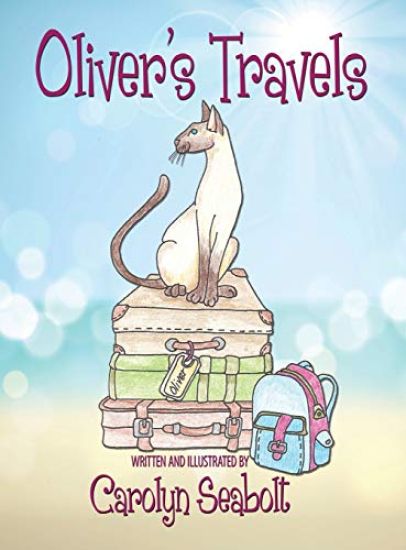
Oliver's Travels

Oliver's Travels

Carolyn Seabolt

Fideli Publishing Inc.
2017
sidottu
Join Oliver, a chocolate point Siamese cat on his adventures as he travels to Egypt, Greece, Spain, Italy, Germany, Holland, London and Paris. Even with all the excitment of travelling, he learns that there's no place like home.
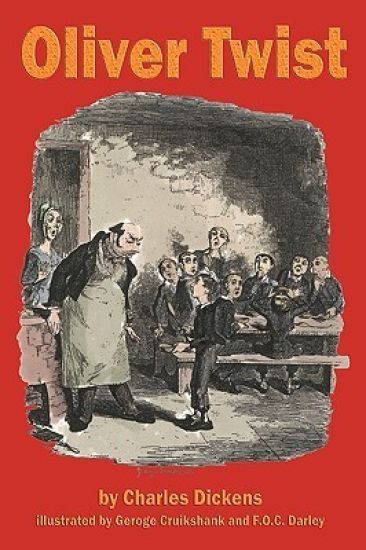
Oliver Twist

Oliver Twist

Charles Dickens

Flying Chipmunk Publishing
2008
pokkari
One of Dickens most enduringly popular stories is Oliver Twist, his second novel, published in installments starting in February 1837 and continuing until 1838. Like many of his later novels, its central theme is the hardship faced by the dispossessed
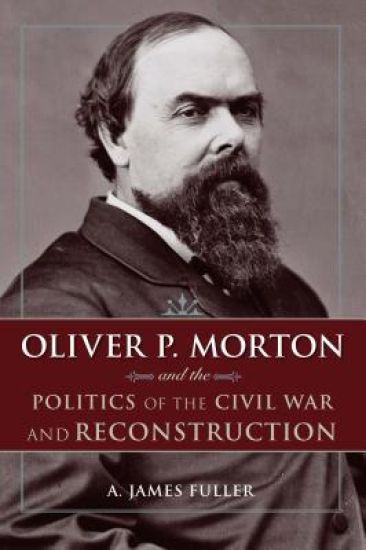
Oliver P. Morton and the Politics of the Civil War and Reconstruction
Remembered as the "Great War Governor" who led the state of Indiana during the Civil War, Oliver P. Morton has always been a controversial figure. His supporters praised him as a statesman who helped Abraham Lincoln save the Union, while his critics blasted him as a ruthless tyrant who abused the power of his office. Many of his contemporaries and some historians saw him as a partisan politician and an opportunist who shifted his positions to maintain power. Later generations treated Governor Morton as either a hero or a villain and generally forgot about his postwar career as a Radical Republican leader in the U.S. Senate.In this first full biography of Morton to be published in over a century, A. James Fuller offers a groundbreaking new interpretation of Indiana's most significant political leader in the nineteenth century. Overturning traditional views, Fuller argues that Morton's nationalist ideology motivated him throughout his career and that the Hoosier leader held consistently to the ideas of freedom, Union, power, and party. Those core principles drove Morton's politics and actions, including his support for Indiana soldiers, his fight against the Democrats in the state legislature, and his twenty-two months of one-man rule, a period in which his opponents accused him of being a virtual dictator. His principles also framed his struggle against the disloyal Copperheads who tried to assassinate him and whose leaders he helped bring to justice in the Indianapolis Treason Trials.Fuller also restores the historical significance of Morton's long neglected career as a Reconstruction senator. Seeing Reconstruction as a continuation of the Civil War, Morton became a leading Radical Republican who championed racial equality. He continually waved the bloody shirt, reminding voters that the Democrats had caused the rebellion. Morton supported the civil rights of African Americans and fought against the Democrats and the Ku Klux Klan. He enjoyed widespread support for the presidency in 1876, but when his bid for the Republican nomination came up short, he helped decide the disputed election for Rutherford B. Hayes. When Morton died in 1877, Reconstruction died with him, symbolically marking the end of an era. In the decades after his death, Hoosiers built monuments to Morton, remembering him in ways that reflected their own times, keeping his controversial legacy alive in historical memory.
Oliver Wendell Holmes Jr., Pragmatism, and the Jurisprudence of Agon
This book argues that Oliver Wendell Holmes Jr., helps us see the law through an Emersonian lens by the way in which he wrote his judicial dissents. Holmes’s literary style mimics and enacts two characteristics of Ralph Waldo Emerson’s thought: “superfluity” and the “poetics of transition,” concepts ascribed to Emerson and developed by literary critic Richard Poirier. Using this aesthetic style borrowed from Emerson and carried out by later pragmatists, Holmes not only made it more likely that his dissents would remain alive for future judges or justices (because how they were written was itself memorable, whatever the value of their content), but also shaped our understanding of dissents and, in this, our understanding of law. By opening constitutional precedent to potential change, Holmes’s dissents made room for future thought, moving our understanding of legal concepts in a more pragmatic direction and away from formalistic understandings of law. Included in this new understanding is the idea that the “canon” of judicial cases involves oppositional positions that must be sustained if the law is to serve pragmatic purposes. This process of precedent-making in a common-law system resembles the construction of the literary canon as it is conceived by Harold Bloom and Richard Posner.
Oliver Wendell Holmes Jr., Pragmatism, and the Jurisprudence of Agon
This book argues that Oliver Wendell Holmes Jr., helps us see the law through an Emersonian lens by the way in which he wrote his judicial dissents. Holmes’s literary style mimics and enacts two characteristics of Ralph Waldo Emerson’s thought: “superfluity” and the “poetics of transition,” concepts ascribed to Emerson and developed by literary critic Richard Poirier. Using this aesthetic style borrowed from Emerson and carried out by later pragmatists, Holmes not only made it more likely that his dissents would remain alive for future judges or justices (because how they were written was itself memorable, whatever the value of their content), but also shaped our understanding of dissents and, in this, our understanding of law. By opening constitutional precedent to potential change, Holmes’s dissents made room for future thought, moving our understanding of legal concepts in a more pragmatic direction and away from formalistic understandings of law. Included in this new understanding is the idea that the “canon” of judicial cases involves oppositional positions that must be sustained if the law is to serve pragmatic purposes. This process of precedent-making in a common-law system resembles the construction of the literary canon as it is conceived by Harold Bloom and Richard Posner.
Oliver Sacks: The Last Interview

Oliver Sacks: The Last Interview

Oliver Sacks

Melville House Publishing
2016
nidottu
An extraordinary collection of interviews with the beloved doctor and author, whose research and books inspired generations of readers. Oliver Sacks ?called "the poet laureate of medicine" by the New York Times?illuminated the mysteries of the brain for a wide audience in a series of richly acclaimed books, including Awakenings and The Man Who Mistook His Wife for a Hat, and numerous The New Yorker articles. In this collection of interviews, Sacks is at his most candid and disarming, rich with insights about his life and work. Any reader of Oliver Sacks will find in this book an entirely new way of looking at a brilliant writer.
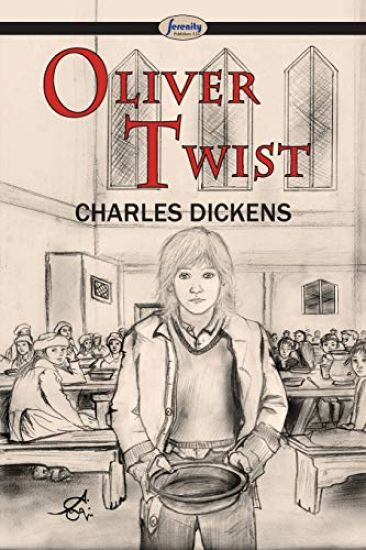
Oliver Twist

Oliver Twist

Charles Dickens

Serenity Publishers, LLC
2013
pokkari
This is an illustrated adaptation for children of the famous novel by Charles Dickens. In nineteenth-century England, a young boy named Oliver Twist is driven out of his orphanage. Placed with an undertaker who mistreats him, Oliver escapes and travels to London in search of happiness. There, he discovers the meaning of living in the streets as he becomes entangled with a gang of thieves, but he never loses his will to find a family.