Kirjojen hintavertailu. Mukana 11 717 486 kirjaa ja 12 kauppaa.

Kirjahaku

Etsi kirjoja tekijän nimen, kirjan nimen tai ISBN:n perusteella.

1000 tulosta hakusanalla Oskar Reponen

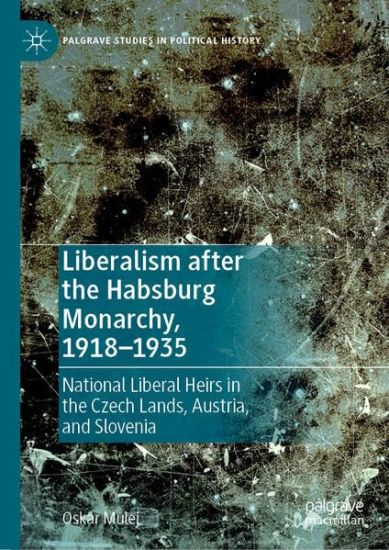
Liberalism after the Habsburg Monarchy, 1918–1935

Liberalism after the Habsburg Monarchy, 1918–1935

Oskar Mulej

Springer International Publishing AG
2024
sidottu
This book explores what it meant to be ‘liberal ’ in interwar Czech, Austrian, and Slovenian politics. Up until 1918, these countries shared the common political framework of Cisleithania (the Austrian part of the Habsburg Monarchy). Within this framework was the predominantly pejorative function of the label ‘liberal,’ and as a result after 1918, no major political party employed it to describe its own political orientation. Despite making considerable efforts to dissociate themselves from liberalism, many parties continued to be referred to as ‘liberal ’ by the contemporary public. This association with liberalism, the book argues, was primarily due to the parties’ historical background rather than any ideological commitment to liberalism, and for that reason, the author refers to them as ‘national liberal heirs.’ Examining the (dis)continuities of liberal party traditions, the book presents three representative cases of national liberal heirs: the Czechoslovak National Democracy; the Greater German People’s Party; and the Slovenian sections of the Yugoslav Democratic Party, the Independent Democratic Party, and the Yugoslav National Party. Forming a distinctive part of early twentieth-century party landscapes in Central Europe, the national liberal heirs had inherited organisational structures, parts of electorate, as well as rootedness in specific cultural and social milieus from their liberal predecessors. Following the political trajectories of the national liberal heirs, the author seeks to answer in which spheres, in which manners, and to what extent liberalism survived or even continued to develop in the interwar Czech lands, Austria, and Slovenia.
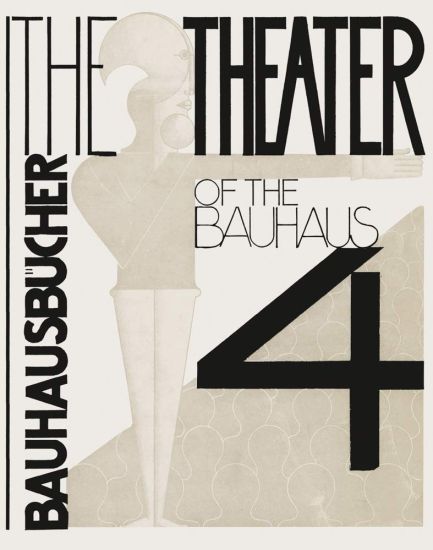
The Theater of the Bauhaus

The Theater of the Bauhaus

Oskar Oskar Schlemmer

Lars Muller Publishers
2020
sidottu
The fourth volume presents the main characteristics of the Bauhaus concept of the stage. It was essentially shaped by Oskar Schlemmer, who had taken over the stage department in 1923. László Moholy-Nagy took an interest in abstract kinetic and luminary phenomena which he examines in his essay “Theatre, Circus, Variété.” Farkas Molnár focused for his part on stage architecture, which he discusses in detail in this volume.
A Handbook of Pali Literature

A Handbook of Pali Literature

Oskar von Hinüber

De Gruyter
2000
isokokoinen pokkari
The Handbook surveys the whole of Pali Theravada Buddhist literature (Ceylon, South East Asia). It reviews previous research in the field, and then concentrates on new methodological approaches and a treatment of later Pali literature (after the twelfth century).
Historische Lexikographie

Historische Lexikographie

Oskar Reichmann

de Gruyter
2012
sidottu
Die historische Lexikographie des Deutschen, Niederländischen und Englischen erfolgt aus vergleichbaren ideologischen Motiven: Sie intendiert in ihren Anfängen die Lenkung des Benutzers auf die eigene Vorgeschichte, auf patriotische bzw. nationale Identitätsbildung, auf Bewusstmachung literarischer Höhenkämme und damit auf bildungsbürgerlich motivierte Kulturpädagogik. Neben diesen Anliegen stehen die Anforderungen der akademischen Disziplin Lexikographie. Diese zielt auf die Nennung des Wortschatzes einer Zeit, auf ihre semantische, syntaktische und pragmatische Beschreibung in einer hochgradig standardisierten Reihe von Informationspositionen. Der Band beschreibt, diskutiert und bewertet die Füllung dieser Positionen mittels fachlinguistischer Kriterien. Zur Sprache kommen: Das Lemma, die Morphologie, die Bedeutung, die Syntax, die Wortbildung, die Phraseme, die Pragmatik und die Belege, jeweils auf dem Hintergrund gesellschaftlich-ideologischer sowie fachlinguistischer Anliegen.