Kirjojen hintavertailu. Mukana 12 016 292 kirjaa ja 12 kauppaa.

Kirjahaku

Etsi kirjoja tekijän nimen, kirjan nimen tai ISBN:n perusteella.

1000 tulosta hakusanalla Philip Perry

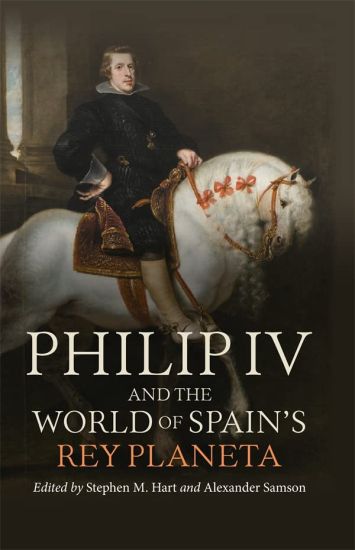
Philip IV and the World of Spain’s Rey Planeta
Did Spain fall into decline or flourish in the seventeenth century? This edited collection looks at perceptions and representations of Philip IV, Spain's 'Planet King', and his government against the backdrop of the seventeenth-century General Crisis in Europe, wars, revolutions and a sovereign debt crisis. Scholars often associate Philip's reign (1621-1665) with decline, decadence, crisis, stagnation and adversity (as did many contemporaries); yet the glittering cultural and artistic achievements (enhanced by his patronage) of the period led it to be dubbed 'the' Golden Age. The book analyses these contradictions, examining Philip's own understanding of kingship and how he and his courtiers used art and ceremony to project an image of strength, tradition, culture and prestige, while, at the same time, the empire grappled with revolts in Europe and falling trade with its New World colonies.
Philip Johnson and His Mischief

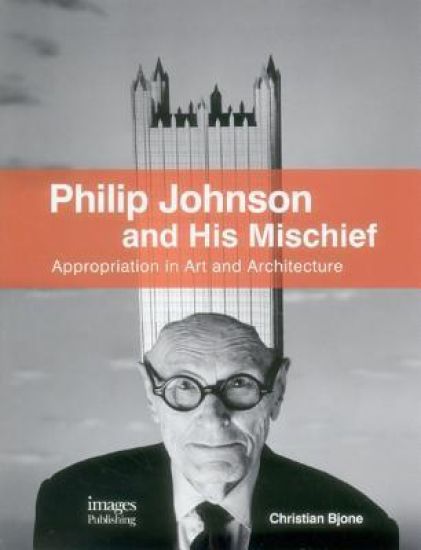
Philip Johnson and His Mischief

Christian Bjone

Images Publishing Group Pty Ltd
2014
nidottu
In the world of modern art, the idea of appropriation, or the conscious manipulation of the recognised world of another artist, has long been accepted as a legitimate strategy in criticism of the tradition of art authorship, challenging the context of viewing contemporary work and the manipulation of omnipresent media images. The world of art itself is fair game to be pillaged or mined in the production of new art, but there is almost no recognised equivalent aesthetic in architecture. Philip Johnson consistently dealt with the concept of appropriation and used it as a design strategy from the very beginning of his illustrious career. A singular taste-maker, Philip Johnson influenced art, architecture and design during the second half of the 20th century. Philip Johnson and His Mischief: Appropriation in Art and Architecture looks at the concept of appropriation and how Johnson's style was influenced first by his mentor, Mies van der Rohe, and then by post-modern ideas and artists. This title serves to review Johnson's body of work and show that, far from being a weakness, his use of appropriation was a major part of his innovative success.
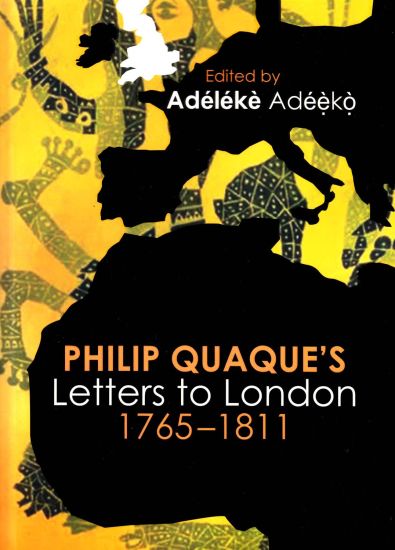
Philip Quaque’s letters to London, 1763-1811
``There are many reasons to welcome Adeleke Ade?ko’s new edition of the letters of the Reverend Phillip Quaque: the letters bring new insights into the contradictions that defined the encounter between Europeans and West Africans in the modern period, and of Quaque's complicated life as he tried to negotiate his role as a subject caught between the aspiration to be modern and the brutality of the slave trade. Ade?ek?o’s careful editing of the letters makes them accessible to modern readers and ensures that the troubled and troubling voice of the African will become central to our understanding of the “Black Atlantic”.’ – Simon Gikandi, Robert Schirmer Professor of English, Princeton University.
Philip K. Dick

Philip K. Dick

Phil Stephensen-Payne; Gordon Benson

Galactic Central Publication
2022
pokkari
Primary and Secondary Bibliography of Philip K. Dick up to February 1995, including foreign editions, phantom titles and a chronological listing.
The Power of Self Awareness: A Conversation with Philip Burley
In this conversation between medium Philip Burley and a young teacher, you will find questions about work, loss, and life common to all of us and answers flowing from spirit with universal meaning. If you are searching for greater satisfaction and contentment in your life's walk, the content of this booklet will be a light to guide your way. "Sometimes we think we have to save other people, but the God that lives in me lives in you, and God is just as involved in your life as in my life. Because I have that awareness in relation to my children, I don't worry about them. They may not walk the path I walk or do things as I would, but they have to live their lives, and I deeply respect that. I'm able to feel secure in watching them find their own way because I'm highly aware that the spiritual cause of life is guiding them. I know they will learn from life as I did--that life itself will teach them. Often I think that our experience is the greatest manifestation of God, because life is God. And since life teaches us, we can also say that God teaches us through life. So we learn. I see it all the time in myself and in others, and it's the same for you." Philip Burley
Confronting Depression to Stop Suicide: A Conversation with Philip Burley
Andrew is a young man recovering from a suicide attempt during which he journeyed on a "train" to the other side and realized that life does not stop when the physical body dies. In his meeting with medium and spiritual counselor Philip Burley, Andrew confronts his dependence on the opinion of others and begins to see the inner strength and potential that he has always possessed. Philip shares his own experience of self-discovery and his firm conviction that Andrew will move forward with increasing awareness of the indestructible light that resides within each one of us. "What is interesting to me is that I can see a brilliant light within each person that I see--the soul light. It doesn't matter what they've done with their life or what ups and downs they've experienced. Someone could be an alcoholic or a murderer, but the light within is still there at their core because it can't be touched, affected, or destroyed. The soul part of us is never touched because it's the God part of us." Philip Burley
Caring for a Loved One with Dementia: A Conversation with Philip Burley
Life is difficult enough without having to deal with an illness that incapacitates or leads to the death of a loved one, especially when that person is our lifelong mate. ...All of Annie's wifely and motherly instincts came to her aid when the reality of her husband's illness came rushing into her awareness, foreshadowing his early death. As a prospective survivor with perhaps many years ahead of her, she asked the understandable question, "What is going to happen to me?" ..".Instead of fighting reality, I embrace it. I tell myself and people I work with, 'Whatever is bothering you and whatever you don't want to face, turn around and walk toward it. Walk right into it, even if it's very painful and seems impossible to do, because in doing that you'll knock the problem down to size and put it in the right perspective.' When we do that, the situation will change. Things will get better, and the problem will either go away or at least be easier to live with. We will not have the same degree of discomfort we had before." Philip Burley
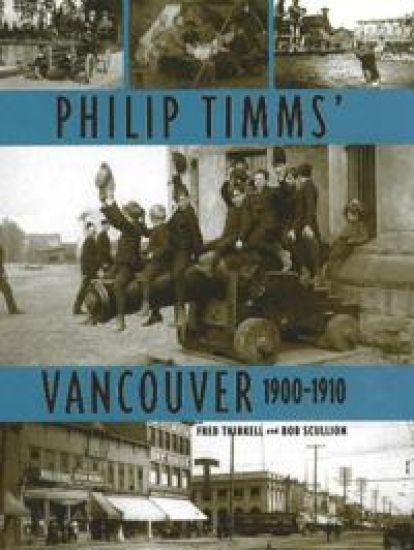
Philip Timms' Vancouver

Philip Timms' Vancouver

Bob Scullion; Fred Thirkell

Heritage House Publishing Co L
2006
sidottu
In Philip Timms' Vancouver, the city's "golden age" has been captured with spirit and style by one of British Columbia's foremost photographers. Philip Timms was a man of many accomplishments, but one of the most notable was his photographic record of Vancouver and the Lower Mainland, created between 1900 and 1910. As Vancouver evolved from a colonial outpost to a modern centre of industry and tourism, Timms sought to preserve views of the maturing city and its people, from landmark buildings to street scenes to children and families. James B. Stanton, a former curator of history at the Vancouver Museum, wrote: "All of Timms' photographs have a certain recognizable quality about them; much of the kindness and gentleness of the man himself comes through. His shots are candid and uncluttered and capture dramatically the feeling and mood of the time." Fortunately, Vancouver's adolescence coincided with the "golden age of postcards," when billions of them were being sent, exchanged and hoarded all over the world. By 1910, numerous photographers were producing postcards in the Vancouver area, but Philip Timms stood well above the others. This sampling of Timms' best work is full of life: people in action on the streets, in the parks, on the waterfront and on ships.
Philip Taaffe: Anima Mundi

Philip Taaffe: Anima Mundi

Irish Museum of Modern Art
2011
sidottu
Dedicated mailing and e-mail campaign to targeted art related media & organisations. Philip Taaffe is arguably one of the most significant artists working in America today. He is considered by both critics and his peers alike to be substantially responsible for the revival and renewed interest in abstraction and abstract art. Taaffe's work features multiple cultural references from both the past and the present, creating multi-layered final images of great complexity and extraordinary beauty that acknowledge the great tradition of Abstract Art initiated by Kandinsky, Kupka and Mondrian. His paintings are equally well rooted in the present time, and somehow could not have been imagined before the world we now live in, bombarded as we are by information technology.
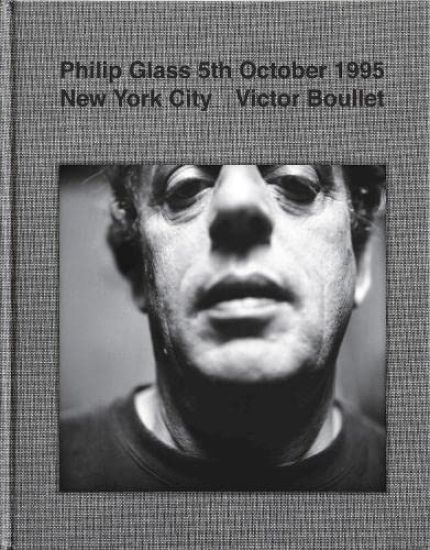
Philip Glass 5th October 1995 New York City

Philip Glass 5th October 1995 New York City

Victor Boullet

Antenne Publishing
2021
sidottu
In 1995, while visiting New York, Victor Boullet managed to secure a portrait sitting with the composer Philip Glass in his New York townhouse. In ‘Philip Glass 5th October 1995 New York City’, Boullet reveals the entire unedited portrait session including every frame, along with his contact sheets. In this sequence of photographs and Boullet’s accompanying essay, which amusingly recounts the story behind his morning with Philip Glass, Boullet’s portrayal of the composer and his own thoughts, mishaps and insecurities coincide to create a double portrait of the artist and his sitter. "Portraying someone connected to culture or fame can be a way of climbing a social ladder just by being associated with the sitter, I have used this to my advantage, but this was not the case that day I rang Philip Glass, I was a fan and bored. The playing stopped. Silence. Footsteps. There he was in front of me, Philip Glass. He looked at me with a startled expression, first at my face, then down at my shoes. He then rapidly moved his eyeballs towards my yellow plastic suitcase containing my camera, he lifted his head and sort of looked behind me, and uttered: is that all?” - Victor Boullet Antenne Publishing is delighted to present its first major publication: Philip Glass 5th October 1995 New York City by Victor Boullet.
Philip and Faith

Philip and Faith

Terry Wright

New Generation Publishing
2012
pokkari
Philip looks back at his life so far, a long and complicated journey. First there was his conversion at an evangelical crusade, followed by a critical retracing of the origins of Christianity and then his reception into the Catholic Church, with whose present condition he is deeply unhappy.At the same time there was his sometimes comic education by the women in his life: Faith, who rejected him as a lover but remained his friend, Rachel, who became his wife, and Amanda, his therapist. These personal events, he recalls, took place alongside more public events in the life of the Anglican and CatholicChurches, including the Second Vatican Council, the debates over the ordination of women and the problem of the sexual abuse of children by priests, all of which impinged on his own life.Both Philip and Faith and the churches to which they belong are forced to confront the need to change, to adapt to new circumstances, in order to survive.Terry Wright has written ten academic books exploring different aspects of literature and theology. This is his second novel, after The Browning Papers.
Philip Ruddock and the Politics of Compassion

Philip Ruddock and the Politics of Compassion

Tom Frame

Connor Court Publishing Pty Ltd
2020
sidottu
Philip Ruddock was commended for conviction and condemned for cruelty in his management of Australia's Immigration program between 1996 and 2003. As Australia's longest-serving Minister for Immigration and second longest-serving Federal parliamentarian, he won praise in the 1970s and 1980s for his strong commitment to human rights and refugee resettlement but in the 1990s and 2003 drew sharp criticism for offshore processing and the mandatory detention of asylum seekers. A reserved man, Ruddock did not display his emotions when confronted with human tragedy or angry protests. His reserved manner led to allegations he was uncaring and callous. This book is the first extended treatment of Ruddock's political career, focussing specifically on Immigration and the place of compassion in the development and administration of public policy. It will interest students of Australian politics, particularly the Howard era, and engage anyone committed to the exercise of moral virtues and ethical values in national life.
Philip Roth: Novels 1967-1972 (LOA #158)

Philip Roth: Novels 1967-1972 (LOA #158)

Philip Roth

The Library of America
2005
sidottu
In this, the second volume of The Library of America’s definitive edition of the collected works of Philip Roth, published by special arrangement with the author, the range and inventiveness of Roth’s fiction is dazzlingly displayed in four extraordinarily diverse works.When She Was Good (1967) is the trenchant portrait of Lucy Nelson, a young midwestern woman whose perception of her own suffering turns her into a ferocious force, “enemy-ridden and unforgivingly defiant,” as Roth would later describe her. A small-town 1940s America of restrictive social pressures and foreclosed opportunities provides the novel’s background.The publication of the hilarious Portnoy’s Complaint (1969) was a cultural event that turned Roth into a reluctant celebrity. The confession of a bewildered psychoanalytic patient thrust through life by his unappeasable sexuality yet held back by the iron grip of his unforgettable childhood, Portnoy unleashed Roth’s comic virtuosity and opened new avenues for American fiction.In Our Gang (1971), described by Anthony Burgess as a “brilliant satire in the real Swift tradition,” Roth effects a savage takedown of the administration of Richard Nixon (who figures here as Trick E. Dixon). Written before the revelations of the Watergate scandal, Our Gang continues to resonate as a broad and outraged response to the clownish hypocrisy and moral theatrics of the American political scene.The Kafkaesque excursion The Breast (1972) introduces David Kepesh in the first volume of a trilogy that continues with The Professor of Desire (1977) and The Dying Animal (2001). The Breast prompted Cynthia Ozick to remark, “One knows when one is reading something that will permanently enter the culture.”LIBRARY OF AMERICA is an independent nonprofit cultural organization founded in 1979 to preserve our nation’s literary heritage by publishing, and keeping permanently in print, America’s best and most significant writing. The Library of America series includes more than 300 volumes to date, authoritative editions that average 1,000 pages in length, feature cloth covers, sewn bindings, and ribbon markers, and are printed on premium acid-free paper that will last for centuries.
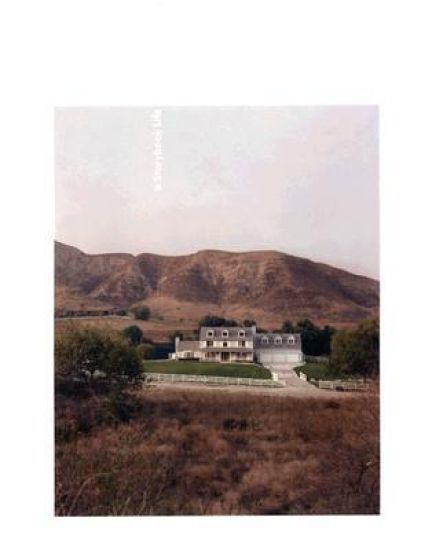
Philip-Lorca diCorcia: A Storybook Life
diCorcia’s curation of “disparate photographs,” from his early career to his first solo shows "The disparate photographs assembled here were made over the course of twenty years. None of them were originally intended to be used in this book. By ordering and shaping them I tried to investigate the possibilities of narrative both within a single image and especially in relation to the other photographs. A Storybook Life