
Kirjahaku
Etsi kirjoja tekijän nimen, kirjan nimen tai ISBN:n perusteella.
1000 tulosta hakusanalla Renee' Perry

The book Little Girl Goo is based on my childhood experiences. How does dysfunctional relationships look through the eyes of a child? Well, Little Girl Goo will tell her story in her way.....
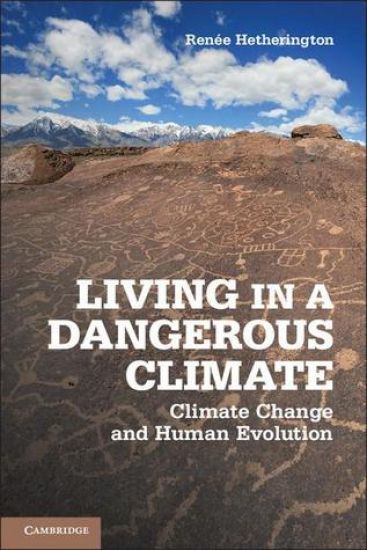
Living in a Dangerous Climate provides a journey through human and Earth history, showing how a changing climate has affected human evolution and society. Is it possible for humanity to evolve quickly, or is slow, gradual, genetic evolution the only way we change? Why did all other Homo species go extinct while Homo sapiens became dominant? How did agriculture, domestication and the use of fossil fuels affect humanity's growing dominance? Do today's dominant societies - devoted as they are to Darwinism and 'survival of the fittest' - contribute to our current failure to meet the hazards of a dangerous climate? Unique and thought provoking, the book links scientific knowledge and perspectives of evolution, climate change and economics in a way that is accessible and exciting for the general reader. The book is also valuable for courses on climate change, human evolution and environmental science.
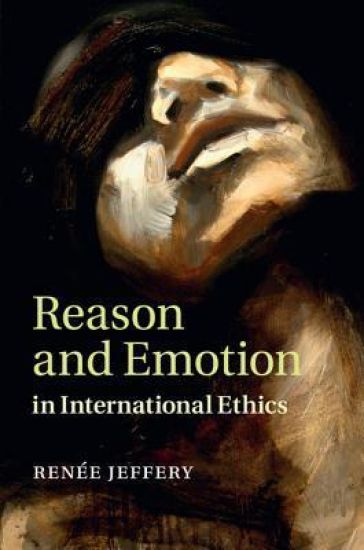
The study of international ethics is marked by an overwhelming bias towards reasoned reflection at the expense of emotionally driven moral deliberation. For rationalist cosmopolitans in particular, reason alone provides the means by which we can arrive at the truly impartial moral judgments a cosmopolitan ethic demands. However, are the emotions as irrational, selfish and partial as most rationalist cosmopolitans would have us believe? By re-examining the central claims of the eighteenth-century moral sentiment theorists in light of cutting-edge discoveries in the fields of neuroscience and psychology, Renée Jeffery argues that the dominance of rationalism and marginalisation of emotions from theories of global ethics cannot be justified. In its place she develops a sentimentalist cosmopolitan ethic that does not simply provide a framework for identifying injustices and prescribing how we ought to respond to them, but which actually motivates action in response to international injustices such as global poverty.
Living in a Dangerous Climate provides a journey through human and Earth history, showing how a changing climate has affected human evolution and society. Is it possible for humanity to evolve quickly, or is slow, gradual, genetic evolution the only way we change? Why did all other Homo species go extinct while Homo sapiens became dominant? How did agriculture, domestication and the use of fossil fuels affect humanity's growing dominance? Do today's dominant societies - devoted as they are to Darwinism and 'survival of the fittest' - contribute to our current failure to meet the hazards of a dangerous climate? Unique and thought provoking, the book links scientific knowledge and perspectives of evolution, climate change and economics in a way that is accessible and exciting for the general reader. The book is also valuable for courses on climate change, human evolution and environmental science.
In the past two decades, peace negotiators around the world have increasingly accepted that granting amnesties for human rights violations is no longer an acceptable bargaining tool or incentive, even when the signing of a peace agreement is at stake. While many states that previously saw sweeping amnesties as integral to their peace processes now avoid amnesties for human rights violations, this anti-amnesty turn has been conspicuously absent in Asia. In Negotiating Peace: Amnesties, Justice and Human Rights Renée Jeffery examines why peace negotiators in Asia have resisted global anti-impunity measures more fervently and successfully than their counterparts around the world. Drawing on a new global dataset of 146 peace agreements (1980–2015) and with in-depth analysis of four key cases - Timor-Leste, Aceh Indonesia, Nepal and the Philippines - Jeffery uncovers the legal, political, economic and cultural reasons for the persistent popularity of amnesties in Asian peace processes.
In the past two decades, peace negotiators around the world have increasingly accepted that granting amnesties for human rights violations is no longer an acceptable bargaining tool or incentive, even when the signing of a peace agreement is at stake. While many states that previously saw sweeping amnesties as integral to their peace processes now avoid amnesties for human rights violations, this anti-amnesty turn has been conspicuously absent in Asia. In Negotiating Peace: Amnesties, Justice and Human Rights Renée Jeffery examines why peace negotiators in Asia have resisted global anti-impunity measures more fervently and successfully than their counterparts around the world. Drawing on a new global dataset of 146 peace agreements (1980–2015) and with in-depth analysis of four key cases - Timor-Leste, Aceh Indonesia, Nepal and the Philippines - Jeffery uncovers the legal, political, economic and cultural reasons for the persistent popularity of amnesties in Asian peace processes.
Want to learn something well? Make media to advance knowledge and gain new ideas. You don’t have to be a communication professional to create to learn. Today, with free and low-cost digital tools, everyone can compose videos, blogs and websites, remixes, podcasts, screencasts, infographics, animation, remixes and more. By creating to learn, people internalize ideas and express information creatively in ways that may inspire others. Create to Learn is a ground-breaking book that helps learners create multimedia texts as they develop both critical thinking and communication skills. Written by Renee Hobbs, one of the foremost experts in media literacy, this book introduces a wide range of conceptual principles at the heart of multimedia composition and digital pedagogy. Its approach is useful for anyone who sees the profound educational value of creating multimedia projects in an increasingly digital and connected world. Students will become skilled multimedia communicators by learning how to gather information, generate ideas, and develop media projects using contemporary digital tools and platforms. Illustrative examples from a variety of student-produced multimedia projects along with helpful online materials offer support and boost confidence. Create to Learn will help anyone make informed and strategic communication decisions as they create media for any academic, personal or professional project.
Want to learn something well? Make media to advance knowledge and gain new ideas. You don’t have to be a communication professional to create to learn. Today, with free and low-cost digital tools, everyone can compose videos, blogs and websites, remixes, podcasts, screencasts, infographics, animation, remixes and more. By creating to learn, people internalize ideas and express information creatively in ways that may inspire others. Create to Learn is a ground-breaking book that helps learners create multimedia texts as they develop both critical thinking and communication skills. Written by Renee Hobbs, one of the foremost experts in media literacy, this book introduces a wide range of conceptual principles at the heart of multimedia composition and digital pedagogy. Its approach is useful for anyone who sees the profound educational value of creating multimedia projects in an increasingly digital and connected world. Students will become skilled multimedia communicators by learning how to gather information, generate ideas, and develop media projects using contemporary digital tools and platforms. Illustrative examples from a variety of student-produced multimedia projects along with helpful online materials offer support and boost confidence. Create to Learn will help anyone make informed and strategic communication decisions as they create media for any academic, personal or professional project.
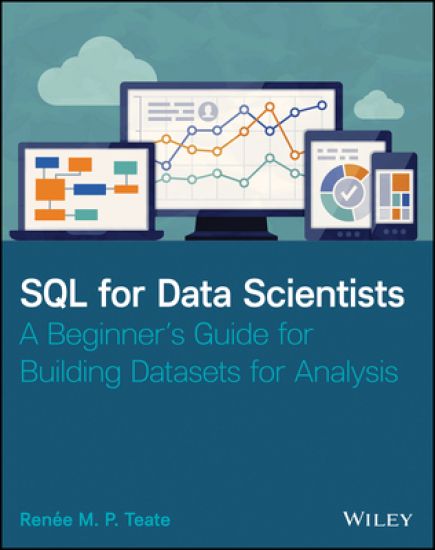
Jump-start your career as a data scientist—learn to develop datasets for exploration, analysis, and machine learning SQL for Data Scientists: A Beginner's Guide for Building Datasets for Analysis is a resource that’s dedicated to the Structured Query Language (SQL) and dataset design skills that data scientists use most. Aspiring data scientists will learn how to how to construct datasets for exploration, analysis, and machine learning. You can also discover how to approach query design and develop SQL code to extract data insights while avoiding common pitfalls. You may be one of many people who are entering the field of Data Science from a range of professions and educational backgrounds, such as business analytics, social science, physics, economics, and computer science. Like many of them, you may have conducted analyses using spreadsheets as data sources, but never retrieved and engineered datasets from a relational database using SQL, which is a programming language designed for managing databases and extracting data. This guide for data scientists differs from other instructional guides on the subject. It doesn’t cover SQL broadly. Instead, you’ll learn the subset of SQL skills that data analysts and data scientists use frequently. You’ll also gain practical advice and direction on "how to think about constructing your dataset." Gain an understanding of relational database structure, query design, and SQL syntaxDevelop queries to construct datasets for use in applications like interactive reports and machine learning algorithmsReview strategies and approaches so you can design analytical datasetsPractice your techniques with the provided database and SQL code In this book, author Renee Teate shares knowledge gained during a 15-year career working with data, in roles ranging from database developer to data analyst to data scientist. She guides you through SQL code and dataset design concepts from an industry practitioner’s perspective, moving your data scientist career forward!
Organizations around the world are in a struggle for survival, racing to transform themselves in a herculean effort to adapt to the digital age, all while protecting themselves from headline-grabbing cybersecurity threats. As organizations succeed or fail, the centrality and importance of cybersecurity and the role of the CISO—Chief Information Security Officer—becomes ever more apparent. It's becoming clear that the CISO, which began as a largely technical role, has become nuanced, strategic, and a cross-functional leadership position. Fight Fire with Fire: Proactive Cybersecurity Strategies for Today's Leaders explores the evolution of the CISO's responsibilities and delivers a blueprint to effectively improve cybersecurity across an organization. Fight Fire with Fire draws on the deep experience of its many all-star contributors. For example: Learn how to talk effectively with the Board from engineer-turned-executive Marianne Bailey, a top spokesperson well-known for global leadership in cyberDiscover how to manage complex cyber supply chain risk with Terry Roberts, who addresses this complex area using cutting-edge technology and emerging standardsTame the exploding IoT threat landscape with Sonia Arista, a CISO with decades of experience across sectors, including healthcare where edge devices monitor vital signs and robots perform surgery These are just a few of the global trailblazers in cybersecurity who have banded together to equip today’s leaders to protect their enterprises and inspire tomorrow’s leaders to join them. With fires blazing on the horizon, there is no time for a seminar or boot camp. Cyber leaders need information at their fingertips. Readers will find insight on how to close the diversity and skills gap and become well-versed in modern cyber threats, including attacks coming from organized crime and nation-states. This book highlights a three-pronged approach that encompasses people, process, and technology to empower everyone to protect their organization. From effective risk management to supply chain security and communicating with the board, Fight Fire with Fire presents discussions from industry leaders that cover every critical competency in information security. Perfect for IT and information security professionals seeking perspectives and insights they can’t find in certification exams or standard textbooks, Fight Fire with Fire is an indispensable resource for everyone hoping to improve their understanding of the realities of modern cybersecurity through the eyes of today’s top security leaders.

Engaged Teaching in Theology and Religion
Renee K. Harrison; Jennie S. Knight
Palgrave Macmillan
2015
sidottu
This book guides scholars and teachers of theology and religion through a process of self-reflection that leads to intentional, transformative teaching, dialogue, and reform in theological education and religious studies.

Offering a discussion of translation and social media through three themes, theory, training and professional practice, this book builds on emerging research in Translation Studies, including references citing recent translation and social media industry data. Topics include the translation of hashtags and the relevance of indexing, among others.

Less Is More in Elementary School
Renee Rubin; Michelle Abrego; John Sutterby
Routledge
2014
sidottu
In this era of rigorous standards, testing, and overcrowded curricula, many teachers are left wondering how they’re ever going to cover the material. Less Is More in Elementary School offers realistic solutions by providing ways teachers can streamline their curriculum, get the most out of assessment, communicate with families, and engage students in their own learning. This much-needed book will help you meet the demands of the Common Core more efficiently and effectively. You’ll learn how to… integrate the curriculum so that you can take time to slow down and explore topics in depth; help students become critical readers, problem solvers, collaborators, and communicators; make students more engaged, reflective, and self-regulating; get the most out of assessment during this era of high-stakes testing; maintain high expectations for all students but modify instruction to ensure all students progress; communicate more effectively with families to build trust during a time of change and high-stakes assessments; and overcome obstacles, such as the emphasis on testing, the need for more technology, and finding teacher collaboration time. Each chapter is filled with practical strategies that you can implement immediately, as well as suggested resources for learning more about a particular topic.
Less Is More in Elementary School
Renee Rubin; Michelle Abrego; John Sutterby
Routledge
2014
nidottu
In this era of rigorous standards, testing, and overcrowded curricula, many teachers are left wondering how they’re ever going to cover the material. Less Is More in Elementary School offers realistic solutions by providing ways teachers can streamline their curriculum, get the most out of assessment, communicate with families, and engage students in their own learning. This much-needed book will help you meet the demands of the Common Core more efficiently and effectively. You’ll learn how to… integrate the curriculum so that you can take time to slow down and explore topics in depth; help students become critical readers, problem solvers, collaborators, and communicators; make students more engaged, reflective, and self-regulating; get the most out of assessment during this era of high-stakes testing; maintain high expectations for all students but modify instruction to ensure all students progress; communicate more effectively with families to build trust during a time of change and high-stakes assessments; and overcome obstacles, such as the emphasis on testing, the need for more technology, and finding teacher collaboration time. Each chapter is filled with practical strategies that you can implement immediately, as well as suggested resources for learning more about a particular topic.
Every production is built on the backbone of the pipeline. While a functional and flexible pipeline can‘t assure a successful project, a weak pipeline can guarantee its demise. A solid pipeline produces a superior product in less time and with happier artists who can remain creative throughout the grueling production schedule. Walk through the foundational layers of the production pipeline, including IT infrastructure, software development practices and deployment policies, asset management, shot management, and rendering management. Production Pipeline Fundamentals for Film and Games will teach you how to direct limited resources to the right technological initiatives, getting the most for every dollar spent. Learn how to prepare for and manage all aspects of the pipeline with this entirely unique, one-of-a-kind guide. Expand your knowledge with real-world pipeline secrets handed to you by a stellar group of professionals from across the globe. Visit the companion website for even further resources on the pipeline.

"This is a brilliant work of lasting value to both sociology and anthropology by a person combining the talent of keen observer with the highest level of theoretical sophistication. . . a major contribution to our understanding of the nature and structure of a significant social situation."--David M. Schneider, The University of Chicago.