Kirjojen hintavertailu. Mukana 11 627 220 kirjaa ja 12 kauppaa.

Kirjahaku

Etsi kirjoja tekijän nimen, kirjan nimen tai ISBN:n perusteella.

1000 tulosta hakusanalla Richard Cook

Richard B. Morris and American History in the Twentieth Century
Richard B. Morris, an internationally known early American scholar, was a historian at both City College of New York and Columbia University. Morris' dissertation, Studies in the History of American Law, helped establish American legal history as a field. His Government and Labor in Early America was a landmark publication. He won the Bancroft Prize for his masterpiece, The Peacemakers, in 1966. This biography is based primarily on Morris' extensive papers and the recollections of historians who knew him well. Prominent historians of the twentieth century such as Evarts Greene, Charles M. Andrews, Lawrence Henry Gipson, Perry Miller, Merrill Jensen, Dumas Malone, Julian Boyd, Allan Nevins, and Henry Commager, among others, appear throughout. Subjects discussed include anti-Semitism, the celebrated New American Nation series, and Morris' suspicions about the innocence of Alger Hiss. This book was one of the History New Network's books of the month in July 2005.
Richard Rorty

Richard Rorty

SAGE Publications Inc
2002
muu
This is the first systematic assessment of the work of Richard Rorty - one of the most provocative and influential thinkers writing today. It will be an essential reference for academics and students in philosophy, social theory, sociology, cultural studies and literary theory. Rorty's fertile writings have challenged not just the assumptions behind the relatively narrow analytic tradition he was first trained in, but those concerning the very nature of social thought itself. The critical articles collected in these four volumes follow the trajectory of Rorty's whole career, from his early work in analytic philosophy to his later writings on pragmatism, continental philosophy, literature, culture, and liberal politics. The collection is divided into four volumes: - Philosophy: this volume looks at how Rorty's contribution to the analytic tradition was assessed by his peers at the time and then examines how his later, more explicitly post-analytic, writings relate to traditional philosophical topics such as `truth' and `realism'. - Post-Analytic Pragmatism: Volume Two examines Rorty's `post-analytic pragmatism'. It begins by considering how Rorty prepared for a shift into this territory, and then looks more closely at the kind of pragmatism he sought to establish; the volume contains discussions of the kind of pragmatism that emerges from both Philosophy and the Mirror of Nature (1979) and Consequences of Pragmatism (1982). - Politics, Irony and Solidarity provides an assessment of Rorty's account of irony and examines its relationship to his liberal politics. - Culture, Interpretation and Conversations: this final volume examines Rorty's views on philosophy as a form of cultural conversation and discusses his interpretations or `appropriations' of other philosophers. Of special interest here are his readings of continental philosophers such as Hegel, Heidegger and Derrida, where it is acknowledged that one Rorty's most important contributions to social thought has been to make the work of such philosophers more accessible to readers unfamiliar with, or even hostile to, the continental tradition. Volume 4 concludes with a definitive bibliography, which will be an invaluable resource for researchers and students. Edited by Alan Malachowski - a leading commentator on Rorty's work - this collection will be the standard reference work on one of the canonical theorists of the late 20th century.
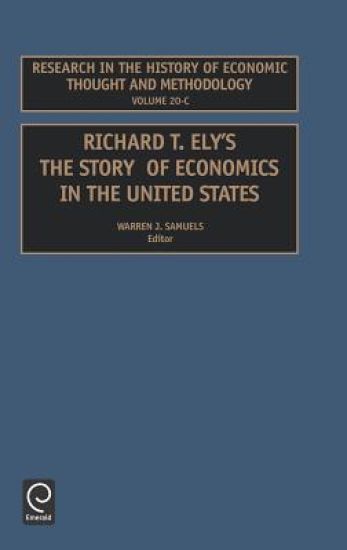
Richard T Ely

Richard T Ely

JAI Press Inc.
2002
sidottu
This work publishes for the first time Richard T. Ely's study of the history of American economic thought. Ely was both a reformer of economics and a leading economist between the 1880's and 1930's. A founder of the American economic association, he himself wrote on a vast number of topics. This history of American economics tells a story that is both straightforward and his own interpretation.
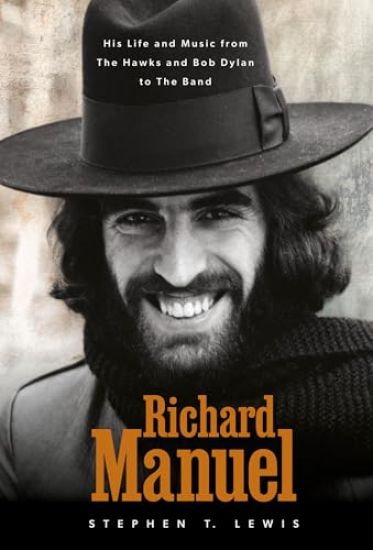
Richard Manuel

Richard Manuel

Stephen T. Lewis

SCHIFFER PUBLISHING LTD
2025
sidottu
For the first time—in an official biography endorsed by his family—the Band's legendary Richard Manuel’s compositions and performances are analyzed with expert commentary while shining a light on his contributions to all of his bands—and on the undeniable impact he had on rock music. Richard Manuel was a fearless original. Sweetly soulful as a vocalist and endearingly creative as a songwriter and multi-instrumentalist, he was a vital part of some of rock ’n’ roll’s pivotal moments, including Bob Dylan’s controversial move to electric music, Woodstock 1969, and the legendary Last Waltz. Through thoughtful research and analysis, this book places Manuel’s troubled yet inspired spirit within a musical and historical context. For the first time, Manuel’s compositions and performances are critiqued with expert commentary—alongside new interviews with family, friends, and fellow musicians, including Eric Clapton and Van Morrison. The story traces Manuel’s journey from Stratford, Ontario, to Woodstock, New York, and beyond, beginning with his first band, the Revols, then singing the blues with Robbie Robertson, Levon Helm, Rick Danko, and Garth Hudson in the Hawks, the group that would later become the Band. Manuel’s influence was profound, his distinctive vocals infusing songs with emotion and depth. His songwriting flourished in classics like “Tears of Rage,” cowritten with Dylan, and “We Can Talk.” His keyboard work added a lovable funkiness to the Band’s sound, blending elements of rock, folk, country, and blues into what would become the genesis of Americana. Despite the Band’s successes, Manuel struggled with personal demons, battling addiction and inner turmoil. Looking beyond his human frailty, this book celebrates Richard Manuel’s immeasurable contributions to music, ensuring that memories of his voice and artistry endure.
Richard Wright

Richard Wright

Keneth Kinnamon

McFarland Co Inc
2006
pokkari
African-American writer Richard Wright (1908-1960) was celebrated during the early 1940s for his searing autobiography (Black Boy) and fiction (Native Son). By 1947 he felt so unwelcome in his homeland that he exiled himself and his family in Paris. But his writings changed American culture forever, and today they are mainstays of literature and composition classes. He and his works are also the subjects of numerous critical essays and commentaries by contemporary writers. This volume presents a comprehensive annotated bibliography of those essays, books, and articles from 1983 through 2003. Arranged alphabetically by author within years are some 8,320 entries ranging from unpublished dissertations to book-length studies of African American literature and literary criticism. Also included as an appendix are addenda to the author's earlier bibliography covering the years from 1934 through 1982. This is the exhaustive reference for serious students of Richard Wright and his critics.
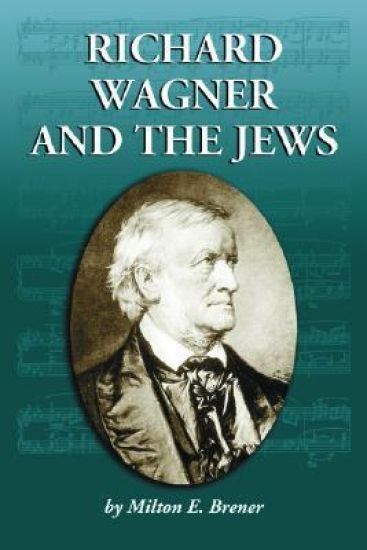
Richard Wagner and the Jews

Richard Wagner and the Jews

Milton E. Brener

McFarland Co Inc
2006
pokkari
It is well known that Richard Wagner, the renowned and controversial 19th century composer, exhibited intense anti-Semitism. The evidence is everywhere in his writings as well as in conversations his second wife recorded in her diaries. In his infamous essay "Judaism in Music," Wagner forever cemented his unpleasant reputation with his assertion that Jews were incapable of either creating or appreciating great art. Wagner's close ties with many talented Jews, then, are surprising. Most writers have dismissed these connections as cynical manipulations and rank hypocrisy. Examination of the original sources, however, reveals something different: unmistakeable, undeniable empathy and friendship between Wagner and the Jews in his life. Indeed, the composer had warm relationships with numerous individual Jews. Two of them resided frequently over extended periods in his home. One of these, the rabbi's son Hermann Levi, conducted Wagner's final opera--Parsifal, based on Christian legend--at Wagner's request; no one, Wagner declared, understood his work so well. Even in death his Jewish friends were by his side; two were among his twelve pallbearers. The contradictions between Wagner's antipathy toward the amorphous entity "The Jews" and his genuine friendships with individual Jews are the subject of this book. Drawing on extensive sources in both German and English, including Wagner's autobiography and diary and the diaries of his second wife, this comprehensive treatment of Wagner's anti-Semitism is the first to place it in perspective with his life and work. Included in the text are portions of unpublished letters exchanged between Wagner and Hermann Levi. Altogether, the book reveals astonishing complexities in a man long known as much for his prejudice as for his epic contributions to opera.
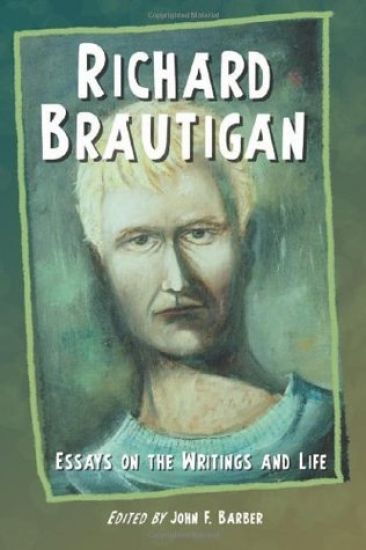
Richard Brautigan

Richard Brautigan

McFarland Co Inc
2006
pokkari
"Richard Gary Brautigan's idiosyncratic style and humor caused him to be identified with the counterculture movement of the 1960s. The authors of many of these essays knew Brautigan personally and professionally; others through a connection with his writings. The essays combine remembrance of the man and appraisal of his works. Includes previously unpublished photographs and artworks"--Provided by publisher.
Richard Matheson on Screen

Richard Matheson on Screen

Matthew R. Bradley

McFarland Co Inc
2010
pokkari
Though innumerable biographies have been written about novelists, playwrights, and poets, screenwriters are rarely granted this distinction, even ones as prolific and successful as Richard Matheson. He has occupied a unique position in cinema as the writer or original author of films from The Incredible Shrinking Man in 1957 through I Am Legend in 2007. This book documents his rise to prominence, parallel literary career, and role in the horror and science fiction renaissance. In chronological order, the exhaustively indexed narrative examines each film written by Matheson or based on his work, with sections devoted to episodic television (including The Twilight Zone) and unproduced projects.
Richard Wagner

Richard Wagner

John Louis DiGaetani

McFarland Co Inc
2014
pokkari
This is a new biography of the German composer Richard Wagner, 200 years after his birth, re-examining his life in light of new documents and new sensibilities. Since World War II Wagner has often been wrongly associated with Adolf Hitler because Hitler liked Wagner's music and used it in Nazi propaganda. But Wagner died in 1883--fifty years before Hitler's regime. It is time to have a fresh look at Wagner's life without the Nazi associations. His life was a series of abandonments and traumas for the self-destructive but creative genius, as he tried to survive as a freelance composer in the hostile environments of 19th century Germany.
Richard Yates Up Close

Richard Yates Up Close

Martin Naparsteck

McFarland Co Inc
2012
pokkari
Richard Yates has been referred to as America's least known great writer. Today Yates is known primarily for the novel Revolutionary Road, considered by many critics as the greatest American novel of the second half of the twentieth century. This critical study examines the life and work of Yates by placing his body of work in both cultural and personal context. Topics covered include the writing of his major novels, homosexuality, his role as a critic, and his relationship with Hollywood. This text divulges new details about his life and offers a thorough analysis of unpublished materials from the Richard Yates archives at Boston University.
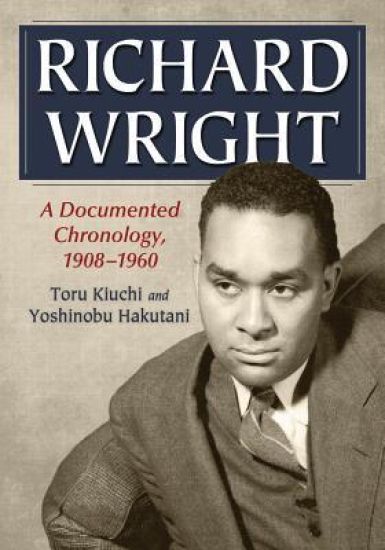
Richard Wright

Richard Wright

Toru Kiuchi; Yoshinobu Hakutani

McFarland Co Inc
2014
pokkari
In this minutely detailed, comprehensive chronology, Toru Kiuchi and Yoshinobu Hakutani document the life in letters of the greatest African American writer of the twentieth century. The author of Black Boy and Native Son, among other works, Wright wrote unflinchingly about the black experience in the United States, where his books still influence discussions of race and social justice. Entries are documented by Wright's journals, articles, and other works published and unpublished, as well as his letters to and from friends, associates, writers and public figures. Part One covers Wright's life through the year 1946, the period in which he published his best-known work. Part Two covers the final fifteen years of his life in exile, a prolific period in which he wrote two novels, four works of nonfiction, and four thousand haiku. Each part begins with a historical and critical introduction.
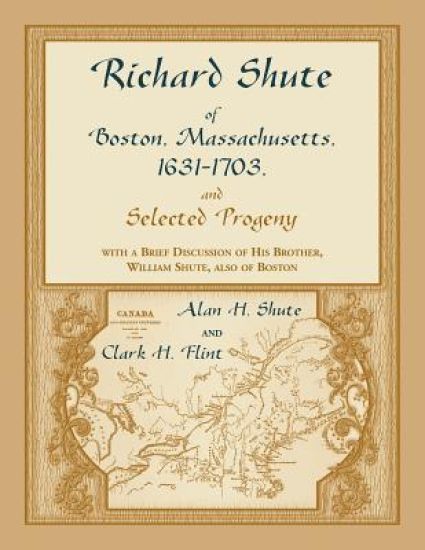
Richard Shute of Boston, Massachusetts, 1631-1703 and Selected Progeny
Supplementing its 'standard' genealogical data with narrative text, this book documents the family and descendants of Richard Shute, an English mariner who arrived in the Massachusetts Bay Colony sometime prior to 1659 and began a New World family line full of ambition, daring, and initiative. The book focuses on Richard and his progeny, but also investigates the descendants of Richard's brother, William, himself a mariner of Boston. It covers twelve generations of Richard's line (to the time of original publication in 1995) and five generations of William's (to the early 19th century). Basic facts such as birth dates, death dates, and marriage dates, and names of associated people and places are included, as well as tidbits and anecdotes gleaned from wills, diaries, and public records. Over 1,000 descendants of Richard and William are supplied; families mentioned include Belcher, Boardman, Buckley, Coffin, Cushing, Dudley, Emerson, French, Greenland, Grover, Hitchings, Jewett, Knower, Mountfort, Nichols, Pearson, Pillsbury, Rainsford, Rust, Sargeant, Soley, Sprague, Waite, Watts, and Wiggins. Chapters include: Descendants of Richard and Elizabeth Shute, Index to Descendants of Richard Shute, Descendants of William and Hopestill Shute, and Index to Descendants of William Shute. Appendices include: The Will of Richard Shute, Sr. (1631-1703); The Will of Richard Shute, Jr. (1666-c1742/43); The Will of Michael Shute (1707-1784); and, The Will of Benjamin Shute (1759-1847). A bibliography adds to the value of this work.
Richard Rorty

Richard Rorty

David L. Hall

State University of New York Press
1993
pokkari
This book is a discussion of the nature and import of Richard Rorty's philosophy, particularly as it relates to his reevaluation of American pragmatism. Rorty's thinking is assessed within the context of both modern and postmodern intellectual trends, and his thought is contrasted with that of his principal contemporaries in America and Europe, including Donald Davidson, W. V. O. Quine, Jürgen Habermas, Michel Foucault, Martin Heidegger, and Jacques Derrida.
Richard M. Nixon

Richard M. Nixon

Elizabeth Drew

TIMES BOOKS
2007
sidottu
The complex man at the center of America's most self-destructive presidency In this provocative and revelatory assessment of the only president ever forced out of office, the legendary Washington journalist Elizabeth Drew explains how Richard M. Nixon's troubled inner life offers the key to understanding his presidency. She shows how Nixon was surprisingly indecisive on domestic issues and often wasn't interested in them. Turning to international affairs, she reveals the inner workings of Nixon's complex relationship with Henry Kissinger, and their mutual rivalry and distrust. The Watergate scandal that ended his presidency was at once an overreach of executive power and the inevitable result of his paranoia and passion for vengeance. Even Nixon's post-presidential rehabilitation was motivated by a consuming desire for respectability, and he succeeded through his remarkable resilience. Through this book we finally understand this complicated man. While giving him credit for his achievements, Drew questions whether such a man--beleaguered, suspicious, and motivated by resentment and paranoia--was fit to hold America's highest office, and raises large doubts that he was.
The Mexican War Correspondence of Richard Smith Elliott

The Mexican War Correspondence of Richard Smith Elliott

Richard Smith Elliott

University of Oklahoma Press
1997
sidottu
When General Stephen Watts Kearny's Army of the West marched into Santa Fe, New Mexico, on August 18, 1846, Richard Smith Elliott, a young Missouri volunteer, was included in its ranks. In addition to Lieutenant Elliott's duties in the Laclede Rangers, he served as a regular correspondent to the St. Louis Reveille. An entertaining and educated observer, Elliott provided readers back home with an account of the grueling march over the famous Santa Fe Trail, the triumphant entry of the army into Santa Fe, the U.S. occupation of New Mexico, and the volunteers' eventual return to St. Louis.Noted southwestern scholars Mark L. Gardner and Marc Simmons present here, for the first time, all of Elliott's letters published in the Reveille under his nom-de-plume, John Brown, using passages from his autobiography for the same period to fill in a break resulting from a few missing letters. Also included are Elliott's literary sketches, drawn from his Mexican War experiences and the people he met and served with.
The Indian Territory Journals of Colonel Richard Irving Dodge

The Indian Territory Journals of Colonel Richard Irving Dodge

Richard Irving Dodge

University of Oklahoma Press
2000
sidottu
In these journals, Colonel Richard Irving Dodge, a well-known chronicler of western history and an authority on Plains Indians, provides an important account of conditions in Indian Territory from 1878 to 1880, a period of rapid transition.The Cheyenne-Arapaho reservation in present-day western Oklahoma was the center of Dodge's activity. His writings offer a firsthand record of the 1878 retreat of the Northern Cheyenne, the conditions endured by Indians who remained on the reservation, and the jurisdictional conflicts between Army personnel and representatives of the Office of Indian Affairs.These journals also provide insight into Dodge's character, with reports of his official duties as a military man and of several landmark events in his family life. Extensive commentaries and notes by Wayne R. Kime provide further detail, including a history of Cantonment North Fork Canadian River, a six-company post Dodge established and commanded in the region.