
Kirjahaku
Etsi kirjoja tekijän nimen, kirjan nimen tai ISBN:n perusteella.
1000 tulosta hakusanalla Robert L. Perry

Poets, visionaries, rakes, ramblers, agitators and healers all have a place in ANNA'S HOME, a two-act play set in Madison, Wisconsin on the eve of the Revolution.
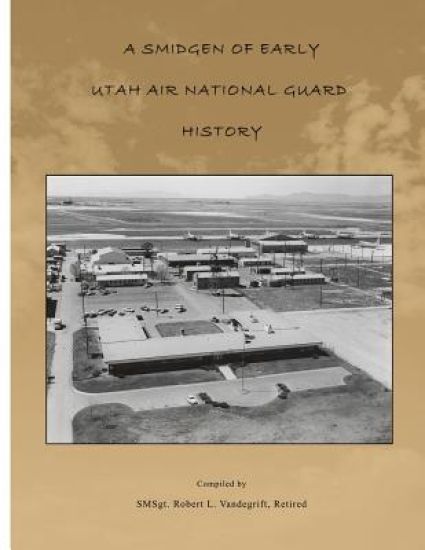
A Smidgen Of Early Utah Air National Guard History
Robert L. Vandegrift
Independently Published
2019
nidottu

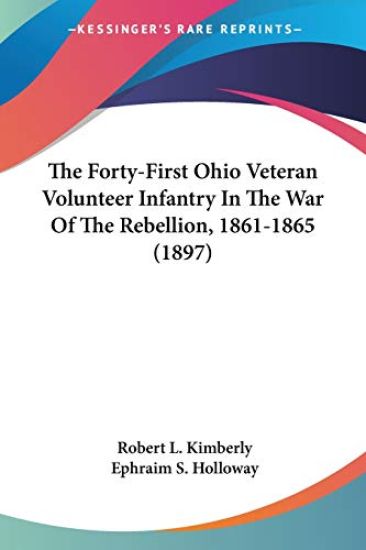
The Forty-first Ohio Veteran Volunteer Infantry in the War of the Rebellion, 1861-1865
Robert L. Kimberly; Ephraim S. Holloway
Kessinger Pub
2009
pokkari
History And Cultivation Of Cotton And Tobacco (1864)
Robert L. De Coin
KESSINGER PUBLISHING, LLC
2009
pokkari

Principles for Christian Living is a gift of inspiration, encouragement and prodding to believers to live the way that Christians should live so they can reap the great rewards of a Godly life. Those principles of faith, discipline, obedience, forgiveness, commitment, hard work and sharing are brought beautifully to life through the experiences Rev. Ramsey had growing up poor financially on a Georgia farm but enriched with devoutly religious parents who ensured that he knew God at an early age. He shows how these principles apply to people's real lives and daily challenges. In today's world - a world full of turmoil and obsessed with material goods and riches, a world that glorifies greed, lewdness and indifference to the needs of others, a world where "Love thy neighbor" is largely ignored - this is the kind of book people need desperately. And Rev. Ramsey, who lives these principles daily and preaches them from the pulpit constantly is just the person to write it.

Since publication of Hetzel's The Monetary Policy of the Federal Reserve (Cambridge University Press, 2008), the intellectual consensus that had characterized macroeconomics has disappeared. That consensus emphasized efficient markets, rational expectations and the efficacy of the price system in assuring macroeconomic stability. The 2008–9 recession not only destroyed the professional consensus about the kinds of models required to understand cyclical fluctuations but also revived the credit-cycle or asset-bubble explanations of recession that dominated thinking in the nineteenth century and the first half of the twentieth century. These 'market-disorder' views emphasize excessive risk taking in financial markets and the need for government regulation. The present book argues for the alternative 'monetary-disorder' view of recessions. A review of cyclical instability over the last two centuries places the 2008–9 recession in the monetary-disorder tradition, which focuses on the monetary instability created by central banks rather than on a boom-bust cycle in financial markets.
The Physics of Energy provides a comprehensive and systematic introduction to the scientific principles governing energy sources, uses, and systems. This definitive textbook traces the flow of energy from sources such as solar power, nuclear power, wind power, water power, and fossil fuels through its transformation in devices such as heat engines and electrical generators, to its uses including transportation, heating, cooling, and other applications. The flow of energy through the Earth's atmosphere and oceans, and systems issues including storage, electric grids, and efficiency and conservation are presented in a scientific context along with topics such as radiation from nuclear power and climate change from the use of fossil fuels. Students, scientists, engineers, energy industry professionals, and concerned citizens with some mathematical and scientific background who wish to understand energy systems and issues quantitatively will find this textbook of great interest.
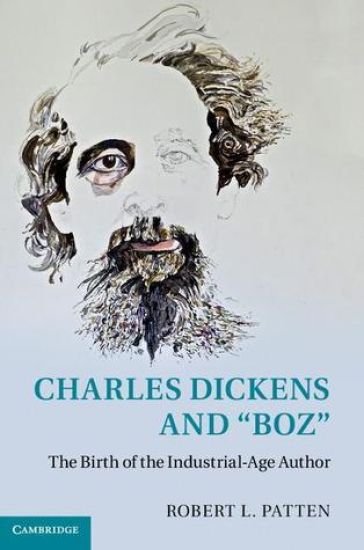
Dickens' rise to fame and his world-wide popularity were by no means inevitable. He started out with no clear career in mind, drifting in and out of the theatre, journalism and editing before finding unexpected success as a creative writer. Taking account of everything known about Dickens' apprentice years, Robert L. Patten narrates the fierce struggle Dickens then had to create an alter ego, Boz, and later to contain and extinguish him. His revision of Dickens' biography in the context of early Victorian social and political history and print culture opens up a more unstable, yet more fascinating, portrait of Dickens. The book tells the story of how Dickens created an authorial persona that highlighted certain attributes and concealed others about his life, talent and publications. This complicated narrative of struggle, determination, dead ends and new beginnings is as gripping as one of Dickens' own novels.
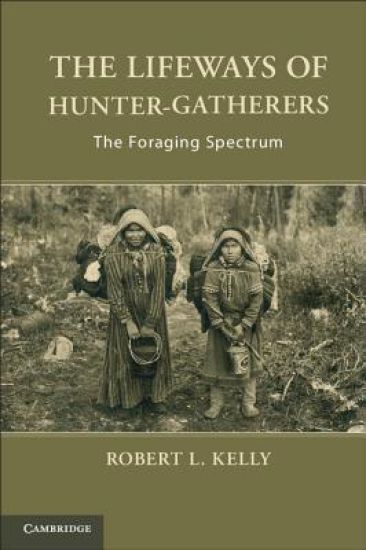
In this book, Robert L. Kelly challenges the preconceptions that hunter-gatherers were Paleolithic relics living in a raw state of nature, instead crafting a position that emphasizes their diversity, and downplays attempts to model the original foraging lifeway or to use foragers to depict human nature stripped to its core. Kelly reviews the anthropological literature for variation among living foragers in terms of diet, mobility, sharing, land tenure, technology, exchange, male-female relations, division of labor, marriage, descent and political organization. Using the paradigm of human behavioral ecology, he analyzes the diversity in these areas and seeks to explain rather than explain away variability, and argues for an approach to prehistory that uses archaeological data to test theory rather than one that uses ethnographic analogy to reconstruct the past.
The Cambridge Introduction to British Fiction, 1900–1950
Robert L. Caserio
Cambridge University Press
2019
sidottu
Examining the work of more than one hundred writers, in a wide variety of genres including detective, spy, gothic, fantasy, comic, and science fiction, this book is an unusually comprehensive introduction to the novels and short stories of the period. Providing fresh readings of famous modernist figures (Conrad, Ford Madox Ford, Joyce, Woolf, Forster, Lawrence, and others), Robert L. Caserio also brings new attention to lesser-known writers who merit increased attention. He provides readers with an overview of modernist fiction's intellectual milieu, and addresses its contextualization by history and politics - feminism, global war, and the emergence of the welfare state after World War II. An ideal introduction for the student, this book offers a thought-provoking re-examination of literary history, and an exploration of the unique value of fiction's portrayals of the world.
Derived from an undergraduate course taught by the author, this accessible book seeks to challenge and provoke readers by posing a series of topical questions concerning climate change and society. Topic summaries provide answers to technical, socio-economic and moral questions surrounding the deployment of climate science. These include how to build and test a climate model, whom and what is most at risk from climate change, and whether we should geoengineer the climate. Practical exercises and case studies provide deeper insights by taking readers through role-play activities and authentic climate change projects. Supporting materials, including notes for instructors and students, graphics, video-clips, games, and online resources, offer scope for further private study and group work. With a focus on applying climate science in practice, this book is ideal for students of geography, natural science, engineering and economics, as well as practitioners involved in the climate service industry.

This book was first published in 2004. There is emerging interest amongst researchers from various subject areas in understanding the interplay of earthquake and volcanic occurrences, archaeology and history. This discipline has become known as archeoseismology. Ancient earthquakes often leave their mark in the myths, legends, and literary accounts of ancient peoples, the stratigraphy of their historical sites, and the structural integrity of their constructions. Such information leads to a better understanding of the irregularities in the time-space patterns of earthquake and volcanic occurrences and whether they could have been a factor contributing to some of the enigmatic catastrophes in ancient times. This book focuses on the historical earthquakes of North and South America, and describes the effects those earthquakes have had with illustrated examples of recent structural damage at archaeological sites. It is written at a level that will appeal to students and researchers in the fields of earth science, archaeology, and history.

Since publication of Hetzel's The Monetary Policy of the Federal Reserve (Cambridge University Press, 2008), the intellectual consensus that had characterized macroeconomics has disappeared. That consensus emphasized efficient markets, rational expectations and the efficacy of the price system in assuring macroeconomic stability. The 2008–9 recession not only destroyed the professional consensus about the kinds of models required to understand cyclical fluctuations but also revived the credit-cycle or asset-bubble explanations of recession that dominated thinking in the nineteenth century and the first half of the twentieth century. These 'market-disorder' views emphasize excessive risk taking in financial markets and the need for government regulation. The present book argues for the alternative 'monetary-disorder' view of recessions. A review of cyclical instability over the last two centuries places the 2008–9 recession in the monetary-disorder tradition, which focuses on the monetary instability created by central banks rather than on a boom-bust cycle in financial markets.
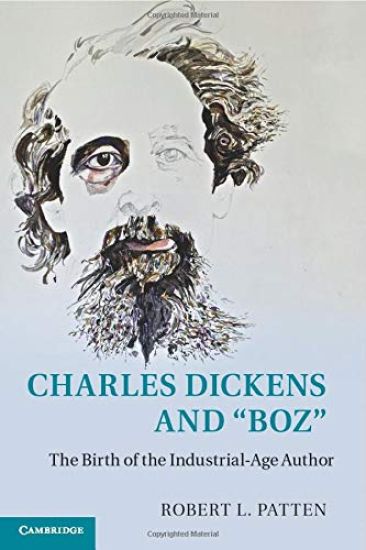
Dickens' rise to fame and his world-wide popularity were by no means inevitable. He started out with no clear career in mind, drifting in and out of the theatre, journalism and editing before finding unexpected success as a creative writer. Taking account of everything known about Dickens' apprentice years, Robert L. Patten narrates the fierce struggle Dickens then had to create an alter ego, Boz, and later to contain and extinguish him. His revision of Dickens' biography in the context of early Victorian social and political history and print culture opens up a more unstable, yet more fascinating, portrait of Dickens. The book tells the story of how Dickens created an authorial persona that highlighted certain attributes and concealed others about his life, talent and publications. This complicated narrative of struggle, determination, dead ends and new beginnings is as gripping as one of Dickens' own novels.
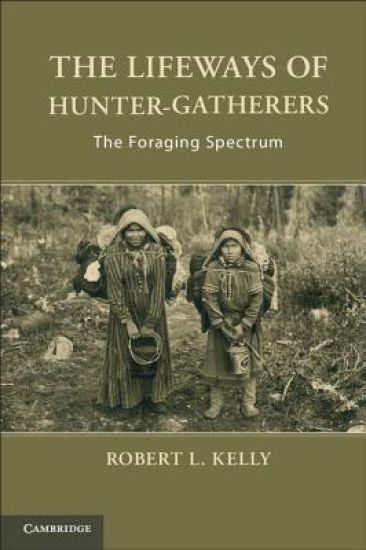
In this book, Robert L. Kelly challenges the preconceptions that hunter-gatherers were Paleolithic relics living in a raw state of nature, instead crafting a position that emphasizes their diversity, and downplays attempts to model the original foraging lifeway or to use foragers to depict human nature stripped to its core. Kelly reviews the anthropological literature for variation among living foragers in terms of diet, mobility, sharing, land tenure, technology, exchange, male-female relations, division of labor, marriage, descent and political organization. Using the paradigm of human behavioral ecology, he analyzes the diversity in these areas and seeks to explain rather than explain away variability, and argues for an approach to prehistory that uses archaeological data to test theory rather than one that uses ethnographic analogy to reconstruct the past.
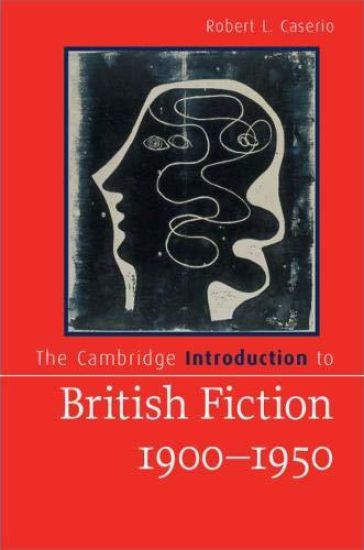
The Cambridge Introduction to British Fiction, 1900–1950
Robert L. Caserio
Cambridge University Press
2019
pokkari
Examining the work of more than one hundred writers, in a wide variety of genres including detective, spy, gothic, fantasy, comic, and science fiction, this book is an unusually comprehensive introduction to the novels and short stories of the period. Providing fresh readings of famous modernist figures (Conrad, Ford Madox Ford, Joyce, Woolf, Forster, Lawrence, and others), Robert L. Caserio also brings new attention to lesser-known writers who merit increased attention. He provides readers with an overview of modernist fiction's intellectual milieu, and addresses its contextualization by history and politics - feminism, global war, and the emergence of the welfare state after World War II. An ideal introduction for the student, this book offers a thought-provoking re-examination of literary history, and an exploration of the unique value of fiction's portrayals of the world.