

Kirjahaku
Etsi kirjoja tekijän nimen, kirjan nimen tai ISBN:n perusteella.
1000 tulosta hakusanalla Rohan Candappa
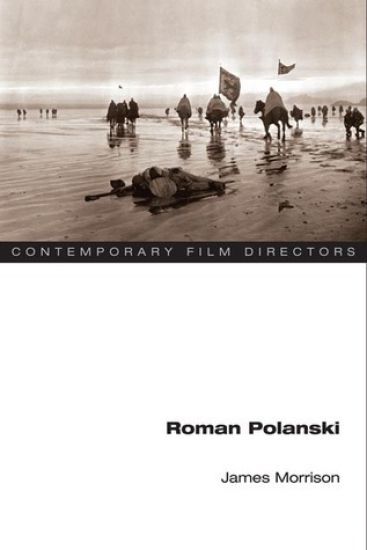
A new take on an eclectic and controversial director James Morrison's critical study offers a comprehensive and critically engaged treatment on Roman Polanski's immense body of work. Tracing the filmmaker's remarkably diverse career from its beginnings to 2007, the book provides commentary on all of Polanski's major films in their historical, cultural, social, and artistic contexts. Morrison locates Polanski's work within the genres of comedy and melodrama, arguing that he is not merely obsessed with the theme of repression, but that his true interest is in the concrete—what is out in the open—and why we so rarely see it. The range of Polanski's filmmaking challenges traditional divisions between high and low culture. For example, The Ninth Gate is a brash pastiche of the horror genre, while The Pianist is an Academy Award-winner about the Holocaust. Dubbing Polanski a relentless critic of modernity, Morrison concludes that his career is representative of the fissures, victories, and rehabilitations of the last fifty years of international cinema. A volume in the series Contemporary Film Directors, edited by James Naremore
Roman Sources for the History of American Catholicism, 1763–1939
Matteo Binasco
University of Notre Dame Press
2018
sidottu
Roman Sources for the History of American Catholicism, 1763–1939 is a comprehensive reference volume, researched and compiled by Matteo Binasco, that introduces readers to the rich content of Roman archives and their vast potential for U.S. Catholic history in particular. In 2014, the University of Notre Dame's Cushwa Center for the Study of American Catholicism hosted a seminar in Rome that examined transatlantic approaches to U.S. Catholic history and encouraged the use of the Vatican Secret Archives and other Roman repositories by today's historians. Participants recognized the need for an English-language guide to archival sources throughout Rome that would enrich individual research projects and the field at large. This volume responds to that need. Binasco offers a groundbreaking description of materials relevant to U.S. Catholic history in fifty-nine archives and libraries of Rome. Detailed profiles describe each repository and its holdings relevant to American Catholic studies. A historical introduction by Luca Codignola and Matteo Sanfilippo reviews the intricate web of relations linking the Holy See and the American Catholic Church since the Treaty of Paris of 1763. Roman sources have become crucial in understanding the formation and development of the Catholic Church in America, and their importance will continue to grow. This timely source will meet the needs of a ready and receptive audience, which will include scholars of U.S. religious history and American Catholicism as well as Americanist scholars conducting research in Roman archives.
Millions have read his words or heard him speak. Now in this book by Rowan Williams and Greg Garrett, there’s a chance to find out more about the man behind the books and speeches. ‘Rowan Williams in Conversation’ allows the reader to be a fly on the wall as two friends – one the former Archbishop of Canterbury, the other ‘one of America's leading voices on religion and culture’ (BBC Radio) – talk about their shared passions and interests. ‘Rowan Williams in Conversation’ is Williams at his most relaxed and personal, offering unique insights into his most heartfelt beliefs and enthusiasms. Listen in as he reflects with Greg Garrett on the vital pursuits that have characterized his life and ministry: among them, friendship, imagination, popular culture, faith and politics, prayer, and the blessings of sacred community. Greg Garrett and Rowan Williams’ book is a unique opportunity to sample the rich and wide-ranging thought of Williams, as he talks about the though-provoking spiritual issues and intellectual passions that are most dear to his heart.
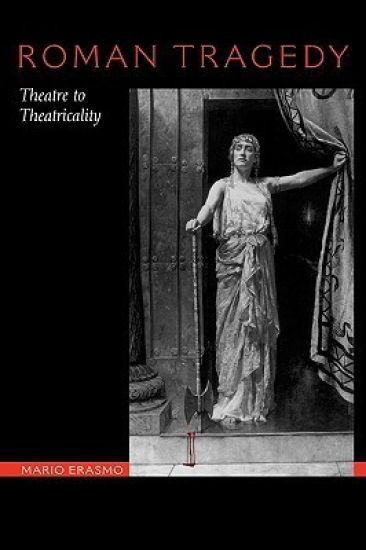
Roman tragedies were written for over three hundred years, but only fragments remain of plays that predate the works of Seneca in the mid-first century C.E., making it difficult to define the role of tragedy in ancient Roman culture. Nevertheless, in this pioneering book, Mario Erasmo draws on all the available evidence to trace the evolution of Roman tragedy from the earliest tragedians to the dramatist Seneca and to explore the role played by Roman culture in shaping the perception of theatricality on and off the stage. Performing a philological analysis of texts informed by semiotic theory and audience reception, Erasmo pursues two main questions in this study: how does Roman tragedy become metatragedy, and how did off-stage theatricality come to compete with the theatre? Working chronologically, he looks at how plays began to incorporate a rhetoricized reality on stage, thus pointing to their own theatricality. And he shows how this theatricality, in turn, came to permeate society, so that real events such as the assassination of Julius Caesar took on theatrical overtones, while Pompey's theatre opening and the lavish spectacles of the emperor Nero deliberately blurred the lines between reality and theatre. Tragedy eventually declined as a force in Roman culture, Erasmo suggests, because off-stage reality became so theatrical that on-stage tragedy could no longer compete.
Skin-clad barbarians ransacking Rome remains a popular image of the "decline and fall" of the Roman Empire, but why, when, and how the Empire actually fell are still matters of debate among students of classical history. In this pioneering study, Ralph W. Mathisen examines the "fall" in one part of the western Empire, Gaul, to better understand the shift from Roman to Germanic power that occurred in the region during the fifth century AD.Mathisen uncovers two apparently contradictory trends. First, he finds that barbarian settlement did provoke significant changes in Gaul, including the disappearance of most secular offices under the Roman imperial administration, the appropriation of land and social influence by the barbarians, and a rise in the overall level of violence. Yet he also shows that the Roman aristocrats proved remarkably adept at retaining their rank and status. How did the aristocracy hold on?Mathisen rejects traditional explanations and demonstrates that rather than simply opposing the barbarians, or passively accepting them, the Roman aristocrats directly responded to them in various ways. Some left Gaul. Others tried to ignore the changes wrought by the newcomers. Still others directly collaborated with the barbarians, looking to them as patrons and holding office in barbarian governments. Most significantly, however, many were willing to change the criteria that determined membership in the aristocracy. Two new characteristics of the Roman aristocracy in fifth-century Gaul were careers in the church and greater emphasis on classical literary culture.These findings shed new light on an age in transition. Mathisen's theory that barbarian integration into Roman society was a collaborative process rather than a conquest is sure to provoke much thought and debate. All historians who study the process of power transfer from native to alien elites will want to consult this work.
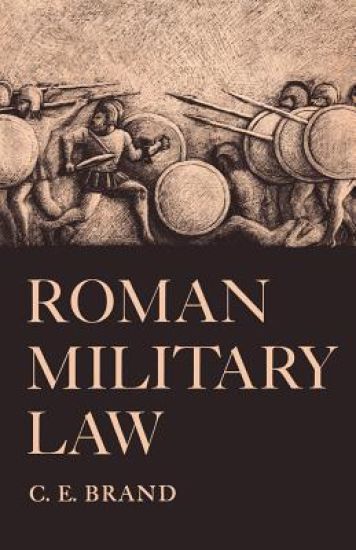
Rome was the law-giver for much of the modern world. She was also the greatest military power of antiquity, operating her military organization with remarkable efficiency and effectiveness throughout most of the then-known world. In view of the importance of both the legal and military aspects of the Roman Empire, an account of their combination in a system of disciplinary control for the Roman armies is of considerable significance to historians in both fields-and, in fact, to scholars in general. In Roman Military Law, C. E. Brand describes this system of control. Since a characterization of such a system can be made most meaningful only against a background of Roman constitutional government and in the light of ideologies current at the time, Brand follows his initial “Note on Sources” with a sketch of the contemporary Roman scene. This first section includes a discussion of the Roman constitution and an examination of Roman criminal law. The history of Rome, as a republic, principate, and empire, extended over a period of a thousand years, so any attempt to represent a generalized picture must be essentially a matter of extraction and condensation from the voluminous literature of the whole era. Nevertheless, from the fantastic evolution that is the history of Rome, Brand has been able to construct a more or less static historical mosaic that may be considered typically “Roman.” This comes into sharpest focus during the period of the Punic Wars, when the city and its people were most intensely Roman. The picture of the Roman armies is set into this basic framework, in chapters dealing with military organization, disciplinary organization, religion and discipline, and offenses and punishments. The final section of the book considers briefly the vast changes in Roman institutions that came about under the armies of the Empire, and then concludes with the Latin text and an English translation of the only known code of Roman military justice, promulgated sometime during the later Empire, preserved in Byzantine literature, and handed down to medieval times in Latin translations of Byzantine Greek law, which it has heretofore been confused.
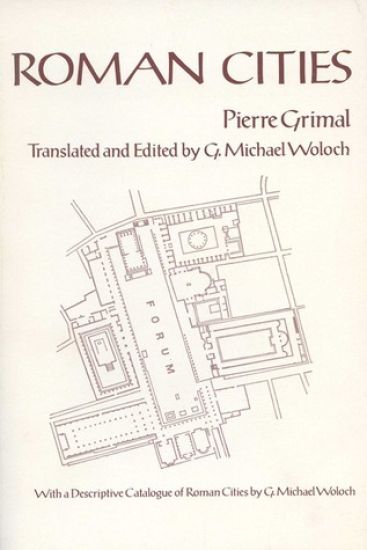
Roman Cities combines G. Michael Woloch’s translation of Les villes romaines, Pierre Grimal’s noted French work on Roman city planning, archeology, and urban history, with Woloch’s additional notes and descriptions of the cities mentioned by Grimal, as well as other important Roman cities. The book provides a brief history and description of more than a hundred Roman cities, an extensive master bibliography, and a comprehensive glossary. Roman Cities will interest both scholars and students of Roman history and archeology, city planning, urban geography, and the social sciences. The glossary and bibliography make the book of value to specialists pursuing a particular topic and to students, history buffs, and amateur archaeologists seeking to broaden their understanding of the Roman city planning methods that are such an integral part of our modern urban heritage.Roman Cities provides the first comprehensive study in English of major Roman cities, including an excellent coverage of the Roman legacy which was transmitted to medieval and modern trends in architecture and urban planning.
“In this interesting and suggestive book, Professor MacMullen views anew an important and rather neglected aspect of Roman social relations. A perceptive and sensitive interpreter, he has drawn widely upon the scattered and unorganized evidence about the poorer classes, rural and urban, in much of the Roman Empire, and presents a fresh picture of their conditions, attitudes and aims.”—T. Robert S. Broughton“Ramsay MacMullen’s work is always provocative and illuminating. This book is no exception…Through good writing, clear presentation, and outstanding common-sense judgment the author has given us chapters to be read with pleasure by a large audience. Specialist or not…This fine book represents for us what we may legitimately know of ancient society.”—American Historical Review“Much of the evidence which MacMullen uses in his narrative is illuminating, much of the analysis and argument lucid and compelling….Roman Social Relations is an interesting and lively book [that] should certainly be read by anyone interested in the social history of the ancient world.”—Journal of Social HistoryRamsay MacMullen is the author of Paganism in the Roman Empire and Roman Government’s Response to Crisis, A.D. 235-337, among other works. He is Dunham Professor of History and Classics at Yale University and is currently president of the Association of Ancient Historians.
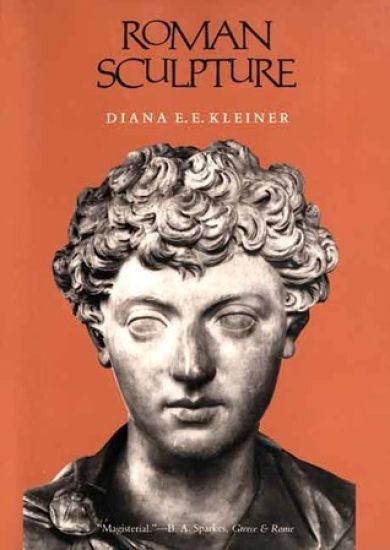
Roman sculpture was an integral part of Roman life, and the Romans placed statues and reliefs in their fora, basilicas, temples, and public baths, as well as in their houses, villas, gardens, and tombs. In this beautifully illustrated book—the first in almost a century devoted solely to Roman sculpture—Diana E. E. Kleiner discusses all the major public and private monuments in Rome, as well as many less well known monuments in the capital and elsewhere in the empire. She examines art commissioned by the imperial elite and by private patrons, including freedmen and slaves, and she also highlights monuments honoring women and children. Kleiner demonstrates that the social, ethnic, and geographical diversity of Roman patronage led to an art that was eclectic and characterized by varying styles, often tied to the social status of the patron. She also examines the interrelations between works produced for different kinds of patrons.Kleiner begins with a long thematic introduction that describes Rome and its empire, characterizes patrons from the capital and the provinces, discusses the position of the artist in Roman society and the materials he used, and presents a history of the study of Roman art. The remaining chapters constitute a chronological examination of Roman sculpture from the foundation of Rome in 753 B.C. to the transfer of the capital to Constantinople in A.D. 330. In each period the monuments are divided by type, for example, portraiture, state relief sculpture, the art of freedmen, and provincial art. Throughout, Kleiner treats Roman sculpture in its cultural, political, and social contexts and, wherever possible, as an element of the architectural complex in which it was set.Published with the assistance of the Getty Grant Program
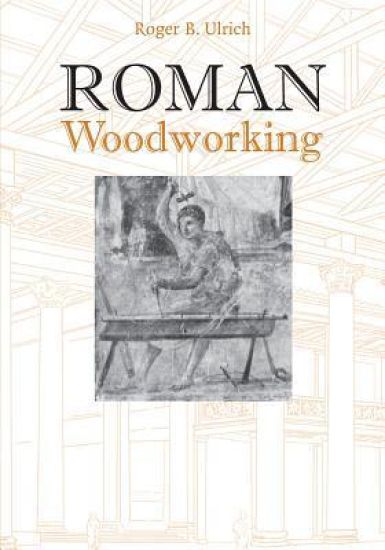
A comprehensive exploration of woodworking in the ancient Roman world “A valuable overview in English of how the Romans used wood in objects great and small, humble and grand.”—Richard F. Liebhart, American Journal of Archaeology This book presents an authoritative and detailed survey of the art of woodworking in the ancient Roman world. Illustrated with over 200 line drawings and photographs, Roman Woodworking covers topics such as the training and guild memberships of Roman carpenters, woodworking tools and techniques, the role of timber in construction and the availability of trees, and interior woodwork and furniture making. It also includes an extensive glossary of fully defined terms. This comprehensive book displays the accomplishment of the Roman woodworkers and their high skill and knowledge of materials and tools. Ulrich helps bring to light the importance of wooden projects and structures in Roman daily life and provides a wealth of information not only for classicists but also for those interested in the history of technology and the history of woodworking.
Roman Space Telescope Observations
National Academies Press
2023
nidottu
The Roman Space Telescope will measurably advance knowledge of dark energy and exoplanet demographics. Locally, it will likely enhance understanding of the structure and substructure of the Milky Way and nearby galaxies, including a census of the predicted but elusive ultra-faint dwarf galaxies. At high redshift, it can provide information on the topology of reionization and the abundance of sources like active galactic nuclei and pair-instability supernovae. With a wavelength range of 0.48-2.3 ?m, the Roman Wide Field Imager has the largest etendue of any existing or planned optical/infrared space observatory. The coronagraph technology demonstration instrument will pioneer new capabilities that will be the basis for future instruments capable of directly detecting and characterizing Earth-like planets around nearby stars. If the technology demonstration is successful, observations with the coronagraph could make substantial advances in the study of planetary and disk systems. At the request of NASA, this report reviews the Roman Space Telescope science program to set the appropriate mix of survey time devoted to the three Core Community Surveys (which address the weak lensing, baryon acoustic oscillations, supernovae, and microlensing programs in NWNH) relative to guest investigator-led observing programs during the primary 5-year mission. Table of ContentsFront MatterExecutive Summary1 Introduction2 Findings and Conclusions3 An Example of Combining Collaboration and Competition4 Maximizing Flexibility5 Summary and Response to the ChargeAppendixesAppendix A: Statement of TaskAppendix B: Letter of RequestAppendix C: Acronyms and AbbreviationsAppendix D: Biographies of Committee Members and Staff
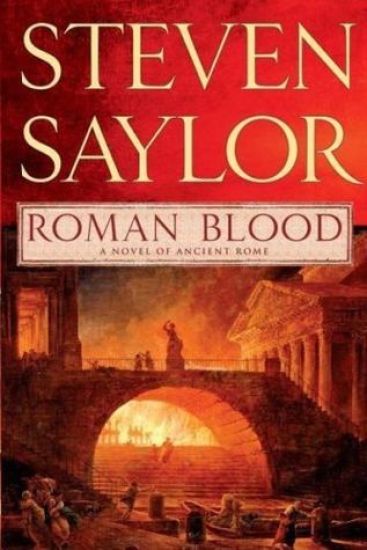
In the unseasonable heat of a spring morning in 80 B.C., Gordianus the Finder is summoned to the house of Cicero, a young advocate staking his reputation on a case involving the savage murder of the wealthy, sybaritic Sextus Roscius. Charged with the murder is Sextus's son, greed being the apparent motive. The punishment, rooted deep in Roman tradition, is horrific beyond imagining. The case becomes a political nightmare when Gordianus's investigation takes him through the city's raucous, pungent streets and deep into rural Umbria. Now, one man's fate may threaten the very leaders of Rome itself.
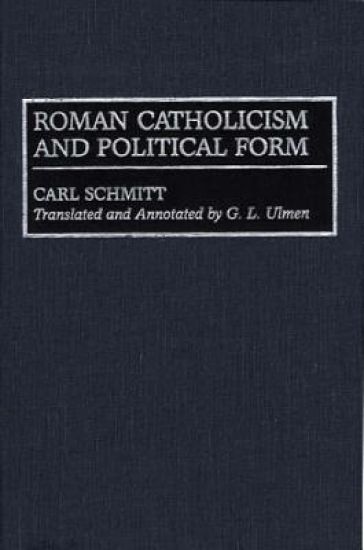
The relationship between economic and political thinking has reached a crisis at the end of the 20th century. Already at the beginning of this century, in Roman Catholicism and Political Form, Carl Schmitt juxtaposed a juridical interpretation of religion oriented to the political sphere to Max Weber's sociological interpretation oriented to the economic sphere in The Protestant Ethic and the Spirit of Capitalism. According to G. L. Ulmen, translator of Roman Catholicism and Political Form
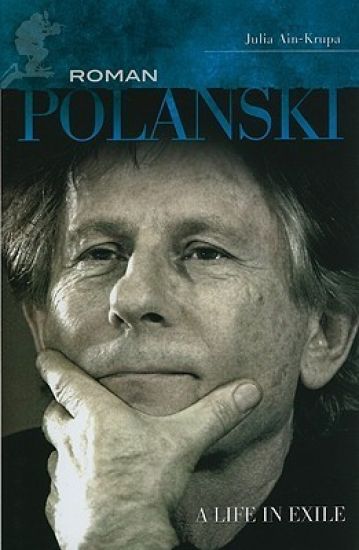
This book offers an examination of the films of Roman Polanski, focusing on the impact that his life as an exile has had upon his work. Roman Polanski: A Life in Exile is a revealing look at this acclaimed filmmaker whose life in exile seems to have made his films all the more personal and powerful. Written by a film critic, this insightful book follows Polanski's story from his childhood in a World War II Jewish ghetto to his early films in Poland; from his American breakout, Rosemary's Baby, to his wife's murder by the Manson family; from the spectacular return of Chinatown, to his exile as a convicted sex criminal, to the monumental career peak, The Pianist. The Holocaust, the oppression of communism, the shattering of the swinging 60s, the decadence of Hollywood, the life of a fugitive—Polanski experienced all of these firsthand, and understanding those experiences provides a fascinating pathway through his work.

Rowan's Primer of EEG
Lara V. Marcuse; Madeline C. Fields; Jiyeoun Jenna Yoo
Elsevier - Health Sciences Division
2024
nidottu
**Selected for 2025 Doody’s Core Titles® in Neurology** Practical, brief, and easy to understand, Rowan's Primer of EEG, 3rd Edition, teaches the difficult technical aspects of how to perform and interpret EEGs. Direct, concise text, numerous illustrations and teaching points, and an extensive video library make this up-to-date reference a valuable resource for students, residents, neurologists, and epileptologists alike. Features a vibrant, full-color design and brief, to-the-point text from experts in the field. Discusses advances in the field such as intracranial EEG and quantitative EEG in the ICU. Includes dozens of videos detailing clinical descriptions of seizures and EEG interpretation, both with and without annotations, so you can practice reading EEGs firsthand and then learn from the annotations. Offers enhanced coverage of epilepsy syndromes with a quick-access chart highlighting age of onset, prognosis, clinical characteristics, and EEG characteristics. Contains pediatric content and a concise chart of the EEG changes throughout the neonatal period. Provides self-assessment questions and answers online for each chapter. Uses the recently updated nomenclature from the International League Against Epilepsy (ILAE) and American Clinical Neurophysiology Society. An eBook version is included with purchase. The eBook allows you to access all of the text, figures, and references, with the ability to search, customize your content, make notes and highlights, and have content read aloud. Any additional digital ancillary content may publish up to 6 weeks following the publication date.
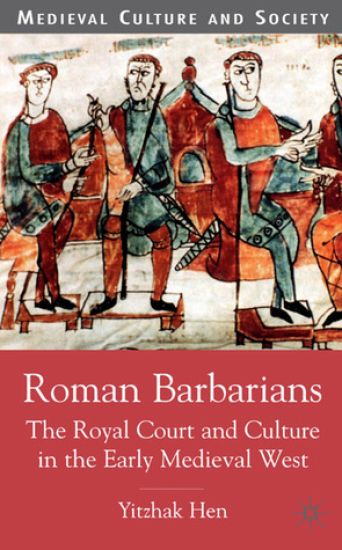
This study investigates the place of the royal court and the operation of patronage in several European kingdoms in the early Middle Ages. It seeks to identify the roots of later medieval developments, and especially of the Carolingian Renaissance, in the centuries immediately succeeding the period of Roman rule.
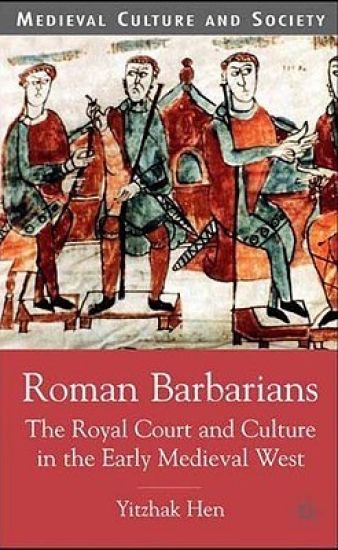
This study investigates the place of the royal court and the operation of patronage in several European kingdoms in the early Middle Ages. It seeks to identify the roots of later medieval developments, and especially of the Carolingian Renaissance, in the centuries immediately succeeding the period of Roman rule.
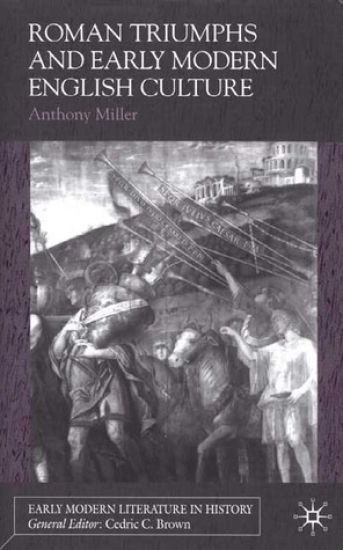
This is the first comprehensive study of the revival and appropriation of the Roman triumph from the 1580s to the 1650s. English versions of the triumph included ceremonial re-enactments, poetic or pictorial representations, and stage performances. As well as many non-canonical writers, Spenser, Marlowe, Shakespeare, Marvell, and Milton all produced versions. The book includes an original survey of ancient literary models and the work of humanist antiquarians, and shows how all its texts are implicated in contemporary political conflicts and discourses.