Kirjojen hintavertailu. Mukana 11 717 486 kirjaa ja 12 kauppaa.

Kirjahaku

Etsi kirjoja tekijän nimen, kirjan nimen tai ISBN:n perusteella.

1000 tulosta hakusanalla Rudolf Ehwald

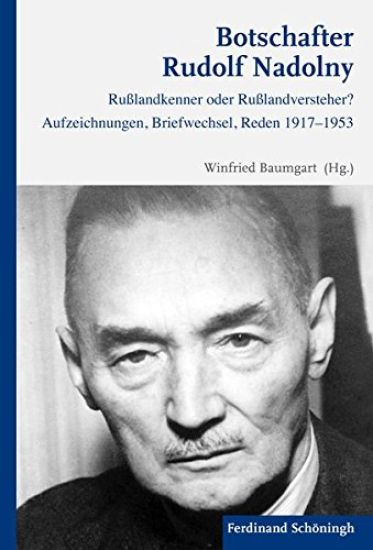
Botschafter Rudolf Nadolny: Rußlandkenner Oder Rußlandversteher? Aufzeichnungen, Briefwechsel, Reden 1917-1953
Rudolf Nadolny ist einer der deutschen Spitzendiplomaten aus der ersten H lfte des 20. Jahrhunderts. 1933/34 war er deutscher Botschafter in Moskau und quittierte den Dienst, weil er Hitlers passive Russlandpolitik nicht unterst tzen wollte. Die Edition bietet einen repr sentativen Querschnitt der Schriften Nadolnys als Erstpublikationen. In der Weimarer Republik wurde Nadolny mehrmals als Au enminister gehandelt. Ihm stand aber stets seine politische Gradlinigkeit im Wege. In der NS-Zeit war er nach seinem Abgang 1934 als Privatier in der Landwirtschaft t tig. 1945 nahm er sofort Kontakt zum sowjetischen Hauptquartier in Berlin-Karlshorst auf, ohne indes die Besatzungsmacht mit seinem diplomatischen Geschick beeindrucken zu k nnen. Er k mpfte bis zu seinem Tod unentwegt f r die Wiedervereinigung Deutschlands, nahm erst sp t Abstand von Sowjetrussland und versuchte sich Zugang zur amerikanischen Regierung zu verschaffen.

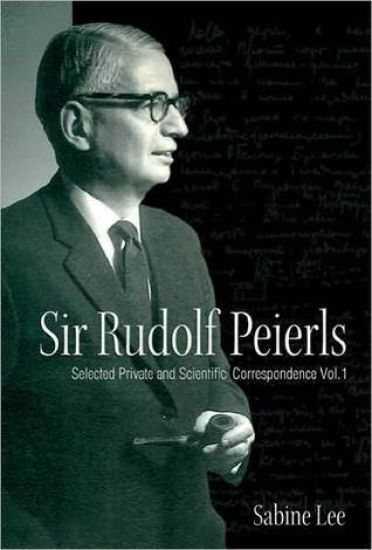
Sir Rudolf Peierls: Selected Private And Scientific Correspondence (In 2 Volumes)
This edition of the private and scientific correspondence of Sir Rudolf Peierls gives a unique insight into the life and work of one of the greatest theoretical physicists of the 20th century. Rudolf Peierls' scientific work contributed to the early developments in quantum mechanics, and he is well known and much appreciated for his contributions to various disciplines, including solid state physics, nuclear physics, and particle physics. As an enthusiastic and devoted teacher, he passed on his knowledge and understanding and inspired the work of collaborators and students alike. As an effective administrator he was responsible, almost single-handedly, for the establishment of an outstanding successful centre of theoretical physics in Birmingham, and later contributed much to theoretical physics in Oxford.A meticulous collector of correspondence, Sir Rudolf left a fascinating collection of letters, in some cases spanning more than seven decades. This collection includes correspondence with his parents, his wife, the Russian-born physicist Genia Kannegieser, life-long friends such as Hans Bethe, and many great physicists, including Wolfgang Pauli, Niels Bohr, Werner Heisenberg, Lev Landau, and George Placzek, to name but a few.The second volume, which covers the years 1945 to 1995, contains fascinating documents from the early postwar period, when Peierls, like many of his colleagues elsewhere, attempted to rebuild academic life in the aftermath of the Second World War. Materials from the 1950s provide evidence for the significance of the research undertaken by Peierls' group at Birmingham, and for the positive impact of his determined implementation of international exchange on the development of theoretical physics. Later documents illustrate the role played by Peierls in nuclear disarmament, and as a link between East and West through his own personal contacts and within international organisations such as the Pugwash Movement. The extensive apparatus provides an invaluable background which allows the reader to put the documents into their multi-faceted social, political and scientific context.
Hanns and Rudolf

Hanns and Rudolf

Thomas Harding

Random House UK
2014
pokkari
Moving from the Middle-Eastern campaigns of the First World War to bohemian Berlin in the 1920s, to the horror of the concentration camps and the trials in Belsen and Nuremberg, this book tells the story of two German men whose lives diverged, and intersected, in an unusual way.
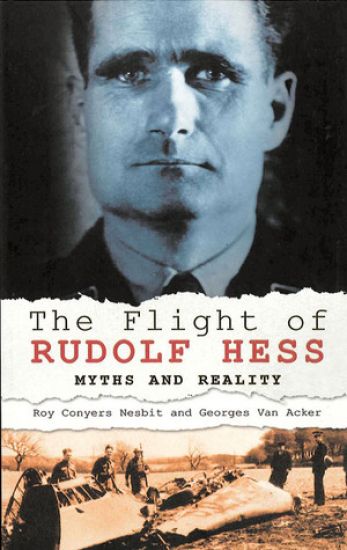
The Flight of Rudolf Hess

The Flight of Rudolf Hess

Roy Conyers Nesbit; Georges Acker

The History Press Ltd
2007
nidottu
On 10 May 1941, Rudolf Hess - Deputy Fuhrer of the Third Reich - embarked on his astonishing flight from Augsburg to Scotland. At dusk the same day, he parachuted on to a Scottish moor and was taken into custody. His arrival provoked widespread curiosity and speculation, which has continued to this day. Why did Hess fly to Scotland? Had Hitler authorized him to attempt to negotiate peace? Was British Intelligence involved? What was his state of mind at the time? Drawing on a variety of reliable archive and eyewitness sources in Britain, Germany and the USA, authors Roy Conyers Nesbit and Georges van Acker have written what must be the most objective assessment of the Hess' story yet to be published. Their compelling narrative not only dispels many of the extraordinary conspiracy theories, but also uncovers some intriguing new facts.
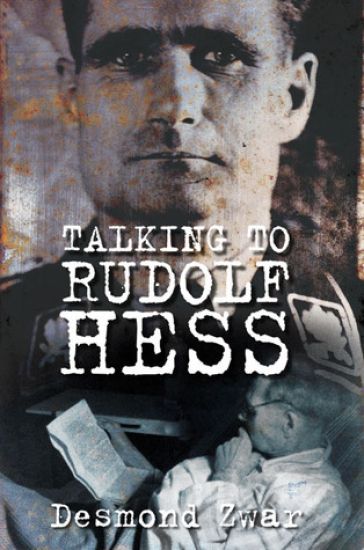
Talking to Rudolf Hess

Talking to Rudolf Hess

Desmond Zwar

The History Press Ltd
2010
sidottu
Rudolf Hess was Adolf Hitler’s Deputy Führer until, in 1941, he flew to Scotland, ostensibly to negotiate peace between Germany and Britain. Captured by the British, he was held for the rest of the War, before being convicted of war crimes at the Nuremberg Trials in 1946. Desmond Zwar collaborated with Col. Burton C. Andrus, who was Commandant of Nuremberg Prison during the Trials, on his book The Infamous of Nuremberg, and with Col. Eugene K. Bird, US Governor of Spandau Prison (where Hess was held for over forty years), on The Loneliest Man in the World. For reasons of practicality, neither of these books told the full story, which is now revealed for the first time in Talking to Rudolf Hess. As well as his interviews with Hess and others, Zwar tells the story of how this book came to be written, including how Hess hid proofs in his underpants, how Bird was sacked by the US Army and how the CIA tried to recover the transcripts.
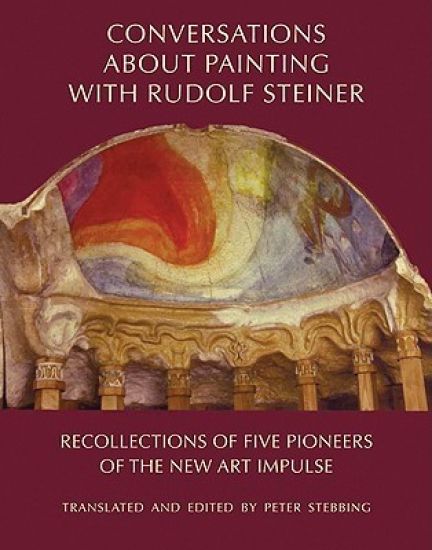
Conversations About Painting with Rudolf Steiner
The purpose of this illustrated volume of first-hand recollections is to increase appreciation in the world for Rudolf Steiner's artistic contributions to modern culture. The authors represented in Conversations about Painting with Rudolf Steiner offer insights into Steiner's intentions as he responded to artists' questions about the deeper, spiritual aspects of painting, color, and role of the arts as a whole in culture and society. Peter Stebbing's inspiration for translating these conversations was an early reading of Hilde Boos-Hamburger's book on Steiner's "new art impulse" (included here). Through the years, Stebbing also came to recognize the importance of other artists who were influenced by Steiner. Margarita Voloschin, for example, describes the inner transformation required of artists who wish to deepen their artistic sensibilities as described by Rudolf Steiner. Henni Geck, though she wrote little on art, is an important figure in this school of artistic renewal through having elicited numerous training sketches from Steiner. Assya Turgenieff was a pioneer artist who worked with stained glass. Her discussion of the artistic approach she used--which incorporated both color and sculpting techniques--can be applied to other visual arts as well. Conversations about Painting with Rudolf Steiner is an extraordinary contribution to a deeper understanding of the "anthroposophic" arts. Richly illustrated, this volume will warrant serious study and frequent rereading and browsing. A great book for the coffee table. CONTENTS: MARIA STRAKOSCH-GIESLER "Indications Given by Rudolf Steiner to a Painter" "A Color Meditation Given by Rudolf Steiner" "The Human Form and Color" "Recollections of Two Lectures by Rudolf Steiner on Painting" "About Maria Strakosch-Giesler" by Peter Stebbing HILDE BOOS-HAMBURGER "Preliminary Remarks" "Experiences in Painting the Cupolas of the First Goetheanum" "The Struggle for the Underlying Principles of a New Spiritualized Painting Impulse" "Some Experiences in Teaching Older Children" "About Hilde Boos-Hamburger" by Roy Wilkinson & Jan Pohl HENNI GECK "The Sketches Given by Rudolf Steiner 1922-1924" "The Motif Sketches of Rudolf Steiner" by Fritz Billing "The Work in Painting at the Goetheanum with Henni Geck" by Clara Bosshardt "On Studying in Henni Geck's Painting School" by Gerard Wagner "About Henni Geck" by Ernst Marti "Recollections of the Teacher" by Walter Roggenkamp "Thoughts on Method" by Bettina Roder "Henni Geck's Quest" by Ingrid Stinzing-Eriksson MARGARITA VOLOSCHIN "Self-portrait" "Memory-Pictures from a Time of Intensive Work" "How Rudolf Steiner Himself Painted in the Small Cupola" by Luise Clason "About Margarita Voloschin" by Rosemarie Wermbter ASSYA TURGENIEFF "Working on 'Light and Dark'" "Recollections of the Beginning of Studies in Light and Dark" "A Drawing Class with Rudolf Steiner" by Daniel J. van Bemmelen "About Assya Turgenieff" by Jakob Streit & Christiane Haid Also includes an afterword and a selected bibliography.
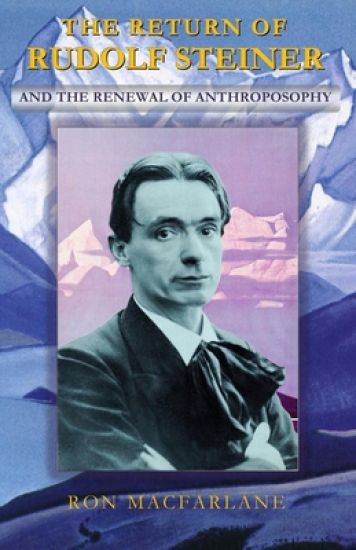
The Return of Rudolf Steiner and the Renewal of Anthroposophy

The Return of Rudolf Steiner and the Renewal of Anthroposophy

Ron MacFarlane

ISBN Canada (Library and Archives Canada)
2020
nidottu
THE PREMATURE DEATH in 1925 of Austrian philosopher and esotericist―Rudolf Steiner―at the age of 64, was a devastating "body-blow" to the newly-constituted General Anthroposophical Society and to its world-wide members.Even though Steiner had been seriously ill, and often bed-ridden for six months prior to his death, everyone expected that this extraordinarily-gifted individual would fully recover. After all, Steiner was widely recognized as a highly-developed Christian initiate with demonstrated supernatural abilities.Besides that, throughout his worsening illness, Steiner himself talked and acted as though he expected to fully recover. Not only had he assumed the presidency of the Society and taken up the leadership of the School of Spiritual Science just nine months before becoming ill; but even after becoming seriously afflicted, he continued to dictate letters, to record new supersensible research, to work on his autobiography, to write weekly essays for the newsletter Das Goetheanum, and to provide personal counseling for a constant flow of members and non-members. Hardly the funerary activities of a man who was preparing to die. The shock, surprise, disbelief and despair that anthroposophists experienced with the death of Rudolf Steiner similarly echoed that of the apostles and disciples of Christ-Jesus immediately after his own premature death at 33 years of age. No one expected that the Messiah, with his demonstrated divine power, would be cruelly put to death by Roman execution (despite his repeated prophetic indications that this would occur). In the case of Christ-Jesus, his unwavering compassion to rescue fallen humanity was placed far above personal concerns for his own physical safety. For this reason, he willingly sacrificed his own physical life despite the enormous spiritual power at his command. Nevertheless, notwithstanding his untimely death, he positively left behind the strong foundation for a future universal church, and the promise that he would one day return to earth.In Rudolf Steiner's case, as a devoted follower of Christ-Jesus, he similarly minimized and disregarded the seriousness of his own physical health in order to compassionately continue to assist those around him, and to help struggling humanity in general. Unfortunately, this too resulted in his own sacrificial death. And similar to Our Saviour, Rudolf Steiner positively left behind the foundation for a world-wide esoteric society; and the indication that he would return to earth in less than a hundred years. Also noteworthy in both cases―with Christ-Jesus and Rudolf Steiner―their predicted return to earth was not what was generally expected to occur; but something that was quite different in fact. While briefly touching on the unique earthly return of Christ-Jesus that occurred in the twentieth century, this publication―The Return of Rudolf Steiner and the Renewal of Anthroposophy―will focus on explaining and understanding the predicted return to earth of Rudolf Steiner that quietly (but profoundly) occurred at the beginning of the twenty-first century; and the positive impact this will have on future anthroposophy.