Kirjojen hintavertailu. Mukana 11 717 486 kirjaa ja 12 kauppaa.

Kirjahaku

Etsi kirjoja tekijän nimen, kirjan nimen tai ISBN:n perusteella.

1000 tulosta hakusanalla Samuel

The Works of Samuel Johnson, LL.D.

The Works of Samuel Johnson, LL.D.

Samuel Johnson

Cambridge University Press
2011
pokkari
Dr Samuel Johnson (1709–84) is regarded as one of the outstanding figures of English literature, as a poet, essayist, moralist, critic, biographer, editor and lexicographer. This collected edition of his works - commissioned by the publisher within hours of Johnson's death, such was his celebrity - was published in 1787 in eleven volumes, edited by his literary executor, the musicologist Sir John Hawkins. Volume 1 is entirely devoted to a biography of Johnson by Hawkins, his close friend. Although Boswell's 1791 Life is much better known, Hawkins had been acquainted with Johnson for far longer, and was present at his death. Although his narrative is less colourful than that of Boswell, he had a better understanding of some aspects of Johnson's character, especially regarding his religious beliefs, and Boswell did not hesitate to borrow from this work.
The Works of Samuel Johnson, LL.D.

The Works of Samuel Johnson, LL.D.

Samuel Johnson

Cambridge University Press
2011
pokkari
Dr Samuel Johnson (1709–84) is regarded as one of the outstanding figures of English literature, as a poet, essayist, moralist, critic, biographer, editor and lexicographer. This collected edition of his works - commissioned by the publisher within hours of Johnson's death, such was his celebrity - was published in 1787 in eleven volumes, edited by his literary executor, the musicologist Sir John Hawkins. Volume 2 contains the first part of his Lives of the Poets, his last major work. This was a commission to provide short accounts of over fifty poets of the seventeenth and eighteenth centuries, and set a new standard for English literary biography. Although not all of the subjects have been regarded as eminent by posterity, and Johnson was criticised for brusque treatment of well-connected courtier poets now largely forgotten, the work was a great success.
The Works of Samuel Johnson, LL.D.

The Works of Samuel Johnson, LL.D.

Samuel Johnson

Cambridge University Press
2011
pokkari
Dr Samuel Johnson (1709–84) is regarded as one of the outstanding figures of English literature, as a poet, essayist, moralist, critic, biographer, editor and lexicographer. This collected edition of his works - commissioned by the publisher within hours of Johnson's death, such was his celebrity - was published in 1787 in eleven volumes, edited by his literary executor, the musicologist Sir John Hawkins. Volume 3 contains the second part of his Lives of the Poets, his last major work. This was a commission to provide short accounts of over fifty poets of the seventeenth and eighteenth centuries, and it set a new standard for English literary biography. Although not all of the subjects have been regarded as eminent by posterity, and Johnson was criticised for brusque treatment of well-connected courtier poets now largely forgotten, the work was a great success.
The Works of Samuel Johnson, LL.D.

The Works of Samuel Johnson, LL.D.

Samuel Johnson

Cambridge University Press
2011
pokkari
Dr Samuel Johnson (1709–84) is regarded as one of the outstanding figures of English literature, as a poet, essayist, moralist, critic, biographer, editor and lexicographer. This collected edition of his works - commissioned by the publisher within hours of Johnson's death, such was his celebrity - was published in 1787 in eleven volumes, edited by his literary executor, the musicologist Sir John Hawkins. Volume 4 contains the third part of his Lives of the Poets, his last major work. This was a commission to provide short accounts of over fifty poets of the seventeenth and eighteenth centuries, and set a new standard for English literary biography. Although not all of the subjects have been regarded as eminent by posterity, the work was a great success. The volume also includes miscellaneous historical and literary biographies of figures such as Paolo Sarpi, Sir Francis Drake and Roger Ascham.
The Works of Samuel Johnson, LL.D.

The Works of Samuel Johnson, LL.D.

Samuel Johnson

Cambridge University Press
2011
pokkari
Dr Samuel Johnson (1709–84) is regarded as one of the outstanding figures of English literature, as a poet, essayist, moralist, critic, biographer, editor and lexicographer. This collected edition of his works - commissioned by the publisher within hours of Johnson's death, such was his celebrity - was published in 1787 in eleven volumes, edited by his literary executor, the musicologist Sir John Hawkins. Volume 5 contains the first part of The Rambler, the periodical published by Johnson twice a week between 1750 and 1752. Modelled on Addison's Spectator, the essays address a wide range of social, religious, political and literary themes, and are not exclusively by Johnson himself: there are contributions by others, particularly women writers such as Hester Chapone and Elizabeth Carter. The Rambler adopted an 'elevated' style, and topics range from criticism of the emerging novel genre to discussions of humanitarian issues such as prostitution and capital punishment.
The Works of Samuel Johnson, LL.D.

The Works of Samuel Johnson, LL.D.

Samuel Johnson

Cambridge University Press
2011
pokkari
Dr Samuel Johnson (1709–84) is regarded as one of the outstanding figures of English literature, as a poet, essayist, moralist, critic, biographer, editor and lexicographer. This collected edition of his works - commissioned by the publisher within hours of Johnson's death, such was his celebrity - was published in 1787 in eleven volumes, edited by his literary executor, the musicologist Sir John Hawkins. Volume 6 contains the second part of The Rambler, the periodical published by Johnson twice a week between 1750 and 1752. Modelled on Addison's Spectator, the essays address a wide range of social, religious, political and literary themes, and are not exclusively by Johnson himself: there are contributions by others, particularly women writers such as Hester Chapone and Elizabeth Carter. The Rambler adopted an 'elevated' style, and topics range from criticism of the emerging novel genre to discussions of humanitarian issues such as prostitution and capital punishment.
The Works of Samuel Johnson, LL.D.

The Works of Samuel Johnson, LL.D.

Samuel Johnson

Cambridge University Press
2011
pokkari
Dr Samuel Johnson (1709–84) is regarded as one of the outstanding figures of English literature, as a poet, essayist, moralist, critic, biographer, editor and lexicographer. This collected edition of his works - commissioned by the publisher within hours of Johnson's death, such was his celebrity - was published in 1787 in eleven volumes, edited by his literary executor, the musicologist Sir John Hawkins. Volume 7 contains the final part of The Rambler, the periodical published by Johnson twice a week between 1750 and 1752. Modelled on Addison's Spectator, the essays address a wide range of social, religious, political and literary themes, and are not exclusively by Johnson himself: there are contributions by others, particularly women writers such as Hester Chapone and Elizabeth Carter. The Rambler adopted an 'elevated' style, and topics range from criticism of the emerging novel genre to discussions of humanitarian issues such as prostitution and capital punishment.
The Works of Samuel Johnson, LL.D.

The Works of Samuel Johnson, LL.D.

Samuel Johnson

Cambridge University Press
2011
pokkari
Dr Samuel Johnson (1709–84) is regarded as one of the outstanding figures of English literature, as a poet, essayist, moralist, critic, biographer, editor and lexicographer. This collected edition of his works - commissioned by the publisher within hours of Johnson's death, such was his celebrity - was published in 1787 in eleven volumes, edited by his literary executor, the musicologist Sir John Hawkins. Volume 8 contains The Idler, the 103 essays originally published by Johnson in the Universal Chronicle between 1758 and 1760, and published in one volume in 1761. These were more relaxed and rambling in style than those published in The Rambler, and were very popular. A common thread is the follies of the literary world - Johnson defines criticism as 'a study by which men grow important and formidable at very small expense'. Others touch on marriage, scholarship, and travelling.
The Works of Samuel Johnson, LL.D.

The Works of Samuel Johnson, LL.D.

Samuel Johnson

Cambridge University Press
2011
pokkari
Dr Samuel Johnson (1709–84) is regarded as one of the outstanding figures of English literature, as a poet, essayist, moralist, critic, biographer, editor and lexicographer. This collected edition of his works - commissioned by the publisher within hours of Johnson's death, such was his celebrity - was published in 1787 in eleven volumes, edited by his literary executor, the musicologist Sir John Hawkins. Volume 9 includes The Adventurer, the sequel to The Rambler, partly written by Johnson, papers about the famous Dictionary and his edition of the works of Shakespeare, various critical pieces, and an account of the Harleian Library. It also includes prefaces to other works, including Dodsley's The Preceptor, and Rolt's Dictionary of Trade and Commerce. (According to Boswell, Johnson did not actually read the latter work before writing the preface to it.)
The Works of Samuel Johnson, LL.D.

The Works of Samuel Johnson, LL.D.

Samuel Johnson

Cambridge University Press
2011
pokkari
Dr Samuel Johnson (1709–84) is regarded as one of the outstanding figures of English literature, as a poet, essayist, moralist, critic, biographer, editor and lexicographer. This collected edition of his works - commissioned by the publisher within hours of Johnson's death, such was his celebrity - was published in 1787 in eleven volumes, edited by his literary executor, the musicologist Sir John Hawkins. Volume 10 contains a mixture of items – political tracts on taxation and current affairs; miscellaneous short works including book reviews and papers on agriculture, French prisoners of war, and the building of Blackfriars' Bridge; and A Journey to the Western Islands of Scotland. These show the range of his interests and the ease with which he could turn his pen to any topic.
The Works of Samuel Johnson, LL.D.

The Works of Samuel Johnson, LL.D.

Samuel Johnson

Cambridge University Press
2011
pokkari
Dr Samuel Johnson (1709–84) is regarded as one of the outstanding figures of English literature, as a poet, essayist, moralist, critic, biographer, editor and lexicographer. This collected edition of his works - commissioned by the publisher within hours of Johnson's death, such was his celebrity - was published in 1787 in eleven volumes, edited by his literary executor, the musicologist Sir John Hawkins. Volume 11 contains poetry in English and Latin, prayers, and a variety of literary forms - a fantasy, The Vision of Theodore, Johnson's only play, Irene, Rasselas, which uses an oriental tale and a French form to meditate on the folly of the quest for human happiness, and The Vanity of Human Wishes, based on one of Juvenal's satires. There is also an index to the eleven-volume set.
The Correspondence of Samuel Richardson

The Correspondence of Samuel Richardson

Samuel Richardson

Cambridge University Press
2011
pokkari
Samuel Richardson (1689–1761), the English writer and printer best known for his epistolary novels, including Pamela (1740) and Clarissa (1748), had preserved copies of his extensive correspondence with a view to its eventual publication, and these volumes, edited by Anna Laetitia Barbauld and first published in 1804, contain her selection from his papers. Richardson became a printer's apprentice in 1706 and for the rest of his life managed a successful printing business in addition to writing his highly popular and influential novels. After the success of Pamela, Richardson regularly corresponded with leading contemporary literary figures including Henry Fielding and Samuel Johnson. The letters provide fascinating insights into Richardson's life and literary and social activities, as well as discussions of current affairs. Volume 1 contains a biography of Richardson by Mrs Barbauld; this is followed by his correspondence with friends such as Aaron Hill and the Scots printer William Strahan.
The Correspondence of Samuel Richardson

The Correspondence of Samuel Richardson

Samuel Richardson

Cambridge University Press
2011
pokkari
Samuel Richardson (1689–1761), the English writer and printer best known for his epistolary novels, including Pamela (1740) and Clarissa (1748), had preserved copies of his extensive correspondence with a view to its eventual publication, and these volumes, edited by Anna Laetitia Barbauld and first published in 1804, contain her selection from his papers. Richardson became a printer's apprentice in 1706 and for the rest of his life managed a successful printing business in addition to writing his highly popular and influential novels. After the success of Pamela, Richardson regularly corresponded with leading contemporary literary figures including Henry Fielding and Samuel Johnson. The letters provide fascinating insights into Richardson's life and literary and social activities, as well as discussions of current affairs. Volume 2 contains correspondence with (among others) Margaret Collier, Sarah Fielding, Colly Cibber and Hester Mulso (Mrs Chapone).
The Correspondence of Samuel Richardson

The Correspondence of Samuel Richardson

Samuel Richardson

Cambridge University Press
2011
pokkari
Samuel Richardson (1689–1761), the English writer and printer best known for his epistolary novels, including Pamela (1740) and Clarissa (1748), had preserved copies of his extensive correspondence with a view to its eventual publication, and these volumes, edited by Anna Laetitia Barbauld and first published in 1804, contain her selection from his papers. Richardson became a printer's apprentice in 1706 and for the rest of his life managed a successful printing business in addition to writing his highly popular and influential novels. After the success of Pamela, Richardson regularly corresponded with leading contemporary literary figures including Henry Fielding and Samuel Johnson. The letters provide fascinating insights into Richardson's life and literary and social activities, as well as discussions of current affairs. Volume 3 contains correspondence with (among others) Thomas Edwards, the poet and literary editor, and Hester Mulso (Mrs Chapone).
The Correspondence of Samuel Richardson

The Correspondence of Samuel Richardson

Samuel Richardson

Cambridge University Press
2011
pokkari
Samuel Richardson (1689–1761), the English writer and printer best known for his epistolary novels, including Pamela (1740) and Clarissa (1748), had preserved copies of his extensive correspondence with a view to its eventual publication, and these volumes, edited by Anna Laetitia Barbauld and first published in 1804, contain her selection from his papers. Richardson became a printer's apprentice in 1706 and for the rest of his life managed a successful printing business in addition to writing his highly popular and influential novels. After the success of Pamela, Richardson regularly corresponded with leading contemporary literary figures including Henry Fielding and Samuel Johnson. The letters provide fascinating insights into Richardson's life and literary and social activities, as well as discussions of current affairs. Volume 4 contains correspondence with (among others) Dr and Mrs Delany and Thomas and Frances Sheridan, the parents of the playwright Richard Brinsley Sheridan.
The Correspondence of Samuel Richardson

The Correspondence of Samuel Richardson

Samuel Richardson

Cambridge University Press
2011
pokkari
Samuel Richardson (1689–1761), the English writer and printer best known for his epistolary novels, including Pamela (1740) and Clarissa (1748), had preserved copies of his extensive correspondence with a view to its eventual publication, and these volumes, edited by Anna Laetitia Barbauld and first published in 1804, contain her selection from his papers. Richardson became a printer's apprentice in 1706 and for the rest of his life managed a successful printing business in addition to writing his highly popular and influential novels. After the success of Pamela, Richardson regularly corresponded with leading contemporary literary figures including Henry Fielding and Samuel Johnson. The letters provide fascinating insights into Richardson's life and literary and social activities, as well as discussions of current affairs. Volume 5 contains his correspondence with (among many others) Samuel Johnson.
The Correspondence of Samuel Richardson

The Correspondence of Samuel Richardson

Samuel Richardson

Cambridge University Press
2011
pokkari
Samuel Richardson (1689–1761), the English writer and printer best known for his epistolary novels, including Pamela (1740) and Clarissa (1748), had preserved copies of his extensive correspondence with a view to its eventual publication, and these volumes, edited by Anna Laetitia Barbauld and first published in 1804, contain her selection from his papers. Richardson became a printer's apprentice in 1706 and for the rest of his life managed a successful printing business in addition to writing his highly popular and influential novels. After the success of Pamela, Richardson regularly corresponded with leading contemporary literary figures including Henry Fielding and Samuel Johnson. The letters provide fascinating insights into Richardson's life and literary and social activities. Volume 6 is devoted entirely to his lively correspondence with Lady Bradshaigh, discussing literature but also the writers' respective domestic affairs, and contemporary social concerns including the education of women and the behaviour of men.
Samuel Johnson

Samuel Johnson

Stephen Leslie

Cambridge University Press
2011
pokkari
The English poet, literary critic, biographer and lexicographer Samuel Johnson (1709–84) is perhaps most famous for his Dictionary of the English Language and the influential Lives of the Most Eminent English Poets, and is often considered the most distinguished man of letters in English history. First published in 1878 in the first series of 'English Men of Letters', this biography by the eminent critic Sir Leslie Stephen traces Johnson's life from his childhood to his career as a writer and literary critic, and concludes with an overview of his works. Stephen describes Johnson's style as one of 'masculine directness', reflecting a life blighted by experiences of poverty and disease, and a desire to escape from pain. Painting a striking portrait of one of the most vigorous intellects of the eighteenth century, this work remains of interest to literary scholars today.
The Autobiography of Samuel Smiles, LL.D.

The Autobiography of Samuel Smiles, LL.D.

Samuel Smiles

Cambridge University Press
2013
pokkari
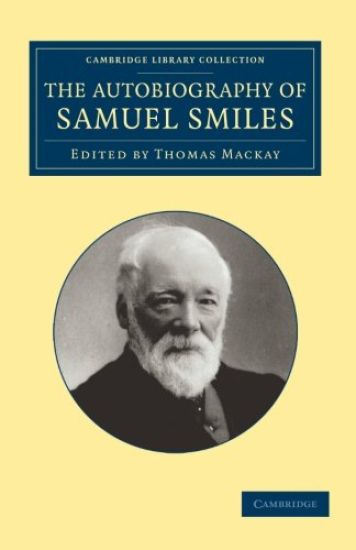
One of the most popular Victorian writers, Samuel Smiles (1812–1904) made his name in 1859 with the original self-improvement manual Self-Help. His highly successful multi-volume Lives of the Engineers (also reissued in this series) contained biographies of men who had, like him, achieved greatness not through privilege but through hard work. Left incomplete at his death, edited by the social theorist Thomas Mackay (1849–1912) and first published in 1905, his autobiography opens with a vivid description of the Scottish garrison town of his birth during the Napoleonic wars. In his later years he was a vocal supporter of state education, and the value of education was a constant theme throughout his life. He remembers his schooldays here with clarity, writing that 'a good education is equivalent to a good fortune'. Straightforward and unpretentious, this book will be of interest to historians and readers fascinated by the Victorian drive for self-improvement.
Letters to and from the Late Samuel Johnson, LL.D.

Letters to and from the Late Samuel Johnson, LL.D.

Samuel Johnson

Cambridge University Press
2013
pokkari
One of the most celebrated individuals of English literature, Samuel Johnson (1709–84) was a defining figure of his age. In addition to his celebrated labours as a lexicographer, Johnson distinguished himself as a poet, essayist, critic, biographer and editor. The writer and society hostess Hester Lynch Piozzi (1741–1821) was an unconventional woman of great intellectual vivacity. She became a close friend of Johnson, whom she met through her first husband, the brewer Henry Thrale, whose ailing business Johnson did much to support. As well as writing essays, poetry, memoirs and travel diaries, she was one of the first women to produce works on philology and history. First published in 1788 - two years after her groundbreaking Anecdotes of the Late Samuel Johnson, which anticipated Boswell's biography - these letters offer a captivating glimpse into their daily lives and concerns. Volume 1 covers the period 1765 to 1777.