Kirjojen hintavertailu. Mukana 11 699 587 kirjaa ja 12 kauppaa.

Kirjahaku

Etsi kirjoja tekijän nimen, kirjan nimen tai ISBN:n perusteella.

1000 tulosta hakusanalla Shay Lynam

British Rearmament in the Thirties

British Rearmament in the Thirties

Robert Paul Shay

Princeton University Press
2016
sidottu
Here is a comprehensive analysis of rearmament under the Baldwin and Chamberlain governments. It reveals the primary determinants of events and provides important new information regarding the principal considerations underlying Chamberlain's policy of appeasement. The author concentrates on a problem that was of central concern to the government. For this reason, and because he draws on the recently opened Cabinet and Treasury papers at the Public Record Office in London, he is able to offer a broader view than that of the existing studies. He describes in detail the interaction of the Cabinet, Treasury, and Armed Services, and the influence of the financial and industrial communities. Originally published in 1977. The Princeton Legacy Library uses the latest print-on-demand technology to again make available previously out-of-print books from the distinguished backlist of Princeton University Press. These editions preserve the original texts of these important books while presenting them in durable paperback and hardcover editions. The goal of the Princeton Legacy Library is to vastly increase access to the rich scholarly heritage found in the thousands of books published by Princeton University Press since its founding in 1905.
Blood in the Wilderness

Blood in the Wilderness

Jack Edward Shay

Xlibris Us
1998
sidottu
Early August, 1799. A wilderness clearing along the Mud River...a few miles northeast of Russellville, a small town in the vast, nearly unbroken frontier of western Kentucky. A pioneer family has stopped to rest. Two men. Three women. Three babies. A string of pack horses. It has been an exhausting journey, a dangerous one at times. The men are about thirty, the women some five to ten years younger. Each woman has a baby, her own child. The children, two girls and a boy, range from four to six months in age. The day is hot. The shallow river is cool. Shade trees provide a measure of relief from the sticky humidity, the baking heat. The men stretch out along the banks of the river. The women tend to their children's needs, then place them down and stretch out themselves. Everyone drinks from the stream. They have been traveling forever. Or, at least, it seems that way. They're tired. They just want to rest before they must move out again, always pushing on, always in search of their destination in an unforgivingly harsh wilderness, battling tremendous odds against their very survival. They carry all their worldly possessions with them. True pioneers, they live off the land, taking from it what they need to eke out another day of life in the new American world of democracy and free enterprise. Suddenly, one of the babies cries. It is one of the girls, this one only four months old. One of the men rouses himself from his rest. He makes his way to the crying infant. The man is both a husband and a father, and he is with his family. A touching scene seems about to ensue. A father lovingly tending his irritable child all alone in the wilderness. A loving man doting on his daughter's needs. He picks the child up. But this is no ordinary family. And this is no ordinary man. The man is Micajah Harp, and he is wanted by the law. Even at this moment, there is a price on his head, and posses are after him. They might hear the wail of the infant and swoop down on the family and arrest them. Micajah must do something. He must silence the baby. He picks the child up by her feet and swings her against the side of the tree. Her head smashes against the unrelenting wood. The breath of life leaves her instantly. He then tosses the lifeless body into the woods. He signals the rest of the family to rise to their feet. They do so, and the family moves deeper into the wilderness. They are the Harps. America's first and most brutal serial killers. God help anyone who gets in their way.*********************************************************** They were "the most brutal monsters of the human race" to those who knew them...ruthless and indiscriminate barbarians terrorizing an innocent America...unconscionable brutes inflicting savagery upon anyone they encountered. They sought little in life save the very survival necessary to maintain their bloodlust. It mattered little where or with whom they lived. They cheated and tormented at will and killed for the sake of killing. Their adult lives became a continual exercise in abject, unrepentant evil. During a reign of horror engulfing Kentucky, Tennessee, and Illinois, they became the scourge of the late 18th-century American frontier. They killed anywhere from two dozen to four dozen men, women, and children before justice caught up with them. They were the historical prototypes of later killers - Billy the Kid, Bonnie and Clyde, and Jeffrey Dahmer - but they far exceeded them in brutality and criminal enormity. They were the Harps...Micajah, the older and bigger; Wiley, the younger and smaller...Big Harp and Little Harp, as they were commonly called. And they were America's first serial killers. This is their story. "Blood in the Wilderness: The Story of the Harps, America's First Serial Killers" includes a bibliography of seventy-five sources. It results from years of research and visits to all the sites associated with t
Blood in the Wilderness

Blood in the Wilderness

Jack Edward Shay

Xlibris Us
1998
pokkari
Early August, 1799. A wilderness clearing along the Mud River...a few miles northeast of Russellville, a small town in the vast, nearly unbroken frontier of western Kentucky. A pioneer family has stopped to rest. Two men. Three women. Three babies. A string of pack horses. It has been an exhausting journey, a dangerous one at times. The men are about thirty, the women some five to ten years younger. Each woman has a baby, her own child. The children, two girls and a boy, range from four to six months in age. The day is hot. The shallow river is cool. Shade trees provide a measure of relief from the sticky humidity, the baking heat. The men stretch out along the banks of the river. The women tend to their children's needs, then place them down and stretch out themselves. Everyone drinks from the stream. They have been traveling forever. Or, at least, it seems that way. They're tired. They just want to rest before they must move out again, always pushing on, always in search of their destination in an unforgivingly harsh wilderness, battling tremendous odds against their very survival. They carry all their worldly possessions with them. True pioneers, they live off the land, taking from it what they need to eke out another day of life in the new American world of democracy and free enterprise. Suddenly, one of the babies cries. It is one of the girls, this one only four months old. One of the men rouses himself from his rest. He makes his way to the crying infant. The man is both a husband and a father, and he is with his family. A touching scene seems about to ensue. A father lovingly tending his irritable child all alone in the wilderness. A loving man doting on his daughter's needs. He picks the child up. But this is no ordinary family. And this is no ordinary man. The man is Micajah Harp, and he is wanted by the law. Even at this moment, there is a price on his head, and posses are after him. They might hear the wail of the infant and swoop down on the family and arrest them. Micajah must do something. He must silence the baby. He picks the child up by her feet and swings her against the side of the tree. Her head smashes against the unrelenting wood. The breath of life leaves her instantly. He then tosses the lifeless body into the woods. He signals the rest of the family to rise to their feet. They do so, and the family moves deeper into the wilderness. They are the Harps. America's first and most brutal serial killers. God help anyone who gets in their way.*********************************************************** They were "the most brutal monsters of the human race" to those who knew them...ruthless and indiscriminate barbarians terrorizing an innocent America...unconscionable brutes inflicting savagery upon anyone they encountered. They sought little in life save the very survival necessary to maintain their bloodlust. It mattered little where or with whom they lived. They cheated and tormented at will and killed for the sake of killing. Their adult lives became a continual exercise in abject, unrepentant evil. During a reign of horror engulfing Kentucky, Tennessee, and Illinois, they became the scourge of the late 18th-century American frontier. They killed anywhere from two dozen to four dozen men, women, and children before justice caught up with them. They were the historical prototypes of later killers - Billy the Kid, Bonnie and Clyde, and Jeffrey Dahmer - but they far exceeded them in brutality and criminal enormity. They were the Harps...Micajah, the older and bigger; Wiley, the younger and smaller...Big Harp and Little Harp, as they were commonly called. And they were America's first serial killers. This is their story. "Blood in the Wilderness: The Story of the Harps, America's First Serial Killers" includes a bibliography of seventy-five sources. It results from years of research and visits to all the sites associated with t
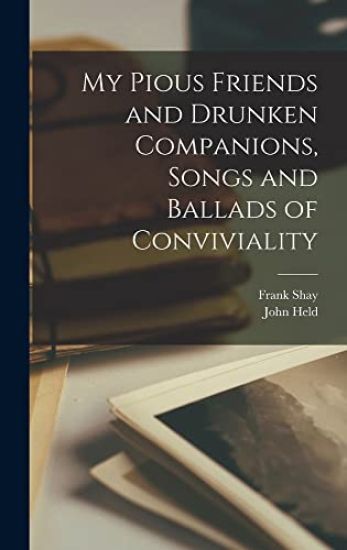
My Pious Friends and Drunken Companions, Songs and Ballads of Conviviality

My Pious Friends and Drunken Companions, Songs and Ballads of Conviviality

Frank 1888- Shay; John 1889-1958 Held

Hassell Street Press
2021
sidottu
This work has been selected by scholars as being culturally important and is part of the knowledge base of civilization as we know it.This work is in the public domain in the United States of America, and possibly other nations. Within the United States, you may freely copy and distribute this work, as no entity (individual or corporate) has a copyright on the body of the work.Scholars believe, and we concur, that this work is important enough to be preserved, reproduced, and made generally available to the public. To ensure a quality reading experience, this work has been proofread and republished using a format that seamlessly blends the original graphical elements with text in an easy-to-read typeface.We appreciate your support of the preservation process, and thank you for being an important part of keeping this knowledge alive and relevant.
Grappling With the Monster; Or, the Curse and the Cure of Strong Drink
"Grappling with the Monster: The Curse and the Cure of Strong Drink" by T.S. Arthur delves into the heart of the 19th-century temperance movement, offering a compelling look at the pervasive issues of alcoholism and addiction. A powerful voice for moral and social reform, Arthur tackles the destructive nature of "strong drink" and explores potential paths toward recovery and redemption. This important work provides a historical perspective on the challenges faced by individuals and communities struggling with alcohol abuse. A significant contribution to the literature surrounding temperance, this book examines the societal impact of addiction and advocates for change. "Grappling with the Monster" remains a relevant and thought-provoking exploration of a continuing social concern. This edition has been meticulously prepared for republication, ensuring the enduring power of Arthur's message resonates.This work has been selected by scholars as being culturally important, and is part of the knowledge base of civilization as we know it.This work is in the public domain in the United States of America, and possibly other nations. Within the United States, you may freely copy and distribute this work, as no entity (individual or corporate) has a copyright on the body of the work.Scholars believe, and we concur, that this work is important enough to be preserved, reproduced, and made generally available to the public. We appreciate your support of the preservation process, and thank you for being an important part of keeping this knowledge alive and relevant.
Finger Posts on the Way of Life

Finger Posts on the Way of Life

T S (Timothy Shay) Arthur

Anson Street Press
2025
pokkari
"Finger Posts on the Way of Life," by T. S. Arthur, offers a compelling glimpse into 19th-century American domestic life, exploring themes of morality and ethics within the context of everyday experiences. This work of American fiction delves into the complexities of human relationships and societal expectations, presenting a narrative that prompts reflection on the choices we make and the paths we choose. Arthur's storytelling provides a window into a bygone era, inviting readers to consider the enduring relevance of fundamental moral questions. Carefully republished, this edition allows you to immerse yourself in a piece of historical literature that resonates with timeless truths about the human condition. A poignant exploration of faith, family, and the search for meaning, "Finger Posts on the Way of Life" remains a relevant and thought-provoking read.This work has been selected by scholars as being culturally important, and is part of the knowledge base of civilization as we know it.This work is in the public domain in the United States of America, and possibly other nations. Within the United States, you may freely copy and distribute this work, as no entity (individual or corporate) has a copyright on the body of the work.Scholars believe, and we concur, that this work is important enough to be preserved, reproduced, and made generally available to the public. We appreciate your support of the preservation process, and thank you for being an important part of keeping this knowledge alive and relevant.
Finger Posts on the Way of Life

Finger Posts on the Way of Life

T S (Timothy Shay) Arthur

Anson Street Press
2025
sidottu
"Finger Posts on the Way of Life," by T. S. Arthur, offers a compelling glimpse into 19th-century American domestic life, exploring themes of morality and ethics within the context of everyday experiences. This work of American fiction delves into the complexities of human relationships and societal expectations, presenting a narrative that prompts reflection on the choices we make and the paths we choose. Arthur's storytelling provides a window into a bygone era, inviting readers to consider the enduring relevance of fundamental moral questions. Carefully republished, this edition allows you to immerse yourself in a piece of historical literature that resonates with timeless truths about the human condition. A poignant exploration of faith, family, and the search for meaning, "Finger Posts on the Way of Life" remains a relevant and thought-provoking read.This work has been selected by scholars as being culturally important, and is part of the knowledge base of civilization as we know it.This work is in the public domain in the United States of America, and possibly other nations. Within the United States, you may freely copy and distribute this work, as no entity (individual or corporate) has a copyright on the body of the work.Scholars believe, and we concur, that this work is important enough to be preserved, reproduced, and made generally available to the public. We appreciate your support of the preservation process, and thank you for being an important part of keeping this knowledge alive and relevant.
The Allen House

The Allen House

T S (Timothy Shay) Arthur

Anson Street Press
2025
pokkari
"The Allen House" by T. S. Arthur offers a compelling glimpse into 19th-century domestic life and the complexities of marriage. This work of moral fiction explores the intricacies of family drama through the lens of conduct of life. Delving into themes of religious faith and literary expression, the novel presents a timeless portrayal of life stages and relationships. Arthur's narrative, set against the backdrop of a rapidly changing society, resonates with enduring relevance. Experience the challenges and triumphs within "The Allen House," a story meticulously prepared for print republication, offering a window into a bygone era while examining universally relatable human experiences. Readers interested in the dynamics of family and the moral fabric of society will find much to contemplate in this classic work.This work has been selected by scholars as being culturally important, and is part of the knowledge base of civilization as we know it.This work is in the public domain in the United States of America, and possibly other nations. Within the United States, you may freely copy and distribute this work, as no entity (individual or corporate) has a copyright on the body of the work.Scholars believe, and we concur, that this work is important enough to be preserved, reproduced, and made generally available to the public. We appreciate your support of the preservation process, and thank you for being an important part of keeping this knowledge alive and relevant.