
Kirjahaku
Etsi kirjoja tekijän nimen, kirjan nimen tai ISBN:n perusteella.
1000 tulosta hakusanalla Stephan Gerke
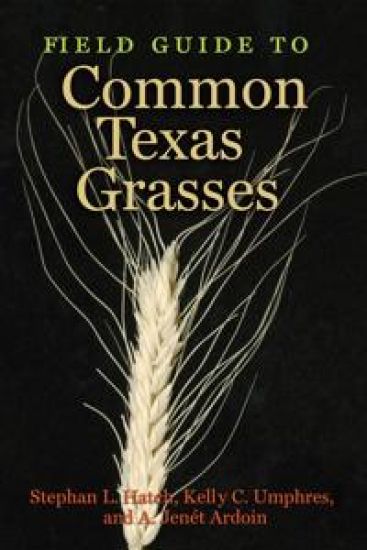
Field Guide to Common Texas Grasses
Stephan L. Hatch; Kelly C. Umphres; A. Jenét Ardoin
Texas A M University Press
2016
nidottu
Covering 172 species of the most significant common grasses growing in Texas, this complete update of the now-classic Common Texas Grasses: An Illustrated Guide contains range maps and color images of the inflorescences and spikelets of each species along with the detailed, black-and-white illustrations found in the original volume.Identifying descriptive text, keys to genera and species, a checklist, and a glossary round out this standard field reference for botanists, students, and naturalists.
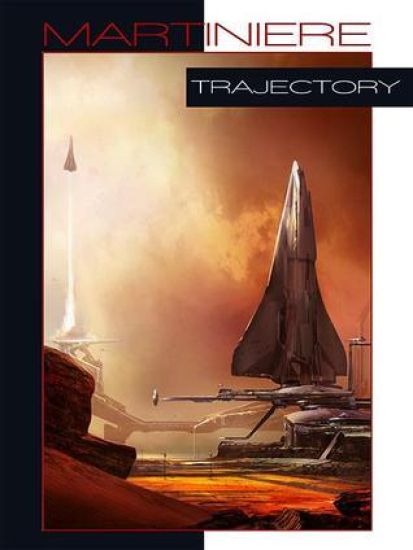
Enjoy a deeper insight into the award-winning science-fiction and fantasy artist Stephan Martiniere with his fourth book Trajectory. Following his previous books, Quantum Dreams, Quantumscapes and Velocity, Trajectory showcases Stephan's phenomenal artistic range and skills in a stunning new visionary collection of sci-fi book covers, theme park and animation concepts, video game designs and never-before-seen artwork.
A popular clinical psychologist explores an often misunderstood and unrecognized emotion that's the root cause of many self-defeating and harmful behaviors.Emotional paralysis, a distorted view of self, a feeling of being a fraud, lack of trust in others, fear of criticism resulting in underdeveloped talents, and a chronic sense of being worthless, invisible, or disposable--these are typical symptoms of shame. In this book, psychologist Stephan B. Poulter delves into this "primary emotional wound." Distinguishing it from commonplace guilt over a particular moral failing, he describes this toxic emotion as a pervasive but largely unrecognized "emotional cancer," with the power of undermining many aspects of life.Dr. Poulter guides the reader through exercises that teach one to expose this "big secret" and to recognize the triggers in daily life that arouse fears and other negative emotions. Beyond these first steps, he shows how we can continue the healing process of self-acceptance, self-forgiveness, empathy, and a new sense of inner well-being.Based on thirty years of experience with patients of all ages and from many walks of life, this is a book full of insight and understanding, one that can help most of us discover and realize our full potentials.
A looming health crisis faces men who find themselves stuck in today’s changing world. Slowly, more and more men are learning the positives that come from talking openly about their struggles with mental and physical health. In this incisive and insightful guide to male mental health, popular clinical psychologist Stephan B. Poulter, Ph.D., unpacks the various issues that stem from male shame, including those surrounding anger, sexual orientation, wealth, physical performance and appearance, relationships, and much more. A New Masculinity is a practical guide for men of all ages to embrace their on-going process of developing a balanced, compassionate, and positive masculinity. Through case studies of real-life men from all walks of life alongside helpful analysis and practical, reader-focused exercises, this book provides:Practical applications to decode emotionsAction steps to address and release unresolved shame and angerWays to recalibrate your personal relationship to moneyMethods to set boundaries effectively and respectfullyStrategies to overcome fears of intimacy, rejection, and confrontationKeys to maintaining a loving long-term relationshipThe importance of male relationships and their value in helping other men heal and change Above all, A New Masculinity shows that embracing who and what you are is a pivotal part of your masculinity journey. By uncovering the interconnections of physical health, mental health, and personal motivation, this comprehensive guide will give you the tools to become your best self.
The timely, powerful memoir of a man unjustly charged with a crime for helping his relatives, refugees from Syria. For trying to save his in-laws, who were fleeing certain death in Syria, St phan P lissier was threatened with fifteen years in prison by the Greek justice system, which accused him of human smuggling. His crime? Having gone to search for the parents, brother, and sister of his wife, Z na, in Greece rather than leaving them to undertake a treacherous journey by boat to Italy. Their joy on finding each other quickly turned into a nightmare: P lissier was arrested as a result of a missing car registration and thrown into prison. Although his relatives were ultimately able to seek asylum--legally--in France, P lissier had to fight to prove his innocence, and to uphold the values of common humanity and solidarity in which he so strongly believes. I Just Wanted to Save My Family offers a heartrending window into the lives of those displaced by the Syrian civil war and a scathing critique of the often absurd, unfeeling bureaucracies that determine their fates.

A lavishly illustrated tour of the methods, process and sources behind the iconic pop artworks of KAWS American artist KAWS is one of the most famous living contemporary artists today. Renowned for his iconic visual language and larger-than-life sculptures, the artist draws on beloved pop culture icons to create a new and recognizable cast of characters of his own. The broad appeal of KAWS’ style has made his artwork accessible to collectors, museum visitors and the general public alike, and has led to collaborations with coveted global brands and immense commercial success. KAWS: FAMILY, organized by the Art Gallery of Ontario, Toronto, marks the artist’s Canadian institutional exhibition debut with an array of his drawings, paintings, sculptures and selected products. The catalog features over 60 works from the past two decades, including installation photography; essays by Julian Cox, AGO Deputy Director and Chief Curator; and an interview with KAWS by Jim Shedden, AGO Curator of Special Projects and Director of Publishing. Together, this material provides new insights into KAWS’ influences and creative process as well as the impact his work has made across the spheres of fine art, pop culture, product design and fashion. A graffiti artist since adolescence, Brian Donnelly (born 1974), known professionally by his moniker KAWS, received his BFA in illustration from New York’s School of Visual Arts in 1996. He has collaborated with brands such as Supreme, Nike and Comme des Garcons, and his work can be found in the collections of the High Museum of Art in Atlanta, the Modern Art Museum of Fort Worth, the Brooklyn Museum and the Museum of Contemporary Art in Los Angeles. KAWS lives and works in Brooklyn, New York.

Cultural Intelligence in the 21st Century: Driving Inclusion, Revenue, and Esg
Stephan M. Branch
Post Hill Press
2023
sidottu
Discover how leadership, cultural intelligence, and inclusion coalesce to create preeminent global leaders and organizations while driving revenue, inclusion, and ESG. If you are a CEO, global leader, or part of a global organization, you can revolutionize every part of your business by raising your cultural intelligence. Cultural Intelligence in the 21st Century explores nine crucial cultural competencies that will transform every part of your business, including: how you drive inclusion, revenue, and ESG how you lead global teams for better results how you increase sales and operational performance how you communicate across cultures how you build relationships and trust in other countries In recent years, organizations have become fixated on raising Environmental, Social, and Governance (ESG) because they recognize that the Millennial and Z generations are largely focused on investing in companies that better align with their personal philosophies. Global 2000 companies know this and are redirecting much of their focus to ESG in order to make their organizations more attractive to employees and investors. The "S" in ESG isn't only about social equity; it's about understanding the importance of how other countries conduct business. Did you know you can solve both at the same time while having a transformative financial impact on your organization? How can you build a globally inclusive culture in an organization where everyone feels seen, heard, and respected if you don't understand how cultures communicate, build relationships and trust, and show respect differently? You can learn the cultural competencies to do business in other countries in order to create a more inclusive environment within a global organization, which qualifies as a metric within the ESG rating. Cultural Intelligence in the 21st Century gives you the competencies you need to do this.
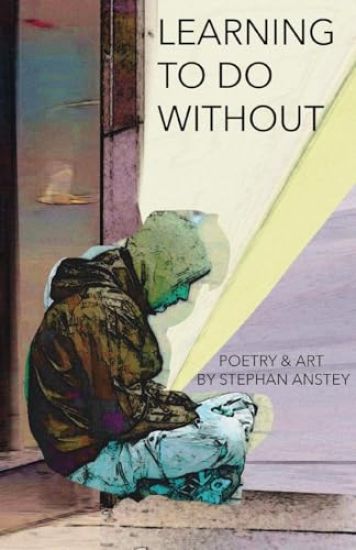
This collection of poetry, by poet and artist Stephan Anstey, is dedicated to people who suffer with depression, for whatever reason and to whatever degree. It is written as a gender-neutral study, exploring the myriad ways we break and hurt as we suffer loneliness, separation and loss. At times the narrator may seem more masculine or feminine, but it is generally intended to be neither. The poems wend their way through the course of a week, with approximately 7 poems for each day of the week, and culminates in a long surreal-narrative that deconstructs the types of things we learn do without. The primary goal of the multi-part final poem is to braid together many of the most fundamental elements of these things with a constructed personality and regurgitates all of them with the barest snippets of a story. One is expected to consider the name Ethyl as it relates both to an old lady, plastic or alcohol - any of the three or all of the three in any portion or combination. Ideally, there is a tongue-in-cheek dark humor to the entirety of this book that culminates in the sick comedy inherent in these tragedies as they unfold.
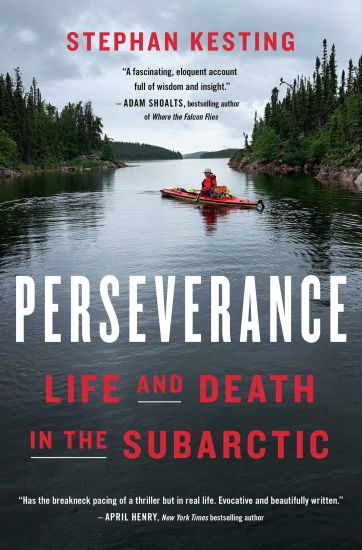
An adventurer, firefighter, and jiu-jitsu practitioner embarks on a journey of a lifetime—a 1,000 mile voyage through the Canadian sub-arctic—after recovering from a life-threatening illness.The Canadian North is a vast and lonely land where bears roam free, fires rage unchecked, and storms blast every living thing on the tundra. When Stephan Kesting, already no stranger to pushing his own physical limits, was faced with a rare illness, he knew the only way for him to recover in both body and mind was to dig even deeper. Despite the dangers inherent in the sub-arctic, Kesting sets out on an unimaginably difficult journey. Completely alone in the wilderness for six weeks, where a single mistake could cost his life, Kesting followed in the footsteps of the native peoples and earliest explorers. In this deepest solitude and wracked with self-doubt, he found the strength to endure. Perseverance is the moving and nail-biting account of his journey from near-death to a raw embrace of adventure and life. Inspirational, vulnerable and honest, Kesting shares the lessons he learned in the wilderness that will help us hold onto hope in our darkest moments and show how we can find the strength to overcome any obstacle.

Compendium of British History: Selected Essays on Aristocracy, Industrialization, and Social Demographic Change
Stephan Smith
Palmetto Publishing Group
2019
nidottu
Through this series of fascinating and highly informative essays, Stephan Smith brings Britain's past to life in this unique glimpse into the world's first industrial society and its enormous social and political influence on the western world. From the foundations of early aristocratic rule forged during Tudor times, to the social and economic challenges presented by the Industrial Revolution on Britain's ruling class, this book examines several of the key figures and events from the sixteenth through the twentieth centuries. The interwoven essays explore the influence these monumentally important people and events have had on the economic, political, and domestic landscape of modern Britain and the wider world rendering them startlingly relevant today. One is left to wonder how different the world might have been were it not for the innovative genius of the British people whose enterprising spirit and abundant energy paved the way toward much of the modern world.
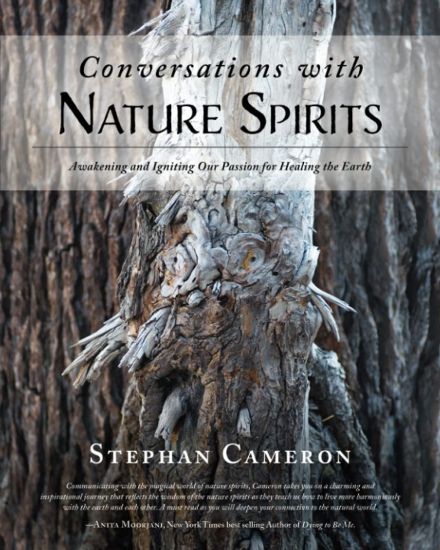
In light of the current climate change crisis, there is a growing recognition of the need to broaden our awareness and demonstrate a fresh way of interacting with our planet. Conversations with Nature Spirits offers a more intimate way of interacting with the natural world around us. Through a stunning series of photographs and the author's personal accounts of interactions with nature spirits, it is revealed that everything is interdependent, has consciousness, and desires to communicate with us. Readers are invited to explore their deeper connection with the divine wisdom and harmony found in nature, opening the way to adoption of more sustainable lifestyles and to the critical transformation of consciousness that is vital to our survival on this planet.
In light of the current climate change crisis, there is a growing recognition of the need to broaden our awareness and demonstrate a fresh way of interacting with our planet. Conversations with Nature Spirits offers a more intimate way of interacting with the natural world around us. Through a stunning series of photographs and the author's personal accounts of interactions with nature spirits, it is revealed that everything is interdependent, has consciousness, and desires to communicate with us. Readers are invited to explore their deeper connection with the divine wisdom and harmony found in nature, opening the way to adoption of more sustainable lifestyles and to the critical transformation of consciousness that is vital to our survival on this planet.
When Engmawi, a village girl from the North East, is hired as a hostess in Hotel Alpha by Abhay, her joy is inexplicable. However, what she doesn't know is that Abhay is a gangster, a sex-maniac, the son-in-law of a powerful don Rocky and the son of Dhruv, who'll do anything to take revenge.Naive but pure-hearted, Engmawi is shocked to find the real intention of Abhay right from the first day at the hotel. The more she keeps her distance, the more it makes him want her.Engmawi's world suddenly takes a terrifying turn when she witnesses Dhruv killing Damodar. Though Dan, her crazy lover, saves her life from Dhruv's men, Engmawi has no choice. She needs to work and earn for her poor parents back in the village.Despite warnings from Sharon D'souza, Abhay's girlfriend, that her life is in danger, Engmawi chooses her way and lands in a trap of kidnap, rape and murder.Who'll save her from the bad guys? Will she ever see her parents again?
Cultures and Materialities of Imagination
Stephan S. Sieland
Information Age Publishing
2020
nidottu
In our current digital era, imagination and the cultural and material conditions by which it is developed are more crucially than ever implicated in the experienced adversities and contradictions of drug use. The technological changes of society underscore the need for rethinking dominant understandings which portray addiction as an immediate and even mindless relation between a person and a substance or behavior, only minimally affected by subjective significance and historical alterations of everyday life. Indeed, from ancient mythology to our modern times drugs have been part of our cultural history. Understandings and practices of their uses have developed through cultural ideas and cultural-material conditions like traditions, rituals and routines. Today, the omnipresence of digital media in everyday life is massively changing and expanding such cultural and material conditions. Digital media equip people with associations between drugs and an incredible abundance of images, ideas, facts, fiction, narratives, plots, soundtracks, characters, and much more, and thereby expanding their imaginable potentials for providing answers to biographical questions. People and potential drug use become connected in novel and labyrinthine ways through digital communities and arrangements of everyday life. And digital media are part of and transform the cultural-material practices in which activities and experiences of intoxication actually take place. In the book, all these details are extensively analyzed empirically based on qualitative data on the lives of a number of young, Danish people who were undergoing treatment for drug-related problems at the time of the research. An underlying premise of the entire work is that addiction may be seen as a more extreme expression of how the technological developments in our contemporary world more generally speaking magnify the contradictory implications of imagination for modern living.Over the recent years, psychological research into the significance of the human capacity to imagine for how people deal with and live their lives has received growing attention. Yet, the complex involvement of imagination in actual living and consequently the theoretical cruxes this engenders continue to amaze and surprise research and researchers. This book also contributes to these theoretical ambitions with a substantial work on the concept of imagination. It primarily suggests that a critical discussion of how imagining is essentially a contradictory process in everyday life and how it is always grounded in the agency of material aspects, ranging anywhere from mundane artifacts over mediated content to advanced technologies, is ultimately what makes the scientific study of imagination relevant to understanding and intervening in the dilemmas and crises of modern life and society.The book will primarily interest scholars of social psychology of everyday life, scholars working conceptually and empirically on imagination, scholars of social studies of media, materiality and technology, and researchers or practitioners working with addictions.
Cultures and Materialities of Imagination
Stephan S. Sieland
Information Age Publishing
2020
sidottu
In our current digital era, imagination and the cultural and material conditions by which it is developed are more crucially than ever implicated in the experienced adversities and contradictions of drug use. The technological changes of society underscore the need for rethinking dominant understandings which portray addiction as an immediate and even mindless relation between a person and a substance or behavior, only minimally affected by subjective significance and historical alterations of everyday life. Indeed, from ancient mythology to our modern times drugs have been part of our cultural history. Understandings and practices of their uses have developed through cultural ideas and cultural-material conditions like traditions, rituals and routines. Today, the omnipresence of digital media in everyday life is massively changing and expanding such cultural and material conditions. Digital media equip people with associations between drugs and an incredible abundance of images, ideas, facts, fiction, narratives, plots, soundtracks, characters, and much more, and thereby expanding their imaginable potentials for providing answers to biographical questions. People and potential drug use become connected in novel and labyrinthine ways through digital communities and arrangements of everyday life. And digital media are part of and transform the cultural-material practices in which activities and experiences of intoxication actually take place. In the book, all these details are extensively analyzed empirically based on qualitative data on the lives of a number of young, Danish people who were undergoing treatment for drug-related problems at the time of the research. An underlying premise of the entire work is that addiction may be seen as a more extreme expression of how the technological developments in our contemporary world more generally speaking magnify the contradictory implications of imagination for modern living.Over the recent years, psychological research into the significance of the human capacity to imagine for how people deal with and live their lives has received growing attention. Yet, the complex involvement of imagination in actual living and consequently the theoretical cruxes this engenders continue to amaze and surprise research and researchers. This book also contributes to these theoretical ambitions with a substantial work on the concept of imagination. It primarily suggests that a critical discussion of how imagining is essentially a contradictory process in everyday life and how it is always grounded in the agency of material aspects, ranging anywhere from mundane artifacts over mediated content to advanced technologies, is ultimately what makes the scientific study of imagination relevant to understanding and intervening in the dilemmas and crises of modern life and society.The book will primarily interest scholars of social psychology of everyday life, scholars working conceptually and empirically on imagination, scholars of social studies of media, materiality and technology, and researchers or practitioners working with addictions.

EXILE: The AwakeningBy: Stephan Douglas With the world on the brink of destruction, one man's discovery holds the key to mankind's ultimate survival. Trey Winston, a brilliant prodigy, discovers long lost ancient knowledge that reveals truth and formulas of life. With the help of a mysterious watcher and a beautiful MI-6 British agent Riley Kramer, they race toward a great awakening of mankind. But many don't want the eyes of mankind opened and aware. Trey, unaware that other unworldly forces are at play, hurdles headlong into his destiny. The world will never be the same. About the AuthorStephan Douglas, a native Texan, is a visionary inventor and businessman. He loves to travel and experience new cultures thereby continuing his lifelong pursuit of knowledge and understanding.
Lessons from Leopold
Stephan A. Nelle; Iliana Peña; Wyman Meinzer
TEXAS A M UNIVERSITY PRESS
2024
sidottu
Aldo Leopold (1887–1948), arguably best known for his posthumous A Sand County Almanac (1949), is considered by many the father of modern wildlife management. He developed and described many of the concepts of conservation, ecology, and stewardship of natural resources still used today. Leopold was an astute observer of the land and people’s relationship to the land. His writings have endured the test of time and have proven to be remarkably prophetic and relevant to today’s issues. Lessons from Leopold: Learning from the Land takes 54 selections of Leopold’s writings relevant to current-day conservation issues as a starting point to provide thought-provoking lessons that have direct application to contemporary land management. Notable Texas conservationist Steve Nelle brings Leopold’s message into our current context, touching on a variety of issues including ecology, land ethics, conservation, and land and wildlife management. Nelle’s pieces originally appeared as a bimonthly column for Texas Wildlife, Texas Wildlife Association’s monthly magazine. This collection of works has been edited and organized into a coherent whole as seven chapters, accompanied by short introductions to place the lessons into a wider topical context. The book includes an introduction by Iliana PeÑa, 15 archival photographs, and 20 color photographs by nature photographer Wyman Meinzer.