

Kirjahaku
Etsi kirjoja tekijän nimen, kirjan nimen tai ISBN:n perusteella.
1000 tulosta hakusanalla Stephen Decatur
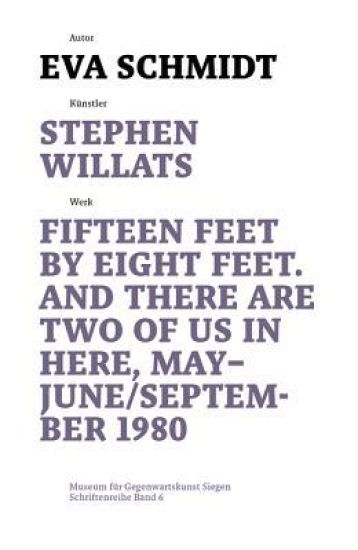
Stephen Willats schafft seit den 1960er-Jahren kommunikative Projekte, in denen er Menschen direkt zu Wort kommen lässt: Die Arbeit Fifteen Feet by Eight Feet, And There are Two of Us in Here widmet sich dem Berufsalltag eines Redakteurs. Unter Berücksichtigung von Archivmaterialien und ausführlichen Gesprächen des Künstlers mit dem Redakteur sowie weiteren Berufsinhabern, nimmt Eva Schmidt eine wichtige Werkgruppe Willats‘ erstmals in den Blick.




Du sollst nicht fluchen - ein alltaglicher, oft totgeschwiegener Bestandteil der Sprache ist ihr Tabuwortschatz. Anhand eines ausgewahlten Bereichs von Stephen Kings Roman It und seinen UEbersetzungen wird Einblick in die Gewohnheiten des Fluchens in sieben verschiedenen Sprachen genommen. Dabei stellt der im Roman fein ausdifferenzierte Gebrauch von Fluchen und Tabuwoertern UEbersetzerinnen und UEbersetzer vor die Herausforderung, die thematischen und stilistischen Schattierungen des Originals adaquat wiederzugeben. Kann es uberhaupt gelingen, den Tabubruch aus der einen in eine andere Sprache zu ubertragen, ohne dass seine Wirkung verloren geht? Wie diese Studie zeigt, weisen der Tabuwortschatz und sein Gebrauch in jeder Sprache ihre ganz speziellen Eigenarten auf.

Stephen Crane's "The Red Badge of Courage" as a work of late nineteenth-century American naturalism
Jan-Christoph Allermann
Grin Publishing
2007
pokkari
Seminar paper from the year 2006 in the subject American Studies - Literature, grade: 14 Punkte oder 1,3, Saarland University, course: North American War Writing, 11 entries in the bibliography, language: English, abstract: When it comes to American War Writing there are several important writers which come to ones mind. One writer, however, who will most probably always be among them, is Stephen Crane. Although his " ...] contribution to the canon of American literature is fairly slight in bulk: one classic short novel, three vivid stories, and two or three ironic lyrics," he has achieved something very remarkable. " ...] Crane, who later saw warfare in Cuba and between the Greeks and the Turks in his work as a correspondent, had experienced no fighting when he wrote The Red Badge of Courage." "Yet anyone who has gone through warfare, from the time of the novel's publication (1895) until now, has testified to Crane's uncanny accuracy at the representation of battle." The fact that Crane's imaginative vision is so compatible with real-life experiences of people who have witnessed battle left foremost British and later on American critics in awe and quickly established his reputation as an author. Soon after its publication The Red Badge of Courage became a bestseller. While some people merely enjoy the book as a good read, others have digged deeper into the world of Stephen Crane in order to analyse his masterpiece. Thus it comes as no surprise that there are plenty of academic essays and reviews which deal with The Red Badge of Courage. One thing that is conspicuous throughout these essays and reviews is the ongoing discussion of whether the corresponding literary movement is actually naturalism. "Stephen Crane's admirers regularly deny he is a naturalist out of what appears to be a fear of linking him with a circle of bad writers." For a better understanding of their fear one should know that "American literary naturalism has almost always been viewed with


Seminar paper from the year 2002 in the subject American Studies - Literature, grade: 2,0, University of Hannover (Englisches Seminar), course: Progressivism, Modernity, and the 'New Woman' - US-Literature and Culture, 1880-1910," 8 entries in the bibliography, language: English, abstract: Stephen Crane's first novel, Maggie - A Girl of the Streets (1893), is a characteristic specimen of Naturalist or New Realist Literature. The plot is quite different from Victorian Realist literature as well as the Symbolist literature by the likes of Kipling and T.S. Eliott. In fact, Crane purposely wanted to get away from that sort of writing as he states in one of his letters: "If I had kept to my clever Rudyard -Kipling style, the road might have been shorter but, ah, it wouldn't be the true road." While the early Realists still concentrated on people from the middle class upward, Crane's characters belonged to the lowest scale in terms of social standing. This meant that the young author had to break with some taboos installed by Victorian writers and as a result from that, he had difficulties in publishing the novel in the first place and also received a lot of hostility from critics. The most basic feature that distinguishes Maggie: A Girl of the Streets from Symbolist or Aestheticist works is its focus on the concept of 'truth'. For Symbolist authors, the highest principle of art was 'beauty' whereas Naturalists saw the need of objective descriptions of life and nature in order to portray them as close to reality as possible. Helga Quadflieg sees this as a replacement for the divine, which both Symbolists and Naturalists did not believe in: "Im Gegensatz zum sthetizismus stellt der New Realism aber nicht 'beauty' an die Stelle fr herer Gottheiten, sondern 'truth', die ...] den h chsten Stellenwert hat." While Symbolist literature in some cases still contained supernatural apparitions, e.g. in Kipling's The Mystery of Purun Bhagath or The Bull that Thought and Hardy's For

Stephen Cranes "The Open Boat " - A Naturalistic Short Story
Timo Dersch
Grin Publishing
2010
nidottu

Stephen Spender's "The Temple" as an autobiographical novel
Nina Jungmann
Grin Publishing
2011
nidottu

Stephen Kings "Der Anschlag". Die Konsequenz des Intervenierens
Susanne Hahn
Grin Publishing
2014
pokkari

Stephen Greenblatt's New Historicism. A Viable Theory?
Sebastian Langner
Grin Publishing
2014
pokkari
Stephen Crane's Short Story "The Blue Hotel as a Text of the Realistic Period
Nathalie Fiore
Grin Publishing
2016
nidottu
Reproduction of the original: Stephen Grattan s Faith by Margaret M. Robertson

Reproduction of the original: Stephen Grattan s Faith by Margaret M. Robertson

Stephen King: The Stand - Das letzte Gefecht
Stephen King; Roberto Aguirre-Sacasa
Panini Verlags GmbH
2020
sidottu

Stephen Kings Der Dunkle Turm Deluxe
Robin Furth; Peter David; Jae Lee
Panini Verlags GmbH
2022
sidottu
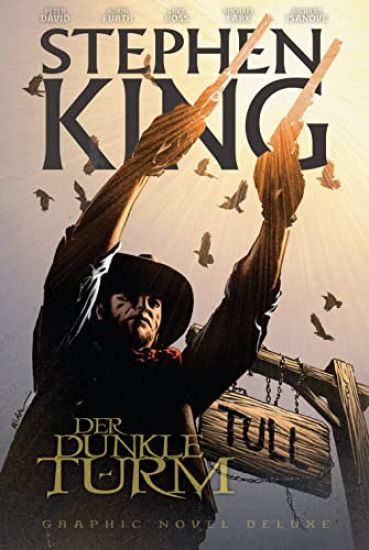
Stephen Kings Der Dunkle Turm Deluxe
Stephen King; Robin Furth; Luke Ross
Panini Verlags GmbH
2023
sidottu
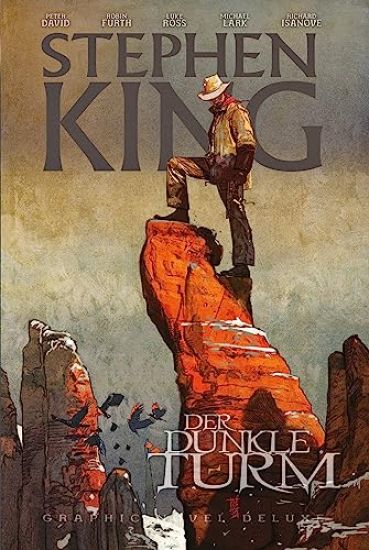
Stephen Kings Der Dunkle Turm Deluxe
Robin Furth; Peter David; Laurence Campbell
Panini Verlags GmbH
2023
sidottu