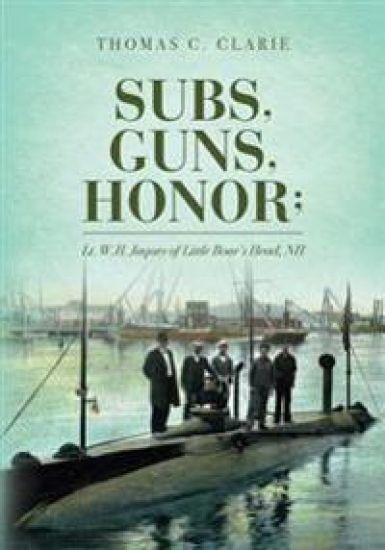
On the surface, this book floats along as the fascinating biography of W.H. Jaques, 1867 graduate of Annapolis. He heads to sea, teaches on a school ship, advises a president on weaponry, then goes to study big-gun-making in England, France, and Russia. When Congress asks him to tell them how great our ships are, he says, "Not good at all." Jaques barely loses a tough fight with Teddy Roosevelt to win the position of Assistant Secretary of the Navy, becoming instead close friend of Navy Secretary William Chandler. They both marry daughters of New Hampshire Senator Hale, who single-handedly fought slavery. Chandler's bride was engaged to John Wilkes Booth. Lt. Jaques moves on to head Bethlehem Steel's big gun and armor division, then takes over the Holland Submarine Company, even traveling to Europe to try and sell a few. He goes throughout the world lecturing as he shows hundreds of stereopticon slides.Below the surface biography, where submarines lurk, the book is an equally fascinating study of the U.S. Navy as it overpowers the nation's landscape and seascape with its raw power. Navy admirals command vessels on trips all over the world - Japan, Singapore, Chile, Cuba. One ship sends a Navy lieutenant up the Congo River, another sends a party up the Amazon. Trouble in Brazil? Just send ships there with crews of young grads from Annapolis. Polar exploration? Jaques' school-teaching friend De Long dies in the Arctic, to have the lieutenant act as his pallbearer but also welcome a survivor to New York Harbor with a bear-hug.Below the surface biography and the sub-level of Navy history is a third level, not quite at ocean-bottom. It presents a great period of technology in the 1800s blossoming forth - a boy canal expert from Sweden building locomotives, then creating a ship whose Peacemaker big gun explodes and kills part of the U.S. Cabinet - John Holland running away from Ireland to build a sub that struggles not to sink - Holland's competitor Simon Lake proudly inventing a submarine on wheels - Jaques urging that nickel be added to steel to make it so much stronger.This book turns the world we have come to count on upside down. Japanese in internment camps? No, they are invited to go to school at Annapolis in the mid-1800s. Japan our enemy? President Grant visits that country with great excitement after our Civil War and Japanese show him great love -- Jaques advises them how to win their war of 1894-5 - awed Japanese visit President Grant's grave as Jaques provides them with a very welcome carriage ride, then shows Japanese guests his submarine. Russians as enemies to the U.S.? No, their sailors float into New York Harbor with our applause as they bolster the North's sagging spirits during the Civil War - these Russian men voyage up the Hudson River while residents high up on the cliffs wave their handkerchiefs - Russian sailors take a tour of Niagara Falls and love it. Lt. Jaques shows Russian dignitaries famed Cramp Shipyard, then gives them an exhaustive tour they love of Bethlehem Steel as they roll through the factory on railroad cars.A stunning biography of W.H. Jaques; an all-aboard tour of Navy ships proudly sailing world seas; a wide-ranging study of 19th century inventions and the men who dared create them. Three books in one - that is what the author has built into this work for you. He has created a shell that explodes in illumination of the sea that Jaques cherished and the country he helped protect.
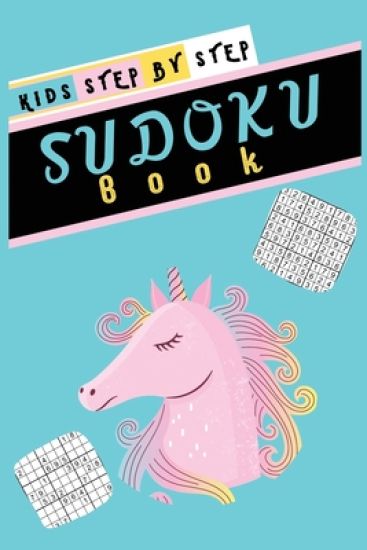
Sudoku puzzle books small print for KidsThis book contains 50 SUDOKU puzzles of varying easy to difficult, meant to take you to a journey of discovery and eventually mastery of this century's most addictive game.6x9 inches50 Sudoku Puzzles and AnswerEasy=20Medium =10Hard= 10 F i e n d i s h =10
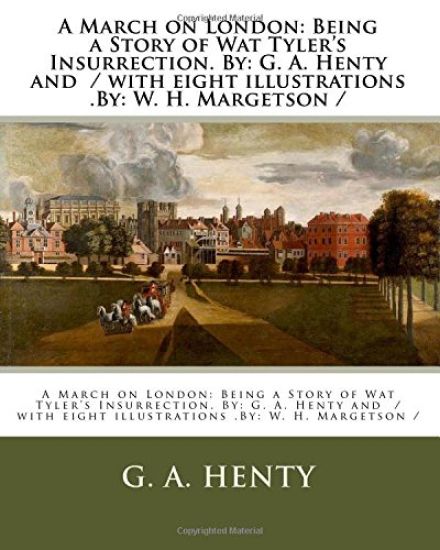
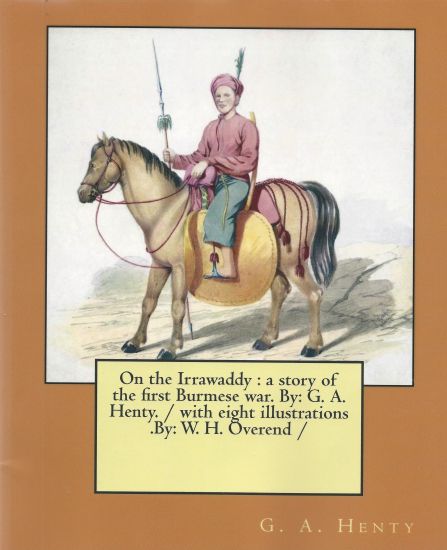
George Alfred Henty (8 December 1832 - 16 November 1902) was a prolific English novelist and war correspondent. He is best known for his historical adventure stories that were popular in the late 19th century. G. A. Henty was born in Trumpington, near Cambridge. He was a sickly child who had to spend long periods in bed. During his frequent illnesses he became an avid reader and developed a wide range of interests which he carried into adulthood. He attended Westminster School, London, and later Gonville and Caius College, Cambridge, where he was a keen sportsman. He left the university early without completing his degree to volunteer for the Army Hospital Commissariat when the Crimean War began. He was sent to the Crimea and while there he witnessed the appalling conditions under which the British soldier had to fight. His letters home were filled with vivid descriptions of what he saw. His father was impressed by his letters and sent them to The Morning Advertiser newspaper which printed them. This initial writing success was a factor in Henty's later decision to accept the offer to become a special correspondent, the early name for journalists now better known as war correspondents.
George Alfred Henty (8 December 1832 - 16 November 1902) was a prolific English novelist and war correspondent. He is best known for his historical adventure stories that were popular in the late 19th century. G. A. Henty was born in Trumpington, near Cambridge. He was a sickly child who had to spend long periods in bed. During his frequent illnesses he became an avid reader and developed a wide range of interests which he carried into adulthood. He attended Westminster School, London, and later Gonville and Caius College, Cambridge, where he was a keen sportsman. He left the university early without completing his degree to volunteer for the Army Hospital Commissariat when the Crimean War began. He was sent to the Crimea and while there he witnessed the appalling conditions under which the British soldier had to fight. His letters home were filled with vivid descriptions of what he saw. His father was impressed by his letters and sent them to The Morning Advertiser newspaper which printed them. This initial writing success was a factor in Henty's later decision to accept the offer to become a special correspondent, the early name for journalists now better known as war correspondents.
Since the mid-1820s, a series of lectures has been delivered each year over the Christmas period in the world-famous Faraday Lecture Theatre at The Royal Institution of Great Britain by prominent scientists, addressed specifically to an audience of children. Initially made accessible in book form, the lectures have been nationally televised throughout the UK and distributed worldwide since the 1960s, making them accessible to an even larger audience. The importance of these lectures in promoting science to a broad audience is perhaps best gauged by the fact that an image of one of Faraday's lectures appeared on the Bank of England £20 note in the 1990s.This anthology brings together, for the first time, a carefully chosen selection of 11 lectures from the 1860s to the 1990s. The selection includes lectures by Michael Faraday, arguably the most important and influential 19th-century physicist, and Lawrence Bragg, the youngest ever winner of the Nobel Prize. Through this work, readers will come to grips with the changing nature of popular science lectures over the past 140 years.
Since the mid-1820s, a series of lectures has been delivered each year over the Christmas period in the world-famous Faraday Lecture Theatre at The Royal Institution of Great Britain by prominent scientists, addressed specifically to an audience of children. Initially made accessible in book form, the lectures have been nationally televised throughout the UK and distributed worldwide since the 1960s, making them accessible to an even larger audience. The importance of these lectures in promoting science to a broad audience is perhaps best gauged by the fact that an image of one of Faraday's lectures appeared on the Bank of England £20 note in the 1990s.This anthology brings together, for the first time, a carefully chosen selection of 11 lectures from the 1860s to the 1990s. The selection includes lectures by Michael Faraday, arguably the most important and influential 19th-century physicist, and Lawrence Bragg, the youngest ever winner of the Nobel Prize. Through this work, readers will come to grips with the changing nature of popular science lectures over the past 140 years.