W.O.W I COULD'VE HAD A V-8 I AM COMPILING THESE "WORDS OF WISDOM" AND MY SPIRITUAL SABBATICAL JOURNEY IN 2016 BUT GOD WROTE THIS BOOK IN MY HEART IN 2007 (HE TRULY KNOWS THE END FROM THE BEGINNING). BY KEEPING A JOURNAL IN THE HOSPITAL AFTER SUFFERING A MAJOR STROKE; MY LIFE HAS NOW BECOME A LIFE OF ENCOURAGEMENT, TEACHING, MINISTERING AND SHARING 'GOOD NEWS' THROUGHOUT THE NATIONS. IF YOU NEED GUIDANCE, HELP OR JUST PLAIN REMINDERS OF WHO YOU ARE AND WHY YOU ARE...THIS BOOK IS FOR YOU AND YOURS. IN ONE-LINERS, POEMS, PICTURES, ESSAYS AND WISDOM GLEANED THROUGHOUT LIFE'S JOURNEY. THIS BOOK IS EASY TO READ AND WILL SPEAK VOLUMES TO YOUNG AND OLD ALIKE. ENJOY AND DON'T HESITATE TO SHARE YOUR REVELATIONS WITH OTHERS. DR. B*T THOMAS (MISSIONARY*TEACHER*MOTIVATIONAL SPEAKER*AUTHOR* LIFE ENCOURAGER)
Have you ever "felt fat"? Do you beat yourself up when one bite of cookie dough turns into eating the whole batch? Have you dieted yourself into a larger dress size? Are you frustrated because hours of exercise have produced zero results? If you have answered yes to any of these questions, you are not alone. Studies show that 75% of women suffer from some type of eating disorder. Whether it's bingeing, bulimia, or another addiction, the good news is there is hope. W.A.I.T.loss: The Keys to Finding Food Freedom and Winning the Battle of the Binge is about Wendy Hendry's journey to recovery from 35 years of binge eating and food addiction. Like many others stuck in their own mental food prison, Wendy dieted and binged her way into obesity. Learning the keys to physical and mindful health that she shares in her book, Wendy was able to heal her body as well as free her mind. Now a certified Health Coach and Fitness Trainer, Wendy's W.A.I.T. (What Am I Thinking?) and Click approach to recovery has helped hundreds of others find that same freedom. Most diets teach how to lose weight, but only through changing daily habits can weight loss be maintained. Weight loss should be a natural consequence of healthy living. This book will help you find that. W.A.I.T.loss: The Keys to Finding Food Freedom and Winning the Battle of the Binge is the perfect combination of storytelling, common sense, humor and scientific proof that recovery is possible. If you need help with bingeing, food addiction, chronic dieting or just simple weight loss, don't W.A.I.T. any longer
Are the "sugar-free," "low-calorie" artificial sweeteners as beneficial as they advertise? Let's think about it. The definition of artificial is: "not natural or real; made, produced, or done to seem like something natural, not happening or existing naturally: created or caused by people, not sincere." That being said, if something is "artificial" why would we consume it? Are any of these artificial sweeteners naturally produced? Some of us consume artificial sweeteners thinking that it is better for our health and weight maintenance, is this 100% accurate? Do they possibly cause an increase in appetite? Is natural cane sugar better for our bodies? Is there a sugar that may assist in eradicating cancer? Well, this little book may help you find some answers Here's a lists all the artificial sweeteners, the pros and cons of each one, and some guidance to keeping that sweet tooth satisfied the right way Let's take a look Reference: (http: //www.merriam-webster.com/dictionary/artificial)
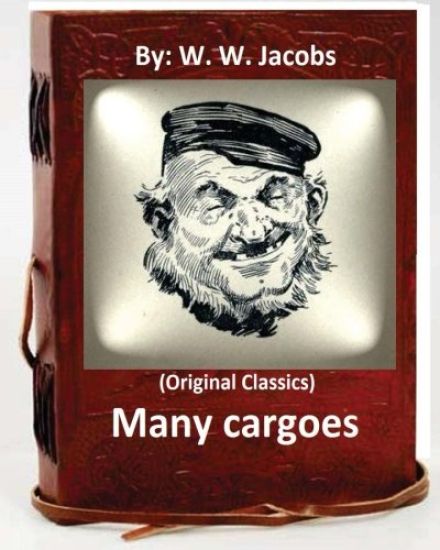
William Wymark "W. W." Jacobs (8 September 1863 - 1 September 1943) was an English author of short stories and novels. Although much of his work was humorous, he is most famous for his horror story "The Monkey's Paw Jacobs was born in Wapping, London; his father was a wharf manager at the South Devon wharf at Lower East Smithfield. He was educated at a private school in London and later at Birkbeck College (then called Birkbeck Literary and Scientific Institution, now part of the University of London)In 1879, Jacobs began work as a clerk in the civil service, in the Post Office Savings Bank, and by 1885 he had his first short story published. His road to success was relatively slow: Arnold Bennett writing in 1898 was astonished that Jacobs turned down the sum of 500 for six short stories. Jacobs was financially secure enough to be able to leave the Post Office in 1899 Jacobs is now remembered for his macabre tale "The Monkey's Paw" (published 1902 in the collection of short stories The Lady of the Barge) and several other ghost stories, including "The Toll House" (published 1909 in the collection of short stories Sailors' Knots) and "Jerry Bundler" (published 1901 in the collection Light Freights). However, the majority of his output was humorous in tone. His favourite subjects were marine life: "men who go down to the sea in ships of moderate tonnage" said Punch, reviewing his first collection of stories, Many Cargoes, which achieved great popular success on its publication in 1896. Michael Sadleir described Jacobs' fiction thus: "he wrote stories of three kinds; describing the misadventures of sailor-men ashore; celebrating the artful dodger of a slow-witted village; and tales of the macabre
William Wymark "W. W." Jacobs (8 September 1863 - 1 September 1943) was an English author of short stories and novels. Although much of his work was humorous, he is most famous for his horror story "The Monkey's Paw acobs was born in Wapping, London; his father was a wharf manager at the South Devon wharf at Lower East Smithfield. 2] He was educated at a private school in London and later at Birkbeck College (then called Birkbeck Literary and Scientific Institution, now part of the University of London)In 1879, Jacobs began work as a clerk in the civil service, in the Post Office Savings Bank, and by 1885 he had his first short story published. His road to success was relatively slow: Arnold Bennett writing in 1898 was astonished that Jacobs turned down the sum of 500 for six short stories. Jacobs was financially secure enough to be able to leave the Post Office in 1899.Jacobs is now remembered for his macabre tale "The Monkey's Paw" (published 1902 in the collection of short stories The Lady of the Barge) 4] and several other ghost stories, including "The Toll House" (published 1909 in the collection of short stories Sailors' Knots) and "Jerry Bundler" (published 1901 in the collection Light Freights). However, the majority of his output was humorous in tone. His favourite subjects were marine life: "men who go down to the sea in ships of moderate tonnage" said Punch, reviewing his first collection of stories, Many Cargoes, which achieved great popular success on its publication in 1896. Michael Sadleir described Jacobs' fiction thus: "he wrote stories of three kinds; describing the misadventures of sailor-men ashore; celebrating the artful dodger of a slow-witted village; and tales of the macabre
Theodore Herman Albert Dreiser ( August 27, 1871 - December 28, 1945) was an American novelist and journalist of the naturalist school. His novels often featured main characters who succeeded at their objectives despite a lack of a firm moral code, and literary situations that more closely resemble studies of nature than tales of choice and agency.Dreiser's best known novels include Sister Carrie (1900) and An American Tragedy (1925). In 1930 he was nominated to the Nobel Prize in Literature.Dreiser was born in Terre Haute, Indiana, to Sarah Maria (n e Schanab) and John Paul Dreiser.John Dreiser was a German immigrant from Mayen in the Eifel region, and Sarah was from the Mennonite farming community near Dayton, Ohio. Her family disowned her for converting to Roman Catholicism in order to marry John Dreiser. Theodore was the twelfth of thirteen children (the ninth of the ten surviving). Paul Dresser (1857-1906) was one of his older brothers; Paul changed the spelling of his name as he became a popular songwriter. They were reared as Catholics.After graduating from high school in Warsaw, Indiana, Dreiser attended Indiana University in the years 1889-1890 before dropping out. William James Glackens (March 13, 1870 - May 22, 1938) was an American realist painter and one of the founders of the Ashcan School of American art. He is also known for his work in helping Albert C. Barnes to acquire the European paintings that form the nucleus of the famed Barnes Foundation in Philadelphia.His dark-hued, vibrantly painted street scenes and depictions of daily life in pre-WW I New York and Paris first established his reputation as a major artist. His later work was brighter in tone and showed the strong influence of Renoir. During much of his career as a painter, Glackens also worked as an illustrator for newspapers and magazines in Philadelphia and New York City.Glackens was born in Philadelphia, Pennsylvania, where his family had lived for many generations. William had two siblings: an older sister, Ada, and an older brother, cartoonist and illustrator Louis Glackens. He graduated from the prestigious Central High School in 1890. Throughout his school years, he showed a great interest in and aptitude for drawing and drafting.
William Henry Hudson (4 August 1841 - 18 August 1922) was an author, naturalist, and ornithologist Hudson was born in the borough of Quilmes, now Florencio Varela of the greater Buenos Aires, in Buenos Aires Province, Argentina. He was the son of Daniel Hudson and his wife Catherine n e Kemble, U.S. settlers of English and Irish origin. He spent his youth studying the local flora and fauna and observing both natural and human dramas on what was then a lawless frontier, publishing his ornithological work in Proceedings of the Royal Zoological Society, initially in an English mingled with Spanish idioms. He had a special love of Patagonia. Hudson settled in England during 1874, taking up residence at St Luke's Road in Bayswater. He produced a series of ornithological studies, including Argentine Ornithology (1888-1899) and British Birds (1895), and later achieved fame with his books on the English countryside, including Hampshire Day (1903), Afoot in England (1909) and A Shepherd's Life (1910), which helped foster the back-to-nature movement of the 1920s and 1930s


![The Exploits of Brigadier Gerard, by Arthur Conan Doyle and W.B.Wollen: & The Adventures of Gerard [ Illustrated ]](/covers/9781530986651.jpg)