Throughout much of the highly-successful golfing career of Jack Nicklaus, many players arrived being touted, "the next Nicklaus." However, only one player has taken that mantle head-on to move forward the standard set by Nicklaus - Tiger Woods. Woods' explosive start in competitive golf at an early age propelled him further and faster in many areas over Nicklaus beginning with his junior amateur days. But has Woods succeeded in de-throning Nicklaus? As both players have repeatedly stated that the standard of greatness in golf revolves largely around performance in the major championships, that will be the focus of this book, but not exclusively. While comparing eras is typically regarded as impossible, the purpose of this book is to quantify and place into perspective these two players' records in such a way as to add debate to the subject of who the greatest player thus far has been.
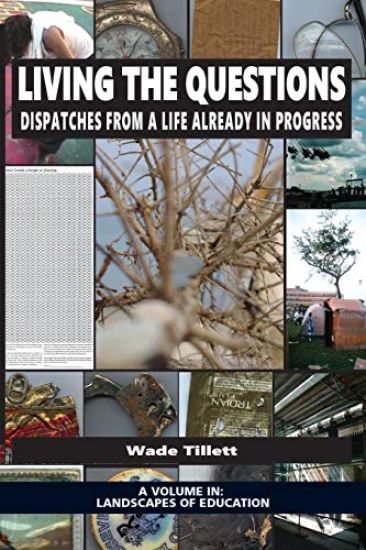
In Living the Questions: Dispatches From a Life Already in Progress, Wade Tillett takes up the question of how to live – not in some abstract sense, but in the urgent present. Tillett realizes that how to live is a question that each of us is already asking – and answering – moment-by-moment. These texts offer surprising discoveries of how we are already inventing solutions to living in multiple and discontinuous worlds through our daily actions. By examining small specific pieces of daily life, Tillett explores how we navigate through tentative, multiple, and often contradictory positions. Among the many situations artistically explored are visiting a church, narrating a family movie, exposing students to a nearby school, re-working a found sculpture, taking a licensure exam, attending a protest, and waiting for the El. By juxtaposing multiple voices and images, he attempts to see how, in both method and content, the texts themselves act on the worlds and lives they describe.Tillett narrates from many perspectives: teacher, researcher, writer, artist, architect, activist, parent, theorist, and struggling protagonist of his own life. As such, many readers sharing such roles will immediately find connections within the book. For researchers struggling to find workable qualitative methodologies after poststructuralism, the experimental methods employed here may provide welcome inspiration. However, the book seems aimed not so much at particular disciplines but at anyone who, like Tillett, is actively searching for how to live. Anyone involved in such a search will likely find hope and ways forward in his methods that look at life as we are already living it.
In Living the Questions: Dispatches From a Life Already in Progress, Wade Tillett takes up the question of how to live – not in some abstract sense, but in the urgent present. Tillett realizes that how to live is a question that each of us is already asking – and answering – moment-by-moment. These texts offer surprising discoveries of how we are already inventing solutions to living in multiple and discontinuous worlds through our daily actions. By examining small specific pieces of daily life, Tillett explores how we navigate through tentative, multiple, and often contradictory positions. Among the many situations artistically explored are visiting a church, narrating a family movie, exposing students to a nearby school, re-working a found sculpture, taking a licensure exam, attending a protest, and waiting for the El. By juxtaposing multiple voices and images, he attempts to see how, in both method and content, the texts themselves act on the worlds and lives they describe.Tillett narrates from many perspectives: teacher, researcher, writer, artist, architect, activist, parent, theorist, and struggling protagonist of his own life. As such, many readers sharing such roles will immediately find connections within the book. For researchers struggling to find workable qualitative methodologies after poststructuralism, the experimental methods employed here may provide welcome inspiration. However, the book seems aimed not so much at particular disciplines but at anyone who, like Tillett, is actively searching for how to live. Anyone involved in such a search will likely find hope and ways forward in his methods that look at life as we are already living it.
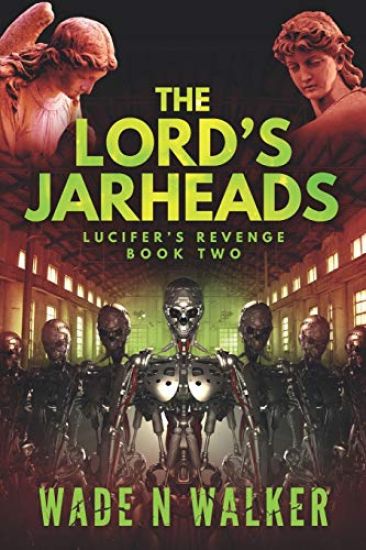
According to first Peter, Lucifer is like a roaring lion going to and fro looking for those to devour. Charlie and his team had no idea of the consequences of poking that lion with a stick. As they thwarted the enemies terrorist attacks, they trusted and relied on the protection of the Living God. They were un prepared for the swift retaliation of the evil one. Charlie and the team though protected would find out the steep price that must be paid for disrupting the plans of Lucifer. They also underestimated how personal Lucifer would take their annoyance. The god wanna be was pricked at his enormous pride and came at Charlie and team tooth, fang, and claw.With one of the team kidnapped, Charlie only wanted the chance to throat punch Lucifer. The team is geared up and ready to hunt lion.
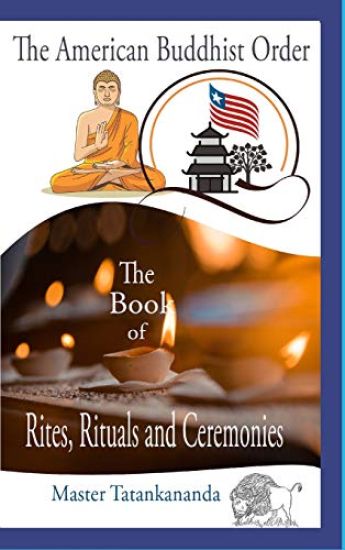
Practice Buddhism immediately This book is the official practice manual of The American Buddhist Order, Inc. The Order was created in 2019 by Master Tatankananda. The goal of this book and the Order is to make the practice of Buddhism simple, easy to understand and melded with Western traditions.
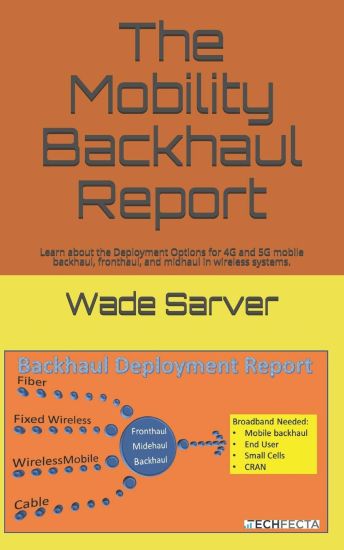
The thing about running any type of equipment is more than the cost of the equipment and installation. It's all the other stuff that most magazines and articles won't cover. It's the delays, permitting, acquisition, and approvals needed to be managed. These are necessary evils for any deployment. Just ask any carrier. Therefore they are adamant about fighting local jurisdictions for the small cell costs of permitting and rent. This is all before you deploy one thing, pay for one piece of equipment, or even design the backhaul. It needs to be worked through, and chances are it will be around 10% to 25% of the cost. If you're talking small cells, then it could be 50% to 75% of the cost. The other thing that has helped the carriers is automation. While they still rely on drive teams for testing, for the most part, they have automated RF engineering and optimization. This has dramatically reduced the cost and effort put forth. The labor of any deployment adds up. However, as the work becomes a commodity, the costs go down. So far, the carriers can't replace the tower climber, but they have been offshoring and automating other services to save costs. Utility power is another cost. If you need power at the site, which you do, running utility to a site costs money. It could also add delays. You need a licensed electrician to work with the power company to make sure you have the power in properly. Then the permitting and inspections that go along with it. It adds delay and cost to any project. You will need power, whether at a pole or in a building or at a tower site. It all adds up. Before you mount anything, this is generally a 3-month wait. It's similar to fiber. Fiber deployments have all the costs of permitting, permissions, and more. They often run into a dig once policy with cities. This is good for the city because they don't want the streets dug up again and again, but the company running the fiber may have to wait until one or more companies are also running fiber. This adds delays, costs, and competition. If you're deploying first, you have a chance to lock up accounts, but if you must wait for the competition to go alongside you, I am pretty sure they are going to go after the same customers you thought you had locked up. It is a dog eat dog world out there. The thing about running fiber everywhere is not the fiber itself. It is the costs associated with running the fiber. In fact, anything you deploy has high costs. Building towers and adding a radio to a pole has a high cost. While you may think it's the installation and design, that is a small portion. It's all the civil work and the acquisition paperwork that needs to be done to make it happen.
Jake lost his wife and unborn daughter on a West Texas highway when three police officers abused their authority. The pigs thought they had got off scot-free until Jake took justice into his own hands. This is an extremely sadistic story that should only be read by the seasoned extreme-horror reader.
Charlie Red Tail Hawk always thought he'd retire from the Marine Corps. He would soon find out God had other plans for him. After serving twelve years Charlie met and married the love of his life Josie. Elizabeth came along a year and a half later. He made the decision to leave the Corps that he dearly loved after much prayer and seeking the Lord's will and wisdom. Charlie, Josie, and Elizabeth moved to a ranch with two hundred and forty acres where for five years they worked on their dream of living off what they grew and raised. One fateful Sunday after church changed all this forever. Josie and Elizabeth went to the local mall. The mall had been targeted by a terrorist attack and Josie and little Elizabeth were killed.The world had steadily been flushing itself down the toilet and running as fast and far away from the ways of the One true God and His Son Lord Jesus. Almost daily the prophecies of the Bible were being fulfilled. Charlie fell on his face beseeching of the Lord and pouring out his grief in the flesh and in the spirit for months. He finally received his answer. It was not the answer Charlie expected. Will Charlie follow the path God has chosen for him, or will he follow his own path for revenge.
John Gapp lives in Seattle, Washington as a retired and decorated police officer. A series of personal tragedies has left the man as a frightened soul and an agoraphobic. One highlight of Gapp's life is his radio show, which is broadcast from a studio that is adjacent to his apartment. Crime on Ice, is a hit and has just been syndicated. While working through his demons of the present, an old one comes calling. A serial killer of children that Gapp had almost apprehended in Vietnam in 1968 is up to his old game again. In 2008, he attempts to draw John Gapp out of hiding for one last showdown. At age sixty-two, the former detective must make the choice if he is to face the world and attempt to bring down this dark angel of death. Can Gapp stand on the sidelines while more young lives are destroyed?
John Gapp lives in Seattle, Washington as a retired and decorated police officer. A series of personal tragedies has left the man as a frightened soul and an agoraphobic. One highlight of Gapp's life is his radio show, which is broadcast from a studio that is adjacent to his apartment. Crime on Ice, is a hit and has just been syndicated. While working through his demons of the present, an old one comes calling. A serial killer of children that Gapp had almost apprehended in Vietnam in 1968 is up to his old game again. In 2008, he attempts to draw John Gapp out of hiding for one last showdown. At age sixty-two, the former detective must make the choice if he is to face the world and attempt to bring down this dark angel of death. Can Gapp stand on the sidelines while more young lives are destroyed?
Casey Kasem, the author's radio companion throughout his troubled teenage years, summed up the approach to this book with his famous byline: "Keep your feet on the ground and keep reaching for the stars."The Rod of Iron brings the author's very personal, and gut-wrenching emotional, intellectual, and spiritual journey to a startling conclusion. Committing to an autobiographical trilogy of a life in flight forced the author to document unexpected twists and turns in his obsessive quest for coherence. "Truthy," superficial answers would not do. A global digging for satisfactory answers that began at the 1981 City of David archaeological expedition, described in The People of the Sign, continues in the ruins of ancient temples at G bekli Tepe and then stretches outward, towards the heavens. The Rod of Iron digs deeper, reaches higher, and ends up connecting dots on earth to those indicated by distant stars, forming ever-larger patterns, which ultimately solve riddle after puzzle after mystery in what one reviewer called a "relentless search for truth."The final miles of the long and winding road embarked upon in the prior two volumes integrate theories that predate the planet, describing the first moments of the creation that unfolded space-time. Fractal patterns, revealed in the fabric that originated, envelops, and permeates us, provide compelling answers to questions about where we come from, who we are, and where we are in our progression as a species. They also reveal how our destiny to emerge as Sons of God, with similar creative capacities, albeit in infinitely weaker and more limited forms, is being fulfilled, in real time, through the continuous march of prophetic history.The Tower of Bab-El story is but one mysterious "X Marks the Spot" starting point in this final volume, but also an elusive destination - located in our modern era. The author unpacks the Bible's cryptic message: That which the citizens of Bab-El sought to attain is within the reach of a unified planet. The implications of that statement are among the astounding discoveries in this tightly written book.Fans of The People of the Sign and The Hardness of the Heart are sure to find The Rod of Iron a fascinating, surprising and satisfying conclusion to Mr. Fransson's opus, as the lyrical threads of the author's life come together in a crescendo worth the considerable effort needed to digest the vast internal and external territory covered along the way. The testing of outrageous hypotheses against historical events and modern science, the intricate nuances of science and philosophy explained using articles from the Bible, Scientific American, Indian Legends, official government websites, and the author's personal life events has delivered a riveting story unlike any other.After finishing The Rod of Iron you may never again view the universe, current events, and the significance of your own existence, in quite the same way.
The essential reference book for students of Kabbalistic Gematria. This unique compilation contains a complete listing of Hebrew numerological and mystical meanings for every number from 1 to 399. Access to these meanings will help you as an advanced student of Kabbalistic Gematria deepen your understanding of nature's laws and the intrinsic power of the universe. Gematria numerology is an ancient study rooted in the awareness that mathematics is the universal language of nature, and this reference book proves an invaluable tool for numerologists, mystics, and every serious student of magical studies and the Western Mystery Tradition. Wade Coleman is an author of several non-fiction books on esotericism, magical studies, and Egyptology. He has also penned a number of popular fiction books in the genre of Dystopian and dark urban fantasy.
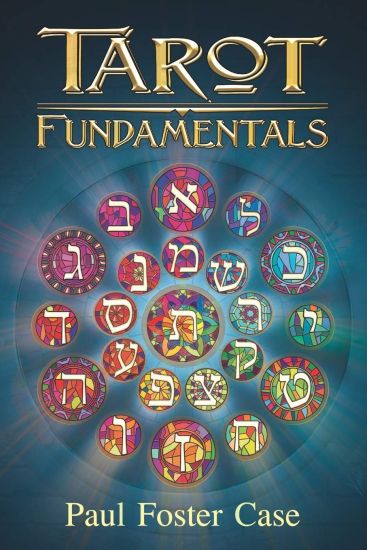
How to use the Tarot to unlock the hidden truth you hold within you.This is the second of Paul Foster Case's three books written to deepen your understanding of the Tarot. The specific aim of this book is to teach you how to use the Tarot to bring forth the wisdom within. Foster Case illuminates the Tarot tradition in simple, straightforward language, ensuring that novices, as well as adepts, will find Tarot Fundamentals an effective and essential learning tool. With practical instructions and easy-to-follow explanations, the book teaches you how to use the Tarot Keys to unlock the flow of information hidden in your subconscious. Because the Tarot is key learning on the Western Path, you will learn the symbolism of numbers within the Tarot Keys, and the relationship between the Tarot, the Hebrew letters, the Thirty-Two Paths of Wisdom, and where it fits in the Kabbalistic Tree of Life. This book is a significant addition to any studies of the Tarot, Cartomancy, Practical Occultism, Astrology and Kabbalah. As one of the leading early 20th-century proponents of the Western Mysteries, Paul Foster Case's Tarot teaching is unparalleled. An American occultist, Foster Case was the founder of Builders of the Adytum (B.O.T.A), a leading school of the Western mystery tradition in Los Angeles that still exists today. A widely respected figure in the American occult and spiritual community, he wrote several articles and 15 books including two other books as part of his Tarot learning series, An Introduction to Tarot and Astrology and Tarot Interpretations.
Tarot Interpretations is the third and final book in the Paul Foster Case's Tarot lesson series. In this lesson, Dr. Case uses magic squares to layout the Tarot Keys. These tableaus are used in a daily meditational practice that includes the seven stages of spiritual unfoldment.
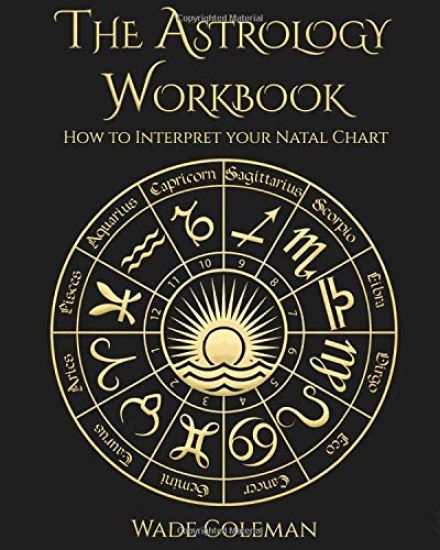
A step-by-step guide to help you determine your deepest desires and true life path through your Natal Chart For centuries, humans have been searching the skies and stars to understand themselves better. Though the contemporary world teaches us to look outside ourselves for support and guidance, the ancient science of astrology teaches us to look inwards for answers and acceptance. Starting with our births, the positions of celestial bodies at that precise moment can give us profound insight into our talents, strengths, weaknesses and life purpose. This is the significance of your Natal Chart, and in this Astrology Workbook, you will be presented with the exact techniques to help you analyze your natal chart and uncover specific personality traits and behaviors. Gleaning this insight gives you the tools to understand your desires and more effectively accomplish your goals. Who Will Benefit from Reading this Book?The Astrology Workbook: How to Interpret Your Natal Chart is a key tool in magical studies and understanding the workings of astrology. But people new to this discipline will find it informative, illuminating, and very easy to use. Wade Coleman is an author of several non-fiction books on esotericism, magical studies and Egyptology, including The Cabala of Planetary Magic and The Zodiac of Dendara Egypt. He is also the editor of several updated books by notable American occultist, Paul Foster Case. Along with his literary contribution to the Western esoteric tradition, Wade Coleman has penned a number of popular fiction books in the genre of Dystopian and dark urban fantasy.
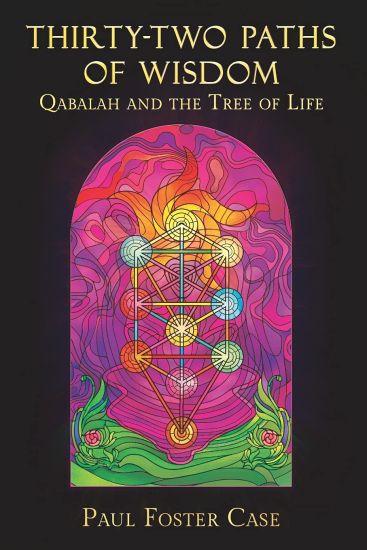
Qabalah trains the mind to think practically and relationally. Using this system, students can awaken their consciousness and answer the questions related to God, the Universe, and Humanity.In the Kabbalah, the Thirty-Two Paths of Wisdom are the ten sephiroth and the 22 paths between them on the Tree of Life. In 1652, Athanasius Kircher published the Hebrew text and Latin commentary to 13th Century Thirty-Two Paths of Wisdom.Paul Foster Case was an occultist of the early 20th century and author of numerous books on occult tarot and Qabalah. This book contains Cases' insights, a full translation and commentary on the Latin and Hebrew texts on the 32 Paths of Wisdom.
A boy's mystical bird ride unveils the secret to finding magic in everyday life. Based on his own experiences as a child, the author shows readers how to find the magic in everyday life. The Bird Ride, Book One in Wade Bergner's Emotional Agility Matters series for children, shows how positive attitude, self-awareness, and ability to be present in the moment can enrich our lives. This series provides parents and teachers with tools to help children develop positive attitudes, enhance their self-esteem, social skills, and attention span, and sharpen their focus in school and at home.
Gu a para el dise o de materiales de calzado. Quieres ser un experto dise ador de calzado? Deber s aprender a seleccionar y especificar correctamente los materiales para el calzado. La Gu a para el dise o de materiales de calzado detalla todos los materiales que necesitar s para crear calzado deportivo, casual cl sico y de moda.Cada cap tulo cubre un material de calzado concreto y aprender s c mo se fabrica, las opciones disponibles en el mercado, y c mo especificar el material correctamente. En el interior encontrar s cap tulos que tratan sobre el cuero, textiles, sint ticos, cordones, pegamentos, refuerzos, fornituras, logotipos, entresuelas, suelas y mucho m s. Desc rgalo ya y empieza a leerlo ahora Echa un vistazo a c mo se utiliza cada material dentro del calzado de producci n con las vistas de las secciones transversales de m s de treinta modelos de calzado diferentes. Estudia el interior de las zapatillas de baloncesto, zapatillas de running, zapatillas con insertos de clavos, botas de monta a, botas de trabajo, tac n alto, botas de cowboy, y mucho m s.Tambi n encontrar s informaci n sobre los ensayos de los materiales, producci n sostenible y materiales ex ticos entre otros. Escrito como complemento de nuestro superventas C mo se fabrican los zapatos, la Gu a para el dise o de materiales de calzado profundiza en el mundo de los materiales y el dise o del calzado. Documento en PDF, compatible con Mac y PC, 28 cap tulos, 195 p ginas con m s de 330 fotograf as a todo color.
una gu a para principiantes sobre las t cnicas fundamentales de la fabricaci n del calzado Quieres aprender a hacer patrones de calzado? Sabr as la diferencia entre dise ar una horma de un zapato de tac n alto y una deportiva, o un zapato de vestir? En el libro Patronaje de calzado y dise o de hormas te ense amos el proceso en el dise o de hormas y explicamos las t cnicas b sicas de patronaje y modelismo de calzado. Esta gu a revela el desarrollo de dise o y fabricaci n de hormas, la geometr a oculta y sus peculiaridades, la funcionalidad y los criterios para hacer la escala de tallas. Encontrar s muchos dise os y tipos de hormas para zapatillas, calzado deportivo, zapatos de tac n alto, botas, y mucho m s. Dedicamos la segunda parte del libro al patronaje, incluyendo una gu a paso a paso con m s de 200 fotograf as a color para que aprendas a modelar siendo primerizo. Mira y compara los patrones de muestras de calzado deportivo, zapatillas de ca a alta, zapatos de tac n y otros tipos de calzado. Aprende a hacer la trepa de una zapatilla y el proceso para crear patrones, c mo usar un programa de dise o asistido por ordenador para patronar y hacer el escalado de tallas. Por qu una horma de calzado tiene esa forma? C mo puedo hacer patrones con herramientas b sicas? Encontrar s todas las respuestas dentro. 200 p ginas, 12 cap tulos y m s de 500 fotograf as a color.