Kirjojen hintavertailu. Mukana 11 370 965 kirjaa ja 12 kauppaa.

Kirjahaku

Etsi kirjoja tekijän nimen, kirjan nimen tai ISBN:n perusteella.

1000 tulosta hakusanalla Wauter Mannaert

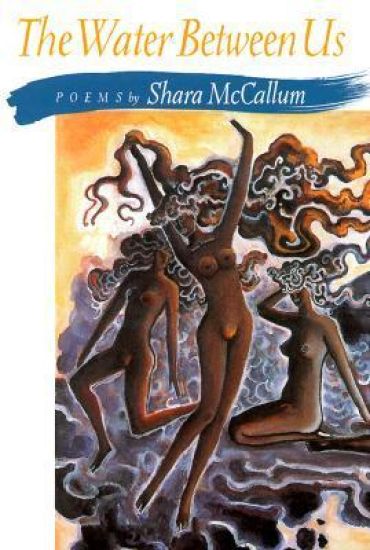
Water Between Us, The

Water Between Us, The

Shara McCallum

University of Pittsburgh Press
1999
nidottu
1998 Agnes Lynch Starrett Prize winner.The Water Between Us is a poetic examination of cultural fragmentation, and the exile's struggle to reconcile the disparate and often conflicting influences of the homeland and the adopted country. The book also centers on other kinds of physical and emotional distances: those between mothers and daughters, those created by being of mixed racial descent, and those between colonizers and the colonized. Despite these distances, or perhaps because of them, the poems affirm the need for a multilayered and cohesive sense of self. McCallum's language is precise and graceful. Drawing from Anancy tales, Greek myth, and biblical stories, the poems deftly alternate between American English and Jamaican patois, and between images both familiar and surreal.
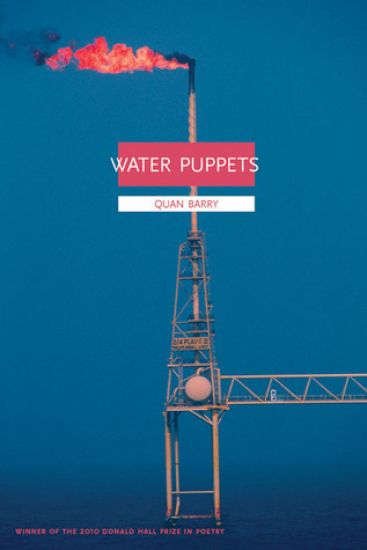
Water Puppets

Water Puppets

Amy Quan Barry

University of Pittsburgh Press
2011
nidottu
Winner of the 2010 Donald Hall Prize in PoetryIn her third poetry collection, Quan Barry explores the universal image of war as evidenced in Afghanistan and Iraq as well as Vietnam, the country of her birth. In the long poem \u201cmeditations\u201d Barry examines her own guilt in initially supporting the invasion of Iraq. Throughout the manuscript she investigates war and its aftermath by negotiating between geographically disparate landscapes—from the genocide in the Congo—to a series of pros poem \u201csnapshots\u201d of modern day Vietnam. Despite the gravity of war, Barry also turns her signature lyricism to other topics such as the beauty of Peru or the paintings of Ana Fernandez.
Walter Benjamin and Theology

Walter Benjamin and Theology

Fordham University Press
2016
sidottu
In the Arcades Project, Walter Benjamin writes that his work is "related to theology as blotting pad is related to ink. It is saturated with it." For a thinker so decisive to critical literary, cultural, political, and aesthetic writings over the past half-century, Benjamin's relationship to theological matters has been less observed than it should, even despite a variety of attempts over the last four decades to illuminate the theological elements latent within his eclectic and occasional writings. Such attempts, though undeniably crucial to comprehending his thought, remain in need of deepened systematic analysis. In bringing together some of the most renowned experts from both sides of the Atlantic, Walter Benjamin and Theology seeks to establish a new site from which to address both the issue of Benjamin's relationship with theology and all the crucial aspects that Benjamin himself grappled with when addressing the field and operations of theological inquiry.
Walter Benjamin and Theology

Walter Benjamin and Theology

Fordham University Press
2016
pokkari
In the Arcades Project, Walter Benjamin writes that his work is "related to theology as blotting pad is related to ink. It is saturated with it." For a thinker so decisive to critical literary, cultural, political, and aesthetic writings over the past half-century, Benjamin's relationship to theological matters has been less observed than it should, even despite a variety of attempts over the last four decades to illuminate the theological elements latent within his eclectic and occasional writings. Such attempts, though undeniably crucial to comprehending his thought, remain in need of deepened systematic analysis. In bringing together some of the most renowned experts from both sides of the Atlantic, Walter Benjamin and Theology seeks to establish a new site from which to address both the issue of Benjamin's relationship with theology and all the crucial aspects that Benjamin himself grappled with when addressing the field and operations of theological inquiry.
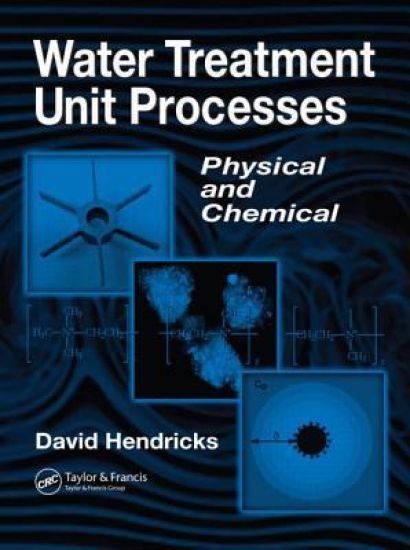
Water Treatment Unit Processes

Water Treatment Unit Processes

David W. Hendricks

CRC Press Inc
2006
sidottu
The unit process approach, common in the field of chemical engineering, was introduced about 1962 to the field of environmental engineering. An understanding of unit processes is the foundation for continued learning and for designing treatment systems. The time is ripe for a new textbook that delineates the role of unit process principles in environmental engineering. Suitable for a two-semester course, Water Treatment Unit Processes: Physical and Chemical provides the grounding in the underlying principles of each unit process that students need in order to link theory to practice. Bridging the gap between scientific principles and engineering practice, the book covers approaches that are common to all unit processes as well as principles that characterize each unit process. Integrating theory into algorithms for practice, Professor Hendricks emphasizes the fundamentals, using simple explanations and avoiding models that are too complex mathematically, allowing students to assimilate principles without getting sidelined by excess calculations. Applications of unit processes principles are illustrated by example problems in each chapter. Student problems are provided at the end of each chapter; the solutions manual can be downloaded from the CRC Press Web site. Excel spreadsheets are integrated into the text as tables designated by a "CD" prefix. Certain spreadsheets illustrate the idea of "scenarios" that emphasize the idea that design solutions depend upon assumptions and the interactions between design variables. The spreadsheets can be downloaded from the CRC web site. The book has been designed so that each unit process topic is self-contained, with sidebars and examples throughout the text. Each chapter has subheadings, so that students can scan the pages and identify important topics with little effort. Problems, references, and a glossary are found at the end of each chapter. Most chapters contain downloadable Excel spreadsheets integrated into the text and appendices with additional information. Appendices at the end of the book provide useful reference material on various topics that support the text. This design allows students at different levels to easily navigate through the book and professors to assign pertinent sections in the order they prefer. The book gives your students an understanding of the broader aspects of one of the core areas of the environmental engineering curriculum and knowledge important for the design of treatment systems.
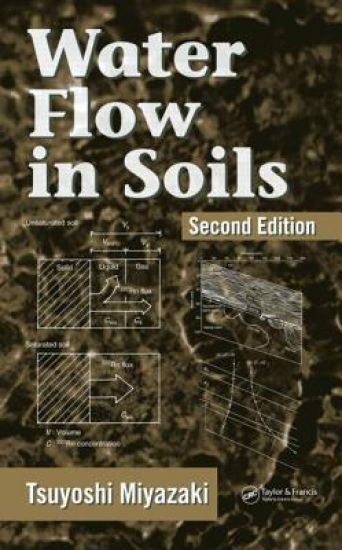
Water Flow In Soils

Water Flow In Soils

Tsuyoshi Miyazaki

CRC Press Inc
2005
sidottu
The new edition of a bestseller, Water Flow in Soils bridges the fields of soil physics-where descriptions of water flow tend to be microscopic- and hydrology - where they tend to be macroscopic. Unlike other physics laden texts, this work conveys the fundamental concepts of water flow in soils with clear and essentially nonmathematical explanations. Using abundant illustrations, figures, and equations, the author introduces soil water flow, taking both a phenomenological and analytical approach. He elegantly elucidates the basic and advanced principles of water movement in soils.
Water Activity

Water Activity

Rockland

CRC Press Inc
1987
sidottu
This book presents the proceedings of the Tenth Basic Symposium sponsored by the Institute of Food Technologists and the International Union of Food Science and Technology. The key aim of the Symposium was to explore some basic principles relating to the influences of water activity on food quality.
Water Contamination and Health

Water Contamination and Health

Rhoda G.M. Wang

CRC Press Inc
1994
sidottu
This volume examines every potential means of exposure to water contaminants, provides in-depth discussions on toxicology, and explains up-to-date techniques for evaluating human health risk. It develops a methodology for assessing the cumulative absorbed dose of contaminants through all routes of exposure, including ingestion, inhalation and dermal. Federal and state efforts to monitor and treat water are examined.
Water Vapor Measurement

Water Vapor Measurement

Pieter R. Wiederhold

CRC Press Inc
1997
sidottu
Offering all aspects of humidity measurement and instrumentation, this work includes rudiments and theory, common applications, advantages and limitations of frequently-used sensors and techniques, and guidelines for installation, maintenance and calibration. The disk is intended for easy conversions of humidity parameters and units.
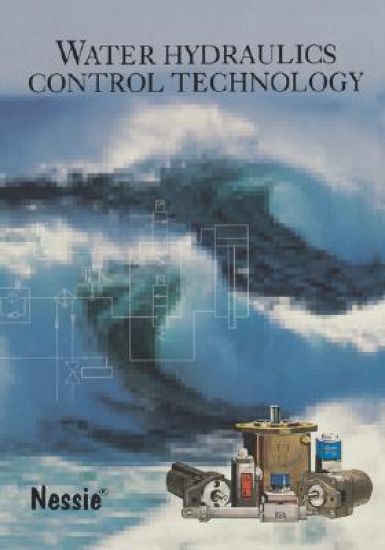
Water Hydraulics Control Technology

Water Hydraulics Control Technology

Erik Trostmann

CRC Press Inc
1995
sidottu
This work introduces the principles of water hydraulics technology and its benefits and limitations, and clarifies the essential differences between water and oil hydraulics. It discusses basic components and systems, including hydraulic power generators (pumps), hydraulic control components or modulators (valves), hydraulic transmission lines (tubes, hoses and fittings) and hydraulic actuators (single- or double-acting cylinders and rotary motors). A listing of water hydraulics components/systems manufacturers is provided.
Water Of Life

Water Of Life

Rita Knipe

University of Hawai'i Press
1989
sidottu
Mythology flows like a subterranean stream throughout Hawai'i. Rita Knipe has selected a number of characteristic myths and mythological figures from the rich pantheon of Hawaiian deities. As she retells their stories, illustrated by Hawaii artist Dietrich Varez, the transposition of such primal drama to the pages of this book becomes poetic theater. The dramatic plots are myths and legends chosen from the oral traditions of unique island people, but the underlying themes and symbols are archetypal and eternal. Drawing parallels between Hawaiian mythology, universal patterns, and individual behavior, the author illustrates certain basic Jungian concepts and explains how we express them in the drama of our own lives.
Water and the Law in Hawai'i

Water and the Law in Hawai'i

Lawrence H. Miike

University of Hawai'i Press
2004
sidottu
Water and the Law in Hawai'i provides an intellectual and legal framework for understanding both the past and future of Hawai'i's freshwater resources. It covers not only the kanawai (laws) governing the balancing act between preservation and use, but also the science of aquifers and streams and the customs and traditions practiced by ancient and present-day Hawaiians on the 'aina (land) and in the wai (water). In placing Hawai'i water law in the context of its historical development, the author condenses an enormous amount of information on traditional Hawaiian social structure and mythology. His analysis and explanation of the Hawai'i Supreme Court decisions on water rights pose difficult questions and reveal the Court's at times defective reasoning by referring readers to original source material. He is the first author to explain fully how water use permits will play out in a variety of circumstances that may arise in the future, and he discusses the interrelationship between the State Water Code and the common law on water rights, which few people understand or are aware of. Water and the Law in Hawai'i is a vital contribution to understanding water law in Hawai'i. It will prove invaluable to students of the subject and will appeal to those with an interest in cultural anthropology, planning, Hawaiian history, and political science.
Water, Snow, Water

Water, Snow, Water

David K. Reynolds

University of Hawai'i Press
2013
nidottu
“You can’t be happy all the time. You can’t feel comfortable all the time. You can’t have the feelings you want when you want them for as long as you want them. Life just doesn’t operate like that. Maybe you have tried counseling or therapy or diets or meditation or chemicals or some sort of esoteric magic to work on your feelings, to fix your life or make it perfect. Nothing worked as well as you had hoped. Reading this book won’t solve your life problems either. But it will give you some suggestions that are sensible, practical and doable—suggestions about how to work on your life. Work is the key word here. Sitting and talking with someone is not enough. Venting your feelings is not enough. Putting your mind in some quiet inner place is not enough. Working on your life involves moving your body, doing your life purposefully and constructively. This book offers you concrete assignments for such activity.” Adapting ideas from Japanese psychotherapies and Eastern thought, Constructive Living (CL) offers a sensible way of living. Across cultures and generations, CL ideas make sound, practical sense. Water, Snow, Water presents the current state of CL in its application to the West. Using a variety of materials—including essays, tales, maxims, detailed behavioural advice, case studies—David Reynolds, the founder of CL, presents fresh perspectives on everything from worrying to love, from psychotherapy to death.
Water and Power in West Maui

Water and Power in West Maui

Jonathan L. Scheuer; Bianca K. Isaki

University of Hawai'i Press
2021
nidottu
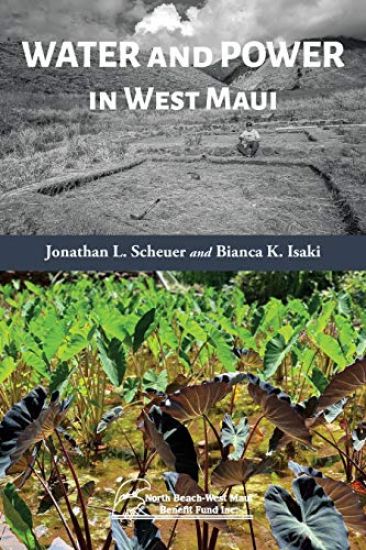
Water and Power in West Maui draws our attention to the ways control of water resources, in West Maui and across Hawai‘i, has been key to the creation and perpetuation of political and economic power and privilege. This volume, by two leading advocates for progressive change in Hawai‘i, highlights what has been only touched on by previous volumes on water law or land tenure in the islands, and with specific attention to the environment, history, and communities of West Maui.Individually, chapters on physical and legal infrastructure are invaluable stand-alone guides to key aspects of water management in the state and this area. For instance, one chapter covers recent efforts by the state to restore stream flows, a topic that is otherwise little addressed in published literature. This volume also dives into the inherent failures and unsustainability of the state of Hawai‘i’s management of groundwater by "sustainable yield," which will have profound implications for the future of Hawai‘i water supplies in a changing climate.As a whole, with clear explanations of historical transformation and ongoing bureaucratic practice, the authors identify liberating paths forward. Rather than another treatise on how past bad practices set up a beleaguered present, they suggest how water and power in West Maui and Hawai‘i can be better shared for an enduring prosperity for the diverse people within these communities.This volume will be of interest to scholars and historians, and a must-read for practitioners in water management and control, and contemporary environmental and indigenous struggles in Hawai‘i and the Pacific.
Water in New Mexico

Water in New Mexico

Ira G. Clark

University of New Mexico Press
1987
sidottu
Originally published in 1987, 'Water in New Mexico' remains one of the most comprehensive studies of a natural resource for any state. It contains material from the earliest pueblo irrigation systems to recent judicial decisions. Clark explores the issues of land-grant water rights, the effects of coal and uranium mining on water quality, the allocation of groundwater, as well as the interstate and federal-state conflicts over land and water. These issues reflect the competing demands for private control, environmental quality, recreational access, and commercial use that influence the management of water to this day. This volume brings together in one source a wealth of historical and contemporary material of great importance to lawyers, engineers, historians, economists, political scientists, environmentalists, and policy makers. Clark has effectively narrated a complex and tangled history in a style that is accessible to lay readers as well as to specialists.
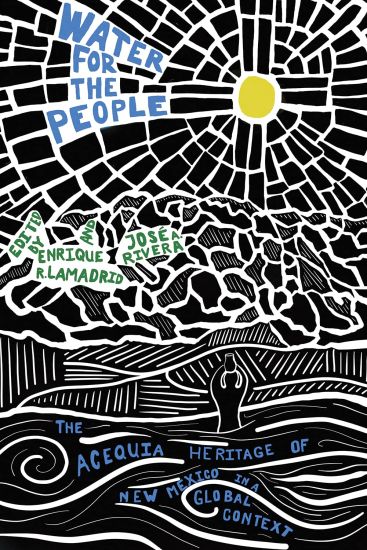
Water for the People

Water for the People

UNIVERSITY OF NEW MEXICO PRESS
2023
pokkari
Water for the People features twenty-five essays by world-renowned acequia scholars and community members that highlight acequia culture, use, and history in New Mexico, northern Mexico, Chile, Peru, Argentina, Spain, the Middle East, Nepal, and the Philippines, situating New Mexico's acequia heritage and its inherent sustainable design within a global framework. The lush landscapes of the upper Río Grande watershed created by acequias dating from as far back as the late sixteenth century continue to irrigate their communities today despite threats of prolonged drought, urbanization, private water markets, extreme water scarcity, and climate change. Water for the People celebrates acequia practices and traditions worldwide and shows how these ancient irrigation systems continue to provide arid regions with a model for water governance, sustainable food systems, and community traditions that reaffirm a deep cultural and spiritual relationship with the land year after year.