Kirjojen hintavertailu. Mukana 12 481 275 kirjaa ja 12 kauppaa.

Kirjahaku

Etsi kirjoja tekijän nimen, kirjan nimen tai ISBN:n perusteella.

1000 tulosta hakusanalla William A. Cook

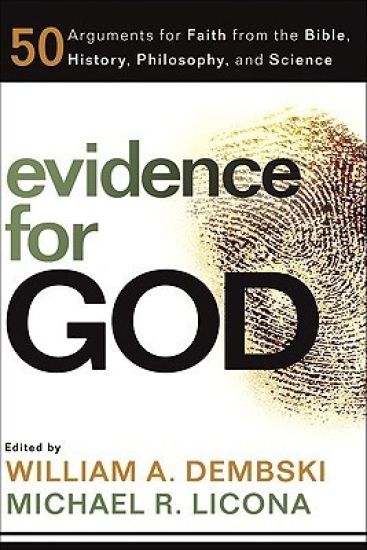
Evidence for God – 50 Arguments for Faith from the Bible, History, Philosophy, and Science

Evidence for God – 50 Arguments for Faith from the Bible, History, Philosophy, and Science

William A. Dembski; Michael R. Licona

Baker Academic, Div of Baker Publishing Group
2010
nidottu
There have always been challenges to belief in God as he is revealed in the Bible and each new year seems to add more questions to the doubter's arsenal. In Evidence for God, leading apologists provide compelling arguments that address the most pressing questions of the day about God, science, Jesus, the Bible, and more, including Is Intelligent Design really a credible explanation of the origins of our world? Did Jesus really exist? Is Jesus really the only way to God? What about those who have never heard the gospel? Is the Bible today what was originally written? What about recently publicized gospels that aren't in the Bible? and much more
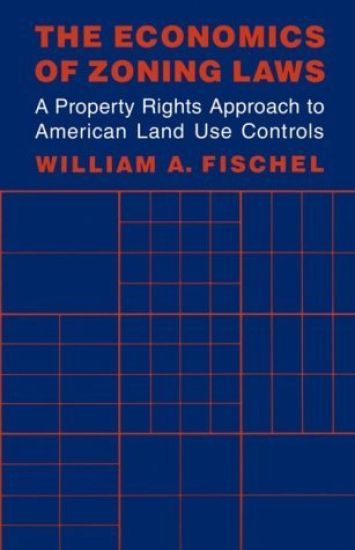
The Economics of Zoning Laws

The Economics of Zoning Laws

William A. Fischel

Johns Hopkins University Press
1987
pokkari
Land use controls can affect the quality of the environment, the provision of public services, the distribution of income and wealth, the development of natural resources, and the growth of the national economy. The Economics of Zoning Laws is the first book to apply the modern economic theory of property rights to all major aspects of zoning.Zoning laws are neither irrational constrints on otherwise efficient markets nor disinterested attempts to correct market failure. Rather, zoning must be viewed as a collective property right, vested in local governments and administered by politicians who rationally repsond to their constituents and to developers as markets for development rights arise.The Economics of Zoning Laws develops the economic theories of property rights and public choice and applies them to three zoning controversies: the siting of a large industrial plant, the exclusionary zoning of the suburbs, and the constitutional protection of propery owners from excessive regulation. Economic and legal theory, William Fischel contends, suggest that payment of damages under the taking clause of the Constitution may provide the most effective remedy for excessive zoning regulations.
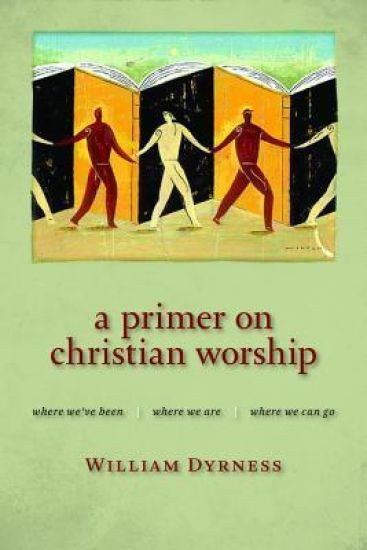
Primer on Christian Worship

Primer on Christian Worship

William A. Dyrness

William B Eerdmans Publishing Co
2009
nidottu
-For all the declarations of advance and creativity made for contemporary worship, - William Dyrness says, -the controversies that swirl around it are anything but new. And they call us to reflect on the sources of our inclinations in our current circumstances.- / A respected scholar of theology and culture, Dyrness here explores where the church has been, theologically and historically speaking, and how that shapes -- and needs to shape -- where the church will go. He shows how both medieval worship and Reformation spirituality have continued to determine the development of Christian worship in both its Catholic and its Protestant forms. / Through accessible language, clear examples, and thoughtful questions for reflection and discussion, Dyrness makes a very vital conversation about worship available to a wide audience of pastors, worship leaders, and church members.
Poetic Theology

Poetic Theology

William A. Dyrness

William B Eerdmans Publishing Co
2010
nidottu
Reveals the presence of God in the creative works of human life and culture What are the -poetics of everyday life-? What can they teach us about God? Art, music, dance, and writing can certainly be -poetic, - but so can such diverse pastimes as fishing, skiing, or attending sports events. Any and all activities that satisfy our fundamental need for play, for celebration, and for ritual, says William Dyrness, are inherently poetic -- and in Poetic Theology he demonstrates that all such activities are places where God is active in the world. All of humanity's creative efforts, Dyrness points out, testify to our intrinsic longing for joy and delight and our deep desire to connect with others, with the created order, and especially with the Creator. This desire is rooted in the presence and calling of God in and through the good creation. With extensive reflection on aesthetics in spirituality, worship, and community development, Dyrness's Poetic Theology will be useful for all who seek fresh and powerful new ways to communicate the gospel in contemporary society.
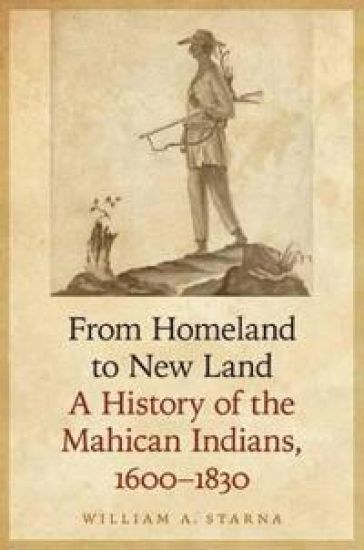
From Homeland to New Land

From Homeland to New Land

William A. Starna

University of Nebraska Press
2013
sidottu
This history of the Mahicans begins with the appearance of Europeans on the Hudson River in 1609 and ends with the removal of these Native people to Wisconsin in the 1830s. Marshaling the methods of history, ethnology, and archaeology, William A. Starna describes as comprehensively as the sources allow the Mahicans while in their Hudson and Housatonic Valley homeland; after their consolidation at the praying town of Stockbridge, Massachusetts; and following their move to Oneida country in central New York at the end of the Revolution and their migration west.The emphasis throughout this book is on describing and placing into historical context Mahican relations with surrounding Native groups: the Munsees of the lower Hudson, eastern Iroquoians, and the St. Lawrence and New England Algonquians. Starna also examines the Mahicans’ interactions with Dutch, English, and French interlopers. The first and most transformative of these encounters was with the Dutch and the trade in furs, which ushered in culture change and the loss of Mahican lands. The Dutch presence, along with the new economy, worked to unsettle political alliances in the region that, while leading to new alignments, often engendered rivalries and war. The result is an outstanding examination of the historical record that will become the definitive work on the Mahican people from the colonial period to the Removal Era.
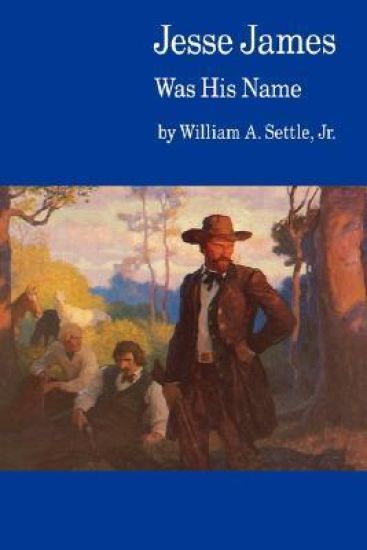
Jesse James Was His Name; or, Fact and Fiction Concerning the Careers of the Notorious James Brothers of Missouri
"Jesse James," said Carl Sandburg, "is the only American bandit who is classical, who is to this country what Robin Hood or Dick Turpin is to England, whose exploits are so close to the mythical and apocryphal." For this definitive study no significant source of information concerning Jesse James and his brother Frank has been neglected, and from it emerges resolution of the debated point: "Were the Jameses common criminals or gallant Robin Hoods?"
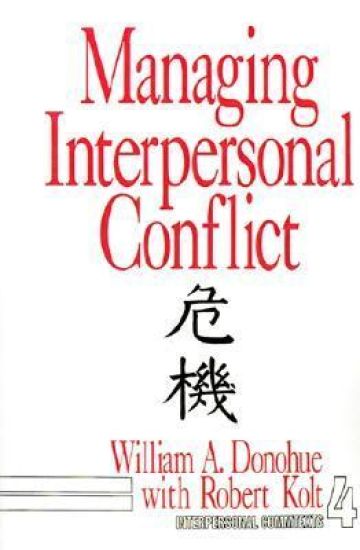
Managing Interpersonal Conflict

Managing Interpersonal Conflict

William A. Donohue

SAGE Publications Inc
1992
nidottu
Managing Interpersonal Conflict helps readers better understand and ultimately manage their routine interpersonal conflicts. Specifically, the book walks readers through the conflict process--from the initial decision of whether or not to confront differences to how to plan the actual confrontation. Donohue deals extensively with the negotiation process and, if negotiation proves unsuccessful, with third-party dispute resolution. The book emphasizes keeping conflicts under control and keeping focused on the issues. The key to managing conflict is to address differences collaboratively so parties can create better solutions and, ultimately, strengthen their relationships. Managing Interpersonal Conflict prepares and encourages the reader to stop avoiding their conflicts and start confronting them. Designed for college and university undergraduates, Donohue's text and the Interpersonal Commtext series will also interest students and professionals in management studies, sociology, organization studies, and social psychology. "They provide a very useful look at a somewhat broader than usual range of conflict issues. . . . Where the decision is to confront, it offers useful approaches to allowing face saving and to issue structuring that will allow the conflict, in many cases, to be readily resolved. . . . The second section . . . provides a useful and easily worked with framework for negotiating, and deals most effectively with the use of and responses to the exercise of power in the negotiation context. . . . The book is exceptionally readable and effective in its presentation of approaches to conflict. While it is not a traditional academic text, periodic references to the conflict literature are used to allow the reader to examine the issues presented in more depth. The book will serve as an outstanding text for a training program in conflict management and can also be used by an individual effectively to learn these techniques." --The Alternative Newsletter
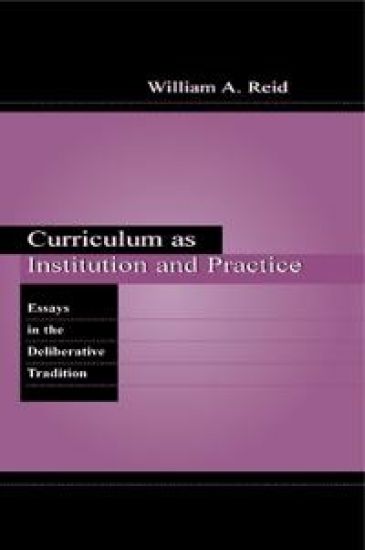
Curriculum as Institution and Practice

Curriculum as Institution and Practice

William A. Reid

Routledge Member of the Taylor and Francis Group
1998
sidottu
This volume brings together a collection of essays by William A. Reid that present and elaborate the deliberative tradition of curriculum theory, and examine the implications of a deliberative perspective for approaches to policy making and school systems. The essays illustrate the development of Reid's understanding of the deliberative tradition and his efforts to extend it from a focus on practice to one that embraces conceptions of schooling as an institution.Institution and practice are the key concepts which guide and illuminate the central thesis of the book: To be effective, a theory of curriculum must be able to talk not only about questions of desirable practice, but also about questions of how practice may be aided or constrained by the nature of the institution within which it takes place. This significant new contribution to the literature of curriculum studies: *represents a unique attempt to synthesize what have often been treated as quite separate issues: questions of the philosophical basis for curriculum decision making, questions of processes of decision making, and questions of the nature of schools and classrooms; *presents its material in an evolutionary way, focusing on the continuing development of ideas, rather than on a "rhetoric of conclusions"; and *offers a summing up of thought and achievement in the deliberative tradition that is not otherwise available.
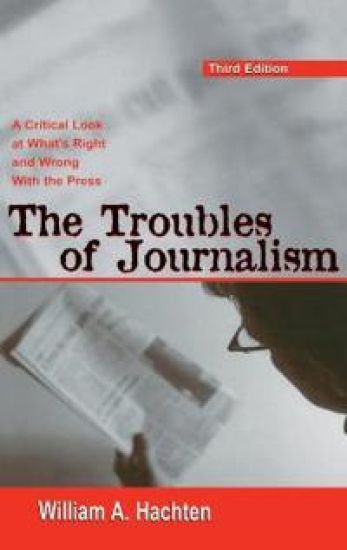
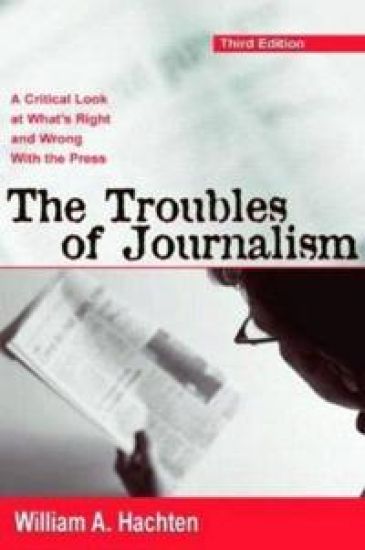
The Troubles of Journalism

The Troubles of Journalism

William A. Hachten

Routledge Member of the Taylor and Francis Group
2004
sidottu
This book looks at criticisms of the journalism profession and evaluates many of the changes in journalism--both positive and negative. In addition, it suggests what the many changes mean for this nation and indeed for the world at large, as American journalism--its methods and standards--has markedly influenced the way many millions overseas receive news and view their world. Based on author William Hachten's 50-year involvement with newspapers and journalism education, The Troubles of Journalism serves as a realistic examination of the profession, and is appropriate for upper-level undergraduate courses in journalism and media criticism.Since the previous edition of The Troubles of Journalism, many significant challenges have occurred in the media: the events of September 11, the war on terrorism, mergers and consolidation of media ownership, new concerns about press credibility, the expanding and controversial role of cable news channels, the growing impact role of news and comment on the Internet, and continuing globalization and controversy over the role of American media in international communications. To do justice to these recent "troubles" of the news media, important additions and modifications have been made in every chapter of this Third Edition.
The Troubles of Journalism

The Troubles of Journalism

William A. Hachten

Routledge Member of the Taylor and Francis Group
2004
nidottu
This book looks at criticisms of the journalism profession and evaluates many of the changes in journalism--both positive and negative. In addition, it suggests what the many changes mean for this nation and indeed for the world at large, as American journalism--its methods and standards--has markedly influenced the way many millions overseas receive news and view their world. Based on author William Hachten's 50-year involvement with newspapers and journalism education, The Troubles of Journalism serves as a realistic examination of the profession, and is appropriate for upper-level undergraduate courses in journalism and media criticism.Since the previous edition of The Troubles of Journalism, many significant challenges have occurred in the media: the events of September 11, the war on terrorism, mergers and consolidation of media ownership, new concerns about press credibility, the expanding and controversial role of cable news channels, the growing impact role of news and comment on the Internet, and continuing globalization and controversy over the role of American media in international communications. To do justice to these recent "troubles" of the news media, important additions and modifications have been made in every chapter of this Third Edition.
The Student's Guide to Successful Project Teams

The Student's Guide to Successful Project Teams

William A Kahn

Routledge Member of the Taylor and Francis Group
2008
nidottu
It is common for undergraduate and graduate students across various disciplines to be placed on teams and assigned group project research reports and presentations which require them to work together. For example a psychology course requires teams to develop, conduct, analyze and present the result of their experiments, a marketing course requires student project teams to prepare marketing plans and present their conclusions, and an organizational behavior course forms teams for the purpose of researching the cultures of different organizations and making presentations about their findings. This new guidebook will be a core text on how to help student project teams confront and successfully resolve issues, tasks and problems. Sections include conceptual material, stories and illustrations, and exercises. Students and teachers in Organizational Behavior, Management, Marketing and all psychology disciplines will find this book of interest.
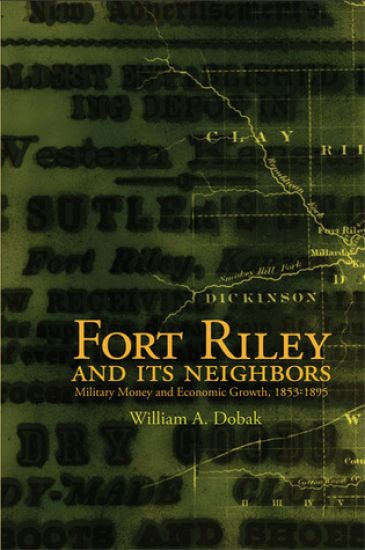
Fort Riley and Its Neighbors

Fort Riley and Its Neighbors

William A. Dobak

University of Oklahoma Press
2007
nidottu
Fort Riley and Its Neighbors is a story of soldiers trying to save money and civilians trying to make it.Fort Riley stands today overlooking the Kansas River because army quartermasters in the 1850s thought that small steamboats could deliver supplies cheaply there. Civilians came to help build the fort and stayed to bid on the quartermaster's contracts for feed and fuel.Army posts were often a magnet for settlers. Contracts for supplies and transportation brought hard-to-find cash to small western towns, replacing systems of barter and credit and integrating them into the national economy.Townspeople kept a covetous eye on Fort Riley's land and its resources, and they voted bond issues to build short-line railroads in order to get competitive freight rates from trans-continental carriers. These short lines put Fort Riley at the center of the nation's transportation system, assuring the fort's survival for the next century.The history of Fort Riley and its neighbors typifies the relations that evolved between the American people and their government throughout the American West. The settlers' approach to federal authority, at once supplicating and conniving, has persisted and thrived and become the national attitude.This book won first place in the Dr. Edward Tihen Historical Research and Publication competition, November 5, 1999. This award is presented by the Kansas State Historical Society for Kansas books written by first-time authors.
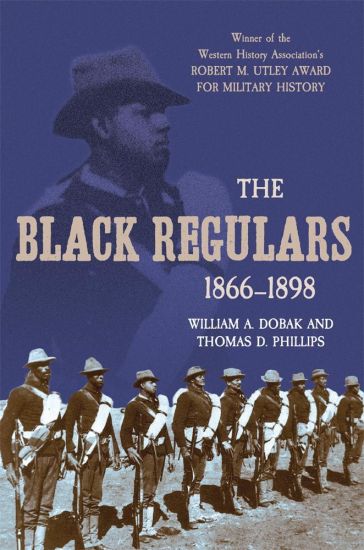
The Black Regulars, 1866-1898

The Black Regulars, 1866-1898

William A. Dobak; Thomas D. Phillips

University of Oklahoma Press
2017
nidottu
Black soldiers first entered the regular army of the United States in the summer of 1866. While their segregated regiments served in the American West for the following three decades, the promise of Reconstruction gave way to the repressiveness of Jim Crow. But black men found a degree of equality in the service: the army treated them no worse than it did their white counterparts.The Black Regulars uses army correspondence, court-martial transcripts, and pension applications to tell who these men were, often in their own words: how they were recruited and how their officers were selected; how the black regiments survived hostile congressional hearings and stringent budget cuts; how enlisted men spent their time, both on and off duty; and how regimental chaplains tried to promote literacy through the army's schools. The authors shed new light on the military justice system, relations between black troops and their mostly white civilian neighbors, their professional reputations, and what veterans faced when they left the army for civilian life.
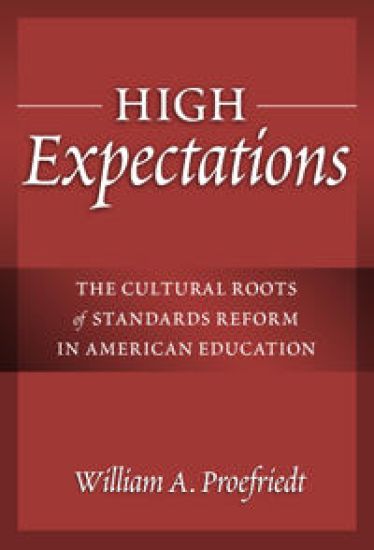
High Expectations

High Expectations

William A. Proefriedt

Teachers' College Press
2008
nidottu
This fascinating historical account sheds much-needed light on the ideas and assumptions of the current standards and accountability movement by focusing on essential questions in education: Who is to be educated? What knowledge is of most worth? How shall we teach and how do students learn? And education toward what ends? The author then compares and contrasts how present reformers have answered these questions and how educational thinkers, including Emerson, Du Bois, and Dewey, have addressed them. By placing today's reforms in historical perspective, educators will be better able to respond thoughtfully to current educational policies and practices. Providing a thorough understanding and critique of today's standards movement, this book shows how the strengths and weaknesses of the present reform movement are rooted in a set of American cultural beliefs about individual possibility and responsibility, about opportunity and merit, and about the role of schooling in creating social change, argues that schools are not the only institution in our society that should be held responsible for the failure to close the achievement gap, encourages educators to step outside of their day-to-day practice to see that there are other ways of ""doing schooling"" based on our past, and offers new paths that reformers can try to address issues, such as curriculum, approaches to learning, testing, and school finance practices.
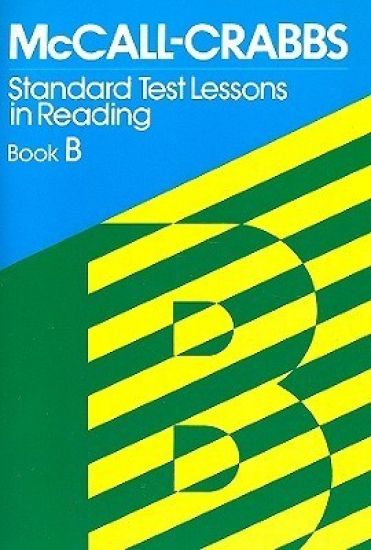
Standard Test Lessons in Reading Book B

Standard Test Lessons in Reading Book B

William A McCall

Teachers' College Press
1979
nidottu
Each book contains a total of 60 short reading selections (fiction and nonfiction) followed by eight multiple choice questions. Scoring will help estimate your student's reading level, reading comprehension, and test-taking ability. The Instructional Benefits of McCall-Crabbs:Supplement basal reading programsMotivate and challenge even the most reluctant readersAllow for individualization with different grade level booksMonitor reading progress over timeProvide a graded informal reading inventoryPractice test-taking skillsProvide “power-work,” progressively timed or untimedOral reading practiceUseful in adult education, ESL, and special educationBook A: Grades 2–4Book B: Grades 3–5Book C: Grades 4–6Book D: Grades 5–7Book E: Grades 6–8Book F: Grades 7–12Teachers' Manual/Answer Key is for all books in the series.Student Answer Sheet is available as a free download.
Standard Test Lessons in Reading, Book D

Standard Test Lessons in Reading, Book D

William A McCall; Lelah Crabbs Schroeder

Teachers' College Press
1979
nidottu
Each book contains a total of 60 short reading selections (fiction and nonfiction) followed by eight multiple choice questions. Scoring will help estimate your student's reading level, reading comprehension, and test-taking ability. The Instructional Benefits of McCall-Crabbs:-Supplement basal reading programs-Motivate and challenge even the most reluctant readers-Allow for individualization with different grade level books-Monitor reading progress over time-Provide a graded informal reading inventory-Practice test-taking skills Provide “power-work,” progressively timed or untimed-Oral reading practice-Useful in adult education, ESL, and special education
McCall-Crabbs Standard Test Lessons in Reading, Teachers Manual/Answer Key
This Teachers' Manual/Answer Key is for all books in the series.Student Answer Sheet is available as a free download.Each book contains a total of 60 short reading selections (fiction and nonfiction) followed by eight multiple choice questions. Scoring will help estimate your student's reading level, reading comprehension, and test-taking ability. The Instructional Benefits of McCall-Crabbs:Supplement basal reading programsMotivate and challenge even the most reluctant readersAllow for individualization with different grade level booksMonitor reading progress over timeProvide a graded informal reading inventoryPractice test-taking skillsProvide "power-work," progressively timed or untimedOral reading practiceUseful in adult education, ESL, and special educationBook A: Grades 2–4Book B: Grades 3–5Book C: Grades 4–6Book D: Grades 5–7Book E: Grades 6–8Book F: Grades 7–12