Kirjahaku
Etsi kirjoja tekijän nimen, kirjan nimen tai ISBN:n perusteella.
1000 tulosta hakusanalla Alexandra Hackl
This history of the U.S. Public Health Service's efforts to educate Americans about sex makes clear why federally funded sex education has been haphazard, ad hoc, and often ineffectual. Since launching its first sex ed program during World War I, the Public Health Service has dominated federal sex education efforts. Alexandra M. Lord draws on medical research, news reports, the expansive records of the Public Health Service, and interviews with former surgeons general to examine these efforts, from early initiatives through the administration of George W. Bush. Giving equal voice to many groups in America-middle class, working class, black, white, urban, rural, Christian and non-Christian, scientist and theologian-Lord explores how federal officials struggled to create sex education programs that balanced cultural and public health concerns. She details how the Public Health Service left an indelible mark on federally and privately funded sex education programs through partnerships and initiatives with community organizations, public schools, foundations, corporations, and religious groups. In the process, Lord explains how tensions among these organizations and local, state, and federal officials often exacerbated existing controversies about sexual behavior. She also discusses why the Public Health Service's promotional tactics sometimes inadvertently fueled public fears about the federal government's goals in promoting, or not promoting, sex education. This thoroughly documented and compelling history of the U.S. Public Health Service's involvement in sex education provides new insights into one of the most contested subjects in America.
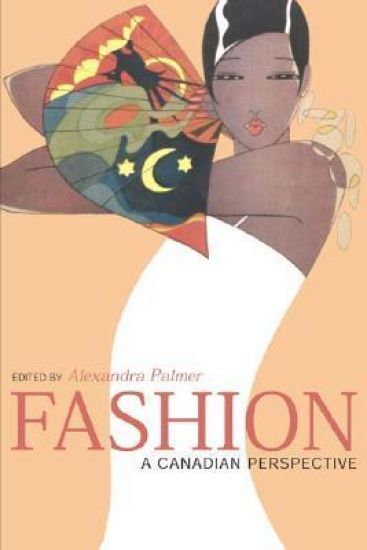
How does a country dress itself? From Montreal's 'Retail Mile,' to Ontario's millinery trade, to how war and television can effect the garment industry or whether tailoring can make a cultural impact, Alexandra Palmer gathers together some of the top curators, designers, fashion writers, historians, and artists in the country to create a truly dynamic and thought-provoking collection of essays. Controversial and unconventional, Fashion: A Canadian Perspective challenges readers to consider aspects of Canadian identity in terms of what its citizenship has chosen to wear for the last three centuries, and the internal and external influences of those socio-cultural decisions. Covering a broad range of topics - such as the iconic Hudson Bay Blanket Coats, garment factories of the late 1800s, specific Canadian fashion couturiers whose influences reach international stages, and the contemporary role of fashion journalists and their effect on trends - this collection breaks new ground in producing multiple perspectives on fashion and fashion dress. In a country that has given birth to such global fashion corporations as Club Monaco, Roots, and MAC, Fashion: A Canadian Perspective develops the first intriguing and readable historiography that links past to future, couture vision to trade trends, and heritage costuming to FashionTelevision.
B.F. Skinner (1904-1990) is one of the most famous and influential figures in twentieth century psychology. A best-selling author, inventor, and social commentator, Skinner was both a renowned scientist and a public intellectual known for his controversial theories of human behavior. Beyond the Box is the first full-length study of the ways in which Skinner's ideas left the laboratory to become part of the post-war public's everyday lives, and chronicles both the enthusiasm and caution with which this process was received. Using selected case studies, Alexandra Rutherford provides a fascinating account of Skinner and his acolytes' attempts to weave their technology of human behavior into the politically turbulent fabric of 1950s-70s American life. To detail their innovative methods, Rutherford uses extensive archival materials and interviews to study the Skinnerians' creation of human behavior laboratories, management programs for juvenile delinquents, psychiatric wards, and prisons, as well as their influence on the self-help industry with popular books on how to quit smoking, lose weight, and be more assertive. A remarkable look at a post-war scientific and technological revolution, Beyond the Box is a rewarding study of how behavioral theories met real-life problems, and the ways in which Skinner and his followers continue to influence the present.
Artemisia Gentileschi, a significant female artist of the late 1600s, is brought to life as Lapierre captures the flavor of Baroque Italy as well as the emotional life of this fascinating woman. A major exhibition of the artist's paintings opens in February 2002 at the Metropolitan Museum of Art in New York City. of color photos.
"A truly extraordinary memoir about a mother's loss of her son: beautiful, fearless, raw and an utterly compelling read." -- Helen Macdonald, author of H Is For Hawk"Fair to say, I was in a ribald state the summer before my fiftieth birthday." And so begins Alexandra Fuller's open, vivid new memoir, Fi. It's midsummer in Wyoming and Alexandra is barely hanging on. Grieving her father and pining for her home country of Zimbabwe, reeling from a midlife breakup, freshly sober and piecing her way uncertainly through a volatile new relationship with a younger woman, Alexandra vows to get herself back on even keel. And then - suddenly and incomprehensibly - her son Fi, at 21 years old, dies in his sleep. No stranger to loss - young siblings, a parent, a home country - Alexandra is nonetheless leveled. At the same time, she is painfully aware that she cannot succumb and abandon her two surviving daughters as her mother before her had done. From a sheep wagon deep in the mountains of Wyoming to a grief sanctuary in New Mexico to a silent meditation retreat in Alberta, Canada, Alexandra journeys up and down the spine of the Rocky Mountains in an attempt to find how to grieve herself whole. There is no answer, and there are countless answers - in poetry, in rituals and routines, in nature and in the indigenous wisdom she absorbed as a child in Zimbabwe. By turns disarming, devastating and unexpectedly, blessedly funny, Alexandra recounts the wild medicine of painstakingly grieving a child in a culture that has no instructions for it.
From the award-winning New York Times-bestselling author of Don't Let's Go To The Dogs Tonight, Alexandra Fuller, comes a career defining memoir about grieving the sudden loss of her twenty-one-year-old child"A mesmeric celebration of a boy who died too soon, a mother's love and her resilience. It will help others surviving loss -- surviving life." -- David Sheff, New York Times"Fair to say, I was in a ribald state the summer before my fiftieth birthday." And so begins Alexandra Fuller's open, vivid new memoir, Fi. It's midsummer in Wyoming and Alexandra is barely hanging on. Grieving her father and pining for her home country of Zimbabwe, reeling from a midlife breakup, freshly sober and piecing her way uncertainly through a volatile new relationship with a younger woman, Alexandra vows to get herself back on even keel.And then - suddenly and incomprehensibly - her son Fi, at 21 years old, dies in his sleep.No stranger to loss - young siblings, a parent, a home country - Alexandra is nonetheless leveled. At the same time, she is painfully aware that she cannot succumb and abandon her two surviving daughters as her mother before her had done. From a sheep wagon deep in the mountains of Wyoming to a grief sanctuary in New Mexico to a silent meditation retreat in Alberta, Canada, Alexandra journeys up and down the spine of the Rocky Mountains in an attempt to find how to grieve herself whole. There is no answer, and there are countless answers - in poetry, in rituals and routines, in nature and in the indigenous wisdom she absorbed as a child in Zimbabwe. By turns disarming, devastating and unexpectedly, blessedly funny, Alexandra recounts the wild medicine of painstakingly grieving a child in a culture that has no instructions for it.
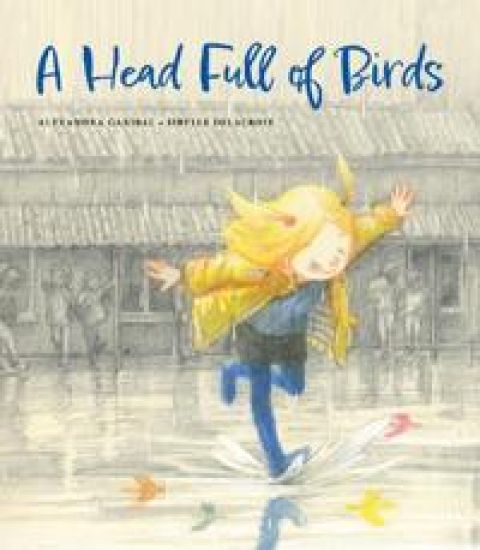
A school story to encourage friendship and understanding among children of all abilities. When the other kids mock her at recess, Nanette doesn't listen. She'd rather focus on puddles, spider webs, and whatever she can create with her hands. One day a boy named Noah--who'd rather fly paper airplanes than listen to the lesson--starts sitting at Nanette's table. At first, Noah finds Nanette confusing and a little frustrating. But her ideas look like so much fun... Expressively illustrated in colored pencils, this school story will foster discussions about navigating differences and embracing creativity. A Head Full of Birds is a sensitive portrayal of neurodiverse friendships and the joy that comes when we reimagine the world together.
A Stanford University Press classic.
In recent years, the question of the post-Cold War NATO, particularly in relation to the former communist countries of Europe, has been at the heart of a series of international reform debates. NATO in the "New Europe" contributes to these debates by arguing that, contrary to conventional assumptions about the role of international security organizations, NATO has been systematically involved in the process of building liberal democracy in the former communist countries of Central and Eastern Europe. The book also seeks to contribute to the development of an international political sociology of socialization. It draws on arguments developed by political theorists, sociologists, and social psychologists to examine the dynamics and implications of socialization practices conducted by an international institution.
The Sincerity Edge
Alexandra Christina Countess of Frederiksborg; Timothy L. Fort
STANFORD UNIVERSITY PRESS
2017
sidottu
Recognizing their role as "corporate citizens," companies are seeking guidance on how to be true to their missions, principled in practice, and well regarded for their contributions to society. As this book reveals, the key lies in sincerity—the sum of values like authenticity, integrity, and trust. Countess Alexandra Christina, a European corporate director, and Timothy L. Fort, a leading American scholar, delineate a clear and actionable model for bringing sincerity to the business context. Their vision for sincerity complies with law, aligns corporate social and financial performance, and values corporate ethics in its own right, rather than as a means to an end. Underpinning this model is a synthesis of the top research in the field and a suite of new interviews with current and former CEOs. Tracing inspirational tales and scandals alike, this book shows how leaders can head up companies that more reliably make good decisions and conduct themselves in a trustworthy manner. It then concludes with twelve concrete actions that businesses can take to cultivate "the sincerity edge."
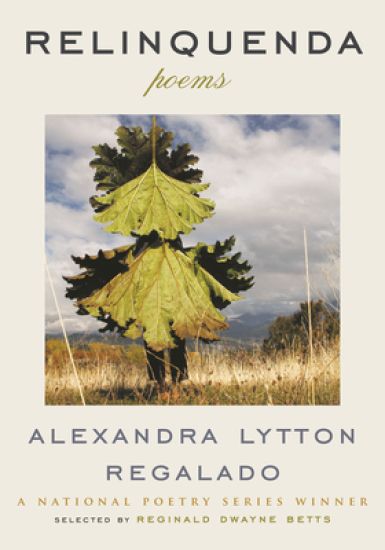
A 4-part poetry collection that explores women's roles in familial dynamics, immigration, and El Salvador's civil war while reflecting on the death of the poet's father A National Poetry Series winner, selected by the celebrated poet Reginald Dwayne Betts When COVID-19 broke and the United States closed the border to travel, Alexandra Lytton Regalado was separated from family back in El Salvador. She wrote Relinquenda entirely during lockdown as a meditation on cancer, the passing of her father, and the renewed significance of community. The central part of the collection focuses on her father during his 6-year struggle with cancer and considers how his stoicism, alcoholism, and hermitage might serve as mirror and warning. In contrast, she dedicates other poems to what it means for daughters, mothers, and wives to care for another as reflected in her relationships with the men in her life. Situated in the tropical landscapes of Miami, Florida and El Salvador, the poems also negotiate the meaning of home, reflecting on immigration and the ties between United States and El Salvador 30 years after her birth country's decade-long civil war. In a lyrical and often bilingual voice, Regalado explores the impermanence and the body, communication and inarticulation, and the need to let go in order to heal regrets.
What is the alt-right? What do they believe, and how did they take center stage in the American social and political consciousness? From a loose movement that lurked in the shadows in the early 2000s, the alt-right has achieved a level of visibility that has allowed it to expand significantly throughout America's cultural, political, and digital landscapes. Racist, sexist, and homophobic beliefs that were previously unspeakable have become commonplace, normalized, and accepted--endangering American democracy and society as a whole. Yet in order to dismantle the destructive movement that has invaded our public consciousness, we must first understand the core beliefs that drive the alt-right. To help guide us through the contemporary moment, historian Alexandra Minna Stern excavates the alt-right memes and tropes that have erupted online and explores the alt-right's central texts, narratives, constructs, and insider language. She digs to the root of the alt-right's motivations: their deep-seated fear of an oncoming "white genocide" that can only be remedied through swift and aggressive action to reclaim white power. As the group makes concerted efforts to cast off the vestiges of neo-Nazism and normalize their appearance and their beliefs, the alt-right and their ideas can be hard to recognize. Through careful analysis, Stern brings awareness to the underlying concepts that guide the alt-right and animate its overlapping forms of racism, xenophobia, transphobia, and anti-egalitarianism. She explains the key ideas of "red-pilling," strategic trolling, gender essentialism, and the alt-right's ultimate fantasy: a future where minorities have been removed and "cleansed" from the body politic and a white ethnostate is established in the United States. By unearthing the hidden mechanisms that power white nationalism, Stern reveals just how pervasive this movement truly is.
The Plague Files
Alexandra Parma Cook; Noble David Cook
Louisiana State University Press
2009
sidottu
In the first half of the 1580s, Seville, Spain, confronted a series of potentially devastating crises. In three years, the city faced a brush with deadly contagion, including the plague; the billeting of troops in preparation for Philip II's invasion of Portugal; crop failure and famine following drought and locust infestation; an aborted uprising of the Moriscos (Christian converts from Islam); bankruptcy of the municipal government; the threat of pollution and contaminated water; and the disruption of commerce with the Indies. While each of these problems would be formidable on its own, when taken together, the crises threatened Seville's social and economic order. In The Plague Files, Alexandra Parma Cook and Noble David Cook reconstruct daily life during this period in sixteenth-century Seville, exposing the difficult lives of ordinary men, women, and children and shedding light on the challenges municipal officials faced as they attempted to find solutions to the public health emergencies that threatened the city's residents. Filling several gaps in the historiography of early modern Spain, this volume offers a history of not only Seville's city government but also the medical profession in Andalusia, from practitioner nurses and barber surgeons (who were often the first to encounter symptoms of plague) to well-trained university physicians. All levels of society enter the picture -- from slaves to the local aristocracy. Drawing on detailed records of city council deliberations, private and public correspondence, reports from physicians and apothecaries, and other primary sources, Cook and Cook recount Seville's story in the words of the people who lived it -- the city's governor, the female innkeepers charged with reporting who recently died in their establishments, the physicians who describe the plague victims' symptoms. As Cook and Cook's detailed history makes clear, in spite of numerous emergencies, Seville's bureaucracy functioned with relative normality, providing basic services necessary for the survival of its citizens. Their account of the travails of 1580s Seville provides an indispensable resource for those studying early modern Spain.
The Plague Files
Alexandra Parma Cook; Noble David Cook
Louisiana State University Press
2012
nidottu
In the first half of the 1580s, Seville, Spain, confronted a series of potentially devastating crises. In three years, the city faced a brush with deadly contagion, including the plague; the billeting of troops in preparation for Philip II's invasion of Portugal; crop failure and famine following drought and locust infestation; an aborted uprising of the Moriscos (Christian converts from Islam); bankruptcy of the municipal government; the threat of pollution and contaminated water; and the disruption of commerce with the Indies. While each of these problems would be formidable on its own, when taken together, the crises threatened Seville's social and economic order. In The Plague Files, Alexandra Parma Cook and Noble David Cook reconstruct daily life during this period in sixteenth-century Seville, exposing the difficult lives of ordinary men, women, and children and shedding light on the challenges municipal officials faced as they attempted to find solutions to the public health emergencies that threatened the city's residents. Filling several gaps in the historiography of early modern Spain, this volume offers a history of not only Seville's city government but also the medical profession in Andalusia, from practitioner nurses and barber surgeons (who were often the first to encounter symptoms of plague) to well-trained university physicians. All levels of society enter the picture -- from slaves to the local aristocracy. Drawing on detailed records of city council deliberations, private and public correspondence, reports from physicians and apothecaries, and other primary sources, Cook and Cook recount Seville's story in the words of the people who lived it -- the city's governor, the female innkeepers charged with reporting who recently died in their establishments, the physicians who describe the plague victims' symptoms. As Cook and Cook's detailed history makes clear, in spite of numerous emergencies, Seville's bureaucracy functioned with relative normality, providing basic services necessary for the survival of its citizens. Their account of the travails of 1580s Seville provides an indispensable resource for those studying early modern Spain.
Before Fanfiction investigates the overlapping cultures of fandom and American literature from the late 1800s to the mid-1940s, exploding the oft-repeated myth that fandom has its origins in the male-dominated letter columns of science fiction pulp magazines in the 1930s. By reexamining the work of popular American women writers and their fans, Alexandra Edwards recovers the literary history of American media fandom, drawing previously ignored fangirls into the spotlight.
Luis Gerónimo de Oré
Alexandra Parma Cook; Noble David Cook
LOUISIANA STATE UNIVERSITY PRESS
2023
sidottu
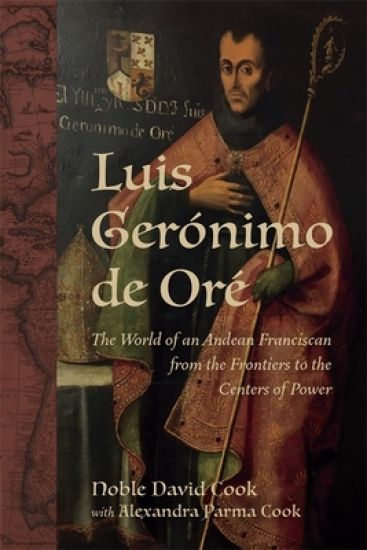
Born in a provincial city in the Peruvian Andes, the Franciscan linguist and theologian Luis Gerónimo de Oré (1554–1630) lived during a critical period in the formation of the modern world, as the global empire of Spain engaged in a nearly continuous struggle over resources and religion.In the first full-length biography of Oré, Noble David Cook and Alexandra Parma Cook reconstruct the friar's life and the communities in which he circulated, tracing the career of this first-generation Creole from his roots in Huamanga to his work in Andean missions, his activities at the royal courts of Spain and throughout Spanish America, until his final years as bishop of Concepción, Chile. While serving in Peru's Colca Valley, Oré composed multilingual texts, translating doctrinal concepts into the indigenous languages Quechua and Aymara, alongside Latin and Spanish, which missionaries and secular clergy frequently used in their conversion efforts. As commissioner to Cuba and La Florida, he inspected the frontier missions along the coast of what became the southeastern United States and wrote an influential history of these outposts and their environment. After Philip III dispatched him to Concepción, Oré spent his last years working in the southernmost end of the Americas, where he continued his advocacy for indigenous justice and engaged in heated arguments with the governor over defensive war, royal patronage, and Indian enslavement.Drawn from research conducted in Spain and Latin America over several decades, this consequential biography recovers from obscurity a colonial friar whose legacy continues in the Andean world today.
Before Fanfiction investigates the overlapping cultures of fandom and American literature from the late 1800s to the mid-1940s, exploding the oft-repeated myth that fandom has its origins in the male-dominated letter columns of science fiction pulp magazines in the 1930s. By reexamining the work of popular American women writers and their fans, Alexandra Edwards recovers the literary history of American media fandom, drawing previously ignored fangirls into the spotlight.
In World War II, Great Britain needed lumber to make planes, ships, and even newspapers--but there weren't enough men to cut down the trees. Enter the fearless Lumber Jills These young women may not have had much woodcutting experience, but they each had two hands willing to work and one stout heart, and they came together to do their part. Discover this lyrical story of home front heroism and female friendship.
Teaching As Inquiry
Alexandra Weinbaum; David Allen; Tina Blythe; Katherine Simon; Steve Seidel; Catherine Saldutti
Teachers' College Press
2004
nidottu
This book offers an engaging and effective approach to improving teacher and student learning. Based on the experiences of three leading educational organizations, the authors provide invaluable, research-based guidelines for incorporating inquiry into teacher's instructional practices and student work as part of the ongoing work of schools. In addition to discussing the lessons learned and questions raised by inquiry work, this volume includes specific considerations for determining who should be involved, what work should be under review, how it should be reviewed, and how such inquiry should be supported by the school.
Lessons and Legacies XIII
Alexandra Garbarini; Paul Jaskot; Brad Prager; Dana Smith; Marion Kaplan; Kaelber Lutz; Kubátová Hana; Martin Dean; Jan Grabowski; Simone Gigliotti; Pedro Correa Martín-Arroyo; Jonathan Druker; Gershon Greenberg; Lissa Skitolsky; Dorota Glowacka
Northwestern University Press
2018
nidottu
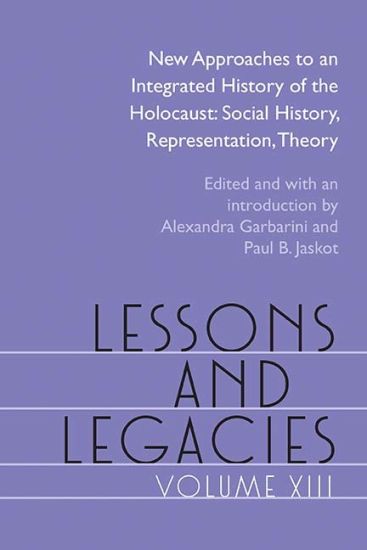
The social history of the genocide, its representation in postwar culture, and new theoretical approaches stand at the forefront of current research in a range of disciplines. Analyses at the most intimate scale—of the individual or of a particular locale— are juxtaposed with those that turn to broader studies of the war or postwar order. Complementing these different scales are theoretical investigations that address individual agency, moral judgment, and the construction of meaning and memory in the study of the victims of the Holocaust and in our understanding of society as a whole. Together they mark the contemporary scholarly landscape of Holocaust studies, which includes history as well as film and literary studies, philosophy, and religious studies (among other disciplines). Each of the volume's three sections contributes to understanding the Holocaust and postwar ramifications of the genocide by focusing on: 1) the history of specific communities of both victims and perpetrators; 2) postwar cultural representations; and 3) new theoretical understandings of each. The essays in this volume thus represent new interests in the field that contribute to building integrated histories of the Holocaust.