This classic cookbook offers so much more than a collection of recipes-it captures the spirit of the Russian people and their cuisine. From zavtrak (breakfast) to uzhin (dinner), Russians love to eat heartily. Originally published in 1947, The Best of Russian Cooking is a treasured classic that combines authentic Russian recipes with culinary tips and invaluable cultural insights. This expanded edition features a concise list of menu terms, sections on Russian table traditions and mealtimes, and a guide to special cooking utensils. A survey of the tastiest Russian cuisine, this book includes 300 recipes for popular dishes such as beef stroganoff and borscht, as well as many lesser-known dishes which are daily fare in Russia-kotleti (meatballs), piroshki (dumplings with meat or vegetables) and tvorojniki (cottage cheese cakes).
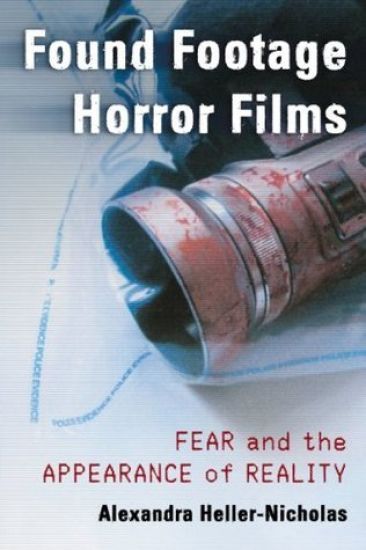
As the horror subgenre du jour, found footage horror's amateur filmmaking look has made it available to a range of budgets. Surviving by adapting to technological and cultural shifts and popular trends, found footage horror is a successful and surprisingly complex experiment in blurring the lines between quotidian reality and horror's dark and tantalizing fantasies. Found Footage Horror Films explores the subgenre's stylistic, historical and thematic development. It examines the diverse prehistory beyond Man Bites Dog (1992) and Cannibal Holocaust (1980), paying attention to the safety films of the 1960s, the snuff-fictions of the 1970s, and to television reality horror hoaxes and mockumentaries during the 1980s and 1990s in particular. It underscores the importance of The Blair Witch Project (1999) and Paranormal Activity (2007), and considers YouTube's popular rise in sparking the subgenre's recent renaissance.
Now in paperback, the New York Times bestseller-with over 91,000 copies in print-that takes you behind closed doors to see what really goes on in America's sororities. Ever wonder what sorority life is really like In Pledged, bestselling author Alexandra Robbins goes undercover to expose the dark side of collegiate sisterhood-the psychological abuse, hazing rituals, and widespread body image disorders-while at the same time introducing us to many of the intelligent, successful women within its ranks. The result is a compelling sociological exploration of the powerful influence that these organizations wield over young women today. With its fly-on-the-wall voyeurism and remarkable insight, Pledged paints a sharp-eyed portrait of the intriguing and paradoxical world of modern-day sororities.
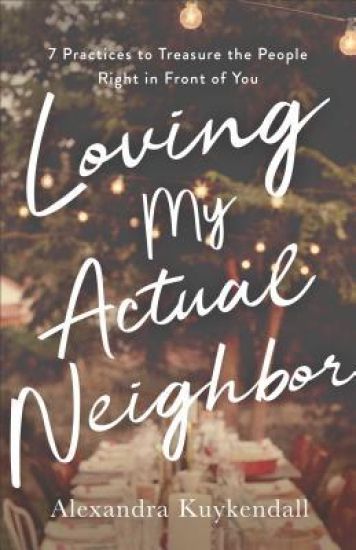
Feel Satisfied with Who and Where You AreIn a world of comparison and discontent, it can feel impossible to be happy with life as we know it. Other people seem to have it all together, to be finding success, to be having more fun. But we weren't meant for a life characterized by dissatisfaction.In this entertaining and relatable book, Alexandra Kuykendall chronicles her nine-month experiment to rekindle her love of her ordinary "actual" life. After wiping her calendar as clean as a mother of four can, Kuykendall focuses on one aspect of her life each month, searching for ways to more fully enjoy her current season. By intentionally adding one thing each month that will make her jump for joy, she provides a practical challenge women can easily replicate. With humor, poignancy, and plenty of personal stories, Kuykendall weaves together spiritual themes and practical application into a holy self-awareness, showing women how a few small changes in their routines can improve their enjoyment of this crazy-busy life.Endorsement"If you ever get the chance to read anything written by Alexandra Kuykendall, take it. She is a gentle, trustworthy storyteller who lives the words she writes about."--Emily P. Freeman, author of Simply Tuesday
As Christians, we know we are called to love our neighbor. We may even grasp that "neighbor" encompasses more than just the people living next door or down the street. But what we too often don't know is how to begin. How do we love our neighbor? Where do we start? What does this look like in our increasingly isolated world?Following practices outlined in the first chapter of 2 Peter, Alexandra Kuykendall lays out the framework for where to begin. From practicing humility to listening with understanding to being generous in our relationships, Loving My Actual Neighbor offers practical, start-now steps readers can take to love their neighbors. With her approachable, friendly tone and down-to-earth advice, Kuykendall has carved out for herself a place in the hearts of readers, who will be thrilled to extend her commonsense approach into this sphere of their lives.
This history of the U.S. Public Health Service's efforts to educate Americans about sex makes clear why federally funded sex education has been haphazard, ad hoc, and often ineffectual. Since launching its first sex ed program during World War I, the Public Health Service has dominated federal sex education efforts. Alexandra M. Lord draws on medical research, news reports, the expansive records of the Public Health Service, and interviews with former surgeons general to examine these efforts, from early initiatives through the administration of George W. Bush. Giving equal voice to many groups in America-middle class, working class, black, white, urban, rural, Christian and non-Christian, scientist and theologian-Lord explores how federal officials struggled to create sex education programs that balanced cultural and public health concerns. She details how the Public Health Service left an indelible mark on federally and privately funded sex education programs through partnerships and initiatives with community organizations, public schools, foundations, corporations, and religious groups. In the process, Lord explains how tensions among these organizations and local, state, and federal officials often exacerbated existing controversies about sexual behavior. She also discusses why the Public Health Service's promotional tactics sometimes inadvertently fueled public fears about the federal government's goals in promoting, or not promoting, sex education. This thoroughly documented and compelling history of the U.S. Public Health Service's involvement in sex education provides new insights into one of the most contested subjects in America.
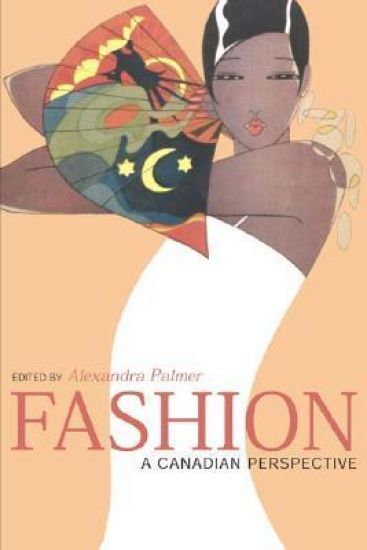
How does a country dress itself? From Montreal's 'Retail Mile,' to Ontario's millinery trade, to how war and television can effect the garment industry or whether tailoring can make a cultural impact, Alexandra Palmer gathers together some of the top curators, designers, fashion writers, historians, and artists in the country to create a truly dynamic and thought-provoking collection of essays. Controversial and unconventional, Fashion: A Canadian Perspective challenges readers to consider aspects of Canadian identity in terms of what its citizenship has chosen to wear for the last three centuries, and the internal and external influences of those socio-cultural decisions. Covering a broad range of topics - such as the iconic Hudson Bay Blanket Coats, garment factories of the late 1800s, specific Canadian fashion couturiers whose influences reach international stages, and the contemporary role of fashion journalists and their effect on trends - this collection breaks new ground in producing multiple perspectives on fashion and fashion dress. In a country that has given birth to such global fashion corporations as Club Monaco, Roots, and MAC, Fashion: A Canadian Perspective develops the first intriguing and readable historiography that links past to future, couture vision to trade trends, and heritage costuming to FashionTelevision.
B.F. Skinner (1904-1990) is one of the most famous and influential figures in twentieth century psychology. A best-selling author, inventor, and social commentator, Skinner was both a renowned scientist and a public intellectual known for his controversial theories of human behavior. Beyond the Box is the first full-length study of the ways in which Skinner's ideas left the laboratory to become part of the post-war public's everyday lives, and chronicles both the enthusiasm and caution with which this process was received. Using selected case studies, Alexandra Rutherford provides a fascinating account of Skinner and his acolytes' attempts to weave their technology of human behavior into the politically turbulent fabric of 1950s-70s American life. To detail their innovative methods, Rutherford uses extensive archival materials and interviews to study the Skinnerians' creation of human behavior laboratories, management programs for juvenile delinquents, psychiatric wards, and prisons, as well as their influence on the self-help industry with popular books on how to quit smoking, lose weight, and be more assertive. A remarkable look at a post-war scientific and technological revolution, Beyond the Box is a rewarding study of how behavioral theories met real-life problems, and the ways in which Skinner and his followers continue to influence the present.
Artemisia Gentileschi, a significant female artist of the late 1600s, is brought to life as Lapierre captures the flavor of Baroque Italy as well as the emotional life of this fascinating woman. A major exhibition of the artist's paintings opens in February 2002 at the Metropolitan Museum of Art in New York City. of color photos.
"A truly extraordinary memoir about a mother's loss of her son: beautiful, fearless, raw and an utterly compelling read." -- Helen Macdonald, author of H Is For Hawk"Fair to say, I was in a ribald state the summer before my fiftieth birthday." And so begins Alexandra Fuller's open, vivid new memoir, Fi. It's midsummer in Wyoming and Alexandra is barely hanging on. Grieving her father and pining for her home country of Zimbabwe, reeling from a midlife breakup, freshly sober and piecing her way uncertainly through a volatile new relationship with a younger woman, Alexandra vows to get herself back on even keel. And then - suddenly and incomprehensibly - her son Fi, at 21 years old, dies in his sleep. No stranger to loss - young siblings, a parent, a home country - Alexandra is nonetheless leveled. At the same time, she is painfully aware that she cannot succumb and abandon her two surviving daughters as her mother before her had done. From a sheep wagon deep in the mountains of Wyoming to a grief sanctuary in New Mexico to a silent meditation retreat in Alberta, Canada, Alexandra journeys up and down the spine of the Rocky Mountains in an attempt to find how to grieve herself whole. There is no answer, and there are countless answers - in poetry, in rituals and routines, in nature and in the indigenous wisdom she absorbed as a child in Zimbabwe. By turns disarming, devastating and unexpectedly, blessedly funny, Alexandra recounts the wild medicine of painstakingly grieving a child in a culture that has no instructions for it.
From the award-winning New York Times-bestselling author of Don't Let's Go To The Dogs Tonight, Alexandra Fuller, comes a career defining memoir about grieving the sudden loss of her twenty-one-year-old child"A mesmeric celebration of a boy who died too soon, a mother's love and her resilience. It will help others surviving loss -- surviving life." -- David Sheff, New York Times"Fair to say, I was in a ribald state the summer before my fiftieth birthday." And so begins Alexandra Fuller's open, vivid new memoir, Fi. It's midsummer in Wyoming and Alexandra is barely hanging on. Grieving her father and pining for her home country of Zimbabwe, reeling from a midlife breakup, freshly sober and piecing her way uncertainly through a volatile new relationship with a younger woman, Alexandra vows to get herself back on even keel.And then - suddenly and incomprehensibly - her son Fi, at 21 years old, dies in his sleep.No stranger to loss - young siblings, a parent, a home country - Alexandra is nonetheless leveled. At the same time, she is painfully aware that she cannot succumb and abandon her two surviving daughters as her mother before her had done. From a sheep wagon deep in the mountains of Wyoming to a grief sanctuary in New Mexico to a silent meditation retreat in Alberta, Canada, Alexandra journeys up and down the spine of the Rocky Mountains in an attempt to find how to grieve herself whole. There is no answer, and there are countless answers - in poetry, in rituals and routines, in nature and in the indigenous wisdom she absorbed as a child in Zimbabwe. By turns disarming, devastating and unexpectedly, blessedly funny, Alexandra recounts the wild medicine of painstakingly grieving a child in a culture that has no instructions for it.
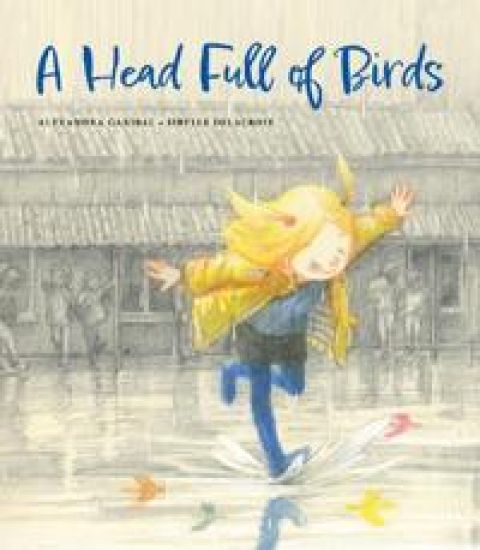
A school story to encourage friendship and understanding among children of all abilities. When the other kids mock her at recess, Nanette doesn't listen. She'd rather focus on puddles, spider webs, and whatever she can create with her hands. One day a boy named Noah--who'd rather fly paper airplanes than listen to the lesson--starts sitting at Nanette's table. At first, Noah finds Nanette confusing and a little frustrating. But her ideas look like so much fun... Expressively illustrated in colored pencils, this school story will foster discussions about navigating differences and embracing creativity. A Head Full of Birds is a sensitive portrayal of neurodiverse friendships and the joy that comes when we reimagine the world together.
In recent years, the question of the post-Cold War NATO, particularly in relation to the former communist countries of Europe, has been at the heart of a series of international reform debates. NATO in the "New Europe" contributes to these debates by arguing that, contrary to conventional assumptions about the role of international security organizations, NATO has been systematically involved in the process of building liberal democracy in the former communist countries of Central and Eastern Europe. The book also seeks to contribute to the development of an international political sociology of socialization. It draws on arguments developed by political theorists, sociologists, and social psychologists to examine the dynamics and implications of socialization practices conducted by an international institution.
Recognizing their role as "corporate citizens," companies are seeking guidance on how to be true to their missions, principled in practice, and well regarded for their contributions to society. As this book reveals, the key lies in sincerity—the sum of values like authenticity, integrity, and trust. Countess Alexandra Christina, a European corporate director, and Timothy L. Fort, a leading American scholar, delineate a clear and actionable model for bringing sincerity to the business context. Their vision for sincerity complies with law, aligns corporate social and financial performance, and values corporate ethics in its own right, rather than as a means to an end. Underpinning this model is a synthesis of the top research in the field and a suite of new interviews with current and former CEOs. Tracing inspirational tales and scandals alike, this book shows how leaders can head up companies that more reliably make good decisions and conduct themselves in a trustworthy manner. It then concludes with twelve concrete actions that businesses can take to cultivate "the sincerity edge."
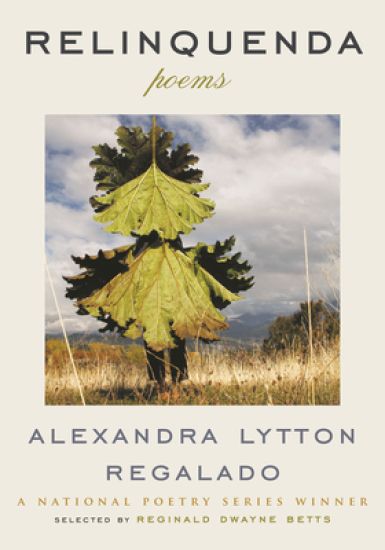
A 4-part poetry collection that explores women's roles in familial dynamics, immigration, and El Salvador's civil war while reflecting on the death of the poet's father A National Poetry Series winner, selected by the celebrated poet Reginald Dwayne Betts When COVID-19 broke and the United States closed the border to travel, Alexandra Lytton Regalado was separated from family back in El Salvador. She wrote Relinquenda entirely during lockdown as a meditation on cancer, the passing of her father, and the renewed significance of community. The central part of the collection focuses on her father during his 6-year struggle with cancer and considers how his stoicism, alcoholism, and hermitage might serve as mirror and warning. In contrast, she dedicates other poems to what it means for daughters, mothers, and wives to care for another as reflected in her relationships with the men in her life. Situated in the tropical landscapes of Miami, Florida and El Salvador, the poems also negotiate the meaning of home, reflecting on immigration and the ties between United States and El Salvador 30 years after her birth country's decade-long civil war. In a lyrical and often bilingual voice, Regalado explores the impermanence and the body, communication and inarticulation, and the need to let go in order to heal regrets.
What is the alt-right? What do they believe, and how did they take center stage in the American social and political consciousness? From a loose movement that lurked in the shadows in the early 2000s, the alt-right has achieved a level of visibility that has allowed it to expand significantly throughout America's cultural, political, and digital landscapes. Racist, sexist, and homophobic beliefs that were previously unspeakable have become commonplace, normalized, and accepted--endangering American democracy and society as a whole. Yet in order to dismantle the destructive movement that has invaded our public consciousness, we must first understand the core beliefs that drive the alt-right. To help guide us through the contemporary moment, historian Alexandra Minna Stern excavates the alt-right memes and tropes that have erupted online and explores the alt-right's central texts, narratives, constructs, and insider language. She digs to the root of the alt-right's motivations: their deep-seated fear of an oncoming "white genocide" that can only be remedied through swift and aggressive action to reclaim white power. As the group makes concerted efforts to cast off the vestiges of neo-Nazism and normalize their appearance and their beliefs, the alt-right and their ideas can be hard to recognize. Through careful analysis, Stern brings awareness to the underlying concepts that guide the alt-right and animate its overlapping forms of racism, xenophobia, transphobia, and anti-egalitarianism. She explains the key ideas of "red-pilling," strategic trolling, gender essentialism, and the alt-right's ultimate fantasy: a future where minorities have been removed and "cleansed" from the body politic and a white ethnostate is established in the United States. By unearthing the hidden mechanisms that power white nationalism, Stern reveals just how pervasive this movement truly is.
In the first half of the 1580s, Seville, Spain, confronted a series of potentially devastating crises. In three years, the city faced a brush with deadly contagion, including the plague; the billeting of troops in preparation for Philip II's invasion of Portugal; crop failure and famine following drought and locust infestation; an aborted uprising of the Moriscos (Christian converts from Islam); bankruptcy of the municipal government; the threat of pollution and contaminated water; and the disruption of commerce with the Indies. While each of these problems would be formidable on its own, when taken together, the crises threatened Seville's social and economic order. In The Plague Files, Alexandra Parma Cook and Noble David Cook reconstruct daily life during this period in sixteenth-century Seville, exposing the difficult lives of ordinary men, women, and children and shedding light on the challenges municipal officials faced as they attempted to find solutions to the public health emergencies that threatened the city's residents. Filling several gaps in the historiography of early modern Spain, this volume offers a history of not only Seville's city government but also the medical profession in Andalusia, from practitioner nurses and barber surgeons (who were often the first to encounter symptoms of plague) to well-trained university physicians. All levels of society enter the picture -- from slaves to the local aristocracy. Drawing on detailed records of city council deliberations, private and public correspondence, reports from physicians and apothecaries, and other primary sources, Cook and Cook recount Seville's story in the words of the people who lived it -- the city's governor, the female innkeepers charged with reporting who recently died in their establishments, the physicians who describe the plague victims' symptoms. As Cook and Cook's detailed history makes clear, in spite of numerous emergencies, Seville's bureaucracy functioned with relative normality, providing basic services necessary for the survival of its citizens. Their account of the travails of 1580s Seville provides an indispensable resource for those studying early modern Spain.
In the first half of the 1580s, Seville, Spain, confronted a series of potentially devastating crises. In three years, the city faced a brush with deadly contagion, including the plague; the billeting of troops in preparation for Philip II's invasion of Portugal; crop failure and famine following drought and locust infestation; an aborted uprising of the Moriscos (Christian converts from Islam); bankruptcy of the municipal government; the threat of pollution and contaminated water; and the disruption of commerce with the Indies. While each of these problems would be formidable on its own, when taken together, the crises threatened Seville's social and economic order. In The Plague Files, Alexandra Parma Cook and Noble David Cook reconstruct daily life during this period in sixteenth-century Seville, exposing the difficult lives of ordinary men, women, and children and shedding light on the challenges municipal officials faced as they attempted to find solutions to the public health emergencies that threatened the city's residents. Filling several gaps in the historiography of early modern Spain, this volume offers a history of not only Seville's city government but also the medical profession in Andalusia, from practitioner nurses and barber surgeons (who were often the first to encounter symptoms of plague) to well-trained university physicians. All levels of society enter the picture -- from slaves to the local aristocracy. Drawing on detailed records of city council deliberations, private and public correspondence, reports from physicians and apothecaries, and other primary sources, Cook and Cook recount Seville's story in the words of the people who lived it -- the city's governor, the female innkeepers charged with reporting who recently died in their establishments, the physicians who describe the plague victims' symptoms. As Cook and Cook's detailed history makes clear, in spite of numerous emergencies, Seville's bureaucracy functioned with relative normality, providing basic services necessary for the survival of its citizens. Their account of the travails of 1580s Seville provides an indispensable resource for those studying early modern Spain.