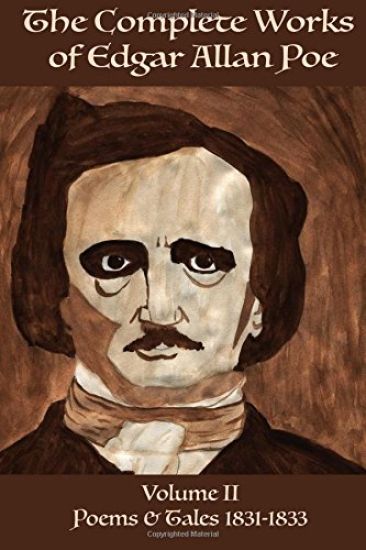
The Works of Edgar Allan PoeVolume IIThe Raven EditionCompleteCLASSIC GOTHIC HORRORThe works of American author Edgar Allan Poe (January 19, 1809 - October 7, 1849) include many poems, short stories, and one novel. His fiction spans multiple genres, including horror fiction, adventure, science fiction, and detective fiction, a genre he is credited with inventing. These works are generally considered part of the Dark romanticism movement, a literary reaction to Transcendentalism. Poe's writing reflects his literary theories: he disagreed with didacticism and allegory. Meaning in literature, he said in his criticism, should be an undercurrent just beneath the surface; works whose meanings are too obvious cease to be art. Poe pursued originality in his works, and disliked proverbs. He often included elements of popular pseudosciences such as phrenology and physiognomy. His most recurring themes deal with questions of death, including its physical signs, the effects of decomposition, concerns of premature burial, the reanimation of the dead, and mourning. Though known as a masterly practitioner of Gothic fiction, Poe did not invent the genre; he was following a long-standing popular tradition. CONTENTS THE PURLOINED LETTERTHE THOUSAND-AND-SECOND TALE OF SCHEHERAZADEA DESCENT INTO THE MAELSTR M.VON KEMPELEN AND HIS DISCOVERYMESMERIC REVELATIONTHE FACTS IN THE CASE OF M. VALDEMARTHE BLACK CAT.THE FALL OF THE HOUSE OF USHERSILENCE--A FABLETHE MASQUE OF THE RED DEATH.THE CASK OF AMONTILLADO.THE IMP OF THE PERVERSETHE ISLAND OF THE FAYTHE ASSIGNATIONTHE PIT AND THE PENDULUMTHE PREMATURE BURIALTHE DOMAIN OF ARNHEIMLANDOR'S COTTAGEWILLIAM WILSONTHE TELL-TALE HEART.BERENICEELEONORA
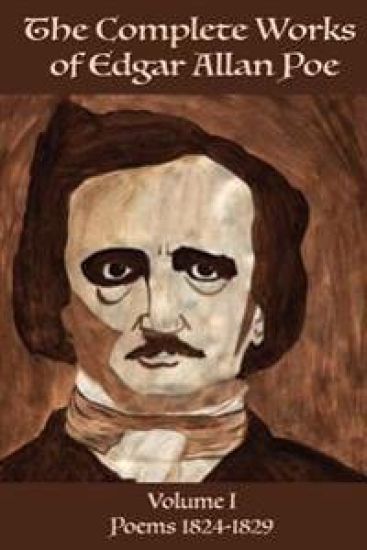
The Works of Edgar Allan PoeVolume 1The Raven EditionCLASSIC GOTHIC HORRORThe great masters of imagination have seldom resorted to the vague and the unreal as sources of effect. They have not used dread and horror alone, but only in combination with other qualities, as means of subjugating the fancies of their readers. The loftiest muse has ever a household and fireside charm about her. Mr. Poe's secret lies mainly in the skill with which he has employed the strange fascination of mystery and terror. In this his success is so great and striking as to deserve the name of art, not artifice. We cannot call his materials the noblest or purest, but we must concede to him the highest merit of construction. CONTENTS EDGAR ALLAN POEDEATH OF EDGAR A. POETHE UNPARALLELED ADVENTURES OF ONE HANS PFAALLTHE GOLD-BUGFOUR BEASTS IN ONE--THE HOMO-CAMELEOPARDTHE MURDERS IN THE RUE MORGUETHE MYSTERY OF MARIE ROGETTHE BALLOON-HOAXMS. FOUND IN A BOTTLETHE OVAL PORTRAIT
Edgar Allan Poe born Edgar Poe; January 19, 1809 - October 7, 1849) was an American writer, editor, and literary critic. Poe is best known for his poetry and short stories, particularly his tales of mystery and the macabre. He is widely regarded as a central figure of Romanticism in the United States and American literature as a whole, and he was one of the country's earliest practitioners of the short story. Poe is generally considered the inventor of the detective fiction genre and is further credited with contributing to the emerging genre of science fiction. 1] He was the first well-known American writer to try to earn a living through writing alone, resulting in a financially difficult life and career. Poe was born in Boston, the second child of two actors. His father abandoned the family in 1810, and his mother died the following year. Thus orphaned, the child was taken in by John and Frances Allan of Richmond, Virginia. They never formally adopted him, but Poe was with them well into young adulthood. Tension developed later as John Allan and Edgar repeatedly clashed over debts, including those incurred by gambling, and the cost of secondary education for the young man. Poe attended the University of Virginia for one semester but left due to lack of money. Poe quarreled with Allan over the funds for his education and enlisted in the Army in 1827 under an assumed name. It was at this time that his publishing career began, albeit humbly, with the anonymous collection of poems Tamerlane and Other Poems (1827), credited only to "a Bostonian". With the death of Frances Allan in 1829, Poe and Allan reached a temporary rapprochement. However, Poe later failed as an officer's cadet at West Point, declaring a firm wish to be a poet and writer, and he ultimately parted ways with John Allan.
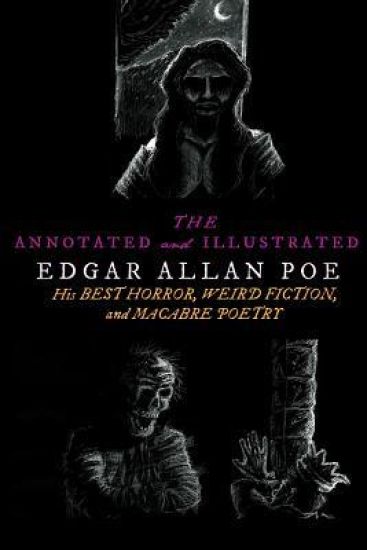
Monday, January 19, 2009 marked Edgar Allan Poe's 200th birthday. Though these tales need no introduction, the rationale for starting with volume two is threefold: many of the best-loved (and best) tales are included. No one else spins a Gothic tale of mystery & macabre quite like Edgar Allan Poe. In this collection of his stories you'll hear such famous Poe stories as "The Fall of the House of Usher", "The Masque of the Red Death", "The Pit and the Pendulum", and "The Tell-Tale Heart". Poe's popular stories and poems made him a living in his day and continue to be popular.
Pollin and Ridgely have included the complete texts of all the reviews and articles Poe wrote for the Messenger (excluding a few texts published elsewhere in the series). Poe's writings are organized in chronological sections corresponding to the actual monthly issue, and each monthly section is further divided into logical subsections. The section for January 1836, for example, comprises an introductory "Headnote," a series of numbered "Texts," and a final subsection of informative "Notes." This method of organization provides a vivid picture of the month-to-month operations of the Messenger, where Poe worked as an editor (or editorial assistant) from 1835 to the beginning of 1837. Since this was Poe's first full-time job in the publishing industry, the book also provides a unique perspective on his origins as a critic and magazinist.
EDGAR ALLAN POE... Undeniably one of the most famous and influential Gothic authors of all time, Edgar Allan Poe's dark, mystical and tragically romantic tales have been terrifying and enthralling readers for more than a hundred and fifty years. The Purloined Letter The Thousand-and-Second Tale of Scheherazade A Descent into the Maelstr m. Von Kempelen and his Discovery Mesmeric Revelation The Facts in the Case of M. Valdemar The Black Cat. The Fall of the House of Usher Silence-A Fable The Masque of the Red Death. The Cask of Amontillado. The Imp of the Perverse The Island of the Fay The Assignation The Pit and the Pendulum The Premature Burial The Domain of Arnheim Landor's Cottage William Wilson The Tell-Tale Heart. Berenice Eleonora
dgar Allan Poe (Boston, 19 janvier 1809 - Baltimore, 7 octobre 1849) est un po te, romancier, nouvelliste, critique litt raire, dramaturge et diteur am ricain, ainsi que l'une des principales figures du romantisme am ricain. Connu surtout pour ses contes - genre dont la bri vet lui permet de mettre en valeur sa th orie de l'effet, suivant laquelle tous les l ments du texte doivent concourir la r alisation d'un effet unique- il a donn la nouvelle ses lettres de noblesse et est consid r comme l'inventeur du roman policier. Nombre de ses r cits pr figurent les genres de la science-fiction et du fantastique. N Boston, Edgar Allan Poe perd ses parents, David Poe Jr. et Elizabeth Arnold, dans sa petite enfance; il est recueilli par John et Frances Allan de Richmond, en Virginie, o il passe l'essentiel de ses jeunes ann es, si l'on excepte un s jour en Angleterre et en cosse, dans une aisance relative. Apr s un bref passage l'Universit de Virginie et des tentatives de carri re militaire, Poe quitte les Allan. Sa carri re litt raire d bute humblement par la publication anonyme d'un recueil de po mes intitul s Tamerlan et autres po mes (1827), sign s seulement par un Bostonien . Poe s'installe Baltimore, o il vit aupr s de sa famille paternelle et abandonne quelque peu la po sie pour la prose. En juillet 1835, il devient r dacteur-assistant au Southern Literary Messenger de Richmond, o il contribue augmenter les abonnements et commence d velopper son propre style de critique litt raire. La m me ann e, vingt-six ans, il pouse sa cousine germaine Virginia Clemm, alors g e de 14 ans. Apr s l' chec de son roman Les Aventures d'Arthur Gordon Pym, Poe r alise son premier recueil d'histoires, les Contes du Grotesque et de l'Arabesque, en 1839. La m me ann e, il devient r dacteur au Burton's Gentleman's Magazine, puis au Graham's Magazine Philadelphie. C'est Philadelphie que nombre de ses oeuvres parmi les plus connues ont t publi es. Dans cette ville, Poe a galement projet la cr ation de son propre journal, The Penn (plus tard rebaptis The Stylus), qui ne verra jamais le jour. En f vrier 1844, il d m nage New York, o il travaille au Broadway Journal, un magazine dont il devient finalement l'unique propri taire.
Edgar Allan Poe (Boston, January 19, 1809 - Baltimore, October 7, 1849) is a poet, novelist, short story writer, literary critic, playwright and American publisher and one of the main figures of American romanticism. Best known for his tales - kind whose brevity allows him to develop his theory of the effect, according to which all elements of the text must contribute to the achievement of an effect only he gave his new letters nobility and is considered the inventor of the detective story. Many of his stories prefigure the genres of science fiction and fantasy. Born in Boston, Edgar Allan Poe loses his parents, David Poe, Jr. and Elizabeth Arnold, in his infancy; it is collected by John and Frances Allan of Richmond, Virginia, where he spent most of his younger years, except for a trip to England and Scotland, with relative ease. After a brief stint at the University of Virginia and the military career attempts, Allan Poe leaves. His literary career began humbly by the anonymous publication of a collection of poems called Tamerlane and Other Poems (1827), signed only "a Bostonian". Poe moved to Baltimore, where he lives with his father's family and gives up some poetry to prose. In July 1835 he became editor-assistant at the Southern Literary Messenger in Richmond, where it helps to increase subscriptions and began to develop his own style of literary criticism. The same year, twenty-six, he married his cousin Virginia Clemm, who was 14 years old. After the failure of his novel The Narrative of Arthur Gordon Pym of Nantucket, Poe produced his first collection of stories, Tales of the Grotesque and Arabesque in 1839. The same year he became editor of Burton's Gentleman's Magazine and in Graham's Magazine in Philadelphia. It's in Philadelphia that many of his works among the best known were published. In this city, Poe also planned the creation of his own journal, The Penn (later renamed The Stylus), who will never see the day. In February 1844 he moved to New York, where he worked at Broadway Journal, a magazine of which he eventually became the sole owner. In January 1845, Poe published The Raven, which was an immediate success. But two years later, his wife Virginia died of tuberculosis on January 30, 1847. Poe is planning to remarry, but no project will be realized. October 7, 1849, Poe died at the age of 40 in Baltimore. The cause of death could not be determined and have been variously attributed to alcohol, to drugs, cholera, rabies, a disease of the heart, at a stroke, etc. The influence of Poe was and remains important to the United States as in the whole world, not only in literature but also other artistic areas such as movies and music, or in scientific fields . Although American author, he was first recognized and defended by French authors, Baudelaire and Mallarm in mind. Contemporary criticism places him among the most remarkable writers of American literature of the nineteenth century.