

Kirjahaku
Etsi kirjoja tekijän nimen, kirjan nimen tai ISBN:n perusteella.
1000 tulosta hakusanalla Allen Wikgren

The Victory Of Allen Rutledge
Alexander Corkey; Florence Rutledge (ILT) Wilde
Kessinger Pub
2008
pokkari
Recollections Of Henry Watkins Allen: Brigadier-General Confederate States Army, Ex-Governor Of Louisiana (1866)
Sarah A. Dorsey
KESSINGER PUBLISHING, LLC
2008
sidottu


B. Sprague Allen: Tides in English Taste (1619-1800). Volume 1
B Sprague Allen
Harvard University Press
2013
sidottu

B. Sprague Allen: Tides in English Taste (1619-1800). Volume 2
B Sprague Allen
Harvard University Press
2013
sidottu
Focusing on the vexed friendship between Hart Crane and Allen Tate, this book examines twentieth-century American poetry's progress toward institutional sanction and professional organization, a process in which sexual identities, poetic traditions, and literary occupations were in question and at stake. Langdon Hammer combines biography and formalist analysis to argue that American modernism was a Janus-faced phenomenon, at once emancipatory and elitist, which simultaneously attacked traditional cultural authority and reconstructed it in new forms. Hammer shows how Crane and Tate, working in relation to each other and to T. S. Eliot, created for themselves the competing roles of "genius" and "poet-critic." Crane embraced the self-authorizing powers of the individual talent at the cost of standing outside the emerging consensus of high modernist literary culture, an aesthetic isolation which converged with his social isolation as a gay man. Tate, turning against Crane, linked the modernist defense of tradition to an embattled heterosexual masculinity, while he adapted Eliot's stance to a career sustained by criticism and teaching. Ending his book with a discussion of Robert Lowell's career, Hammer maintains that Lowell's "confessional" poetry recapitulates the conflict enacted by Crane and Tate. Originally published in 1993. The Princeton Legacy Library uses the latest print-on-demand technology to again make available previously out-of-print books from the distinguished backlist of Princeton University Press. These editions preserve the original texts of these important books while presenting them in durable paperback and hardcover editions. The goal of the Princeton Legacy Library is to vastly increase access to the rich scholarly heritage found in the thousands of books published by Princeton University Press since its founding in 1905.
Focusing on the vexed friendship between Hart Crane and Allen Tate, this book examines twentieth-century American poetry's progress toward institutional sanction and professional organization, a process in which sexual identities, poetic traditions, and literary occupations were in question and at stake. Langdon Hammer combines biography and formalist analysis to argue that American modernism was a Janus-faced phenomenon, at once emancipatory and elitist, which simultaneously attacked traditional cultural authority and reconstructed it in new forms. Hammer shows how Crane and Tate, working in relation to each other and to T. S. Eliot, created for themselves the competing roles of "genius" and "poet-critic." Crane embraced the self-authorizing powers of the individual talent at the cost of standing outside the emerging consensus of high modernist literary culture, an aesthetic isolation which converged with his social isolation as a gay man. Tate, turning against Crane, linked the modernist defense of tradition to an embattled heterosexual masculinity, while he adapted Eliot's stance to a career sustained by criticism and teaching. Ending his book with a discussion of Robert Lowell's career, Hammer maintains that Lowell's "confessional" poetry recapitulates the conflict enacted by Crane and Tate. Originally published in 1993. The Princeton Legacy Library uses the latest print-on-demand technology to again make available previously out-of-print books from the distinguished backlist of Princeton University Press. These editions preserve the original texts of these important books while presenting them in durable paperback and hardcover editions. The goal of the Princeton Legacy Library is to vastly increase access to the rich scholarly heritage found in the thousands of books published by Princeton University Press since its founding in 1905.


Heartland Utopia: William Allen White on the Ideal Midwestern Town
Charles Delgadillo; Jason Stacy
UNIVERSITY PRESS OF KANSAS
2026
sidottu

This new textbook is an abridgment of the author's earlier Woody Allen's Angst: Philosophical Commentaries on His Serious Films (McFarland, 1997; "invaluable"--Choice.) Five main topics are explored: the desire of many of his characters to ground their lives in traditional ethical values despite their realization that such values may no longer be certain; the opposition between pessimism and optimism throughout his films; gender issues relating to romantic love, sexual desire and the ongoing changes in our cultural expectations of both men and women; the idea that contemporary American society is rapidly descending into barbarism precisely because of societal failure to maintain a sense of individual moral responsibility; and a critique of psychoanalysis as a method for understanding human behavior. Instructors considering this book for use in a course may request an examination copy here.
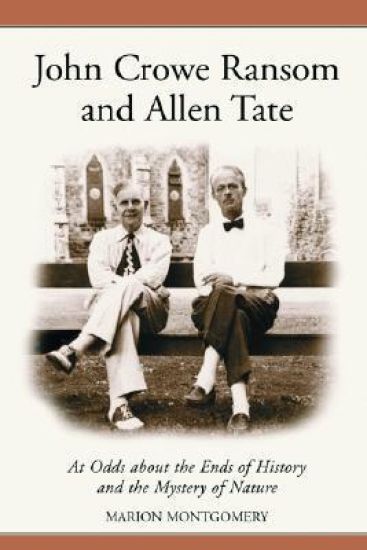
The Fugitives were an influential literary group that began at Vanderbilt University in the 1920s. Although the philosophically driven alliance was short-lived, two of its members, John Crowe Ransom and Allen Tate, went on to become influential Southern poets and theorists. In this work, a self-proclaimed third-generation Fugitive-Agrarian concentrates on the history and mystery of nature. The author supports the recovery of fundamental principles required for the economic, social and political health of our communities. He explores Fugitive-Agrarian concepts of nature, history, science, industry, person, family and community. His discussion focuses particular attention on John Crowe Ransom and Allen Tate and how they diverged in their philosophies of intellect and the written word.
This comprehensive guide covers all of the music used in Woody Allen's films from Take the Money and Run (1969) to Match Point (2005). Each film receives scene-by-scene analysis with a focus on how Allen utilized music.
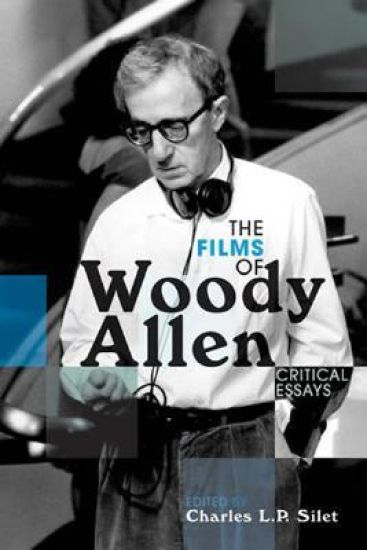
The Films of Woody Allen
Scarecrow Press
2006
sidottu
From What's Up, Tiger Lily? to Match Point, Woody Allen's work has generated substantial interest among scholars and professionals who have written extensively about the director. In The Films of Woody Allen: Critical Essays, Charles L.P. Silet brings together two-dozen scholarly articles that address the core of Allen's work from a variety of cultural and theoretical perspectives. With a special emphasis on his films of the 1980s, this collection includes both general essays that examine various themes and issues encompassed in Allen's repertoire, as well as discussions that focus on one or two specific films. General essays explore Allen's Jewish background as a religious and cultural facet, his apparent love affair with New York City, and his relation to various strains of humor—particularly American film humor, but also Allen's broad use of such traditional comic tropes as irony and parody. The essays on individual films include examinations of some of Allen's most significant work including Love and Death, Annie Hall, Interiors, Crimes and Misdemeanors, Hannah and Her Sisters, Manhattan, and Shadows and Fog. A number of the articles collected here were originally published in now hard to locate places, while others were selected from journals not usually associated with film studies. The result is an anthology of essays that presents an overview of the central issues raised by Allen's body of work as well as a close examination of fourteen individual films that convey these larger themes. A wide-ranging exploration of one of America's most innovative and productive modern directors, this book should appeal to both professionals and students of contemporary film comedy.

The Films of Woody Allen
Scarecrow Press
2006
nidottu
From What's Up, Tiger Lily? to Match Point, Woody Allen's work has generated substantial interest among scholars and professionals who have written extensively about the director. In The Films of Woody Allen: Critical Essays, Charles L.P. Silet brings together two-dozen scholarly articles that address the core of Allen's work from a variety of cultural and theoretical perspectives. With a special emphasis on his films of the 1980s, this collection includes both general essays that examine various themes and issues encompassed in Allen's repertoire, as well as discussions that focus on one or two specific films. General essays explore Allen's Jewish background as a religious and cultural facet, his apparent love affair with New York City, and his relation to various strains of humor_particularly American film humor, but also Allen's broad use of such traditional comic tropes as irony and parody. The essays on individual films include examinations of some of Allen's most significant work including Love and Death, Annie Hall, Interiors, Crimes and Misdemeanors, Hannah and Her Sisters, Manhattan, and Shadows and Fog. A number of the articles collected here were originally published in now hard to locate places, while others were selected from journals not usually associated with film studies. The result is an anthology of essays that presents an overview of the central issues raised by Allen's body of work as well as a close examination of fourteen individual films that convey these larger themes. A wide-ranging exploration of one of America's most innovative and productive modern directors, this book should appeal to both professionals and students of contemporary film comedy.

Allen Smithee specializes in the mediocre. He is versatile. He is prolific. And he doesn't exist. From 1969 until 1999, Allen Smithee was the pseudonym adopted by Hollywood directors when they wished not to be associated with films ostensibly of their making . Encompassing over fifty films of various stripes -- B movies, sequels, music videos, made-for-TV movies -- Smithee's three decades of work affords the authors of this volume a unique opportunity to reassess the claims of auteurism, both in its traditional guise and in the more commodified form it currently assumes.Sometimes treating Smithee as an auteur in much the same way critics and scholars have treated directors as diverse as Douglas Sirk, Abbas Kiarostami, and Quentin Tarantino, the contributors reclaim new possibilities for auteurist filmmaking and film studies, even as they show what an empty display it has recently become. In accounting for this change, the essays in this volume employ innovative theories of authorship to recapture the subversive effect that auteurism once enjoyed. Thus the Smithee name becomes part of a larger discussion of the economics and history of pseudonyms in filmmaking -- notably in the blacklist of the 1950s -- as well as an opportunity to employ Jacques Derrida's theory of the signature to recover obscured economic and historic contexts within Smithee's films. Unique in its focus, innovative in its approach, Directed by Allen Smithee argues that it is precisely through throwaway films such as Smithee's that recent Hollywood cinema can best be studied.
Allen Smithee specializes in the mediocre. He is versatile. He is prolific. And he doesn't exist. From 1969 until 1999, Allen Smithee was the pseudonym adopted by Hollywood directors when they wished not to be associated with films ostensibly of their making . Encompassing over fifty films of various stripes -- B movies, sequels, music videos, made-for-TV movies -- Smithee's three decades of work affords the authors of this volume a unique opportunity to reassess the claims of auteurism, both in its traditional guise and in the more commodified form it currently assumes.Sometimes treating Smithee as an auteur in much the same way critics and scholars have treated directors as diverse as Douglas Sirk, Abbas Kiarostami, and Quentin Tarantino, the contributors reclaim new possibilities for auteurist filmmaking and film studies, even as they show what an empty display it has recently become. In accounting for this change, the essays in this volume employ innovative theories of authorship to recapture the subversive effect that auteurism once enjoyed. Thus the Smithee name becomes part of a larger discussion of the economics and history of pseudonyms in filmmaking -- notably in the blacklist of the 1950s -- as well as an opportunity to employ Jacques Derrida's theory of the signature to recover obscured economic and historic contexts within Smithee's films. Unique in its focus, innovative in its approach, Directed by Allen Smithee argues that it is precisely through throwaway films such as Smithee's that recent Hollywood cinema can best be studied.

Edited and with an Introduction by Michael Wala, Assistant Professor at Universitat Erlangen-Nurnberg This recently discovered study by Allen Dulles, written in the winter of 1947/48 when the acceptance of the Marshall Plan was still in doubt, not only offers fascinating insights into the early postwar period but may also serve as an inspiration to policy makers at a time when there is much discussion of recovery programmes for Eastern Europe and the Marshall Plan is often evoked as a possible model.
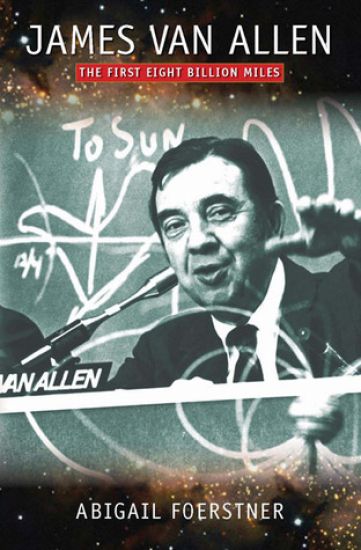
Astrophysicist and space pioneer James Van Allen (1914-2006), for whom the Van Allen radiation belts were named, was among the principal scientific investigators for twenty-four space missions, including Explorer 1 in 1958, the first successful U.S. satellite; Mariner 2's 1962 flyby of Venus, the first successful mission to another planet; and the 1970s Pioneer 10 and Pioneer 11, missions that surveyed Jupiter and Saturn. Although he retired as a University of Iowa professor of physics and astronomy in 1985, he remained an active researcher, using his campus office to monitor data from Pioneer 10 - on course to reach the edge of the solar system when its signal was lost in 2003 - until a short time before his death at the age of ninety-one. Now Abigail Foerstner blends space science drama, military agendas, cold war politics, and the events of Van Allen's lengthy career to create the first biography of this highly influential physicist. Drawing on Van Allen's correspondence and publications, years of interviews with him as well as with more than a hundred other scientists, and declassified documents from such archives as the Jet Propulsion Laboratory, the Kennedy Space Center, and the Applied Physics Laboratory, Foerstner describes Van Allen's life from his Iowa childhood to his first experiments at White Sands to the years of Explorer 1 until his death in 2006. Often called the father of space science, James Van Allen led the way to mapping a new solar system based on the solar wind, massive solar storms, and cosmic rays. Pioneer 10 alone sent him more than thirty years of readings that helped push our recognition of the boundary of the solar system billions of miles past Pluto. Abigail Foerstner's compelling biography charts the eventful life and time of this trailblazing physicist.