A new city brings new life to Stone Barrington as Stuart Woods's bestselling series continues... After a shocking loss, Stone Barrington is at loose ends, unsure if he wants to stay in New York and continue his work as a partner at Woodman and Weld. It comes as a welcome relief when he's summoned to Washington, D.C., by President Will Lee. The President has a special operation that calls for Stone's unique skill set, and it's a mission that will reunite him with his former partner in bed and in crime, Holly Barker.
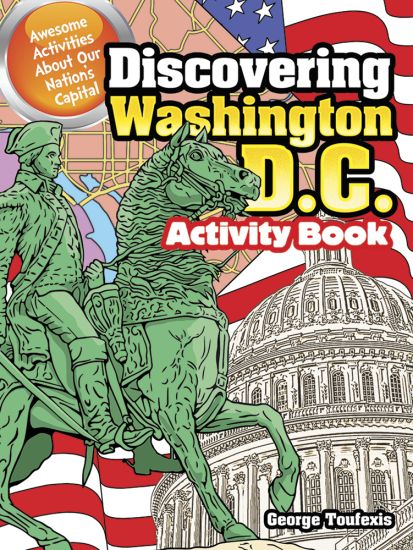
Take a whirlwind tour of Washington, D.C., with this livelybook of puzzles. You'll visit the National Mall, the White House, Capitol Hill, museums, parks, monuments, and landmarks as well as neighborhoods around the city. Along the way, you'll solve crosswords, search-a-words, mazes, word scrambles, and other challenges."
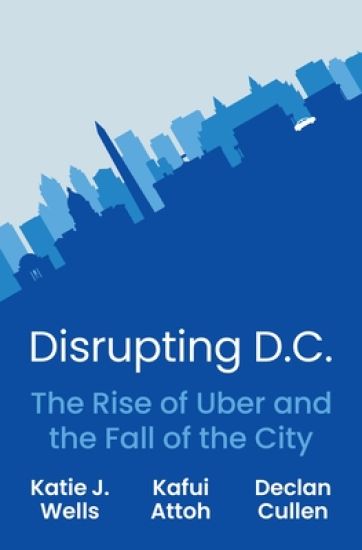
A panoramic account of the urban politics and deep social divisions that gave rise to UberThe first city to fight back against Uber, Washington, D.C., was also the first city where such resistance was defeated. It was here that the company created a playbook for how to deal with intransigent regulators and to win in the realm of local politics. The city already serves as the nation’s capital. Now, D.C. is also the blueprint for how Uber conquered cities around the world—and explains why so many embraced the company with open arms.Drawing on interviews with gig workers, policymakers, Uber lobbyists, and community organizers, Disrupting D.C. demonstrates that many share the blame for lowering the nation’s hopes and dreams for what its cities could be. In a sea of broken transit, underemployment, and racial polarization, Uber offered a lifeline. But at what cost?This is not the story of one company and one city. Instead, Disrupting D.C. offers a 360-degree view of an urban America in crisis. Uber arrived promising a new future for workers, residents, policymakers, and others. Ultimately, Uber’s success and growth was never a sign of urban strength or innovation but a sign of urban weakness and low expectations about what city politics can achieve. Understanding why Uber rose reveals just how far the rest of us have fallen.
A panoramic account of the urban politics and deep social divisions that gave rise to UberThe first city to fight back against Uber, Washington, D.C., was also the first city where such resistance was defeated. It was here that the company created a playbook for how to deal with intransigent regulators and to win in the realm of local politics. The city already serves as the nation’s capital. Now, D.C. is also the blueprint for how Uber conquered cities around the world—and explains why so many embraced the company with open arms.Drawing on interviews with gig workers, policymakers, Uber lobbyists, and community organizers, Disrupting D.C. demonstrates that many share the blame for lowering the nation’s hopes and dreams for what its cities could be. In a sea of broken transit, underemployment, and racial polarization, Uber offered a lifeline. But at what cost?This is not the story of one company and one city. Instead, Disrupting D.C. offers a 360-degree view of an urban America in crisis. Uber arrived promising a new future for workers, residents, policymakers, and others. Ultimately, Uber’s success and growth was never a sign of urban strength or innovation but a sign of urban weakness and low expectations about what city politics can achieve. Understanding why Uber rose reveals just how far the rest of us have fallen.
Four conservatives in need of a second chance. Four media mavens desperate to fight their way back into the only place that mattered to them - the world of Cable TV News. Now this rag-tag group has come together for a commando mission so outrageously daring that it would only be attempted by A- a group of heroes, or B- a bunch of fools. You'll have to decide for yourself. (Hint: It's B.) Frank Conniff, author of the spine-tingling Twenty Five Mystery Science Theater 3000 Films That Changed My Life In No Way Whatsoever, the pulse-pounding Cats v. Conniff, and the nightmare-inducing How To Write Cheesy Movies, has now topped himself with his most action-packed, edge-of-your-tweet thriller yet
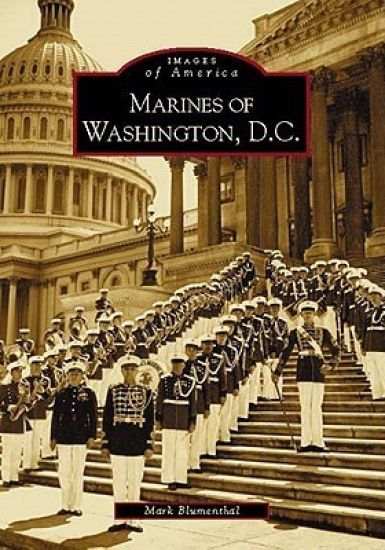
Marines of Washington, D.C. takes the reader on a visual tour that explores the dynamic history of the United States Marine Corps in the nation's capital. The Marines have played an integral role in the development of the social, structural, and political landscape of Washington for over 200 years. This volume traces the history of the Marines from the founding of the Oldest Post of the Corps, Marine Barracks Washington in 1801, to participation in the War of 1812, the Civil War, the World Wars, and into the modern day. Explore the lasting impact of famous Marines, including Commandant Archibald Henderson, Marine Band Director John Phillip Sousa, and Commandants Alfred M. Grey and John A. Lejeune. Marines of Washington, D.C. highlights the unique relationship between the Marines of the nation's capital, the President, and the citizens of the United States they serve.
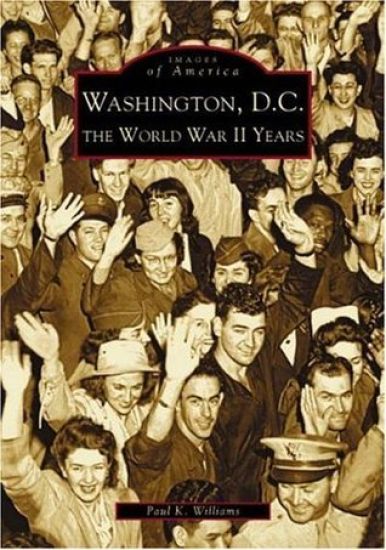
The valiant story of the nation's capital facing the challenges of World War II told in over 200 rare, historical images that bring the past to life.As the country prepared for World War II, the nation's capital took center stage. Washington residents witnessed the local population nearly double in a few short years, as a mostly female work force descended on the city, while its male population was sent off to combat in Europe and the Pacific. Washingtonians planted victory gardens, ran scrap drives, and suffered the effects of severe rationing along with the rest of the nation, while military personnel manned anti aircraft batteries around the city. New government agencies were created and existing ones expanded dramatically-most doubled their workforce and constructed hundreds of temporary facilities on the Mall and throughout the city. Washington also witnessed the construction of the largest office building in the world, the Pentagon, which was completed in just 16 months. Washington, D.C.: The World War II Years captures nearly 200 fascinating images from this era. These archival photographs chronicle the beginning stages of war preparation, little known civic defense organizations, VE and VJ celebratory parades, and the overall spirit of the continually persevering capital city.
From the planner of the city on the Potomac River, to generations of gay women who fought for the ratification of the 19th Amendment, through the 1980s when people covered the Mall with a quilt to finally hear politicians utter the word AIDS, Washington, D.C., has a place in the identity of gay and lesbian America, which continues even now in the fight for marriages equal under the law and in the heart. Original.
Southwest Washington, D.C.: A defined neighborhood even without a proper name.The quadrant of Southwest Washington, D.C. has a clear border southwest of the U.S. Capitol Building, nestled along the oldest waterfront in the city. Its physical delineations have defined it as a community for more than 250 years, beginning in the mid-1700s with emerging farms. By the mid-1800s, a thriving urban, residential, and commercial neighborhood was supported by the waterfront where Washingtonians bought seafood and produce right off the boats. In the 1920s and 1930s, an aging housing stock and an overcrowded city led to an increase of African Americans and Jewish immigrants who became self-sufficient within their own communities. However, political pressures and radical urban planning concepts in the 1950s led to the large-scale razing of most of SW, creating a new community with what was then innovative apartment and cooperative living constructed with such unusual building materials as aluminum. Author and local historian Paul K. Williams provides and in-depth look at it all.
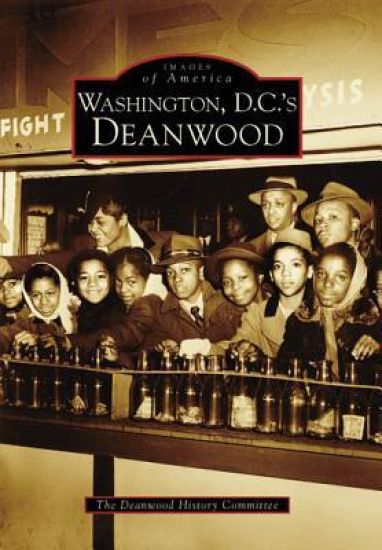
View the legacy of the long-standing African-American neighborhood that formed the close-knit community today.Located in the far northeastern edge of the city, Deanwood is one of Washington, D.C.'s oldest, consistently African American neighborhoods. Rooted in slave-based agriculture on white-owned land, the community began its transition from rural to urban development with the 1871 arrival of a branch of the Baltimore and Ohio Railroad along its western boundary. This period after the Civil War offered blacks the opportunity to become landowners. Since this time, many notable Washingtonians of various ethnicities have been residents and frequent visitors to the area. In the early 1920s, it was home to Suburban Gardens, the only permanent amusement park ever to be housed within the city limits. Many of Deanwood's families have lived in the community for generations, which makes it stable and close-knit.
Prized the world over, jade has been considered a sacred stone with miraculous powers since prehistoric times. In ancient China, jade was regarded as the most important physical substance on earth. This invaluable book traces the chronological use of jade carvings in China, including primitive utilitarian tools, fascinating ceremonial objects, beautiful ornaments, and intricately designed sculptures. Lavishly illustrated with over 900 color photographs, it features a wide diversity of examples and helps today's collector identify different types of jade and their period of carving -- ranging from neolithic times through the Qing Dynasty (1644-1912). Also discussed in less detail are jade carvings from India, New Zealand, and pre-Columbian civilizations such as the Mayan, Toltec, and Aztec. Tips for determining the age and authenticity of jade carvings are provided, along with current values for all items illustrated. This indispensable reference will appeal to all collectors and admirers of jade and the Oriental arts.
Annals of natural disasters have always caused common interest. Scientists and specialists of various domains, teachers, students, post-graduates, journalists .. and merely inquisitive can find useful and didactic information in such annals~ Sad experience of the natural disasters endured gives very important material for humanity. It allows us not only to understand better the phenomenon itself, but also to prepare ourselves for future cataclysms, which our "Mother-Nature" is so rich in. The book by Sergey Soloviev and a group of his collaborators represents a detailed description of tsunami waves and accompanying phenomena in the Mediterranean Sea over a period of approximately four thousand years. Sergey Soloviev, the founder and recognised leader of the Russian scientific school of tsunami researchers, was unable to see the publication of this book, passing away on March 9, 1994. However, his ample experience in investigation and systematisation of tsunami waves for the Pacific area [Soloviev and Go, 1974, 1975; Soloviev, Go and Kim, 1986] has been widely used in compiling this book. The Mediterranean coasts are the cradle of civilisation. Written accounts of past disasters in this region of the Earth are rather numerous and highly reliable. Therefore the results of the tsunami study in the Mediterranean Sea are of specific value both for the scientific community and for humanity at large.