

Kirjahaku
Etsi kirjoja tekijän nimen, kirjan nimen tai ISBN:n perusteella.
1000 tulosta hakusanalla Charles Locks

Named by Architectural Digest as a talent to not be missed, Charles Zana has had a distinguished twenty-year-long career that has brought him to London, Gstaad, Tel Aviv, Monaco, and more to design spaces imbued with his signature modern-meets-timeless aesthetic. By merging thoughtfully placed pops of colour, curated furnishings and art, and luxurious yet liveable touches, the Paris-based interior architect creates unique spaces celebrated for their striking structure and rich visual poetry. In this debut monograph, Zana beautifully showcases his work within the residential and commercial spheres, including villas boasting clean lines and light-filled spaces; avant-garde Parisian apartments; and showrooms defined by an effortless blend of traditional details within an edgy, industrial space. Sumptuously illustrated with two hundred colour photographs that truly capture Zana s cultivated style, this volume is an essential addition to any library of interior design.
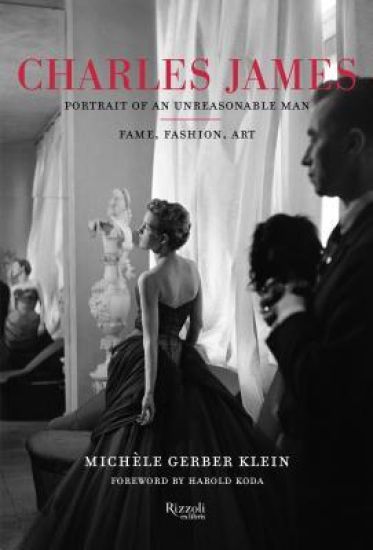
Christian Dior described him as the inspiration for the New Look. Salvador Dali called his work soft sculpture, and Virginia Woolf exclaimed, He is a genius. As George Bernard Shaw tells us, only unreasonable men change the world. This portrait of the life and times of Charles James winner of two Coty awards, and the subject of a 2014 Metropolitan Museum of Art show draws on the glamour of Europe in the 1930s, and the dazzle of New York City from the 40s through the 70s as it travels with James from his birth to privilege in England in 1906 and follows his career through his complex and turbulent relationships with exceptional women such as Elsa Schiaparelli and Eleanor Lambert, ending with his penurious death in New York s fabled Chelsea Hotel. As engrossing as a novel, as dramatic as grand opera, James s story will provoke, rivet, and inspire.
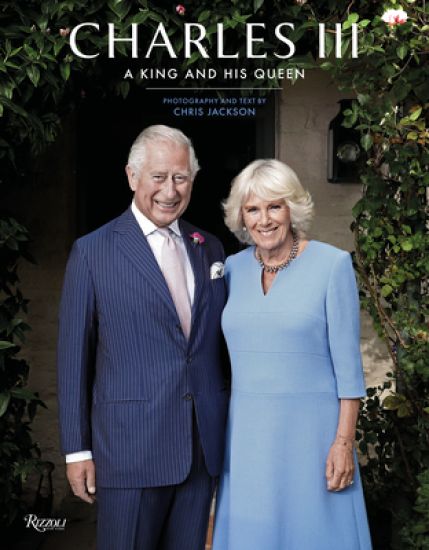
From the excitement of royal tours to capturing official portraits and quiet behind-the-scenes moments of all senior members of the British royal family, Chris Jackson s singular insight into the most famous family on the planet has never been more exciting than now, on the cusp of the coronation of a new British monarch, the first in an astounding seventy years. Jackson s extensive archive of photographs of the former Prince of Wales and Camilla, the Duchess of Cornwall, now King Charles III and the Queen Consort, chronicles the extraordinary life of His Royal Highness -- the longest-serving heir apparent and the oldest person to accede to the British throne, at the age of 73, following the death of his mother, Elizabeth II. Accompanied by Jackson s warm and always engaging text, this book commemorates the beginning of a new reign and documents more than twenty years of tours, engagements, celebrations, historic moments, and royal family gatherings in a singular volume that demonstrates just how relevant the British royal family remains today.

A steaming cup of coffee, a heart-warming story, a poignant time of meditation and prayer in your favorite place of solitude. A few quiet moments alone with God--what a great way to begin . . . or end . . . your day.Now, Charles, Swindoll, the master communicator whose compelling stories and eye-opening insights have helped millions of people find and build meaningful relationships with God, brings you this moving collection of 365 daily devotionals. Based on the Bible and his best-selling classic, The Finishing Touch, this new book provides just what you need to open your heart to the Lord's love and leading every day.Your soul-strengthening journey through this volume can begin at any time during the year. And you will be drawn ever nearer to the heart of God through these brief encounters with Him as you study and worship Day by Day with Charles Swindoll.

Erudite but highly readable.... An attractive and timely repackaging of an unrivalled classic of Burgundian studies. MEDIUM AEVUM Charles the Bold (1467-1477) was the last of the great Dukes of Burgundy. This historical and biographical work assesses his personality and his role as a ruler, and discusses his relationship with his subjects and his neighbours. It describes and analyses his policies, giving particular attention to his imperial plans and projects and his clash with the Swiss. The armies, the court and Burgundian clients and partisans are given separate treatment.

Charles Rennie Mackintosh was an innovator.He is undoubtedly one of Scotland’s most celebrated architects. His astounding buildings creatively reinterpreted the past and opened the way for the Modern Movement. Architecture was his first love, though he was also a highly accomplished artist and designer of interiors, furniture, metalwork, glass and textiles. In addition his graphic design work, using nature and organic plant forms, made him an early exponent of Symbolism and Art Nouveau. In the later years of his life he produced watercolour paintings of intense power and subtlety. His extraordinary work is still regarded today as innovative and modern, and continues to astonish and delight art lovers everywhere.
'Les Fleurs du mal' (1861) was the first great modern work of poetry and one of the few books of poems to become an international bestseller. This edition contains all of Baudelaire's poetry in verse with Francis Scarfe's scrupulous and inventive prose translations at the foot of the pages. Together with his detailed and authoritative introduction, this presentation makes an ideal edition both for the student and for the general reader who wishes to tackle the French original with a reliable prose guide at hand. The companion volume, 'Paris Blues', contains Baudelaire's prose poems ('Le Spleen de Paris' or 'Petits Poemes en prose') and the short novel 'La Fanfarlo' (1847), a charming extravaganza written in his early twenties.
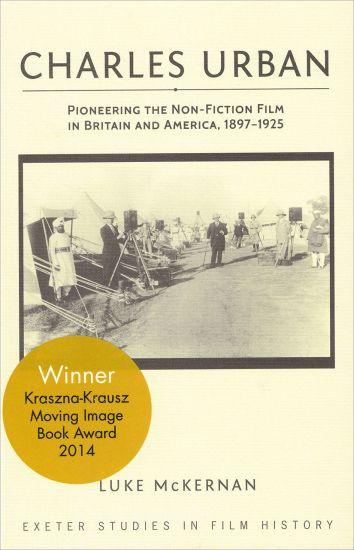
Charles Urban was a renowned figure in his time, and he has remained a name in film history chiefly for his development of Kinemacolor, the world’s first successful natural colour moving picture system. He was also a pioneer in the filming of war, science, travel, actuality and news, a fervent advocate of the value of film as an educative force, and a controversial but important innovator of film propaganda in wartime. The book uses Urban’s story as a means of showing how the non-fiction film developed in the period 1897-1925, and the dilemmas that it faced within a cinema culture in which the entertainment fiction film was dominant. Urban’s solutions – some successful, some less so – illustrate the groundwork that led to the development of documentary film. The book considers the roles of film as informer, educator and generator of propaganda, and the social and aesthetic function of colour in the years when cinema was still working out what it was capable of and how best to reach audiences. Luke McKernan also curates a web resource on Charles Urban at www.charlesurban.com
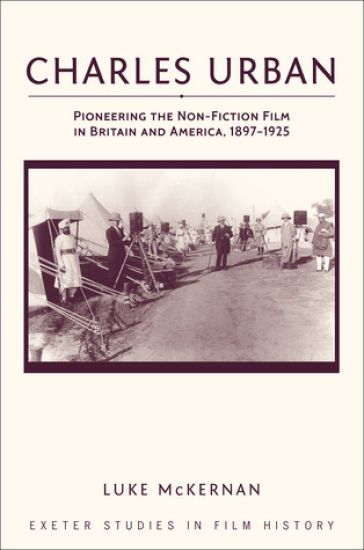
Charles Urban was a renowned figure in his time, and he has remained a name in film history chiefly for his development of Kinemacolor, the world’s first successful natural colour moving picture system. He was also a pioneer in the filming of war, science, travel, actuality and news, a fervent advocate of the value of film as an educative force, and a controversial but important innovator of film propaganda in wartime. The book uses Urban’s story as a means of showing how the non-fiction film developed in the period 1897-1925, and the dilemmas that it faced within a cinema culture in which the entertainment fiction film was dominant. Urban’s solutions – some successful, some less so – illustrate the groundwork that led to the development of documentary film. The book considers the roles of film as informer, educator and generator of propaganda, and the social and aesthetic function of colour in the years when cinema was still working out what it was capable of and how best to reach audiences. Luke McKernan also curates a web resource on Charles Urban at www.charlesurban.com
Charles the Bald
BAR Publishing
1981
nidottu

In this elegant and original book, Régis Debray argues that for two hundred years the defeats of the left have stemmed from its failure to understand what it likes to call the 'national question', while equally its successes have grown from an unacknowledged liaison with the 'unreal reality' of the nation.According to Debray, Charles de Gaulle was no narrow nationalist. By grounding his actions in a generous philosophy of the nation he was able to wed boldness to insight: on 14 June 1940 he appointed himself leader of the free French, disregarding the overwhelming parliamentary and legal mandate according to Petain. This intuitive action was to be resoundingly vindicated in the resistance and liberation of France.This study of De Gaulle is offered as an indictment of the shallowness of contemporary politics in the West. For Debray, De Gaulle is not only the last statesman in the classic mould, he is also the first to anticipate the politics of the twenty-first century. De Gaulle's aloofness from the media and disdain for the base arts of electioneering have an exemplary quality, Debray believes, reaffirming the vocation of political leadership as something other than adapting to popular preferences or allowing professional communicators and opinion pollsters to set every agenda.
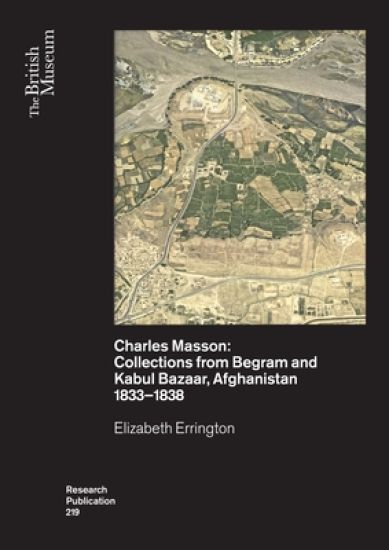
Charles Masson: Collections from Begram and Kabul Bazaar, Afghanistan 1833–1838
Elizabeth Errington
British Museum Press
2021
nidottu
The book discusses and catalogues Charles Masson’s 1833–8 collections from the urban site of Begram and Kabul bazaar. It utilises Masson archival material which appears as a supplementary BM online publication The Charles Masson Archive: British Library, British Museum and Other Documents Relating to the 1832–1838 Masson Collection from Afghanistan: http://www.britishmuseum.org/pdf/Masson%20archive%20Vol.%202.pdf The catalogued objects will be selected from c. 7600 coins and c. 1500 artefacts from Begram and Kabul bazaar now in the British Museum, supplemented by illustrated coins recorded in Masson's archival manuscripts (F526/1a) and in H.H. Wilson (Ariana Antiqua London 1841), but no longer in the collection. A key resource will be the records and images of all the artefacts already available on the Museum’s Collection online database: http://www.britishmuseum.org/research/collection_online/search.aspx?searchText=Charles+Masson

Charles Williams
Kent State University Press
2007
sidottu
He was a close friend of T. S. Eliot, deeply admired by C. S. Lewis, inspirational for W. H. Auden in his journey to faith, and a literary sparring partner for J. R. R. Tolkien. Yet, half a century after his death, much of Charles Williams' life and work remains an enigma. The questions that arose from his immersion in Rosicrucian and hermetic culture and ideology - central to understanding Williams's thought and art - remain provocatively unexplored. For a decade of his early adulthood, Williams was a member of the Fellowship of the Rosy Cross, a form of neo-Rosicrucianism. There is widespread confusion about its nature, which is to be expected given that this was a semisecret society. Though Williams left his formal association with it behind, it enriched and informed his imaginative world with a hermetic myth that expressed itself in an underlying ideology and metaphysics. In ""Charles Williams: Alchemy and Integration"", Gavin Ashenden explores both the history behind the myths and metaphysics Williams was to make his own and the hermetic culture that influenced him. He examines and interprets its expressions in Williams' novels, poetry, and the development of his ideas and relates these elements to Williams' unpublished letters to his platonic lover, Celia, written toward the end of his life. Since one of the foremost ideas in Williams's work is the interdependence or coinherence of both our humanity and the creation, understanding the extent to which he lived and achieved this in his own life is important. Williams's private correspondence with Celia is of particular interest both for its own sake, since it was previously unknown, and for the insight it offers into his personality and muse.
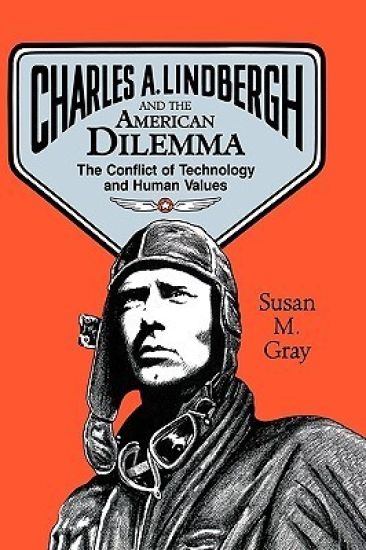
Throughout his life, Lindbergh s value structure, interests, and activities shifted and moved, yielding a conflict between instinct and intellect. Both its presence in his life and his readjustment of values in accordance with it are representative of his time and culture. He moved, with the twentieth century itself, from a faith in technology to a disenchantment with it and finally to a balanced resolution that synthesized the seeming oppositions of technology and the human spirit. This emphasis on a balance between technology and humanity, and Lindbergh s belief that maintained the complementarity rather than the opposition of the two forces, finally culminated in a post-technological mysticism, a teleological worldview of science and nature as aspects of the same physical and spiritual environment."
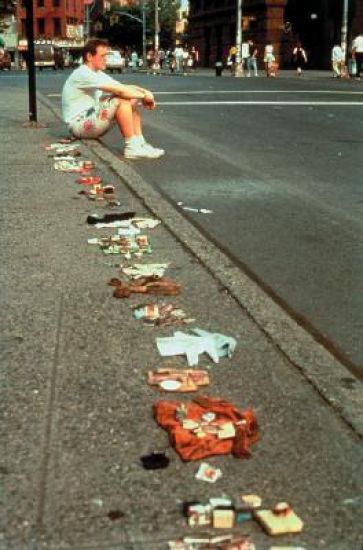
Documenting this American artist's first solo museum exhibition, Charles LeDray will focus on his obsessively crafted miniature sculptures in a variety of media, including textiles, ceramics, seashells, and bone, that reflect on childhood, gender, sexuality, and autobiography.