Kirjojen hintavertailu. Mukana 11 383 530 kirjaa ja 12 kauppaa.

Kirjahaku

Etsi kirjoja tekijän nimen, kirjan nimen tai ISBN:n perusteella.

1000 tulosta hakusanalla Claire Oshetsky

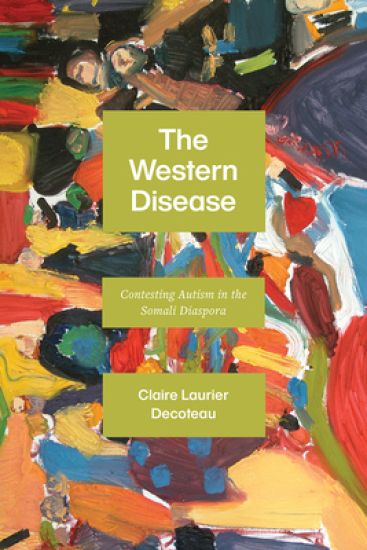
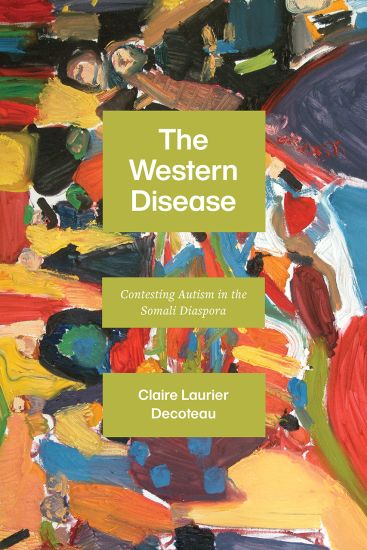
The Western Disease

The Western Disease

Claire Laurier Decoteau

University of Chicago Press
2021
nidottu
Because autism is an increasingly common diagnosis, North Americans are familiar with its symptoms and treatments. But what we know and think about autism is shaped by our social relationship to health, disease, and the medical system. In The Western Disease Claire Laurier Decoteau explores the ways that recent immigrants from Somalia to Canada and the US make sense of their children’s diagnosis of autism. Having never heard of autism before migrating to North America, they often determine that it must be a Western disease. Given its apparent absence in Somalia, they view it as Western in nature, caused by environmental and health conditions unique to life in North America. Following Somali parents as they struggle to make sense of their children's illness and advocate for alternative care, Decoteau unfolds how complex interacting factors of immigration, race, and class affect Somalis’ relationship to the disease. Somalis’ engagement with autism challenges the prevailing presumption among Western doctors that their approach to healing is universal. Decoteau argues that centering an analysis on autism within the Somali diaspora exposes how autism has been defined and institutionalized as a white, middle-class disorder, leading to health disparities based on race, class, age, and ability. The Western Disease asks us to consider the social causes of disease and the role environmental changes and structural inequalities play in health vulnerability.
Partial Stories

Partial Stories

Claire L. Wendland

THE UNIVERSITY OF CHICAGO PRESS
2022
sidottu
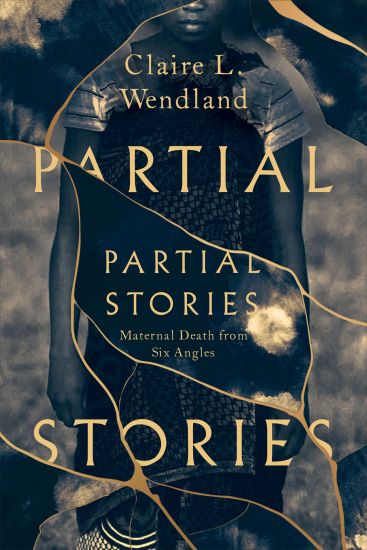
A close look at stories of maternal death in Malawi that considers their implications in the broader arena of medical knowledge. By the early twenty-first century, about one woman in twelve could expect to die of a pregnancy or childbirth complication in Malawi. Specific deaths became object lessons. Explanatory stories circulated through hospitals and villages, proliferating among a range of practitioners: nurse-midwives, traditional birth attendants, doctors, epidemiologists, herbalists. Was biology to blame? Economic underdevelopment? Immoral behavior? Tradition? Were the dead themselves at fault? In Partial Stories, Claire L. Wendland considers these explanations for maternal death, showing how they reflect competing visions of the past and shared concerns about social change. Drawing on extended fieldwork, Wendland reveals how efforts to legitimate a single story as the authoritative version can render care more dangerous than it might otherwise be. Historical, biological, technological, ethical, statistical, and political perspectives on death usually circulate in different expert communities and different bodies of literature. Here, Wendland considers them together, illuminating dilemmas of maternity care in contexts of acute change, chronic scarcity, and endemic inequity within Malawi and beyond.
Partial Stories

Partial Stories

Claire L. Wendland

THE UNIVERSITY OF CHICAGO PRESS
2022
nidottu
A close look at stories of maternal death in Malawi that considers their implications in the broader arena of medical knowledge. By the early twenty-first century, about one woman in twelve could expect to die of a pregnancy or childbirth complication in Malawi. Specific deaths became object lessons. Explanatory stories circulated through hospitals and villages, proliferating among a range of practitioners: nurse-midwives, traditional birth attendants, doctors, epidemiologists, herbalists. Was biology to blame? Economic underdevelopment? Immoral behavior? Tradition? Were the dead themselves at fault? In Partial Stories, Claire L. Wendland considers these explanations for maternal death, showing how they reflect competing visions of the past and shared concerns about social change. Drawing on extended fieldwork, Wendland reveals how efforts to legitimate a single story as the authoritative version can render care more dangerous than it might otherwise be. Historical, biological, technological, ethical, statistical, and political perspectives on death usually circulate in different expert communities and different bodies of literature. Here, Wendland considers them together, illuminating dilemmas of maternity care in contexts of acute change, chronic scarcity, and endemic inequity within Malawi and beyond.
Nonprofit Neighborhoods

Nonprofit Neighborhoods

Claire Dunning

THE UNIVERSITY OF CHICAGO PRESS
2022
nidottu
An exploration of how and why American city governments delegated the responsibility for solving urban inequality to the nonprofit sector. Nonprofits serving a range of municipal and cultural needs are now so ubiquitous in US cities, it can be difficult to envision a time when they were more limited in number, size, and influence. Turning back the clock, however, uncovers both an illuminating story of how the nonprofit sector became such a dominant force in American society, as well as a troubling one of why this growth occurred alongside persistent poverty and widening inequality. Claire Dunning’s book connects these two stories in histories of race, democracy, and capitalism, revealing how the federal government funded and deputized nonprofits to help individuals in need, and in so doing avoided addressing the structural inequities that necessitated such action in the first place.Nonprofit Neighborhoods begins after World War II, when suburbanization, segregation, and deindustrialization inaugurated an era of urban policymaking that applied private solutions to public problems. Dunning introduces readers to the activists, corporate executives, and politicians who advocated addressing poverty and racial exclusion through local organizations, while also raising provocative questions about the politics and possibilities of social change. The lessons of Nonprofit Neighborhoods exceed the bounds of Boston, where the story unfolds, providing a timely history of the shift from urban crisis to urban renaissance for anyone concerned about American inequality—past, present, or future.
Nonprofit Neighborhoods

Nonprofit Neighborhoods

Claire Dunning

THE UNIVERSITY OF CHICAGO PRESS
2022
sidottu
An exploration of how and why American city governments delegated the responsibility for solving urban inequality to the nonprofit sector. Nonprofits serving a range of municipal and cultural needs are now so ubiquitous in US cities, it can be difficult to envision a time when they were more limited in number, size, and influence. Turning back the clock, however, uncovers both an illuminating story of how the nonprofit sector became such a dominant force in American society, as well as a troubling one of why this growth occurred alongside persistent poverty and widening inequality. Claire Dunning’s book connects these two stories in histories of race, democracy, and capitalism, revealing how the federal government funded and deputized nonprofits to help individuals in need, and in so doing avoided addressing the structural inequities that necessitated such action in the first place.Nonprofit Neighborhoods begins after World War II, when suburbanization, segregation, and deindustrialization inaugurated an era of urban policymaking that applied private solutions to public problems. Dunning introduces readers to the activists, corporate executives, and politicians who advocated addressing poverty and racial exclusion through local organizations, while also raising provocative questions about the politics and possibilities of social change. The lessons of Nonprofit Neighborhoods exceed the bounds of Boston, where the story unfolds, providing a timely history of the shift from urban crisis to urban renaissance for anyone concerned about American inequality—past, present, or future.
America's Philosopher

America's Philosopher

Claire Rydell Arcenas

THE UNIVERSITY OF CHICAGO PRESS
2023
nidottu
America’s Philosopher examines how John Locke has been interpreted, reinterpreted, and misinterpreted over three centuries of American history. The influence of polymath philosopher John Locke (1632–1704) can still be found in a dizzying range of fields, as his writings touch on issues of identity, republicanism, and the nature of knowledge itself. Claire Rydell Arcenas’s new book tells the story of Americans’ longstanding yet ever-mutable obsession with this English thinker’s ideas, a saga whose most recent manifestations have found the so-called Father of Liberalism held up as a right-wing icon. The first book to detail Locke’s trans-Atlantic influence from the eighteenth century until today, America’s Philosopher shows how and why interpretations of his ideas have captivated Americans in ways few other philosophers—from any nation—ever have. As Arcenas makes clear, each generation has essentially remade Locke in its own image, taking inspiration and transmuting his ideas to suit the needs of the particular historical moment. Drawing from a host of vernacular sources to illuminate Locke’s often contradictory impact on American daily and intellectual life from before the Revolutionary War to the present, Arcenas delivers a pathbreaking work in the history of ideas.
Emergency

Emergency

Claire Laurier Decoteau

THE UNIVERSITY OF CHICAGO PRESS
2024
sidottu
A forceful critique of how and why states failed to protect marginalized communities in their responses to the COVID-19 pandemic and the implications of ignoring the existing emergencies that exacerbated the pandemic’s devastating effects. The COVID-19 pandemic inaugurated a state of emergency unprecedented for most Americans. Some could observe this emergency from the relative safety of their homes, but those in marginalized communities, without access to the same privileges, were forced to risk their health and well-being. In Emergency, sociologist Claire Laurier Decoteau documents and theorizes the emergencies of COVID-19 by looking at the experiences of Chicagoans and the policies that shaped their lives. She describes the uneven racial impact of COVID-19 on Black and Latinx Chicagoans as a crisis within a crisis, caused by a convergence of emergencies: a state of emergency that protected white supremacy and wealth, the slow emergencies racially marginalized populations have faced for decades due to the long-term gutting of care infrastructure and deindustrialization, and the sacrifice “essential workers” were asked to make to protect the United States economy. As Decoteau shows, the city’s “racial equity” project used data to determine which communities would be given scarce resources, but once positivity or death rates declined, resources were retracted and redistributed elsewhere. City officials thus attempted to manage these converging emergencies by manipulating epidemiological data and orchestrating systems for interpreting that data. Decoteau makes clear that the emergencies precipitated by COVID-19 long predated the pandemic, and that we will continue to live with their compounding crises if we do not tackle their structural underpinnings.
Emergency

Emergency

Claire Laurier Decoteau

THE UNIVERSITY OF CHICAGO PRESS
2024
nidottu
A forceful critique of how and why states failed to protect marginalized communities in their responses to the COVID-19 pandemic and the implications of ignoring the existing emergencies that exacerbated the pandemic’s devastating effects. The COVID-19 pandemic inaugurated a state of emergency unprecedented for most Americans. Some could observe this emergency from the relative safety of their homes, but those in marginalized communities, without access to the same privileges, were forced to risk their health and well-being. In Emergency, sociologist Claire Laurier Decoteau documents and theorizes the emergencies of COVID-19 by looking at the experiences of Chicagoans and the policies that shaped their lives. She describes the uneven racial impact of COVID-19 on Black and Latinx Chicagoans as a crisis within a crisis, caused by a convergence of emergencies: a state of emergency that protected white supremacy and wealth, the slow emergencies racially marginalized populations have faced for decades due to the long-term gutting of care infrastructure and deindustrialization, and the sacrifice “essential workers” were asked to make to protect the United States economy. As Decoteau shows, the city’s “racial equity” project used data to determine which communities would be given scarce resources, but once positivity or death rates declined, resources were retracted and redistributed elsewhere. City officials thus attempted to manage these converging emergencies by manipulating epidemiological data and orchestrating systems for interpreting that data. Decoteau makes clear that the emergencies precipitated by COVID-19 long predated the pandemic, and that we will continue to live with their compounding crises if we do not tackle their structural underpinnings.
A Heart for the Work

A Heart for the Work

Claire L. Wendland

University of Chicago Press
2010
sidottu
Burnout is common among doctors in the West, so one might assume that a medical career in Malawi, one of the poorest countries in the world, would place far greater strain on the idealism that drives many doctors. But, as "A Heart for the Work" makes clear, Malawian medical students learn to confront poverty creatively, experiencing fatigue and frustration but also joy and commitment on their way to becoming physicians. The first ethnography of medical training in the global South, Claire L. Wendland's book is a moving and perceptive look at medicine in a world where the transnational movement of people and ideas creates both devastation and possibility. Wendland, a physician anthropologist, conducted extensive interviews and worked in wards, clinics, and operating theaters alongside the student doctors whose stories she relates. From the relative calm of Malawi's College of Medicine to the turbulence of training at hospitals with gravely ill patients and dramatically inadequate supplies, staff, and technology, Wendland's work reveals the way these young doctors engage the contradictions of their circumstances, shedding new light on debates about the effects of medical training, the impact of traditional healing, and the purposes of medicine.
A Heart for the Work

A Heart for the Work

Claire L. Wendland

University of Chicago Press
2010
nidottu
Burnout is common among doctors in the West, so one might assume that a medical career in Malawi, one of the poorest countries in the world, would place far greater strain on the idealism that drives many doctors. But, as "A Heart for the Work" makes clear, Malawian medical students learn to confront poverty creatively, experiencing fatigue and frustration but also joy and commitment on their way to becoming physicians. The first ethnography of medical training in the global South, Claire L. Wendland's book is a moving and perceptive look at medicine in a world where the transnational movement of people and ideas creates both devastation and possibility. Wendland, a physician anthropologist, conducted extensive interviews and worked in wards, clinics, and operating theaters alongside the student doctors whose stories she relates. From the relative calm of Malawi's College of Medicine to the turbulence of training at hospitals with gravely ill patients and dramatically inadequate supplies, staff, and technology, Wendland's work reveals the way these young doctors engage the contradictions of their circumstances, shedding new light on debates about the effects of medical training, the impact of traditional healing, and the purposes of medicine.
Who's Coming Out to Play

Who's Coming Out to Play

Claire Carter

McGill-Queen's University Press
2021
sidottu
Queer community sports leagues, by their sheer numbers, are changing the energy and space of school gyms and community recreational spaces. Some leagues are well-established – having been in existence for over twenty-five years – whereas others are relatively new, but their collective presence tells stories about the shifting dynamics of queer communities in Canada.Who's Coming Out to Play considers the potential of queer community sports to disrupt notions of the embodiment of gender and community, while maintaining an awareness of numerous factors that limit this potential. Exploring queer teams and leagues of varying sizes and from various locations, this book focuses on leagues that have previously identified as women's or lesbian and are now becoming trans and genderqueer inclusive. Queer community leagues are based in a commitment to community building, prioritizing fun, socializing, and inclusivity over competing or winning. As a result of these commitments, these spaces and the people who come to play in them reflect new ways of being in and with bodies, different ways of embodying gender, and new or different forms of engagement – notably distinct "rules of play" – within sporting arenas.Who's Coming Out to Play paints a vivid picture of the lived experiences of queer bodies in queer sporting spaces, exploring both the possibilities and the continued problems they face.
Who's Coming Out to Play

Who's Coming Out to Play

Claire Carter

McGill-Queen's University Press
2021
nidottu
Queer community sports leagues, by their sheer numbers, are changing the energy and space of school gyms and community recreational spaces. Some leagues are well-established – having been in existence for over twenty-five years – whereas others are relatively new, but their collective presence tells stories about the shifting dynamics of queer communities in Canada.Who's Coming Out to Play considers the potential of queer community sports to disrupt notions of the embodiment of gender and community, while maintaining an awareness of numerous factors that limit this potential. Exploring queer teams and leagues of varying sizes and from various locations, this book focuses on leagues that have previously identified as women's or lesbian and are now becoming trans and genderqueer inclusive. Queer community leagues are based in a commitment to community building, prioritizing fun, socializing, and inclusivity over competing or winning. As a result of these commitments, these spaces and the people who come to play in them reflect new ways of being in and with bodies, different ways of embodying gender, and new or different forms of engagement – notably distinct "rules of play" – within sporting arenas.Who's Coming Out to Play paints a vivid picture of the lived experiences of queer bodies in queer sporting spaces, exploring both the possibilities and the continued problems they face.
The New Arrival

The New Arrival

Claire Williams

Tellwell Talent
2022
pokkari
Everyone is excited;a new baby is on the way Being a big brother will be lots of fun.We will snuggle, laugh and play.A new baby joining the family is a big change for any child.This cute and fun story is perfect to help your little one adjust to their very own new arrival.
The New Arrival

The New Arrival

Claire Williams

Tellwell Talent
2022
sidottu
Everyone is excited;a new baby is on the way Being a big brother will be lots of fun.We will snuggle, laugh and play.A new baby joining the family is a big change for any child.This cute and fun story is perfect to help your little one adjust to their very own new arrival.
It's Time for You to Get To Bed and Rest Your Head!

It's Time for You to Get To Bed and Rest Your Head!

Claire Adelle Greene

Tellwell Talent
2023
pokkari
It's time for bed, and getting the little monsters there is never an easy task Enjoy a playful bedtime story about the jobs the little monsters need to get done before bed This book is full of rhymes and colourful characters, and as you read, don't forget to spot Mr. Cow throughout the story Your little monsters might even learn a thing or two to help you get them to bed next time
It's Time for You to Get To Bed and Rest Your Head!

It's Time for You to Get To Bed and Rest Your Head!

Claire Adelle Greene

Tellwell Talent
2023
sidottu
It's time for bed, and getting the little monsters there is never an easy task Enjoy a playful bedtime story about the jobs the little monsters need to get done before bed This book is full of rhymes and colourful characters, and as you read, don't forget to spot Mr. Cow throughout the story Your little monsters might even learn a thing or two to help you get them to bed next time
Pirates? The Politics of Plunder, 1550-1650

Pirates? The Politics of Plunder, 1550-1650

Claire Jowitt

Palgrave Macmillan
2006
sidottu
This book provides an insight to the cultural work involved in violence at sea in this period of maritime history. It is the first to consider how 'piracy' and representations of 'pirates' both shape and were shaped by political, social and religious debates, showing how attitudes to 'piracy' and violence at sea were debated between 1550 and 1650.