Kirjojen hintavertailu. Mukana 11 699 587 kirjaa ja 12 kauppaa.

Kirjahaku

Etsi kirjoja tekijän nimen, kirjan nimen tai ISBN:n perusteella.

1000 tulosta hakusanalla Colin Flint

Hubert's War

Hubert's War

Colin Orr

Lulu.com
2019
nidottu
The war diaries and letters home of Major John Hubert Penrose during the 1940 BEF campaign that ended at Dunkirk and the 1944 campaign in NW Europe from Normandy to Geilenkirchen.
The Dying Nurse

The Dying Nurse

Colin Richards

Lulu.com
2019
pokkari
A saga covering almost a century, The ravages of war, love and intrigue, Gold and diamonds from Africa retrieved from an ancient civilization, and the recovery of the English countryside after the two world wars, Further intrigue as Australian bomber pilots fly ex RAF planes to the outback.
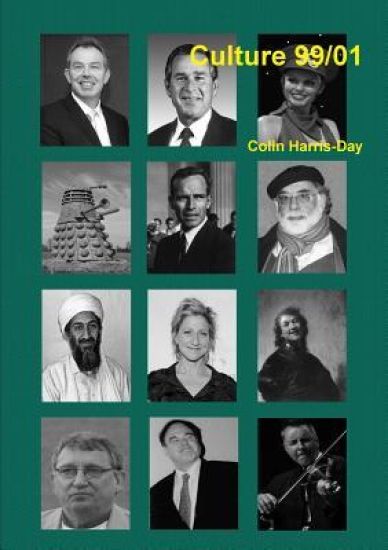
Culture 99/01

Culture 99/01

Colin Harris-Day

Lulu.com
2018
pokkari
The first book from Merseyside based poet Colin Harris-Day. A fragmented collage satirising media and culture during the turn of the millennium. Experimental and entertaining, it mimics the modern bombardment of random noise and seeds it with glimpses of what lies behind, all laced with humour.
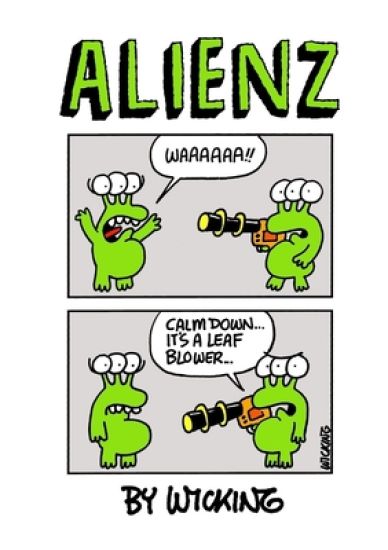
Alienz

Alienz

Colin Wicking

Lulu.com
2018
pokkari
Inspired by the extraordinary number of UFO sightings in Australia's Northern Territory, 'ALIENZ' enjoyed a two-year run in the back pages of People magazine, where you probably didn't see it. Not to worry Now you can, collected for the first time in one handy volume.
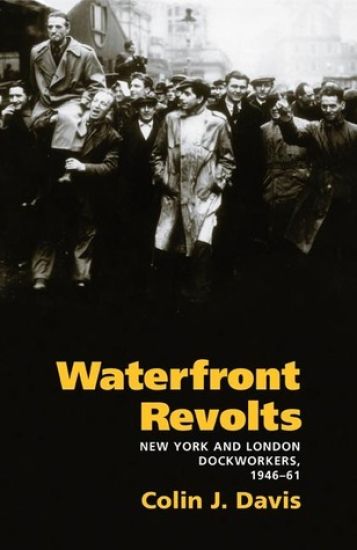
Waterfront Revolts

Waterfront Revolts

Colin J. Davis

University of Illinois Press
2003
sidottu
During the decade that followed World War II, American and British dockworkers undertook a series of militant revolts against their employers, their governments, and even their union leaderships. In this in-depth comparative study, Colin Davis explores the upheavals on both sides of the Atlantic. Davis examines the dynamics of work and work stoppage along the two pivotal waterfronts, showing how issues of race, organized crime, union affiliation, working conditions, and Cold War politics shaped waterfront uprisings and the state's response to them. He explores other key differences between American and British labor, such as the cultural forces that led to the emergence of rank-and-file dockworkers' movements, degree of governmental oversight, methods of obtaining work, and specifics of ethnic and racial identification. An eye-opening look at dockworker influence in postwar industry, Waterfront Revolts reveals how workers and trade unions directly influenced Cold War politics, the economy, and culture across national borders.
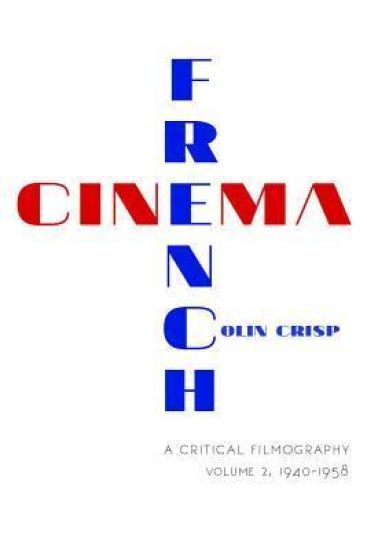
French Cinema—A Critical Filmography

French Cinema—A Critical Filmography

Colin Crisp

Indiana University Press
2015
pokkari
This invaluable resource by one of the world's leading experts in French cinema presents a coherent overview of French cinema in the 20th century and its place and function in French society. Each filmography includes 101 films listed chronologically (Volume 1: 1929–1939 and Volume 2: 1940–1958) and provides accessible points of entry into the remarkable world of 20th-century French cinema. All entries contain a list of cast members and characters, production details, an overview of the film's cultural and historical significance, and a critical summary of the film's plot and narrative structure. Each volume includes an appendix listing rewards earned and an extensive reference list for further reading and research. A third volume, covering the period 1958–1974, is forthcoming.
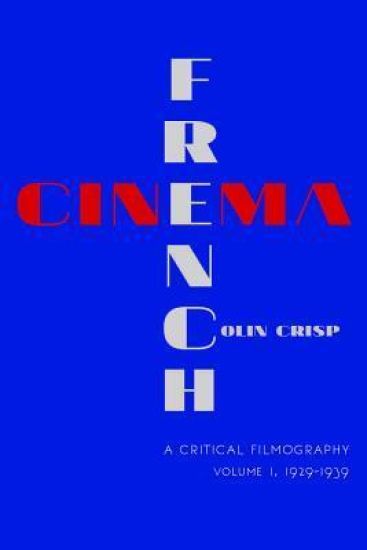
French Cinema—A Critical Filmography

French Cinema—A Critical Filmography

Colin Crisp

Indiana University Press
2015
pokkari
This invaluable resource by one of the world's leading experts in French cinema presents a coherent overview of French cinema in the 20th century and its place and function in French society. Each filmography includes 101 films listed chronologically (Volume 1: 1929–1939 and Volume 2: 1940–1958) and provides accessible points of entry into the remarkable world of 20th-century French cinema. All entries contain a list of cast members and characters, production details, an overview of the film's cultural and historical significance, and a critical summary of the film's plot and narrative structure. Each volume includes an appendix listing rewards earned and an extensive reference list for further reading and research. A third volume, covering the period 1958–1974, is forthcoming.
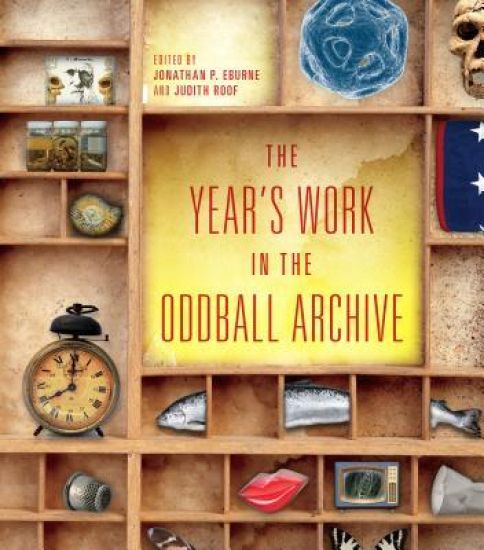
The Year's Work in the Oddball Archive

The Year's Work in the Oddball Archive

Colin Dickey

Indiana University Press
2016
sidottu
The modern age is no stranger to the cabinet of curiosities, the freak show, or a drawer full of odds and ends. These collections of oddities engagingly work against the rationality and order of the conventional archive found in a university, a corporation, or a governmental holding. In form, methodology, and content, The Year's Work in the Oddball Archive offers a counterargument to a more reasoned form of storing and recording the avant-garde (or the post-avant-garde), the perverse, the off, the bent, the absurd, the quirky, the weird, and the queer. To do so, it positions itself within the history of mirabilia launched by curiosity cabinets starting in the mid-fifteenth century and continuing to the present day. These archives (or are they counter-archives?) are located in unexpected places—the doorways of Katrina homes, the cavity of a cow, the remnants of extinct animals, an Internet site—and they offer up "alternate modes of knowing" to the traditional archive.
The Year's Work in the Oddball Archive

The Year's Work in the Oddball Archive

Colin Dickey

Indiana University Press
2016
pokkari
The modern age is no stranger to the cabinet of curiosities, the freak show, or a drawer full of odds and ends. These collections of oddities engagingly work against the rationality and order of the conventional archive found in a university, a corporation, or a governmental holding. In form, methodology, and content, The Year's Work in the Oddball Archive offers a counterargument to a more reasoned form of storing and recording the avant-garde (or the post-avant-garde), the perverse, the off, the bent, the absurd, the quirky, the weird, and the queer. To do so, it positions itself within the history of mirabilia launched by curiosity cabinets starting in the mid-fifteenth century and continuing to the present day. These archives (or are they counter-archives?) are located in unexpected places—the doorways of Katrina homes, the cavity of a cow, the remnants of extinct animals, an Internet site—and they offer up "alternate modes of knowing" to the traditional archive.
Hallow This Ground

Hallow This Ground

Colin Rafferty

Indiana University Press
2016
pokkari
Beginning outside the boarded-up windows of Columbine High School and ending almost twelve years later on the fields of Shiloh National Military Park, Hallow This Ground revolves around monuments and memorials—physical structures that mark the intersection of time and place. In the ways they invite us to interact with them, these sites teach us to recognize our ties to the past. Colin Rafferty explores places as familiar as his hometown of Kansas City and as alien as the concentration camps of Poland in an attempt to understand not only our common histories, but also his own past, present, and future. Rafferty blends the travel essay with the lyric, the memoir with the analytic, in this meditation on the ways personal histories intersect with History, and how those intersections affect the way we understand and interact with Place.
The Invention of Robert Bresson

The Invention of Robert Bresson

Colin Burnett

Indiana University Press
2016
sidottu
Challenging the prevailing notion among cinephiles that the auteur is an isolated genius interested primarily in individualism, Colin Burnett positions Robert Bresson as one whose life's work confronts the cultural forces that helped shape it. Regarded as one of film history's most elusive figures, Bresson (1901–1999) carried himself as an auteur long before cultural magazines, like the famed Cahiers du cinéma, advanced the term to describe such directors as Jacques Tati, Alfred Hitchcock, and Jean-Luc Godard. In this groundbreaking study, Burnett combines biography with cultural history to uncover the roots of the auteur in the alternative cultural marketplace of midcentury France.
The Invention of Robert Bresson

The Invention of Robert Bresson

Colin Burnett

Indiana University Press
2016
pokkari
Challenging the prevailing notion among cinephiles that the auteur is an isolated genius interested primarily in individualism, Colin Burnett positions Robert Bresson as one whose life's work confronts the cultural forces that helped shape it. Regarded as one of film history's most elusive figures, Bresson (1901–1999) carried himself as an auteur long before cultural magazines, like the famed Cahiers du cinéma, advanced the term to describe such directors as Jacques Tati, Alfred Hitchcock, and Jean-Luc Godard. In this groundbreaking study, Burnett combines biography with cultural history to uncover the roots of the auteur in the alternative cultural marketplace of midcentury France.
The Rise and Fall of Development Theory

The Rise and Fall of Development Theory

Colin Leys

Indiana University Press
2009
pokkari
"He has this wonderful and rare capacity to delineate the most complex of arguments in the most limpid prose. He never takes refuge in jargon. He demolishes pretentiousness. He is disarmingly honest. He hits you between the eyes. He is not afraid to be a lone voice as, increasingly, nowadays he is, the still small voice of humane sanity in an increasingly barbarous and market-oriented world. He makes immediate sense to anybody voting marginally to the left of Genghis Khan, Mrs. Thatcher or Newt Gingrich." —John Lonsdale, Fellow of Trinity College, Cambridge. This book is a "stock-taking" of development theory at the end of the 20th century. It argues that the assumptions on which development theory has rested since the 1950s no longer hold. The postcolonial "third world" for which development theory was originally developed has fractured into increasingly diverse regions, while the end of the postwar regime of regulated international trade and capital movements has drastically curtailed the scope for state economic intervention. A much broader based, more historical and more explicitly political theoretical effort is now called for.
The Classic French Cinema, 1930-1960

The Classic French Cinema, 1930-1960

Colin Crisp

Indiana University Press
1997
pokkari
"We can usually expect something fresh and different to emerge from Australia, and this study is no exception." —American Cinematographer "An important contribution to cinema history . . . especially impressive in its analysis of the French cinema industry, in terms of both mode of production and personnel, and in its analysis of the French technological base." —Richard Abel From 1930 to 1960, France produced some of the most famous films ever made, such as Jean Vigo's Zéro de conduite and Jean Cocteau's Orphée. Here Colin Crisp investigates this critical period and details the extraordinary ingenuity of French filmmakers, who worked under economic and technological constraints that affected both the production and the consumption of films.
Africa Since Independence

Africa Since Independence

Colin Legum

Indiana University Press
1999
pokkari
Activist, scholar, and political journalist Colin Legum assesses Africa's experience since independence and offers judicious predictions about the continent's future. Covering 50 years of sweeping change, this provocative and insightful book examines Africa's struggle for democracy, mounting economic problems, and AIDS.
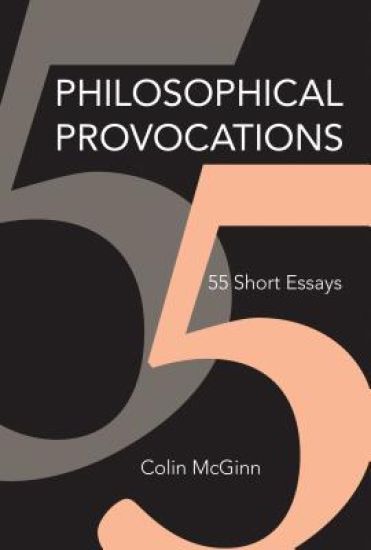
Philosophical Provocations

Philosophical Provocations

Colin McGinn

MIT Press
2017
sidottu
Pithy, direct, and bold: essays that propose new ways to think about old problems, spanning a range of philosophical topics.In Philosophical Provocations, Colin McGinn offers a series of short, sharp essays that take on philosophical problems ranging from the concept of mind to paradox, altruism, and the relation between God and the Devil. Avoiding the usual scholarly apparatus and embracing a blunt pithiness, McGinn aims to achieve as much as possible in as short a space as possible while covering as many topics as possible. Much academic philosophical writing today is long, leaden, citation heavy, dense with qualifications, and painful to read. The essays in Philosophical Provocations are short, direct, and engaging, often challenging philosophical orthodoxy as they consider issues in mind, language, knowledge, metaphysics, biology, ethics, and religion.McGinn is looking for new ways to think about old problems. Thus he writes, about consciousness, "I think we have been all wrong," and goes on to suggest that both consciousness and the unconscious are mysteries. Summing up his proposal on altruism, he remarks, "My suggestion can now be stated, somewhat brutally, as follows: human altruism is the result of parasitic manipulation." He takes a moment to reflect: "I really don't know why it is good to be alive, though I am convinced that the standard suggestions don't work." McGinn gets straight to the point and states his position with maximum clarity. These essays offer provocative invitations to think again.