Kirjojen hintavertailu. Mukana 11 342 296 kirjaa ja 12 kauppaa.

Kirjahaku

Etsi kirjoja tekijän nimen, kirjan nimen tai ISBN:n perusteella.

1000 tulosta hakusanalla Conrad Varentrapp

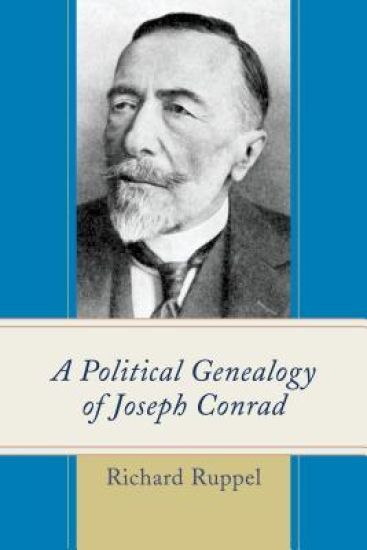
A Political Genealogy of Joseph Conrad

A Political Genealogy of Joseph Conrad

Richard Ruppel

Lexington Books
2016
nidottu
Józef Teodor Konrad Korzeniowski, who gradually transformed himself into the English writer, Joseph Conrad, was a mercurial personality. He left Poland for the sea, though he had no experience with salt water. He left the Polish language for French, and then for English. He attempted suicide at the age of twenty. He invested in various schemes and lost his inheritance. He married an English typist nearly sixteen years younger than himself with whom he had nothing in common. He worked as a writer though he made no money through all the years of his most important work and though he experienced terrible psychological breakdowns after completing each novel. He was warm with his friends, ingratiating with influential strangers, but also intensely irritable and easily offended. His work is as varied and changeable as his personality, from his first two, emotionally intense Malay novels, to the stolid and confident Nigger of the “Narcissus” and “Typhoon”; from the coldly ironic “Outpost of Progress” to the nightmarishly subjective Heart of Darkness; from the leisurely, panoramic visions of Nostromo to the tautly nervous, claustrophobic ironies in The Secret Agent. Despite the extraordinary thematic and tonal range of his work, critics have imposed a stable political perspective on his fiction—most often an organic conservatism, influenced by his Polish background. This is understandable; until recently, a critic’s role has been to impose order on an artist’s creations. The approach in this book is different. Drawing on the work of Michel Foucault and Jean-Francois Lyotard, especially on the latter’s critique of what he called “the grand narrative,” A Political Genealogy of Joseph Conrad shows how Conrad’s politics were always radically contingent on audience, contemporary events, and, especially, genre. While the political perspective in each of his stories and novels may be more-or-less coherent and consistent, there is no consistency throughout his work. A Political Genealogy of Joseph Conrad is the first book devoted exclusively to Conrad’s politics since the 1960s.
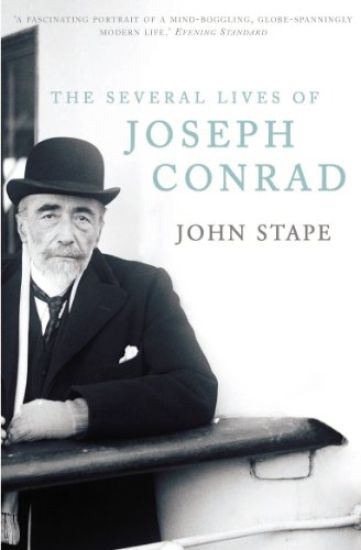
The Several Lives of Joseph Conrad

The Several Lives of Joseph Conrad

John Stape

Arrow Books Ltd
2017
pokkari
Joseph Conrad's impact has been so profound and far-reaching that, eighty years after his death, he remains an essential cultural reference point. Such phrases as 'heart of darkness' and 'The horror! The horror!' have entered the language, often cited without an awareness of their original contexts. His popular legacy extends to Latin American fiction, to the spy novel, to the terrorist and anarchist character, and to film. The writers he has influenced range from T. S. Eliot to William Faulkner to V. S. Naipaul and John Le Carré. For a writer of 'difficult' fiction he has enjoyed a remarkably wide impact, yet as Marlow proclaims in Lord Jim of the figure whose story he tells, 'he was one of us' and so Conrad remains in fascinating ways.
The Connell Guide To Joseph Conrad's Heart of Darkness
Conrad finished Heart of Darkness on 9th February, 1899 and on publication it had an impact as powerful as any long short story, or short novel ever written - it is only 38,000 words. It quickly became, and has remained, Conrad's most famous work and has been regarded by many in America, if not elsewhere, as his greatest work. Exciting and profound, lucid and bewildering, and written with an exuberance which sometimes seems at odds with its subject matter, it has influenced writers as diverse as T.S.Eliot, Graham Greene, William Golding, and Ngugi wa Thiong'o. It has also inspired, among others, Orson Welles, who made two radio versions the second of which, in 1945, depicted Kurtz as a forerunner of Adolf Hitler, and Francis Ford Coppola who turned it into the film Apocalypse Now. More critical attention has probably been paid to it, per word, than to any other modern prose work. It has also become a text about which, as the late Frank Kermode once complained, interpreters feel licensed to say absolutely anything. Why? What is it about Heart of Darkness that has captivated critics and readers for so long and caused so many millions of words to be written about it? And why has its peculiarly dark and intense vision of life so frequently been misunderstood? Graham Bradshaw provides the answers in this illuminating guide.
North World Book 2: The Epic of Conrad (Part 2)
Conrad's given up his life of action and adventure and become an accountant — and in the middle of a quest no, less! But can our intrepid hero truly leave his days of swords and battle behind him or will he finish the job the guild sent him to his hometown to complete? It's a clash of family loyalty and heroic destiny for the star of this first North World story!
The Inheritors (1901) by: Joseph Conrad and Ford Madox Ford. / quasi-science fiction NOVEL /

The Inheritors (1901) by: Joseph Conrad and Ford Madox Ford. / quasi-science fiction NOVEL /

Ford Madox Ford; Joseph Conrad

Createspace Independent Publishing Platform
2017
nidottu
The Inheritors: An Extravagant Story (1901) is a quasi-science fiction novel on which Ford Madox Ford and Joseph Conrad collaborated. It looks at society's mental evolution and what is gained and lost in the process. Written before the first World War, its themes of corruption and the effect of the 20th Century on British aristocracy appeared to predict history. It was first published in London by William Heinemann and later the same year in New York by McClure, Phillips & Co. In the novel, the metaphor of the "fourth dimension" is used to explain a societal shift from a generation of people who have traditional values of interdependence, being overtaken by a modern generation who believe in expediency, callously using political power to bring down the old order. Its narrator is an aspiring writer who himself makes a similar transition at a personal level only to feel he has lost everything.
Strive And Succeed: The Progress of Walter Conrad

Strive And Succeed: The Progress of Walter Conrad

Horatio Alger

Createspace Independent Publishing Platform
2017
nidottu
This work has been selected by scholars as being culturally important, and is part of the knowledge base of civilization as we know it. This work was reproduced from the original artifact, and remains as true to the original work as possible. Therefore, you will see the original copyright references, library stamps (as most of these works have been housed in our most important libraries around the world), and other notations in the work. This work is in the public domain in the United States of America, and possibly other nations. Within the United States, you may freely copy and distribute this work, as no entity (individual or corporate) has a copyright on the body of the work.As a reproduction of a historical artifact, this work may contain missing or blurred pages, poor pictures, errant marks, etc. Scholars believe, and we concur, that this work is important enough to be preserved, reproduced, and made generally available to the public. We appreciate your support of the preservation process, and thank you for being an important part of keeping this knowledge alive and relevant.
El corazón de las tinieblas de Joseph Conrad (Guía de lectura)
ResumenExpress.com presenta y analiza en esta gu a de lectura de El coraz n de las tinieblas de Joseph Conrad, una novela en la que se explora el tema del colonialismo a trav s de la historia de un viejo marinero que recuerda los viajes que realiz a frica. Este relato legendario sobre la oscuridad del alma humana, la barbarie de la civilizaci n y la brutalidad de nuestra mente no dejar indiferente al lector. Ya no tienes que leer y resumir todo el libro, nosotros lo hemos hecho por ti Esta gu a incluye: - Un resumen completo del libro- Un estudio de los personajes- Las claves de lectura- Pistas para la reflexi n Por qu elegir ResumenExpress.com? Para aprender de forma r pida. Porque nuestras publicaciones est n escritas con un estilo claro y conciso que te ayudar a ganar tiempo y a entender las obras sin esfuerzo. Disponibles en formato impreso y digital, te acompa ar n en tu aventura literaria. Toma una dosis de literatura acelerada con ResumenExpress.com
Heart of Darkness by Joseph Conrad (Book Analysis)

Heart of Darkness by Joseph Conrad (Book Analysis)

Bright Summaries

BrightSummaries.com
2018
pokkari
Unlock the more straightforward side of Heart of Darkness with this concise and insightful summary and analysis This engaging summary presents an analysis of Heart of Darkness by Joseph Conrad, in which the sailor Charles Marlow tells the story of his experiences in one of the European colonies in Africa. As a young man, he travelled to the colony for work, where he met the ivory trader Kurtz, who had been driven mad by the unremittingly harsh climate and was ruling over the indigenous inhabitants as a bloodthirsty, god-like tyrant. Heart of Darkness's exploration of the extreme brutality engendered by colonialism made it one of the most celebrated English-language works of the 19th century, although some later critics have accused Conrad himself of racism and imperialism in his depiction of the novella's black characters. Conrad was born in what is now Ukraine in 1857, and much of his work was influenced by his experiences in the British navy, which took him all over the world, including to a number of European colonies. Find out everything you need to know about Heart of Darkness in a fraction of the time This in-depth and informative reading guide brings you: - A complete plot summary- Character studies- Key themes and symbols- Questions for further reflection Why choose BrightSummaries.com?Available in print and digital format, our publications are designed to accompany you on your reading journey. The clear and concise style makes for easy understanding, providing the perfect opportunity to improve your literary knowledge in no time. See the very best of literature in a whole new light with BrightSummaries.com
Methodus als Lebensweg bei Johann Conrad Dannhauer
Die in der protestantischen Orthodoxie üblichen Karrierestufen von logischer zu theologischer und homiletischer Publizistik führen beim Strassburger lutherischen Theologen Johann Conrad Dannhauer (1603-1666) zu einer mehrfachen werkimmanenten Selbstrezeption, Sie erfolgt entlang dem zeitgenössischen Schlüsselbegriff der Methode. Nach Darlegung mündlich-disputatorischer (1629) und schriftlich-hermeneutischer (1630) Argumentationsmethoden entwickelt Dannhauer in seiner Dialektik (1634) die methodus im Gefolge J. Zabarellas insgesamt zu einer deutlicher apodiktisch-binären Logik. Er lässt sie als Darstellung der Wahl des christlichen Lebenswegs zuerst in der monumentalen Predigtsammlung der Catechismus-Milch (ab 1634) und schließlich in der Gegenüberstellung von lutherische Hodosophie (Wegweisheit, 1653) und katholischer sowie reformierter Hodomorie (Wegtorheit, 1654) wirksam werden. Der Methodenbegriff entwickelt sich so zu einer funktional hybriden Metapher und aus der Prüfung von Argumenten bildet sich jene des auch individuell verstandenen Glaubenswegs. Dies eröffnet neue Perspektiven auch auf das Paradox der Prägung Ph. J. Speners durch Dannhauer bei gleichzeitiger Bekämpfung des Pietismus durch die Staßburger Fakultät