Kirjojen hintavertailu. Mukana 11 678 611 kirjaa ja 12 kauppaa.

Kirjahaku

Etsi kirjoja tekijän nimen, kirjan nimen tai ISBN:n perusteella.

1000 tulosta hakusanalla Craig Read

Nimitz at War

Nimitz at War

Craig L. Symonds

OXFORD UNIVERSITY PRESS INC
2024
nidottu
From America's preeminent naval historian, the first full-length portrait in over fifty years of the man who won the war in the Pacific in World War TwoD "destined," says Andrew Roberts, "to be the defining life of Chester Nimitz for a long time to come." "Nimitz at War is the greatest biography yet written about the greatest admiral in American history." - Ian Toll Only days after the Japanese attacked Pearl Harbor, President Franklin D. Roosevelt tapped Chester W. Nimitz to assume command of the Pacific Fleet. Nimitz was not the most senior candidate available, and some, including his new boss, U.S. Navy Admiral Ernest J. King, considered him a "desk admiral," more suited to running a bureaucracy than a theater of war. Yet FDR's selection proved nothing less than inspired. From the precarious early months of the war after December 7th, 1941 to the surrender ceremony in Tokyo Bay nearly four years later, Nimitz transformed the devastated and dispirited Pacific fleet into the most powerful and commanding naval force in history. From the start, the pressures on Nimitz were crushing. Facing demands from Washington to mount an early offensive, he had first to revive the depressed morale of the thousands of sailors, soldiers, and Marines who served under him. He had to corral independent-minded subordinatesD including Admiral Bill "Bull" Halsey and General Holland "Howlin' Mad" SmithD and keep them focused on shared objectives. He had to maintain a sometimes-fraught relationship with his Army counterpart Douglas MacArthur, and cope with his superiors, including the formidably prickly King and the inscrutable FDR. He had to navigate the expectations of a nation impatient for revenge and eventual victory. And of course, he also confronted a formidable and implacable enemy in the Imperial Japanese Navy, which, until the Battle of Midway, had the run of the Pacific. Craig Symonds' Nimitz at War reveals how the quiet man from the Hill Country of Texas eventually surmounted all of these challenges. Using Nimitz's headquartersD the of the hurricaneD as his vantage point, Symonds covers all the major campaigns in the Pacific from Guadalcanal to Okinawa. He captures Nimitz's composure, discipline, homespun wisdom, and most of all his uncanny sense of when to assert authority and when to pull back. In retrospect it is difficult to imagine anyone else accomplishing what Nimitz did. As Symonds' absorbing, dynamic, and authoritative portrait reveals, it required qualities of leadership exhibited by few other commanders in history, qualities that are enduringly and even poignantly relevant to our own moment. Nimitz at War has sold over 25,000 copies in hardcover and ebook combined.
Virgil and the Myth of Venice

Virgil and the Myth of Venice

Craig Kallendorf

Clarendon Press
1999
sidottu
This book, which is the first comprehensive study of its subject, shows how one traditionally esteemed author, the Roman poet Virgil, played an unexpectedly significant role in the shaping of Venetian Renaissance culture. The author draws on reception theory, the sociology of literature, and history of the book to argue that Virgil's poetry became a best-seller because it sometimes challenged, but more often confirmed, the specific moral, religious, and social values its Venetian readers brought with them to their texts. The texts that are used are the printed books of the fifteenth and sixteenth century printed books in which readers of the period encountered Virgil, the prefaces and commentaries that guided their responses, and, the marginal notes that record those responses. How the Renaissance Venetians saw themselves when they looked into their literary past tells us a good deal about them, but it also illuminates a number of issues at the centre of humanistic studies today, ranging from how reading takes place to the role of class and gender in fashioning interpretation. The wide range of interests that are touched on should make this book of value to scholars in the disciplines of classics, history, Renaissance studies, and Italian studies, as well as English literature and cultural studies.
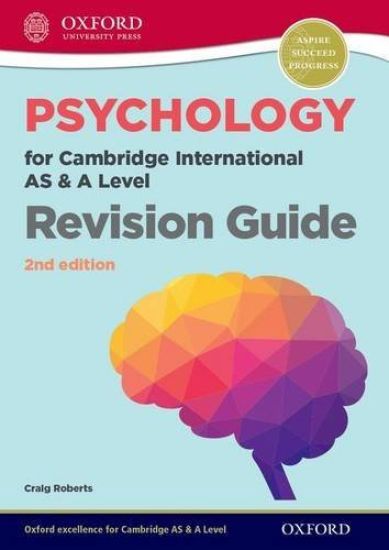
Psychology for Cambridge International AS and A Level Revision Guide
Newly updated to match the latest Cambridge syllabus for first examination in 2018 (9990), Psychology for Cambridge International A Level Revision Guide 2nd Edition supports the Student Book to ensure that learners approach examinations with confidence. A clear, visual approach helps to clarify the concepts, and concise summaries faciliate efficient and effective revision.
Beyond the Learning Curve

Beyond the Learning Curve

Craig Speelman; Kim Kirsner

Oxford University Press
2005
sidottu
For years now, learning has been at the heart of research within cognitive psychology. How do we acquire new knowledge and new skills? Are the principles underlying skill acquisition unique to learning, or similar to those underlying other behaviours? Is the mental system essentially modular, or is the mental system a simple product of experience, a product that, inevitably, reflects the shape of the external world with all of its specialisms and similarities? This new book takes the view that learning is a major influence on the nature of the processes and representations that fill our minds. Throughout, the authors review and consider the areas of skill acquisition and lexical representation to illustrate the effects that practice can have on cognitive processes. They also draw parallels between theories in physical and biological domains to propose not only a new theory of mental function but also demonstrate that the mind is essentially subject to the same natural laws as the physical world. In so doing Speelman and Kirsner present a new perspective on psychology - one that identifies universal principles underlying all behaviours and one which contrasts markedly from our current focus on highly specific behaviours. Accessibly written, Beyond the Learning Curve is a thought provoking and challenging new text for students and researchers in the cognitive sciences.
Beyond the Learning Curve

Beyond the Learning Curve

Craig Speelman; Kim Kirsner

Oxford University Press
2005
nidottu
For years now, learning has been at the heart of research within cognitive psychology. How do we acquire new knowledge and new skills? Are the principles underlying skill acquisition unique to learning, or similar to those underlying other behaviours? Is the mental system essentially modular, or is the mental system a simple product of experience, a product that, inevitably, reflects the shape of the external world with all of its specialisms and similarities? This new book takes the view that learning is a major influence on the nature of the processes and representations that fill our minds. Throughout, the authors review and consider the areas of skill acquisition and lexical representation to illustrate the effects that practice can have on cognitive processes. They also draw parallels between theories in physical and biological domains to propose not only a new theory of mental function but also demonstrate that the mind is essentially subject to the same natural laws as the physical world. In so doing Speelman and Kirsner present a new perspective on psychology - one that identifies universal principles underlying all behaviours and one which contrasts markedly from our current focus on highly specific behaviours. Accessibly written, Beyond the Learning Curve is a thought provoking and challenging new text for students and researchers in the cognitive sciences.
The Protean Virgil

The Protean Virgil

Craig Kallendorf

Oxford University Press
2015
sidottu
The Protean Virgil argues that when we try to understand how and why different readers have responded differently to the same text over time, we should take into account the physical form in which they read the text as well as the text itself. Using Virgil's poetry as a case study in book history, the volume shows that a succession of material forms - manuscript, printed book, illustrated edition, and computer file - undermines the drive toward textual and interpretive stability. This stability is the traditional goal of classical scholarship, which seeks to recover what Virgil wrote and how he intended it to be understood. The manuscript form served to embed Virgil's poetry into Christian culture, which attempted to anchor the content into a compatible theological truth. Readers of early printed material proceeded differently, breaking Virgil's text into memorable moral and stylistic fragments, and collecting those fragments into commonplace books. Furthermore, early illustrated editions present a progression of re-envisionings in which Virgil's poetry was situated within a succession of receiving cultures. In each case, however, the material form helped to generate a method of reading Virgil which worked with this form but which failed to survive the transition to a new union of the textual and the physical. This form-induced instability reaches its climax with computerization, which allows the reader new power to edit the text and to challenge the traditional association of Virgil's poetry with elite culture.
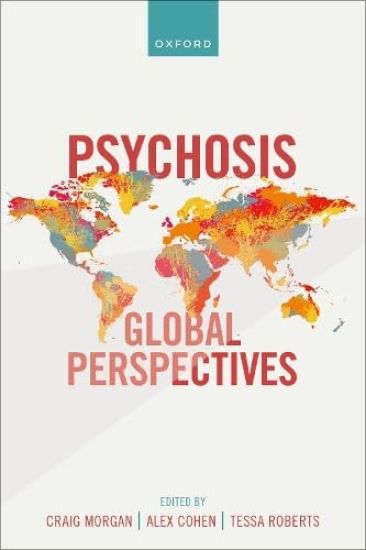
Psychosis: Global Perspectives

Psychosis: Global Perspectives

Craig Morgan; Alex Cohen; Tessa Roberts

Oxford University Press
2023
nidottu
Psychotic disorders are a major public health challenge. Psychoses are associated with significant individual, familial, and societal costs. Yet, our understanding of these conditions is limited because the overwhelming majority of research is conducted in a small number of countries in North America, Europe, and Australasia, which together comprise only around 16% of the world's population. There are consequently substantial gaps in our knowledge of psychoses, and the need for a global perspective is obvious. Psychosis: Global Perspectives comprises two parts: In the first half of the book, the authors review the current evidence base on psychoses around the world by theme, from epidemiology to human rights, highlighting commonalities and differences between settings and illustrating the gaps in our knowledge. The second half of the book synthesises existing research from nine countries in the Global South, providing detailed accounts of ongoing research programmes, local treatment systems, and cultural contexts, and contrasting these with theory and data generated from the Global North. Together, these sections illustrate how experiences of psychosis may be shaped by social context, and the importance of diversifying the settings in which research on psychosis is conducted. Academically rigorous yet accessibly written, this new title addresses the substantial inequalities in literature and attention in the global understanding of psychotic disorders.
Modern India

Modern India

Craig Jeffrey

Oxford University Press
2017
nidottu
India is widely recognised as a new global powerhouse. It has become one of the world's emerging powers, rivalling China in terms of global influence. Yet people still know relatively little about the economic, social, political, and cultural changes unfolding in India today. To what extent are people benefiting from the economic boom? Does caste still exist in India? How is India's culture industry responding to technological change? And what of India's rapidly changing role internationally? This Very Short Introduction looks at the exciting world of change in contemporary India. Craig Jeffrey provides a compelling account of the recent history of the nation, investigating the contradictions that are plaguing modern India and the manner in which people, especially young people, are actively remaking the country in the twenty first century. One thing is clear: India is a country that is going to become increasingly important for the world over the next decades. ABOUT THE SERIES: The Very Short Introductions series from Oxford University Press contains hundreds of titles in almost every subject area. These pocket-sized books are the perfect way to get ahead in a new subject quickly. Our expert authors combine facts, analysis, perspective, new ideas, and enthusiasm to make interesting and challenging topics highly readable.
Pensions Imperilled

Pensions Imperilled

Craig Berry

Oxford University Press
2021
sidottu
Private pensions provision in the UK is in crisis, yet it is not the crisis often depicted in political and popular discourses. While population ageing has affected traditional pensions practice, the imperilment of UK pensions is due in fact to the peculiar way policy-makers have responded to wider social and economic change. Pensions are a mechanism for managing failed futures, yet this function is being impeded by the individualization of provision. This book offers a political economy perspective on the development of private pensions, focusing specifically on how policy elites have sought to respond to perceived crises of demographic change, under-saving, and fund deficits, and in doing so have absorbed imperatives to subject individuals to a market-led regime under the influence of neoliberal ideology. This terrain is explored through chapters on the historical and comparative context of UK pensions provision, the demise of collectivist provision, the rise of pensions individualization and the state's role as facilitator and regulator in this regard, and the financial and economic context in which pensions provision operates. By placing the UK system in a comparative context of pensions reform agendas across the world, this book offers an original understanding of the unique temporality and materiality of pensions provision as a set of mechanisms for coping with generational change and forecast failures in capitalist economies. It also presents a nuanced account of the extent to which the state acts to anchor the process of pensions rematerialization and, crucially, concludes by outlining a coherent and radical programme of progressive pensions reform.
What Makes Time Special?

What Makes Time Special?

Craig Callender

Oxford University Press
2017
sidottu
As we navigate through life we instinctively model time as having a flowing present that divides a fixed past from open future. This model develops in childhood and is deeply saturated within our language, thought and behavior, affecting our conceptions of the universe, freedom and the self. Yet as central as it is to our lives, physics seems to have no room for this flowing present. What Makes Time Special? demonstrates this claim in detail and then turns to two novel positive tasks. First, by looking at the world "sideways" - in the spatial directions -- it shows that physics is not "spatializing time" as is commonly alleged. Even relativity theory makes significant distinctions between the spacelike and timelike directions, often with surprising consequences. Second, if the flowing present is an illusion, it is a deep one worthy of explanation. The author develops a picture whereby the temporal flow arises as an interaction effect between an observer and the physics of the world. Using insights from philosophy, cognitive science, biology, psychology and physics, the theory claims that the flowing present model of time is the natural reaction to the perceptual and evolutionary challenges thrown at us. Modeling time as flowing makes sense even if it misrepresents it.
The War Lawyers

The War Lawyers

Craig Jones

Oxford University Press
2020
sidottu
Over the last 20 years the world's most advanced militaries have invited a small number of military legal professionals into the heart of their targeting operations, spaces which had previously been exclusively for generals and commanders. These professionals, trained and hired to give legal advice on an array of military operations, have become known as war lawyers. The War Lawyers examines the laws of war interpreted and applied by military lawyers to aerial targeting operations carried out by the US military in Iraq and Afghanistan, and the Israel military in Gaza. Drawing on interviews with military lawyers and others, this book explains why some lawyers became integrated in the chain of command whereby military targets are identified and attacked, whether by manned aircraft, drones and/or ground forces, and with what results. This book shows just how important law and war lawyers have become in the conduct of contemporary warfare, and how it is understood. Jones argues that circulations of law and policy between the U.S. and Israel have expanded the scope of what constitutes a legitimate military target, contending that the involvement of war lawyers in targeting operations not only constrains military violence, but also enables, legitimises, and sometimes even extends it.
The Virtues

The Virtues

Craig A. Boyd; Kevin Timpe

Oxford University Press
2021
nidottu
From the philosophy of Aristotle and Confucius, to Thomas Aquinas' Summa Theologiae, to the paintings of Raphael, Botticelli and many more, fascination with the virtues has endured and evolved to fit a wide range of cultural, religious, and philosophical contexts through the centuries. This Very Short Introduction introduces readers to the various virtues: the moral virtues, the intellectual virtues, and the theological virtues, as well as the capital vices. It explores the role of the virtues in moral life, their cultivation, and how they offer ways of thinking and acting that are alternatives to mere rule-following. It also considers the relationship of the virtues to our own emotions, desires, and rational capacities. ABOUT THE SERIES: The Very Short Introductions series from Oxford University Press contains hundreds of titles in almost every subject area. These pocket-sized books are the perfect way to get ahead in a new subject quickly. Our expert authors combine facts, analysis, perspective, new ideas, and enthusiasm to make interesting and challenging topics highly readable.
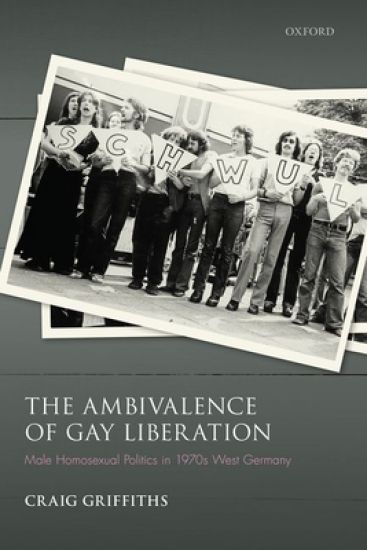
The Ambivalence of Gay Liberation

The Ambivalence of Gay Liberation

Craig Griffiths

Oxford University Press
2021
sidottu
The Ambivalence of Gay Liberation explores ways of thinking, feeling, and talking about being gay in the 1970s, an influential decade sandwiched between the partial decriminalisation of male homosexuality in 1969, and the arrival of the HIV/AIDS crisis in the early 1980s. Moving beyond divided Cold War Berlin, it also focuses on lesser-known cities, such as Aachen, Cologne, Frankfurt, Münster, and Stuttgart, to name just a few of the 53 localities that were home to a gay group by the end of the 1970s. These groups were important, and this book tells their story. In 1970s West Germany gay liberation did not take place only in activist meetings, universities, and on street demonstrations, but also on television, in magazine editorial offices, ordinary homes, bedrooms, and beyond. In considering all these spaces and individuals, this book provides a more complex account than previous histories, which have tended to focus only on a social movement and only on the idea of 'gay pride'. By drawing attention to ambivalence, this book shows that gay liberation was never only about pride, but also about shame; characterized not only by hope, but also by fear; and driven forward not just by the pushes of confrontation, but also by the pulls of conformism. Ranging from the painstaking emergence of the gay press to the first representation of homosexuality on television, from debates over the sexual legacy of 1968 and the student movement to the memory of Nazi persecution, The Ambivalence of Gay Liberation is the first English-language book to tell the story of male homosexual politics in 1970s West Germany. In doing so, this book changes the way we think about modern queer history.
Atmospheric Thermodynamics

Atmospheric Thermodynamics

Craig Bohren; Bruce Albrecht

Oxford University Press
2023
sidottu
Atmospheric Thermodynamics provides a comprehensive treatment of a subject that can often be intimidating. The text analyses real-life problems and applications of the subject, alongside of guiding the reader through the fundamental basics and covering the first and second laws and the ideal gas law, followed by an emphasis on moist processes in Earth's atmosphere. Water in all its phases is a critical component of weather and the Earth's climate system. With user-friendly chapters that include energy conservation and water and its transformations, the authors write with a willingness to expose assumptions and approximations usually absent in other textbooks. History is woven into the text to provide a context for the time evolution of thermodynamics and its place in atmospheric science and demonstrating how physical reasoning leads to correct explanations of everyday phenomena. Many of the experiments described were done using inexpensive instruments to take advantage of the earth's atmosphere as a freely accessible thermodynamics library. This second edition provides updated treatments of atmospheric measurements and substantially expanded sections that include atmospheric applications of the first and second laws and energy exchange between humans and their atmospheric environment. With 400+ thought provoking problems and 350 references with annotated notes and further reading suggestions, this second edition provides a basic understanding of the fundamentals of this subject while still being a comprehensive reference guide for those working in the field of atmospheric and environmental sciences.
Atmospheric Thermodynamics

Atmospheric Thermodynamics

Craig Bohren; Bruce Albrecht

Oxford University Press
2023
nidottu
Atmospheric Thermodynamics provides a comprehensive treatment of a subject that can often be intimidating. The text analyses real-life problems and applications of the subject, alongside of guiding the reader through the fundamental basics and covering the first and second laws and the ideal gas law, followed by an emphasis on moist processes in Earth's atmosphere. Water in all its phases is a critical component of weather and the Earth's climate system. With user-friendly chapters that include energy conservation and water and its transformations, the authors write with a willingness to expose assumptions and approximations usually absent in other textbooks. History is woven into the text to provide a context for the time evolution of thermodynamics and its place in atmospheric science and demonstrating how physical reasoning leads to correct explanations of everyday phenomena. Many of the experiments described were done using inexpensive instruments to take advantage of the earth's atmosphere as a freely accessible thermodynamics library. This second edition provides updated treatments of atmospheric measurements and substantially expanded sections that include atmospheric applications of the first and second laws and energy exchange between humans and their atmospheric environment. With 400+ thought provoking problems and 350 references with annotated notes and further reading suggestions, this second edition provides a basic understanding of the fundamentals of this subject while still being a comprehensive reference guide for those working in the field of atmospheric and environmental sciences.
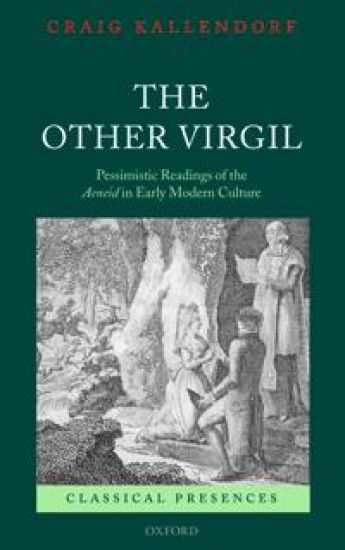
The Other Virgil

The Other Virgil

Craig Kallendorf

Oxford University Press
2007
sidottu
The Other Virgil tells the story of how a classic like the Aeneid can say different things to different people. As a school text it was generally taught to support the values and ideals of a succession of postclassical societies, but between 1500 and 1800 a number of unusually sensitive readers responded to cues in the text that call into question what the poem appears to be supporting. This book focuses on the literary works written by these readers, to show how they used the Aeneid as a model for poems that probed and challenged the dominant values of their society, just as Virgil had done centuries before. Some of these poems are not as well known today as they should be, but others, like Milton's Paradise Lost and Shakespeare's The Tempest, are; in the latter case, the poems can be understood in new ways once their relationship to the 'other Virgil' is made clear.
A Future for Presentism

A Future for Presentism

Craig Bourne

Clarendon Press
2006
sidottu
Presentism, the view that only the present exists, was a much neglected position in the philosophy of time for a number of years. Recently, however, it has been enjoying a renaissance among philosophers. A Future for Presentism is meant as a timely contribution to this fast growing and exciting debate. After discussing rival positions in the philosophy of time, in Part I Craig Bourne shows how presentism is the only viable alternative to the tenseless theory of time. He then develops a distinctive version of presentism that avoids the mistakes of the past, and which sets up the framework for solving problems traditionally associated with the position, such as what makes past-tensed statements true, how to give the proper semantics for statements about the future, how to deal with transtemporal relations, how we can meaningfully talk about past individuals, and how causation can be accommodated. Part I concludes with a discussion of the direction of time and causation, the decision-theoretic problem known as 'Newcomb's problem', and the possibility of time travel and causal loops. In Part II Bourne focuses on the problems for presentism raised by relativity theory. He begins with by giving a self-contained exposition of the concepts of special relativity that are important for understanding the later discussion of its philosophical implications. The last two chapters explore the philosophical implications of certain cosmological models that arise from general relativity, namely the expanding models, which seem to represent our universe, and Gödel's infamous model, which allows us to take a journey into our future and arrive in our past. The necessary physics is explained with the aid of diagrams, throughout.
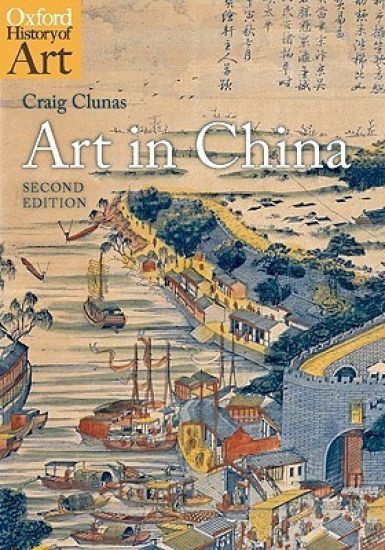
Art in China

Art in China

Craig Clunas

Oxford University Press
2009
nidottu
China boasts a history of art lasting over 5,000 years and embracing a huge diversity of forms - objects of jade, lacquer and porcelain, painted scrolls and fans, sculptures in stone, bronze and wood, and murals. But this rich tradition has not, until now been fully appreciated in the West where scholars have focused attention on the European high arts of painting and sculpture, downplaying arts more highly prized by the Chinese themselves, such as calligraphy. Art in China marks a breakthrough in the study of the subject. Drawing on recent innovative scholarship - and newly-accessible studies in China itself - Craig Clunas surveys the full spectrum of the visual arts in China. He ranges from the Neolithic period to the art scene of the early 21st century, examining Chinese art in a variety of contexts - as it has been designed for tombs, commissioned by rulers, displayed in temples, created by the men and women of the educated elite, and bought and sold in the marketplace. This updated edition contains expanded coverage of modern and contemporary art, from the fall of the empire in 1911 to the growing international interest in the art of an increasingly confident and booming China.
How to Map Arguments in Political Science

How to Map Arguments in Political Science

Craig Parsons

Oxford University Press
2007
sidottu
To venture into explanation of political action we need some map of our basic options: what kinds of explanations are out there? Even advanced students and scholars can find the landscape difficult to chart. We confront a bewildering maze of partial typologies, contrasting uses of terms, and debate over what counts as explanation. This book makes an argument about the most useful first cut into explanations of action. It illustrates the map with reference to political examples and a wide range of political science literature, but the scheme applies even more broadly across the social sciences and history. Common terms form the sectors of the map: structural, institutional, ideational, and psychological logics. This book's novelties lie in arguments about how to best define these terms. It narrows them into distinct mechanisms, arriving at basic segments of causal logic into which all explanations of action can be broken down. It also makes them compatible, however, such that we could imagine a world in which all operated while debating how much each caused any given action. Four benefits follow. The typology directs our attention to the most basic debates about what causes what. Its framework is systematic and exhaustive, bounding our explanatory universe. It defines our main approaches in ways that facilitate both competition and combination. Lastly, it leads to revisions of prevailing views on philosophy of science and research design to encourage more open and rigorous debates. Graduate students will find no other overviews of comparable scope and precision. Scholars of all theoretical inclinations will encounter provocative challenges to their views of theorizing and use of terms.
How to Map Arguments in Political Science

How to Map Arguments in Political Science

Craig Parsons

Oxford University Press
2007
nidottu
To venture into explanation of political action we need some map of our basic options: what kinds of explanations are out there? Even advanced students and scholars can find the landscape difficult to chart. We confront a bewildering maze of partial typologies, contrasting uses of terms, and debate over what counts as explanation. This book makes an argument about the most useful first cut into explanations of action. It illustrates the map with reference to political examples and a wide range of political science literature, but the scheme applies even more broadly across the social sciences and history. Common terms form the sectors of the map: structural, institutional, ideational, and psychological logics. This book's novelties lie in arguments about how to best define these terms. It narrows them into distinct mechanisms, arriving at basic segments of causal logic into which all explanations of action can be broken down. It also makes them compatible, however, such that we could imagine a world in which all operated while debating how much each caused any given action. Four benefits follow. The typology directs our attention to the most basic debates about what causes what. Its framework is systematic and exhaustive, bounding our explanatory universe. It defines our main approaches in ways that facilitate both competition and combination. Lastly, it leads to revisions of prevailing views on philosophy of science and research design to encourage more open and rigorous debates. Graduate students will find no other overviews of comparable scope and precision. Scholars of all theoretical inclinations will encounter provocative challenges to their views of theorizing and use of terms.